The Illusion of the Personal Hearing in GST: A Practitioner’s Reality Check
As tax litigators, we approach the Personal Hearing (PH) as the critical juncture of adjudication. It is supposed to be the moment where written submissions meet spoken advocacy, grounded in the fundamental principle of Audi Alteram Partem. The statute promises taxpayers the opportunity to be heard. However, the current reality across adjudication corridors paints a starkly different picture.
The Unilateral Submission
When presenting a case before the Proper Officer, the expectation is a dialogue. Practitioners bring physical documents, which are readily taken on record. We present our oral submissions and they are noted. Yet, the exchange is almost entirely unilateral. There are rarely counter-questions, cross-objections, or probing inquiries regarding the interpretation of the law or the specific facts of the business. The practitioner speaks, the officer listens and the hearing is concluded. It functions as a submission, not a hearing.
The Foregone Conclusion
Perhaps the most disheartening aspect of this process is the realization that the Adjudicating Authority has frequently determined the outcome before the hearing even commences. The detailed replies filed well in advance often appear to remain unread until the order is actually being drafted. When the final order ultimately ignores the oral and written submissions to confirm the department’s pre-conceived notions, the physical presence of the taxpayer or their counsel is reduced to a mere procedural formality.
The Section 75(4) Anomaly
This mechanical approach creates a significant legal anomaly under Section 75(4) of the CGST Act. The mandate is to offer a hearing when an adverse decision is contemplated.
Logically, if a Proper Officer conducts the initial PH, accepts the reply and only then applies their mind to the facts to conclude that an adverse order is necessary, they are contemplating an adverse decision at that subsequent, post-hearing moment. On a strict reading of the statute, the spirit of the law demands another hearing at that exact juncture. Passing an adverse order based on a post-hearing realization, without offering a chance to rebut that specific contemplation, fractures the foundation of natural justice.
The Compliance Shield and the Appellate Echo
Currently, the grant of a PH is frequently weaponized as a compliance shield. By merely issuing the notice and allowing the taxpayer to speak, the Adjudicating Authority notes in the order that the opportunity was provided. This is used to immunize the order from allegations of violating natural justice, discharging the officer’s duty on paper while entirely ignoring the submissions in substance.
This administrative mindset bleeds directly into the first appeal stage. The Appellate Authority frequently echoes the lower order, turning the appellate hearing into an identical box-ticking exercise without any genuine engagement with the appellant’s grounds.
The Limitation Trap
If an order is passed without a genuine hearing, it is legally voidable. However, an uncomfortable irony exists within the system’s mechanics. If the taxpayer defaults on the strict statutory timelines for filing an appeal, the narrative flips entirely. The procedural delay by the taxpayer suddenly cures the substantive violation by the department. The failure of natural justice is conveniently lost from sight, superseded by the missed deadline.
The Need for Judicial Fact-Finding and Accountability
Until the GSTAT becomes fully functional, this administrative routine will likely continue. We are waiting for the Tribunal to introduce true judicial fact-finding—the kind of robust “hear-ask-cross-hear” dynamic seen in the ITAT, which departmental officers are simply not trained or inclined to perform.
Until that time, we must consider whether in-camera proceedings are the necessary theme of the future. A video-recorded hearing would serve as concrete evidence for future litigation, capturing whether the Proper Officer or Appellate Authority actually engaged with the merits of the case or simply went through the motions. A hearing without consideration is a contradiction in terms and it is time the GST framework reflects that reality.
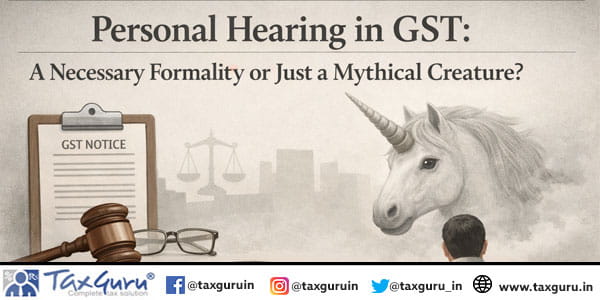
Until the ‘Personal’ in the hearing refers to an actual exchange — questions asked, arguments tested, facts probed — rather than just the physical presence of people in a room, the GST Personal Hearing will remain, for most practical purposes, a formality. A well-documented one. But a formality nonetheless.