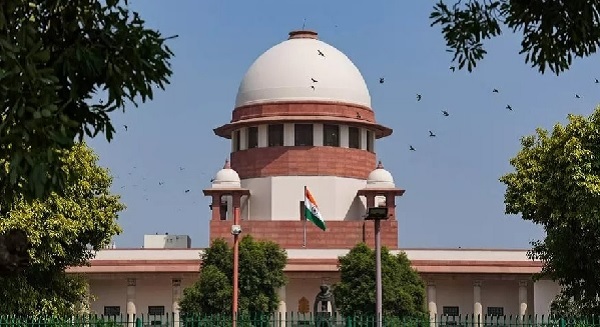
Oriental Insurance Company Ltd. Vs Prashant (Karnataka High Court)
No TDS on Motor Accident Compensation Interest From Claim Petition to Award – Karnataka High Court
Summary: The Karnataka High Court, in Oriental Insurance Company Ltd. Vs Prashant, dismissed an insurer’s writ petition challenging the executing court’s refusal to permit deduction of tax at source under Section 194A of the Income-tax Act, 1961. The Court held that interest awarded by a Motor Accident Claims Tribunal from the date of filing the claim petition until the date of the award is incidental to compensation and does not constitute taxable income. Relying on earlier Karnataka High Court decisions and the Bombay High Court’s ruling in Rupesh Rashmikant Shah Vs Union of India, the Court reiterated that a TDS provision cannot independently determine the taxability of a receipt. It also held that the statutory threshold amendment referred to in its order did not alter the fundamental character of the payment. The decision specifically addresses interest attributable to the period between presentation of the claim petition and the award.
Interest for the Time Taken to Determine Compensation
When a Motor Accident Claims Tribunal awards interest for the period between the filing of a claim petition and the date of the award, can the insurer deduct tax under Section 194A of the Income-tax Act, 1961? The Karnataka High Court answered in the negative. It held that interest for this period is incidental to the compensation and does not constitute taxable income. Justice Ashok S. Kinagi accordingly dismissed the insurer’s writ petition challenging the executing court’s refusal to provide for TDS.
The Dispute Arose at the Execution Stage
The Principal District and Sessions Judge, Bidar, passed an order on 20 July 2023 in Execution Petition No. 345 of 2018. Oriental Insurance challenged that order under Article 227 of the Constitution, contending that the executing court had erred in refusing to give effect to the insurer’s obligation to deduct tax under Section 194A(1).
The dispute concerned the character of the interest component payable to the claimant. The insurer invoked the provision governing deduction of tax on interest. The High Court examined the question that precedes withholding in this context — whether the award interest itself was income chargeable to tax.
Karnataka High Court Followed Its Earlier Decisions
The Court held that the issue was already covered by three Karnataka High Court decisions. It referred to United India Insurance Co. Ltd. v. Seema Begum, W.P. No. 202297 of 2022, decided on 16 September 2026 by the Kalaburagi Bench, and M/s Oriental Insurance Co. Ltd. v. Smt. Laxmavva alias Laxmi, W.P. No. 105599 of 2015, decided on 2 July 2026 by the Dharwad Bench. It also relied on M/s Balaji Corporate Services v. Union of India, W.P. No. 43206 of 2018 connected with W.P. No. 53718 of 2017, decided on 21 April 2022 by the Bengaluru Bench.
Applying those decisions, the Court held that interest from the date of presentation of the claim petition to the date of the award is an incident of motor accident compensation. It accounts for the time taken to determine the compensation payable to the claimant. The description of the amount as interest in the award must therefore be read in light of the purpose for which it was granted.
Section 194A Governs Withholding
The Court also drew support from the Bombay High Court’s decision in Rupesh Rashmikant Shah v. Union of India (2019) 417 ITR 169 (Bom.). The Bombay High Court explained that the provisions governing deduction of tax at source do not determine the taxability of a receipt. It held that interest awarded for the delayed determination of motor accident compensation could not be treated as income attracting TDS.
The Karnataka High Court applied the same reasoning. Once the interest for the relevant period was treated as part of the compensatory payment, the insurer’s reliance on Section 194A could not sustain the deduction. The withholding provision had to be applied in light of the legal character of the underlying payment.
A Higher TDS Threshold Does Not Change the Result
The High Court also referred to the enhancement of the monetary threshold by the Finance Act, 2026. It held that the amendment had no bearing on the controversy because the charging provision remained unaltered. A monetary threshold addresses when withholding applies to a payment within the provision. The issue before the Court arose at an earlier stage — whether interest for the period from the claim petition to the award was taxable income in the first place. The Court found no ground to interfere and dismissed the writ petition.
Author’s Comments
The most important detail in this ruling is the period for which interest was awarded. An award or execution statement may show a single figure for interest, even where the computation extends beyond the date of the award. For applying this judgment, the computation should identify the amount attributable to the period from filing the claim petition until the award. Where a separate amount accrues after the award until payment, its treatment calls for a separate examination. The Karnataka High Court’s express finding in this case concerns pre-award interest.
The decision is particularly relevant in Karnataka because the Court applied rulings from its Bengaluru, Dharwad and Kalaburagi Benches. It also clarifies the sequence of analysis in an execution dispute. The award and the interest computation first establish what the payment represents and the period it covers. The TDS question follows from that characterisation. In this case, the interest compensated the claimant for the time taken to determine the award, and the insurer could not reduce that amount by invoking Section 194A.
Cases Discussed:
- United India Insurance Co. Ltd. Vs Seema Begum (Karnataka High Court, Kalaburagi Bench); W.P. No. 202297 of 2022; 16/09/2026
- Oriental Insurance Co. Ltd. Vs Smt. Laxmavva alias Laxmi and Another (Karnataka High Court, Dharwad Bench); W.P. No. 105599 of 2015; 02/07/2026
- M/s Balaji Corporate Services and Another Vs Union of India and Others (Karnataka High Court, Bengaluru Bench); W.P. No. 43206 of 2018 c/w W.P. No. 53718 of 2017; 21/04/2022; (related subsequent appellate decision)
- Shri Rupesh Rashmikant Shah Vs Union of India and Others (Bombay High Court); W.P. No. 2902 of 2016; (2019) 417 ITR 169; 08/08/2019
FULL TEXT OF THE ORDER OF KARNATAKA HIGH COURT
1. The petitioner-insurer, aggrieved by the order dated 20.07.2023 passed in Execution Petition No.345 of 2018 by the learned Principal District and Sessions Judge, Bidar (for short, ‘the Executing Court’), has filed this writ petition.
2. Heard the learned counsel for the petitioner.
3. Learned counsel for the petitioner submits that the insurance company is liable to deduct the Tax Deducted at Source (“TDS”) as per Section 194A(1) of the Income Tax Act, 1961. However, the Executing Court committed an error in not deducting the TDS as per Section 194A of the Income Tax Act. Hence, on this ground, she prays to allow the writ petition.
4. Perused the records and considered the submissions of the learned counsel for the parties.
5. The point involved in this case is squarely covered by the orders passed by this Court in the cases of (i) United India Insurance Co. Ltd v. Seema Begum1 (ii) Co-ordinate Bench in the case of M/s.Oriental Insurance Co. Ltd v. Smt.Laxmavva alias Laxmi and another2; (iii) the decisions by a Co-ordinate Bench in the case of M/s.Balaji Corporate Services and another v. Union of India, Ministry of Finance, Department of Revenue and others3.
6. This Court has already taken a view that the interest awarded in a motor accident claim cases, from the date of presentation of the claim petition till the date of award, is merely an incident to the compensation and does not constitute “income” liable to tax.
7. The Bombay High Court in the case of Sri. Rupesh Rashmikant Shah v. Union of India and others4 has observed that the provisions relating to the deduction of a tax at source under Section 194A of the Act do not determine the taxability of a receipt and deduction of tax at the sources can arise only if the payment itself is in the nature of taxable income. The Court concluded that, interest awarded by the Claims Tribunal for the delayed determination of compensation cannot be treated as an income attracting TDS.
8. Though an amendment was made to Section 194 of the Income Tax Act, including the enhancement of monetary threshold by Finance Act, 2026, that does not alter the fundamental position. The charging provision remains unaltered and therefore, the amendment has no bearing on the present controversy.
9. In view of the above discussion, I do not find any grounds to entertain the writ petition.
10. Accordingly, the writ petition is dismissed.
Notes:
1 W.P. No.202297 of 2022 decided on 16.09.2026 (Kalaburagi Bench)
2 W.P. No.105599 of 2015, decided on 02.07.2026 (Dharwad Bench)
3 W.P. No.43206 of 2018 c/w. W.P. No.53718 of 2017 decided on 21.04.2022 (Bengaluru Bench)
4 (2019) 417 ITR 169