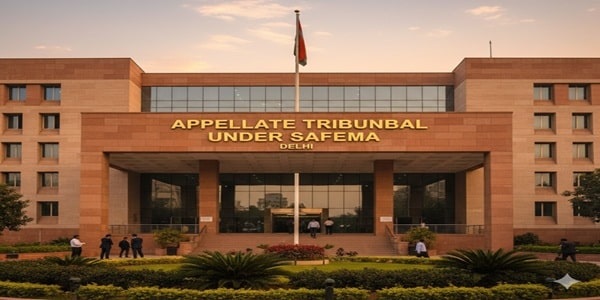
Kishan Gopal Rungta Pvt. Ltd. Vs DCIT (ITAT Jaipur)
Delayed Form 10CCB Cannot Defeat Section 80-IA Deduction for AY 2018-19: Jaipur ITAT
The Jaipur Bench of the Income Tax Appellate Tribunal (ITAT) has held that delayed furnishing of Form 10CCB, including obtaining the audit report after filing the return, did not justify denying deduction under Section 80-IA in the circumstances of the case.
In Kishan Gopal Rungta Pvt. Ltd. v. DCIT, Circle 1, Jaipur, ITA No. 76/JPR/2026, pronounced on 4 November 2026, the Tribunal directed the Assessing Officer to allow the deduction of ₹44,25,650 for Assessment Year 2018-19.
The audit report had been furnished before processing of the return. The Tribunal distinguished the mandatory requirement of audit from the procedural requirement concerning submission of its report.
Background: Audit Report Filed After Return
The assessee filed its return of income on 30 October 2018, claiming deduction under Section 80-IA.
Under Section 80-IA(7), as applicable to the assessment year, the undertaking’s accounts had to be audited by an accountant, and the prescribed audit report had to be furnished along with the return.
The assessee furnished Form 10CCB in April 2019, after filing its return. The report was also signed after the return-filing date.
However, the form was available before the CPC processed the return under Section 143(1). Despite this, the deduction was denied because of the delay.
Deduction Dispute Arose in Multiple Proceedings
The Tribunal noted that the same deduction had become the subject of several proceedings.
Initially, the CPC disallowed the claim during return processing. That dispute reached the Tribunal, which restored it to the CIT(A) for examination of the facts and relevant Supreme Court decisions.
Separately, a scrutiny assessment was completed under Section 143(3). Although the assessment order contained no discussion disallowing the deduction, the accompanying computation denied it.
The assessee also pursued rectification under Section 154. Relief initially granted through rectification was subsequently withdrawn, leading to another appeal.
The present proceedings concerned the CIT(A)’s confirmation of the disallowance appearing in the scrutiny assessment computation.
CIT(A) Treated Delayed Audit as Substantive Failure
The CIT(A) accepted that failure to furnish an audit report with the return could constitute a curable procedural defect.
However, it distinguished between late filing of an existing report and conducting the audit itself after the prescribed date.
According to the CIT(A), the assessee had failed to satisfy a mandatory condition because the audit report was obtained after filing the return.
It relied on CIT v. Shivanand Electronics, treating the delay as substantive non-compliance that could not be cured through subsequent submission of Form 10CCB.
Tribunal Found the Precedent Misinterpreted
The ITAT rejected that interpretation of Shivanand Electronics.
It observed that the Bombay High Court had held the requirement to get the accounts audited to be mandatory. Without an audit, the relevant deduction could not be allowed.
However, the Tribunal found no proposition in that judgment making completion of the audit before the specified due date a mandatory condition in the manner asserted by the CIT(A).
The assessee had admittedly obtained an audit of its accounts. Consequently, the mandatory audit requirement stood fulfilled.
The Tribunal held that the CIT(A) had incorrectly extended the precedent to justify denial merely because the report was obtained later.
Filing Before Processing Constituted Sufficient Compliance
The Tribunal relied on the principle recognised in CIT v. G.M. Knitting Industries Pvt. Ltd., concerning furnishing the prescribed form before completion of assessment proceedings.
It accepted that delayed submission did not necessarily defeat the substantive claim where the report was subsequently furnished within the relevant proceedings.
In this case, Form 10CCB was filed even before processing under Section 143(1).
The Tribunal therefore treated the assessee as having sufficiently complied with the requirements of Section 80-IA(7).
It expressly held that the report being signed after filing the return did not, on these facts, disentitle the assessee to deduction.
Earlier Statutory Framework Was Relevant
The assessee also relied on Natesan Precision Components Pvt. Ltd. v. DCIT, where the Chennai Tribunal allowed deduction after noting that Form 10CCB had been filed before return processing.
That decision, reproduced in the order, distinguished the requirements applicable to earlier assessment years from those introduced with effect from 1 April 2020.
The present dispute concerned AY 2018-19. The ruling must therefore be understood with reference to the statutory framework governing that year.
It does not dispense with the audit requirement or establish that audit-report deadlines can be ignored for every assessment year.
Beneficial Deduction Should Not Fail on Mere Technicalities
The Tribunal emphasised the beneficial purpose of Section 80-IA, which seeks to promote development and growth in specified sectors.
It held that denial should follow failure to satisfy material substantive conditions, rather than mere technicalities concerning delayed forms or audit reports.
Since the accounts were audited and Form 10CCB was furnished before return processing, the Tribunal directed allowance of the ₹44,25,650 deduction and allowed the assessee’s appeal.
Cases Discussed
- CIT v. G.M. Knitting Industries Pvt. Ltd., 376 ITR 456 (SC)
- CIT v. Shivanand Electronics, (1994) 209 ITR 63 (Bombay HC)
- Pr. CIT v. Wipro Ltd., [2022] 140 taxmann.com 223 (SC)
- Natesan Precision Components Pvt. Ltd. v. DCIT, ITA No. 1397/Chny/2024, order dated 9 August 2024
- CIT v. AKS Alloys (P) Ltd., 376 ITR 456 (SC)
FULL TEXT OF THE JUDGMENT/ORDER OF ITAT JAIPUR
1. The present appeal has been filed by the assessee against the order passed by the National Faceless Appeal Centre (NFAC), Delhi (hereinafter referred to as “Ld. CIT(A)”), dated 24.12.2025 under Section 250 of the Income Tax Act, 1961 (hereinafter referred to as “the Act”).
2. The grounds raised by the assessee read as under:-
1. The Ld. CIT(A), NFAC has erred on facts and in law in confirming the disallowance of deduction of Rs.44,25,650/- u/s 80-IA of IT Act, 1961 by holding that since the audit of eligible undertaking was not conducted before the due date of filing the return, there is substantive non compliance and thus deduction u/s 80-IA(7) is not allowable ignoring that the requirement of conducting the audit before the specified date was introduced by FA, 2020 w.e.f. 01.04.2020 and thus when the audit report in Form 10CCB u/s 80-IA(7) was filed on 22.04.2019, i.e. before the AO(CPC) process the return u/s 143(1) on 12.01.2020, assessee ought to have been allowed deduction u/s 80-IA of the Act.
2. The appellant craves to alter, amend and modify any ground of appeal.
3. Necessary cost be awarded to the assessee.
3. The solitary issue in the present appeal is the denial of grant of deduction claimed by the assessee u/s 80-IA of the Act amounting to Rs.44,25,650 for the reason that the audit report in Form 10CCB was filed delayed.
4. The assessee had filed return of income on 30.10.2018.Sub-section (7) of Section 80-IA of the Act required the audit of the undertaking eligible for deduction u/s 80-IA of the Act to be done by an Accountant and the report of the said audit in the prescribed form, i.e Form 10CCB, to be furnished along with the return of income. The assessee however had furnished the audit report in Form 10CCB on 23.04.2019, i.e. after filing the return of income on 30-10-2018. The audit report was dated the same date, i.e. 23-04-2019.
5. We have gone through the orders of the Authorities Below and have also gone through the written submissions as well as the documents and case laws filed by the ld. Counsel for the assessee before us in a paper book comprising of 60 pages. On going through the all of the above, we find that this issue of disallowance of deduction u/s 80-IA of the Act in the case of the assessee for delayed filing of Form 10CCB has arisen in multiple proceedings undertaken as per the Act.
> Initially the assessee was denied claim of deduction u/s 80-IA of the Act by the CPC while processing the return of income filed for the year u/s 143(1) of the Act, which disallowance was confirmed by the ld. CIT(A) and the matter carried before the ITAT who had restored the issue back to the file of the Ld. CIT(A) to bring out clearly the facts of the case, whether the audit report was filed or not, and thereafter to decide the issue after considering the decision of the Hon’ble Apex Court in the case of Pr. CIT Vs. Wipro Ltd. [2022] 140 taxmann.com 223 and the decision of the Hon’ble Apex Court in the case of CIT Vs. G.M. Knitting Industries Pvt. Ltd. 376 ITR 456 (SC). The matter, it was stated before us, is still pending before the Ld. CIT(A),.
> Thereafter, it was contended, after the processing of the return, scrutiny assessment was done and order passed u/s 143(3) of the Act wherein the returned income of the assessee was accepted, but however in the computation of income, the assessee’s claim of deduction u/s 80-IA of the Act was denied, against which the assessee went in appeal before the Ld. CIT(A), who dismissed the assessee’s appeal. Aggrieved by which, the assessee has come up in appeal before us.
> Ld. Counsel for the assessee contended that against the order passed u/s 143(3) of the Act, the assessee had also filed a rectification application u/s 154 of the Act which was allowed by the AO, but thereafter, the AO issued notice u/s 154 of the Act, stating that the claim of deduction u/s 80-IA of the Act had been wrongly allowed vide the earlier order passed u/s 154 of the Act and the AO rectified his earlier order passed u/s 154 of the Act and disallowed the assessee’s claim of deduction u/s 80-IA of the Act. This matter, he stated was also carried in appeal before the Ld. CIT(A) where it was stated to be still pending.
6. Thus, in effect on the issue of claim of deduction u/s 80-IA of the Act being denied by invoking Section 80-IA(7) of the Act on account of delayed filing of Form 10CCB, besides raised in appeal before us, is also pending for adjudication in two proceedings before the Ld. CIT(A). One against the adjustment made by disallowing the claim of deduction u/s 80IA of the Act in the intimation made u/s 143(1) of the Act and the other against the order passed by the AO u/s 154 of the Act reversing his earlier order passed u/s 154 of the Act allowing assessee’s claim, application seeking rectification in the order passed u/s 143(3) of the Act, wherein the claim of deduction u/s 80-IA of the Act was denied.
7. Before us, the assessee has come up in appeal against the order of the ld. CIT(A), who has confirmed the disallowance of deduction u/s 80- IA of the Act in the computation of income in the order passed u/s 143(3) of the Act. The fact remains that no disallowance on this ground was discussed in the order passed u/s 143(3) of the Act and the disallowance was made only in the computation of income in the order passed u/s 143(3) of the Act.
8. The order of the Ld. CIT(A) reveals that he had considered the decision of the Hon’ble Apex Court in the case of G.M. Knitting Industries Pvt. Ltd. (Supra), wherein it was held that failure to furnish audit report with the return is a curable procedural defect and is not fatal to the claim of deduction as long as the report is furnished during assessment proceedings,andafter taking note of the same he held thatthe said decision was distinguishable onfacts .
9. Thus, in principle the Ld. CIT(A) admits to the the proposition of law laid down by the Hon’ble Apex Court in the case of G.M. Knitting Industries Pvt. Ltd. (Supra) that failure to file audit report in Form 10CCB along with return of income was not fatal to the claim of deduction u/s 80-IA of the Act, if the report is filed at any time before the framing of assessment.
10. He had however noted that there was a fundamental difference in the facts of the said case and the facts of the present case before us to the effect that in the case of G.M. Knitting Industries Pvt. Ltd. (Supra) the audit had been completed before the due date prescribed as per law and it was only the report which was furnished belatedly. While in the facts of the present case, the audit itself had been done after the prescribed date in law. The Ld. CIT(A) thereafter referred to the decision of the Hon’ble Bombay High Court in the case of CIT Vs. Shivanand Electronics [1994] 209 ITR 63 (Bomb.), for the proposition that the conditions of the accounts being audited was a mandatory requirement, the non-fulfillment of which would debar the assessee from claiming deduction u/s 80-IA(7) of the Act and noting the assessee to have delayed the audit report ,he held confirmed the disallowance of claim of deduction u/s 80-IA of the Act. His findings in this regard are contained at para 4.5 and 4.6 of his order as under:-
…..
4.5. In the case of CIT vs. G.M. Knitting Industries (P) Ltd. and CIT vs. AKS Alloys (P) Ltd. [2015] 376 ITR 456 (SC), the Hon’ble Supreme Court upheld the following decision of Hon’ble Bombay High Court
Additional depreciation u/s. 32(1)(iia) had been denied to the assessee on the ground that the assessee had failed to furnish form 3AA along with the return of income. The Tribunal allowed additional depreciation as claimed by the assessee. The High Court noted that the Form 3AA was submitted during the course of assessment proceedings and that it was not in dispute that the assessee was entitled to the additional depreciation. The High Court dismissed the appeal of the Revenue in the light of its judgment in CIT vs. Shivanand Electronics (1994) 209 ITR 63 (Bom). On further appeal by the Revenue, the Supreme Court dismissed the appeal concurring with the view of the High Court and holding that even if Form 3AA was not filed alongwith the return of income but same was filed during the assessment proceedings and before the final order of the assessment was made, that would amount to sufficient compliance.
4.5. Further, in the case of CIT vs Shivanand Electronics, the Hon’ble Bombay High Court undertook a statutory-interpretation analysis of section 80J(6A) as it stood for the relevant assessment years (inserted by Finance Act, 1975, effective 1 April1976). The subsection imposes two conditions for admissibility of a deduction undersection 80J(1):
1. That the accounts of the industrial undertaking for the relevant previous year are audited by an accountant as defined by the Act; and
2. That the assessee furnishes, along with the return of income, the audit report in the prescribed form duly signed and verified by such accountant. The Court applied established tests for determining whether statutory requirements are mandatory or directory looking to legislative intent, the object of the enactment, the consequences of strict or liberal construction, and the relationship of the requirement to the overall purpose of the statute. The Hon’ble Court concluded that, The first requirement (that accounts be audited by an accountant as defined) is plainly mandatory: without such an audit, a deduction under section 80J(1) would not be admissible. The second requirement was analytically subdivided into two components:
(a) That the audit report in the prescribed form, duly signed and verified by the accountant, be furnished to the Income-tax Officer this component is mandatory(failure is fatal).
(b) That the report be filed “along with the return of income” the Court held this temporal/formal requirement is not mandatory in the strict sense but is directory. If the audit report is furnished after filing the return but before completion of assessment and the assessee gives a satisfactory explanation for the delay, the Income-tax Officer has the power to accept the report and consider the deduction. 4.
46. In contrast, in the present appeal, not only was the audit report not furnished with the return, but more crucially, the audit of the eligible undertaking was not conducted before the due date for filing the return. The subsequent filing of a belated audit report cannot cure this fundamental defect, as the law mandates that the audit itself must be conducted and the report obtained before the due date. The failure todo so is a substantive non-compliance, not a mere procedural lapse. The legislative intent behind section 80-IA(7) is clear and unambiguous in this regard.
…..
11. Ld. Counsel for the assessee per contra has contended that in the facts of the present case, it is not that the accounts of the assessee have not been audited. The only fact noted by the Ld. CIT(A), he pointed out, was that the audit report has been obtained beyond the time prescribed in law. He contended that the Hon’ble Bombay High Court in the case of Shivanand Electronics (Supra) had held that getting accounts audited was a mandatory condition .That the assessee having fulfilled the said condition, the decision in fact supported the case of the assessee. And though the assessee had belatedly filed form 10CCB but the same was filed before the processing of the return of income u/s 143(1) of the Act therefore as per the decision of the Hon’ble Apex Court in G.M Knitting(supra) the assessee’s claim to deduction u/s 80-IA of the Act was allowable.
12. The Ld. Counsel for the assessee has further contended that the issue is squarely covered by the decision of the ITAT Chennai Bench in the case of Natesan Precision Components Pvt. Ltd. Vs. DCIT in ITA No.1397/Chny/2024 order dated 09.08.2024 wherein in the facts of the said case, the assessee had e-filed audit report belatedly, not along with the return of income, but noting the same to be filed before the return was processed u/s 143(1) and following the decision of the Hon’ble Apex Court in the case of G.M. Knitting Industries Pvt. Ltd. (Supra), the ITAT had allowed the assessee’s claim. Our attention was drawn to the relevant findings of the ITAT para 8 and 9 of his order as under:-
……
8. We have heard both the parties and perused the material available on record. We find that this was the 8th year of claiming deduction u/s.801A of the Act and in earlier year assessee was granted such deduction; and in the relevant AY, the CPC denied the deduction only on the ground that Audit Report/ Form No.10CCB was belatedly e-filed l.e, not along with the return of income. On appeal, the Ld.CIT(A) has confirmed the action of the CPC by holding that the assessee ought to have filed Form No.10CCB on the due date, which requirement of law, we note came w.e.f. 01.04.2020 and is not applicable for AY 2017-18. Having said so, we note that the assessee had e-filed Form No.10CCB before the CPC had processed the return of income u/s 143(1) of the Act; and therefore, the deduction claimed ought to have been allowed as held by the Hon’ble Supreme Court in the case of GM Knitting Industries (P.) Ltd., (supra), wherein the Apex Court had an occasion to examine the action of Bombay High Court holding that if Form 3AA is filed before the assessment proceedings culminated, then additional depreciation shall be allowed and such a claim should not be denied only because assessee did not furnish Form 3AA along with return of income. And the Hon’ble Apex Court, affirmed the action of the Hon’ble High Court of Bombay as well as tagged along matter wherein Revenue challenged the action of the Hon’ble Madras High Court in AKS Alloys Pvt. Ltd (supra) and the Civil Appeal of department was dismissed, which means the decision of the Hon’ble Madras High Court has been affirmed. by Hon’ble Supreme Court, and is binding precedent that if assessee had filed the Form 10CCB before the assessment proceedings culminate, then the deduction claimed u/s.80IB ought not to be denied on the reason that assessee did not file Form 10CCB along with Return of Income (RoI). We also note the Hon’ble Supreme Court’s decision in M/s. Wipro Ltd. (supra) was in the context of that assessee’s [Wipro] claim of exemption under Chapter III, in contra-distinction to the claim raised by the present assessee under Chapter VI-A. And it would be gainful to reproduce the Hon’ble Supreme Court’s observation in M/s.Wipro Ltd., wherein in the distinction in the claim made for exemption under Chapter-III and deduction claimed under Chapter VI was noted as under:
“11. Now so far as the reliance placed upon the decision of this Court in the case of G.M. Knitting Industries Pvt. Ltd. (supra), relied upon by the learned counsel appearing on behalf of the assessee is concerned, Section 10B (8) is an exemptiori provision which cannot be compared with claiming an additional depreciation under section 32(1) (ii-a) of the Act. As per the settled position of law, an assessee claiming exemption has to strictly and literally comply with the exemption provisions. Therefore, the said decision shall not be applicable to the facts of the case on hand, while considering the exemption provisions. Even otherwise. Chapter III and Chapter VIA of the Act operate in different realms and principles of Chapter III, which deals with “incomes which do not form a part of total income”, cannot be equated with mechanism provided for deductions in Chapter VIA, which deals with “deductions to made in computing total income”. Therefore, none of the decisions which are relied upon on behalf of the assessee on interpretation of Chapter VIA shall be applicable while considering the claim under Section 10B (8) of the IT Act. [emphasis given by us]”
9. In the light of the discussion, and taking note that assessee had e-filed the audit report in Form 10CCB on 30.03.2019 and processing by CPC u/s.143(1) of the Act took place only on 12.01.2020, which is an event much after the assessee had e-filed the Form 10CCB, therefore, the claim of deduction ought to have been granted especially when assessee was granted such a deduction for the earlier 5 years. Therefore, we set-aside the impugned order of Ld.CIT(A)/JCIT(A) and direct the AO to allow the claim of deduction u/s.80IA of the Act.
……
13. Having considered the rival submissions, we hold that there is merit in the claim of the assessee that mere delayed filing of audit report in Form 10CCB would not disentitle the assessee to claim of deduction u/s 80-IA of the Act. For that matter, even the fact that the audit report was signed after the date of filing of return of income filed by the assessee, meaning thereby that even if the audit report was obtained delayed, it would not disentitle the assessee from claim of deduction u/s 80-IA(7) of the Act.
14. The Ld. CIT(A), we find, admits to the proposition of law laid down by the Hon’ble Apex Court in the case of G.M. Knitting Industries Pvt. Ltd. (Supra) that mere delayed filing of Form 10CCB would not disentitle to claim of deduction u/s 80-IA of the Act, provided the form is filed during the pendency of assessment proceedings before the AO. However, his case is that there are two conditions prescribed for claiming deduction u/s 80-IA of the Act; one to obtain the audit report and the other of filing the report of the audit in the prescribed form i.e. Form 10CCB. As per the Ld. CIT(A), both the conditions have to be fulfilled and furnished along with the return of income filed by the assessee.
15. For clarity the provisions of Section 80-IA(7) of the Act are being reproduced hereunder:-
….. Deductions in respect of profits and gains from industrial undertakings or enterprises engaged in infrastructure development, etc. 80-IA…..
(7) The deduction under sub-section (1) from profits and gains derived from an undertaking shall not be admissible unless the accounts of the undertaking for the previous year relevant to the assessment year for which the deduction is claimed have been audited by an accountant, as defined in the Explanation below sub-section (2) of section 288, “and the assessee furnishes, along with his return of income” the report of such audit in the prescribed form duly signed and verified by such accountant.
…….
16. As per the Ld. CIT(A) since the assessee in the present case did not get the audit of its eligible undertaking done before the filing of return of income it had failed to comply with the mandatory conditions specified u/s 80IA(7) of the Act and therefore was not entitled to claim deduction u/s 80IA of the Act. The Ld. CIT(A) has referred to the decision of the Hon’ble Bombay High Court in the case of Shivanand Electronics (Supra) in this regard.
17. We have gone through the order of Hon’ble Bombay High Court in the case of Shivanand Electronics (Supra), and we do not find any such proposition laid down by the Hon’ble Bombay High Court that the condition of getting audit done before the specified due date was a mandatory condition. The Hon’ble High Court in fact we find has only held that the requirement of getting audit done is a mandatory condition. That if audit is not got done by the assessee of its eligible undertaking, the assessee is not entitled to claim deduction specified in law. The Hon’ble Bombay High Court was dealing with the claim of deduction u/s 80J of the Act, Sub-Section (6A) of which required accounts of the undertaking to be audited by an accountant and report of such audit furnished along with the return of income, which condition is identical to that prescribed in Section 80IA(7) of the Act for claiming deduction u/s 80IA of the Act. Interpreting the said provision, the Hon’ble Bombay High Court held that the provisions of Sub-Section (6A) of Section 80J of the Act required the fulfillment of two conditions; one of the accounts of the industrial undertaking for which deduction is being claimed to be audited by an accountant and the other of the assessee furnishing along with his return of income, the report of such audit in prescribed form. The first condition of getting accounts audited was held to be mandatory, while the second condition was held to be directory. The relevant findings of the Hon’ble High Court are as under:-
….. Sub-section (6A) of section 80J of the Act, as it stood at the material time, reads:
“(6A) Where the assessee is a person other than a company or a co-operative society, the deduction under sub-section (1) from profits and gains derived from an industrial undertaking shall not be admissible unless the accounts of the industrial undertaking for the previous year relevant to the assessment year for which the deduction is claimed have been audited by an accountant, as defined in the Explanation below sub-section (2) of section 288, and the assessee furnishes, along with his return of income, the report of such audit in the prescribed form duly signed and verified by such accountant.”
This sub-section was inserted by the Finance Act, 1975, with effect from April 1, 1976, and applies to the case of the assessee which pertains to the assessment years 1976-77 and 1977-78. This sub-section makes the admissibility of deduction under sub-section (1) of section 80J of the Act subject to the fulfilment of the conditions mentioned therein. These conditions are:
(i) the accounts of the industrial undertaking for the previous year relevant to the assessment year for which the deduction is claimed by the assessee are audited by an accountant, as defined in the Explanation below sub-section (2) of section 288 of the Act, and (ii) the assessee furnishes along with his return of income the report of such audit in the prescribed form duly signed and verified by such accountant.
There is no dispute about these two conditions. The only controversy is in regard to the nature of these conditions-whether these are manda-tory or directory. So far as the first condition of “audit” is concerned, we do not find any difficulty in holding that this condition, on the face of it, is mandatory, i.e., unless the accounts are audited by an accountant as defined in, this sub-section, no deduction under sub-section (1) would be admissible .
….
We may now examine the requirements of sub-section (6A) of section 80J in the light of the above discussion. As earlier stated, sub-section (6A) lays down two conditions which should be fulfilled in order to get the benefit of deduction under section 80J. The first condition is that the accounts should be audited by an accountant. This condition, as stated earlier, is mandatory.
…….
18. The Ld. CIT(A), we find has misinterpreted the decision of the Hon’ble High Court. The Hon’ble High Court has only stated that the condition of getting audited accounts is mandatory and it has not held that the accounts needed to be audited by the due date specified in law.
19. In the facts of the present case, the assessee admittedly having got its account audited ,even as per the decision of the Hon’ble Bombay High Court, the mandatory condition was fulfilled by the assessee and the only condition which was infringed by the assessee was the filing of the Form 10CCB along with the return of income, which however, the assessee has filed before the processing of return of income u/s 143(1) of the Act and which it is settled law is sufficient compliance with the conditions specified in Section 80IA(7) of the Act.
20. The reliance placed by the Ld. CIT(A) therefore on the decision of the Hon’ble Bombay High Court in the case of Shivan and Electronics (Supra), we hold is misplaced.
21. We may add that deduction of profits u/s 80-IA of the Act undoubtedly is a beneficial provision brought on the statute with the objective of promoting the development of certain underdeveloped areas of the Country or with the objective of promoting the growth of particular sectors of Industries, all in the larger interest of the development of the nation. Such beneficial provisions should be given liberal construction and claims for deduction should be disallowed only where the assessee is found not complying with the material substantive conditions specified in law for claiming the deduction and not on account of mere technicalities of delayed furnishing of forms or audit reports certifying claim of deduction. Denying the claim on account of mere technicalities and procedural requirements, defeats the very object with which the beneficial provision of Section 80-IA of the Act has been brought on statute.
22. In view of the above, we hold that the Ld. CIT(A) is grossly unjustified in denying assessee’s claim of deduction u/s 80-IA of the Act on account of delayed filing in Form 10CCB and we direct the AO to allow assessee’s claim of the deduction u/s 80-IA of the Act.
23. In effect, the appeal of the assessee stands allowed.
Order pronounced in the Open Court on 04.11.2026