1. Introductory
The aim of this article is to clarify the evolving legal treatment of Corporate Social Responsibility (CSR) expenditure under Indian tax law, focusing on Section 80G, revision under Section 263, weighted deductions under Section 35, and CBDT Circular No. 01/2015. This article integrates verified ITAT and High Court decisions, recent news, and practical compliance insights. A detailed Case Study follows to explain the tax planning strategy that can be adopted.
2. CSR Donations and Deduction Under Section 80G of the IT Act, 1961
2.1 Legal Position
CSR expenditure, though mandatory under Section 135 of the Companies Act, 2013, can still qualify for deduction under Section 80G of the Income Tax Act, 1961 — provided the donation is made to an institution approved under Section 80G and meets the conditions of voluntary contribution.

2.2 Detailed Reasoning: InterGlobe Technology Quotient Pvt Ltd v. ACIT (2024) 207 ITD 360 / 114 ITR 611 / 230 TTJ 545 / 240 DTR 1 (Delhi – Trib.)
- Forum: ITAT Delhi
- ITA No.: 95/Del/2024
- Order Date: May 28, 2024
- AY: 2020–21
What the case is about:
This case primarily dealt with the eligibility of CSR donations for deduction under Section 80G, and procedural lapses in the National Faceless Appeal Centre (NFAC).
Tribunal’s Reasoning:
- The assessee had made CSR donations to institutions registered under Section 80G.
- The NFAC had rejected the claim without proper reasoning or examination of facts.
- The ITAT held that CSR donations retain their character as “donations” under the Income Tax Act, even if made in discharge of statutory obligations under the Companies Act.
- It emphasized that Section 80G does not contain any express bar against CSR donations.
- The Tribunal also criticized NFAC’s mechanical approach and restored the matter for fresh consideration.
Relevance:
This decision reinforces that CSR donations to 80G-approved institutions are deductible, and procedural fairness must be upheld in faceless appeals.
2.3 Detailed Reasoning: Max New York Life Insurance Co. Ltd v. DCIT (2015) 171 TTJ 897
- Forum: ITAT Delhi
- ITA No.: 460/Del/2012
- Order Date: March 18, 2015
- AY: 2008–09
- Citation: (2015) 171 TTJ 897 / 191 DTR 209 (Delhi – Trib.)
What the case is about:
This case dealt with deduction under Section 80G for donations made by an insurance company, and whether such donations could be disallowed on grounds of being statutory or non-voluntary.
Tribunal’s Reasoning:
- The assessee, engaged in life insurance business, had made donations to 80G-approved institutions.
- The AO disallowed the claim, arguing that such donations were not voluntary.
- The Tribunal held that donations made to eligible institutions are deductible under Section 80G, regardless of whether they are made in discharge of CSR or other obligations.
- It clarified that voluntariness is presumed unless there is a quid pro quo or benefit to the donor.
- The Tribunal also noted that Section 44, which governs insurance companies, does not override the applicability of Section 80G.
Relevance:
This decision is often cited to support the view that CSR donations are not automatically disqualified from deduction under Section 80G, especially when made to approved institutions.
2.4 Detailed Reasoning: Advik Hi-Tech (P.) Ltd. Vs DCIT 2024] 168 taxmann.com 587 (Pune – Trib.)
- Forum: ITAT Pune
- ITA No.: 1377/PUN/2024
- Order Date: 9 October 2024
- AY: 2021–22
❖ Issue: Deduction under Section 80G for CSR donations
The ITAT Pune allowed the deduction under Section 80G for the CSR donation. It held that: “CSR expenditure, if made to an institution approved under Section 80G, is eligible for deduction under the Income Tax Act.”
The Tribunal rejected the Revenue’s argument that CSR donations are automatically disallowed under Section 37(1), affirming that Section 80G operates independently.
This case aligns with other pro-taxpayer rulings like InterGlobe Technology Quotient Pvt Ltd, Dalal & Broacha Stock Broking Pvt Ltd, and Sikka Ports and Terminals Ltd, reinforcing the doctrinal position that CSR donations to approved institutions are deductible under Section 80G.
2.5 Detailed Reasoning: Delhi Duty Free Services Pvt Ltd v. DCIT Forum: ITAT Delhi
- ITA Nos.: 67/Del/2025 & 68/Del/2025
- Order Date: September 12, 2025
- AYs: 2017–18 & 2018–19
Tribunal’s Line of Reasoning:
The Assessing Officer had disallowed the CSR donation under Section 80G, arguing that CSR is a statutory obligation under Section 135 of the Companies Act and therefore not a “voluntary donation.” The CIT(A) upheld this view.
The assessee contended that the donation was made to institutions duly registered under Section 80G and that the Income Tax Act does not contain any express prohibition against allowing CSR donations under Section 80G.
The Tribunal agreed with the assessee and held:
- The statutory nature of CSR under the Companies Act does not alter the character of the payment under the Income Tax Act.
- Section 80G does not contain any language that excludes CSR donations from its ambit.
- The Tribunal relied on earlier decisions of the Delhi Bench, including:
❖ InterGlobe Technology Quotient Pvt Ltd v. ACIT (supra)
❖ Max New York Life Insurance Co. Ltd v. DCIT (supra)
These precedents had held that donations made to 80G-approved institutions retain their character as “donations” even if made in discharge of CSR obligations.
The Tribunal emphasized that unless a specific bar is introduced in Section 80G, the deduction cannot be denied merely because the donation fulfills a statutory obligation under another law.
2.6 Detailed Reasoning:: Phillips Carbon Black Ltd. v. DCIT [2025] 175 taxmann.com 352 (Kolkata – Trib.)
- Issue: Disallowance of CSR donation under Section 80G.
- Held: Deduction allowed. The Tribunal held that CSR expenditure made to an institution approved under Section 80G is eligible for deduction, and the bar under Section 37(1) does not override Section 80G.
- Relevance: Reinforces the InterGlobe and Dalal & Broacha line of reasoning. Strong pro-taxpayer precedent.
2.7 Detailed Reasoning:: Vimal Coal (P.) Ltd. v. DCIT [2025] 175 taxmann.com 694 (Ahmedabad – Trib.)
- Issue: Whether CSR donation routed through a third-party trust qualifies under Section 80G.
- Held: Deduction disallowed. The Tribunal held that the donation was not made directly to a notified institution, and the intermediary trust was not approved under Section 80G.
- Relevance: Cautionary precedent — emphasizes the importance of direct donation to an approved institution. Useful for contrasting with Advik Hi-Tech and Phillips Carbon Black.
3. Revision Under Section 263 vs Deduction Under Section 80G
For scrutiny assessments
3.1 Controversy
PCITs have invoked Section 263 to revise assessments where AOs allowed CSR deductions under Section 80G, arguing that CSR is a statutory obligation and not voluntary.
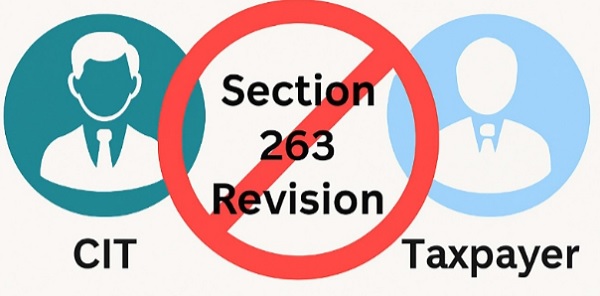
3.2 Detailed Reasoning: JMS Mining Pvt Ltd v. PCIT [2021] 130 taxmann.com 118
- Forum: ITAT Kolkata
- ITA No.: 146/Kol/2021
- Order Date: July 22, 2021
- AY: 2016–17
Tribunal’s Line of Reasoning:
The PCIT revised the assessment under Section 263, stating that the AO had erroneously allowed deduction under Section 80G for CSR donations. The PCIT argued that CSR being mandatory under the Companies Act cannot be considered voluntary under the Income Tax Act.
The assessee countered that:
- The donation was made to an institution registered under Section 80G.
- The AO had examined the claim and taken a plausible view.
- No express bar exists in Section 80G against CSR donations.
The Tribunal held:
- The AO’s view was legally tenable and supported by judicial precedents.
- The revision under Section 263 requires the AO’s order to be “erroneous and prejudicial to the interests of the revenue.”
- If the AO has taken a plausible view after inquiry, revision is not justified.
The Tribunal cited Malabar Industrial Co. Ltd v. CIT [(2000) 243 ITR 83 (SC)] to reinforce that mere disagreement with the AO’s view does not warrant revision.
3.3 Detailed Reasoning: American Express (India) Pvt Ltd v. PCIT [2024] 231 TTJ 476 (Del) (Trib.)
- Forum: ITAT Delhi
- ITA No.: 2468/Del/2023
- Order Date: August 30, 2024
- AY: 2016–17
Tribunal’s Line of Reasoning:
The AO had allowed deduction under Section 80G for CSR donations. The PCIT initiated revision under Section 263, arguing that CSR is not voluntary and hence not deductible.
The assessee argued:
- Donations were made to 80G-approved institutions.
- The AO had verified the claim and recorded satisfaction.
- The view was supported by multiple ITAT decisions.
The Tribunal held:
- The AO’s order was not erroneous.
- The PCIT failed to demonstrate how the AO’s view was unsustainable in law.
- The Tribunal cited CIT v. Max India Ltd [(2007) 295 ITR 282 (SC)] to affirm that where two views are possible, the AO’s view cannot be revised.
3.3 Detailed Reasoning: Axis Securities Ltd. v. PCIT [2025] 175 taxmann.com 982 (Mumbai – Trib.)
- Issue: Revision under Section 263 where AO had allowed 80G deduction for CSR donation in scrutiny assessment.
- Held: Revision quashed. The Tribunal held that the AO had made inquiries, and the view taken was plausible. CIT’s revision was based on mere disagreement, not on any error.
- Relevance: Directly supports your doctrinal position on Section 263 — that revision is impermissible where the AO has applied his mind, even if briefly.
For non-scrutiny assessments
It is quite possible that a case is not taken up for scrutiny and the assessment is completed under section 143(1), resulting in issuance of an “Intimation” to the assessee, allowing the deduction u/s 80G claimed by the taxpayer. The following as mpects may be noted in this context:
(i) Statutory Compliance Is Mandatory at Filing Stage
To claim deduction under Section 80G, the taxpayer must mandatorily furnish the following in the return of income:
- Name and PAN of the donee institution
- Amount donated
- Mode of payment (no cash beyond ₹2,000)
- 80G certificate or approval number (if required)
These disclosures are systematically required in the ITR utility itself. Without them:
- The deduction cannot be claimed, and
- The system will not compute the deduction under Chapter VI-A.
(ii) Implication for Section 263 in Non-Scrutiny Cases
In a summary assessment (143(1)), where:
- The taxpayer has claimed deduction under Section 80G, and
- The ROI contains all statutorily required disclosures,
then:
- The claim is facially valid,
- There is no concealment or misstatement, and
- The CIT cannot allege “erroneous” allowance unless the donation is patently inadmissible (e.g., to a non-approved institution).
(iii) Doctrinal Consequence:
Where the law mandates full disclosure as a precondition to claim, and the taxpayer complies, the absence of scrutiny cannot be used to invoke revision under Section 263.
This is why most ITAT benches have quashed such revisions, holding that:
- The system-driven allowance based on full disclosure is not “erroneous”,
- And no prejudice to Revenue arises unless the claim is demonstrably false or illegal. There are several decisions in favour of the taxpayer in this regard.
(iv) Supporting Jurisprudence (to support the principle involved)
a. PCIT v. Devendra Construction Co. [(2022) 139 taxmann.com 123 (Ahmedabad – Trib.)]
b. ITO v. Vikram Singh [(2023) 101 ITR (Trib) 1 (Del)]
c. Dalal & Broacha Stock Broking Pvt Ltd v. PCIT [2025] 176 taxmann.com 566 (Mumbai – Trib.)
4. Weighted Deduction Under Section 35 for CSR contributions
4.1Legal Position
CSR expenditure is disallowed under Section 37(1), but not under Section 35, which allows weighted deductions for scientific research, skill development, etc., if incurred through approved institutions.
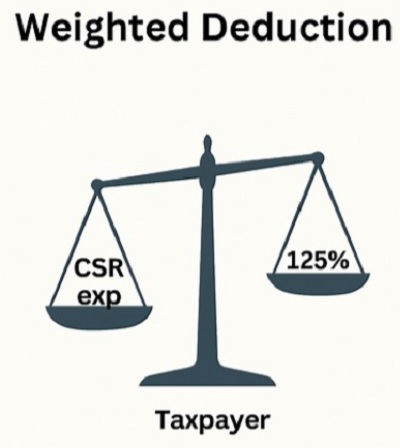
4.2 Detailed Reasoning: Mahyco Monsanto Biotech (India) Pvt Ltd v. DCIT [2024] 174 ITD 1 / 234 TTJ 321 (Mum) (Trib.)
- Forum: ITAT Mumbai
- ITA No.: 4287/Mum/2016
- Order Date: December 4, 2024
- AY: 2017–18
Tribunal’s Line of Reasoning:
The AO disallowed CSR expenditure under Section 37(1), citing Explanation 2 inserted by Finance Act, 2014. The assessee argued that the expenditure qualified under Section 35(2AB) as it was incurred for scientific research through DSIR-approved facilities.
The Tribunal held:
- Explanation 2 to Section 37(1) bars CSR as business expenditure, but does not affect deductions under other sections.
- Section 35(2AB) allows weighted deduction for approved research activities.
- The AO had not examined the nature of expenditure under Section 35.
- The matter was remitted to the AO for fresh examination under Section 35.
The Tribunal relied on Rajapalayam Mills Ltd v. CIT [2019] 109 taxmann.com 271 (Madras HC), which held that scientific research expenditure is eligible under Section 35(2AB) even if incurred outside the main facility, provided DSIR approval exists.
4.3 Detailed Reasoning: ACIT v. Aurobindo Pharma Ltd 2024) 231 TTJ 81 (Hyd) (Trib.)
- Forum: ITAT Hyderabad
- ITA Nos.: 320/Hyd/2023 & 351/Hyd/2023
- Order Date: July 23, 2024
- AY: 2016–17
Tribunal’s Line of Reasoning:
The AO disallowed weighted deduction under Section 35(2AB), arguing that clinical trials were conducted outside the approved R&D facility.
The assessee argued:
- DSIR had approved the research program.
- Clinical trials were part of the approved research.
- The location of expenditure does not invalidate the deduction.
The Tribunal held:
- The deduction under Section 35(2AB) is available if DSIR approval exists.
- The location of expenditure is not a disqualifying factor.
- The AO’s interpretation was overly restrictive.
The Tribunal cited CIT v. Dr. Reddy’s Laboratories Ltd [(2017) 397 ITR 576 (Telangana HC)], which held that clinical trials outside the facility are eligible if part of approved research.
4.4 Detailed Reasoning: Axis Securities Ltd. v. PCIT [2025] 175 taxmann.com 982 (Mumbai – Trib.)
- Issue: Revision under Section 263 where AO had allowed 80G deduction for CSR donation in scrutiny assessment.
- Summary of Holding
- The Tribunal quashed the revision order under Section 263.
- It held that the AO had conducted inquiries during scrutiny and taken a plausible view in allowing the deduction under Section 80G for CSR donation.
- The CIT’s revision was based on mere disagreement, not on any demonstrable error or prejudice to Revenue.
This case strongly supports your doctrinal position that revision under Section 263 is impermissible where the AO has applied his mind, even if briefly.
- Relevance: Directly supports your doctrinal position on Section 263 — that revision is impermissible where the AO has applied his mind, even if briefly.
5. CBDT Circular No. 01/2015
Summary
- Circular No.: 01/2015
- Date: January 21, 2015
- Key Clarification:
-
- CSR expenditure is not deductible under Section 37(1).
- However, it may qualify under Sections 30 to 36, including 80G and 35, if conditions are met.
- Donations to PMNRF, CMRF, or other approved funds may be eligible under 80G.
- Clarifies that CSR expenditure is not allowable under Section 37(1)
- However, such expenditure may be claimed under Sections 30 to 36, including 35, if it satisfies the prescribed conditions
- Specifically mentions that contributions to research institutions approved under Section 35(1)(ii) are not barred from deduction
6. Compliance Strategy
Summary Table: Deduction Eligibility for CSR Expenditure
| Nature of CSR Expenditure | Deduction Allowed? | Relevant Section | Conditions |
|---|---|---|---|
| Donation to 80G-approved trust | Yes | Section 80G | Must be voluntary and not quid pro quo |
| CSR as business expenditure | No | Section 37(1) | Explicitly disallowed by Explanation 2 |
| CSR aligned with scientific research | Yes | Section 35(2AB) [illustrative only] | DSIR approval or the appropriate authority is required |
| CSR donation revised by PCIT
(i) For scrutiny assessments |
No (if AO’s view is plausible or where the AO has applied his mind) | Section 263 | AO must verify and record reasoning in case of scrutiny assessment. |
| (ii) for non-scrutiny cases | No | Sections 143(1) and 263 | “Intimation”, which is treated as “order”, is not erroneous. |
7. Final Notes for Stakeholders
- Ensure CSR donations are routed through institutions with valid 80G approval.
- Maintain documentation: donation receipts, board resolutions, and audit trail.
- Avoid claiming CSR under Section 37(1); instead, explore eligibility under Section 80G or 35.
- AO’s assessment must reflect proper inquiry to withstand revision under Section 263.
- Refer to CBDT Circular No. 01/2015 for interpretative clarity and planning.
8. Case Study: RR Agrotech Ltd — Leveraging CSR for Scientific Research and Tax Efficiency
8.1 Company Profile
- Name: RR Agrotech Ltd
- Sector: Agrochemical manufacturing
- Turnover: ₹1,200 crore
- Net Profit (3-year average): ₹85 crore
- CSR Obligation: ₹1.7 crore (2% of average net profit)
- R&D Facility: In-house DSIR-approved lab in Pune
- CSR Focus Area: Sustainable agriculture and rural innovation
8.2 CSR Expenditure Under Companies Act, 2013
Eligible CSR Activity
RR Agrotech decides to fund a rural soil health improvement program in Maharashtra. The program includes:
- Developing low-cost soil testing kits
- Training farmers on nutrient management
- Conducting field trials on bio-fertilizers
- Collaborating with agricultural universities for knowledge dissemination
These activities fall under Schedule VII of the Companies Act, 2013, specifically:
- Clause (iv): “Ensuring environmental sustainability, ecological balance, protection of flora and fauna, agroforestry, conservation of natural resources…”
- Clause (ii): “Promoting education, including special education and employment enhancing vocation skills…”
The company enters into an MoU with a Section 8 company (non-profit) that is registered under Section 12AB and 80G of the Income Tax Act and also recognized by the Department of Scientific and Industrial Research (DSIR) under Section 35(1)(ii).
8.3 Weighted Deduction Under Section 35 of the Income Tax Act
Legal Framework
Section 35(1)(ii) allows weighted deduction of 150% (as of AY 2020–21; subject to changes) for contributions made to approved scientific research institutions.
Application to RR Agrotech
The ₹1.7 crore CSR contribution is made to the DSIR-approved institution for conducting applied agricultural research. The institution provides:
- A valid DSIR approval under Rule 5C and 5E of the Income Tax Rules
- A certificate in Form 3CF confirming the use of funds for approved research
- A receipt under Section 80G for the donation
CSR Expenditure and Scientific Research: Section 35 Eligibility Beyond Section 37(1)
(i) Mahyco Monsanto Biotech (India) Pvt Ltd v. DCIT (supra)
Held: CSR expenditure disallowed under Section 37(1) may still be eligible under Section 35 if incurred for scientific research through DSIR-approved institutions. The Tribunal remitted the matter to AO for verification under Section 35.
- Rajapalayam Mills Ltd v. CIT [2019] 109 taxmann.com 271 (Mad)
- Forum: Madras High Court
- Held: Scientific research expenditure is eligible under Section 35(2AB) even if incurred outside the main R&D facility, provided DSIR approval exists.
(iii) ACIT v. Aurobindo Pharma Ltd (supra )
- Held: Clinical trials and outsourced research activities are eligible for deduction under Section 35(2AB) if part of DSIR-approved programs. CBDT Circular Support
8.4 CBDT Circular No. 01/2015 (dated January 21, 2015)
- Clarifies that CSR expenditure is not allowable under Section 37(1)
- However, such expenditure may be claimed under Sections 30 to 36, including 35, if it satisfies the prescribed conditions
- Specifically mentions that contributions to research institutions approved under Section 35(1)(ii) are not barred from deduction
8.5 Tax Planning Insight
Strategic Structuring for Dual Benefit
By aligning its CSR activities with scientific research and routing the expenditure through a DSIR-approved institution:
- RR Agrotech complies with CSR obligations under the Companies Act
- Simultaneously, it claims a 150% weighted deduction under Section 35(1)(ii)
- This results in a net tax benefit of ₹2.55 crore deduction on a ₹1.7 crore spend
- Effective tax saving (assuming 25.17% MAT): ₹64.1 lakh
Key Planning Considerations
- Ensure the recipient institution has valid DSIR approval and 80G registration
- Obtain Form 3CF and donation receipts
- Maintain board resolutions and CSR committee minutes
- Avoid claiming under Section 37(1); route through Section 35 or 80G
- Disclose the deduction clearly in tax audit report and computation
8.6 Note to tax professionals
This case study demonstrates how a manufacturing company can strategically align CSR with scientific research to achieve both regulatory compliance and tax efficiency. With proper documentation and alignment with DSIR-approved programs, CSR spending can be transformed from a cost center into a value-adding, deductible investment — fully supported by judicial precedent and CBDT guidance.
9. Bird’s eye view of Reported ITAT and High Court Citations for CSR-Related Decisions
No |
Case Name |
Forum ITAT |
ITA No. |
Order Date |
AY |
Citation(s) |
|---|---|---|---|---|---|---|
1 |
Inter Globe Technology Quotient Pvt Ltd v. ACIT |
Delhi |
95/Del/2024 |
28 May, 2024 |
2020-21 |
(2024) 207 ITD 360 |
2 |
Delhi Duty Free Services Pvt Ltd v. DCIT |
Delhi |
67 & 68/Del/2025 |
12-Sep-2025 |
2017–18 & 2018–19 |
Not yet reported |
3 |
Max New York Life Insurance Co. Ltd v. DCIT |
Delhi |
460/Del/2012 |
18-Mar-2015 |
2008–09 |
(2015) 171 TTJ 897 / 191 DTR 209 |
4 |
JMS Mining Pvt Ltd v. PCIT |
Kolkata |
146/Kol/2021 |
22-Jul-2021 |
2016–17 |
[2021] 130 taxmann.com 118 (Kolkata – Trib.) |
5. |
Advik Hi-Tech (P.) Ltd. v.DcIT |
Pune |
1377/PUN/2024 |
9 Oct 2024 |
2021-22 |
[2024] 168 taxmann.com 587 (Pune – Trib.) |
6 |
Dalal And Broacha Stock Broking Pvt. Ltd. Vs PCIT
|
Mumbai |
3805/Mum/2025 |
11 Mar 2025 |
2020-21 |
[2025] 176 taxmann.com 566 (Mumbai – Trib.) |
7 |
Phillips Carbon Black Ltd. v. DCIT |
Kolkata |
2458/KOL/2024 |
10 June 2025 |
2021-22 |
[2025] 175 taxmann.com 352 (Kolkata – Trib.) |
8 |
Vimal Coal (P.) Ltd. v. DCIT |
Ahmedabad |
1446/AHD/2024 |
25 April 2025 |
2021-22 |
[2025] 175 taxmann.com 694 (Ahmedabad – Trib.) |
9 |
American Express (India) Pvt Ltd v. PCIT |
Delhi |
2468/Del/2023 |
30-Aug-2024 |
2016–17 |
[2024] 231 TTJ 476 (Del) (Trib.) |
10 |
Alubond Dacs India Pvt Ltd v. DCIT |
Mumbai |
3663/Mum/2023 |
27-May-2024 |
2020–21 |
(2024) 207 ITD 393 |
11 |
Axis Securities Ltd. v. PCIT |
Mumbai |
1784/Mum/2023 |
30 July 2025 |
2019-20 |
[2025] 175 taxmann.com 982 (Mumbai – Trib.) |
12 |
ACG Pam Pharma Technologies Pvt Ltd v. PCIT |
Mumbai |
2734/Mum/2025 |
1 July, 2022 |
2021-22 |
Taxguru (July, 2025) |
13 |
WorldQuant Research (India) Pvt Ltd v. PCIT |
Mumbai |
Taxguru (Aug 2025 |
Taxguru (Aug 2025 |
2020-21 |
Taxguru (Aug 2025 |
14 |
ACIT v. Sharda Cropchem Ltd |
Mumbai |
ITA Nos. 6163 & 6164/Mum/2024) |
21 Jan 2025 |
2015-162018-19 |
Taxguru (July, 2025) |
15 |
Naik Seafoods Pvt. Ltd. v. PCIT |
Mumbai |
BCAJ, FEB 2022, page 38 |
26 Nov 2021 |
2016-17 |
TS-1157-ITAT-2021 (Mum)] |
16 |
ABM Knowledgeware Ltd v. AO |
Mumbai |
ITA No. 5893/ Mum/2024 |
12 Sep 2025 |
2021-22 |
Taxguru (Sep 2025) |
17 |
Chandan Steel Ltd v. PCIT |
Mumbai |
ITA No. 5892/ Mum/2024 |
12 Sep 2025 |
2020-21 |
Taxguru (Sep 2025) |
18 |
Mahyco Monsanto Biotech (India) Pvt Ltd v. DCIT |
Mumbai |
4287/Mum/2016 |
04-Dec-2024 |
2017–18 |
[2024] 174 ITD 1 |
19 |
ACIT v. Aurobindo Pharma Ltd |
Hyderabad |
320 & 351/Hyd/2023 |
23-Jul-2024 |
2016–17 |
(2024) 231 TTJ 81 (UO) (Hyd) (Trib.) |
20 |
Rajapalayam Mills Ltd v. CIT |
Madras HC |
T.C. No. 2444/2008 |
23-Apr-2019 |
2010-11 |
(2019) 265 Taxman 209 (Mad.) (HC) |
21 |
ACIT v. Sikka Ports and Terminals Ltd |
Mumbai |
3047/Mum/2024 |
16-Oct-2025 |
2018–19 |
[2025] 179 taxmann.com 476 (Mumbai – Trib.) |
22 |
Hapag Lloyd India Private Limited v. PCIT |
Mumbai |
3805/Mum/2025 |
25 Sep 2025 |
2020-21 |
Taxguru (Sep 2025) |
For unreported decisions, relevant case details have been given supra.
Note: Details taken from reliable websites, public copy of order not available to the author as0n 25 Oct 2025.
10.Concluding remarks
The jurisprudence surrounding CSR donations under Section 80G has now reached a stage of doctrinal clarity, particularly in the context of revisionary powers under Section 263. Across multiple ITAT benches, the consistent quashing of revision orders—most notably in Dalal & Broacha Stock Broking Pvt Ltd v. PCIT and Sikka Ports and Terminals Ltd—reaffirms that an Assessing Officer’s view, if backed by inquiry and judicial precedent, cannot be termed “erroneous” merely because it diverges from departmental expectations. The Tribunal has repeatedly held that Explanation 2 to Section 37(1), which disallows CSR as business expenditure, does not override the permissibility of deduction under Section 80G when donations are made to approved institutions. In InterGlobe Technology Quotient Pvt Ltd v. ACIT, the Delhi Bench went a step further by recognizing that such donations may even qualify for weighted deduction, where applicable, provided the recipient institution is notified under relevant provisions. This case study involved a CSR contribution to a scientific research body, and the Tribunal upheld both the AO’s inquiry and the legal sustainability of the weighted claim. Collectively, these rulings offer not only compliance confidence but also a roadmap for corporates seeking to align statutory CSR obligations with legitimate tax planning under the Income Tax Act.