
In re Tvl. Vallalar Borewells (GST AAAR Tamilnadu)
Essentially, the moot point is whether the bore well drilling activity undertaken by the appellant on agricultural lands is qualified for the entry no. 54 of notfn. No. 12/2017-CGST(R). It is noted that the appellant while undertaking the borewell drilling activity for industries etc., (other than on agricultural lands), it is classified under SAC 995434 leviable to appropriate rate of GST. However, while undertaking the same activity on agricultural lands, the appellant seeks whether the same would fall under SAC 9986 so as to be eligible to fall within the ambit of sl.no.54 of notfn. No. 12/2017 and further buttresses his arguments with case laws and evidences to show that the activity is indeed done in agricultural lands and the practice in service tax era, etc.
Without going into the merits of the main argument of the appellant regarding the activity undertaken is by way of agricultural operations relating to production of any agricultural produce, etc., prima facie, in the scheme of things of GST, no two classifications can be adopted for a single activity based on end use or where it is rendered, etc. The appellant himself has already classified his supply of services of borewell drilling under 9954 for the purpose of paying the tax; it defies logic as well as law that the same activity if done on agricultural land will be classifiable under a different heading 9986.
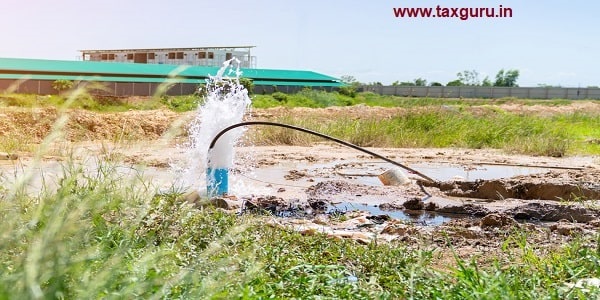
Further since the same equipment is used for the drilling activities, whether on agricultural lands or for industries, etc., it would not be possible for the tax administration to identify whether the driller is exclusively undertaking agricultural drilling only thereby leading to evasion of tax only.
The letter of the then FM quoted and relied by the appellant was also discussed by the Fitment Committee and finds mention during the 28th GST council meeting vide Annexure IV to agenda item 7. After deliberations, the council approved the proposal of Fitment Committee of not acceding to the demand of exemption for drilling of bore wells for agriculture from GST but required to study further. In the same table in Annexure IV pertaining to issues relating to services, against si.no.3 (page no.258 of Vol,I), the Fitment Committee while stating that the same issue was already raised in the service tax regime quoting the FM letter, further reasoned as “The services covered by the scope of Section 66D (d)(i) of the Finance Act, 1994 and si.no.25 (a) of the mega exemption notification 25/2012-ST are exempted in GST vide SI.No. 54, and 3 of notification 12/2017-CT(Rate). Thus, the status quo has been maintained in GST vis-a-vis Service Tax regime”. It is clear from the above that as such no exemption was intended by the Government for borewell drilling for agricultural purposes and continues to be under its examination.
We do not find any infirmity in the reasoning of the Advance Ruling Authority with regard to the impugned ruling, in the light of our additional reasoning as above. With regard to compressor also, we do not differ from the AAR’s ruling.
FULL TEXT OF THE ORDER OF AUTHORITY OF APPELLATE ADVANCE RULING, TAMILNADU
At the outset, we would like to make it clear that the provisions of both the Central Goods and Service Tax Act and the Tamil Nadu Goods and Service Tax Act are the same except for certain provisions. Therefore, unless a mention is specifically made to such dissimilar provisions, a reference to the Central Goods and Service Tax Act would also mean a reference to the same provisions under the Tamil Nadu Goods and Service Tax Act.
1. The subject appeal has been filed under Section 100(1) of the Tamilnadu Goods & Services Tax Act, 2017/Central Goods & Services Tax Act 2017 by Tvl. Vallalar Borewells (hereinafter referred to as ‘Appellant’). The appellant is registered under GST vide GSTIN 33ABAFM0641E1ZY. The appeal is filed against the Order No. 40/ARA/2020 dated 18.12.2020 passed by the TamilNadu State Authority for Advance ruling on the application for advance ruling filed by the appellant.
2. The Appellant has stated that they are engaged in the activity of drilling borewell service to agriculturist. Water is a prime source for the agriculture of crops. Likewise, compressors which are let out by them to agriculturists enable the motor to function and discharge water as required for cultivation and allied agricultural uses. They also obtain a confirmation letter from the agriculturist that the borewell drilled in their land is used only for the agricultural purpose.
3. The Appellant has sought Advance Ruling on the following questions:
(i) Whether the following supply of service provided by the appellant are in relation to agricultural operations directly in connection with raising of agricultural produce:
a. Drilling of Borewells for supply of water for agricultural operations like cultivation including seeding, planting and ploughing.
b. Letting out compressors for pumping of water from the borewells to the agricultural fields.
(ii) If the answer to the above question is affirmative, whether the said service are covered by the entry SI.No.54 of Notification 12/2017 CT (Rate) dated 28.06.2017
4. The AAR pronounced the following rulings:
(i) Drilling of Borewells for supply of water in agricultural land is not ‘Support Service for agriculture classifiable under ‘SAC 9986’ for the reasons stated in para 8.3
(ii) Letting out of compressors for pumping of water from the borewells to the agricultural field is not ‘Support Service for agriculture classifiable under ‘SAC 9986’for the reasons stated in para 8.4
(iii) The above two activities of the applicant are not ‘Support service for agriculture’ classifiable under SAC 9986 and therefore the exemption at SI.No.54 of Notification No. 12/2017-C.T (Rate) is not applicable to the above activities of the applicant.
5. Aggrieved by the above decision, the Appellant has filed the present appeal. The grounds of appeal are as follows:
1. On perusal of the impugned notification SI.No.54 refers to Services relating to cultivation of plants and rearing of all life forms of animals, except the rearing of horses, for food, fibre, fuel, raw material or other similar products or agricultural produce by way of- (a) agricultural operations directly related to the production of any agricultural produce including cultivation, harvesting, threshing, plant protection or testing. The list is not exhaustive but is inclusive in nature and similar activities as depicted in the impugned notification would also fall within the ambit of SI.No.54 of the said notification. The relevant portion of the said Notification is reproduced hereunder:







Comments are closed.