Summary: The Supreme Court’s decision in Goodluck India Limited & Anr. v. Union of India & Ors has settled the controversy concerning the effect of omission of Rule 96(10) of the CGST Rules, 2017 on pending proceedings. Rule 96(10), which restricted the IGST-paid export refund route for specified exporters availing concessional or exemption-based procurement benefits, was omitted through Notification No. 20/2024-Central Tax with effect from 8 October 2024. The Department maintained that the omission was prospective and that proceedings relating to the earlier period survived. The Supreme Court, relying on the Constitution Bench ruling in Kolhapur Canesugar Works Ltd. v. Union of India, held that omission without a saving clause applies to pending proceedings. The Court also held that the GST Council’s recommendation for prospective omission was advisory and did not bind the rule-making authority where the notification itself contained no such saving. The ruling therefore provides relief in pending refund rejections, show-cause notices, demands and appeals founded on the erstwhile Rule 96(10). The article also examines the possible refund implications for exporters who have already paid amounts under the omitted provision, subject to the qualification concerning transactions that have become “past and closed.” The decision effectively brings quietus to substantial legacy litigation concerning Rule 96(10).
Rule 96(10) – Quietus for Pending Proceedings, a Refund Window for the Rest?
When Rule 96(10) of the CGST Rules, 2017 was finally omitted in October 2024, exporters exhaled — but only briefly. The Department took the position that the omission was prospective, leaving thousands of legacy demands, refund rejections and recovery notices alive for the pre-omission period. On 6th August 2026, in Goodluck India Limited & Anr. v. Union of India & Ors.[1], the Hon’ble Supreme Court brought that debate to a close: the omission of Rule 96(10) applies to all pending proceedings, and legacy disputes built on the erstwhile rule must fall.
The rule that caused all the trouble
Section 16 of the IGST Act gives an exporter two routes to relief:
- Export under LUT/bond and claim refund of unutilised ITC (the Rule 89 route); or
- Export on payment of IGST and claim refund of the tax paid (the Rule 96 route).
The second route is faster and, for many, more valuable. Rule 96(10) was an attempt to close that route to a large class of exporters — broadly, those who had procured inputs under concessional or exemption-based schemes, such as:
- EOUs importing without payment of BCD and IGST (Notification No. 78/2017-Cus);
- Advance Authorisation holders importing without BCD and IGST (Notification No. 79/2017-Cus);
- Deemed export procurements (Notification No. 48/2017-CT); and
- Merchant exporters buying at the concessional 0.1% rate (Notifications No. 40/2017-CT(R) and 41/2017-IGST(R)).
In practice, the sub-rule generated exactly the kind of litigation it was designed to prevent — mismatches, recovery demands with interest, and a running dispute over whether foregoing only BCD (while paying IGST) took an exporter outside the bar. The controversy is one that has dogged exporters for years.
The ‘omission’ — and the “prospective” flashpoint
Acting on the recommendation of the 54th GST Council meeting, the Government omitted Rule 96(10) through Notification No. 20/2024-CT with effect from 08.10.2024. While making that recommendation, it was recorded that the rule was leading to unnecessary complications without any intended benefit, and omission was recommended “with prospective effect.”
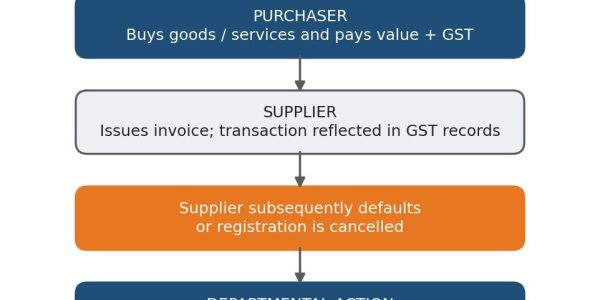
That single phrase — prospective — became the battleground. The Department argued that pre-08th October 2024 demands survived; taxpayers argued that an omission without a saving clause wipes the provision off the statute book for all pending matters.
The High Court decisions
Initially, the Gujarat High Court upheld Rule 96(10) in Cosmo Films Ltd. v. Union of India[2]. Soon after, the Kerala High Court, in Sance Laboratories (P.) Ltd. v. Union of India[3], struck the rule down as ultra vires Section 16 of the IGST Act and manifestly arbitrary, and quashed the demands founded on it; the Calcutta High Court, in Techno Waxchem (P.) Ltd. v. Union of India[4], took the same view for the pre-omission period. The Uttarakhand High Court in Sri Sai Vishwas Polymers v. Union of India[5] set aside the demands following the Kerala HC declaration and the omission.
After the omission with effect from 8 October 2024, a line of High Courts held that the omission operates on all pending proceedings and set aside the Department’s demands — the Gujarat High Court in Addwrap Packaging (P.) Ltd. v. Union of India[6], the Bombay High Court in Hikal Ltd. v. Union of India[7], and the Andhra Pradesh High Court in B.V.L Granites v. Additional Commissioner of Central Taxes[8].
These decisions, and the conflicting positions taken across the High Courts, were carried to the Hon’ble Supreme Court.
What the Supreme Court held
The Hon’ble Supreme Court in Goodluck India Limited & Anr. v. Union of India & Ors. held:
- Omission without a saving clause obliterates the rule. Following the Constitution Bench in Kolhapur Canesugar Works Ltd. v. Union of India[9], the Court reiterated the settled common-law principle that deleting a provision erases it from the statute book as completely as if it had never existed. Section 6 of the General Clauses Act — which preserves pending action on repeal — applies to a Central Act or Regulation, not to the omission of a Rule (para 36 of Kolhapur Canesugar). Absent a saving clause or a deeming fiction, proceedings under an omitted rule cannot continue.
- No saving clause, no sunset clause. As the learned ASG fairly conceded, the legislature enacted neither a saving clause nor a sunset clause when it omitted Rule 96(10). On the Kolhapur Canesugar principle, that is decisive.
- A Council recommendation is advisory, not binding. The recommendation that the omission be “prospective” is exactly that — advisory. It does not bind the rule-making authority, and the notification itself carried no such limitation. The Court pointedly observed that if the rule was omitted to end unnecessary complications once and for all, the legislative intent could not have been to keep those very complications alive for pending matters.
- The vires challenge falls away. Since the assessees had already secured the practical relief they sought, their SLPs were dismissed as infructuous. The vires of Rule 96(10) therefore remains judicially untested at the apex level.
What this means for exporters:
The practical fallout is substantial and immediate:
| Situation | Effect of the ruling |
|---|---|
| Refund claims under Rule 96 rejected or withheld solely on Rule 96(10), still pending | The bar no longer survives in pending proceedings; the refund falls to be considered without the Rule 96(10) restriction. |
| SCNs / OIOs / demands with interest raised under Rule 96(10) for the pre-omission period, under challenge or appeal | The foundation of the demand is gone; such proceedings should be closed or set aside. |
| Appeals pending before appellate authorities, the Tribunal or the High Courts | Squarely covered; expect listing and disposal in line with this order. |
Refund of tax already paid
The omission also opens a window for exporters who had already paid under Rule 96(10). The rule that formed the very basis of those payments now stands removed, and on the principle applied in Goodluck India it is to be treated as if it never existed; the ground for retaining the tax so collected falls away, and such taxpayers may claim refund of the amounts paid. A clarification from the Government affirming that the omission operates with retrospective effect would ease further disputes on this count and spare both sides another round of litigation. The one qualification is the Bombay High Court’s ruling in Hikal Ltd. that the omission does not revive “transactions past and closed” — a caveat that bites only where a matter has attained finality with no remedy surviving. However, in the author’s view, once the very foundation for making a demand or retaining tax is held to have been omitted with retrospective effect, the Government cannot withhold the tax collected under such omitted law. It is a well-recognised constitutional principle that not only the levy but also the collection of tax requires the authority of law; and where that authority is held to have never existed, the tax collected under such a rule must be refunded.
Concluding remarks
With this decision, the Hon’ble Supreme Court has effectively brought quietus to the protracted litigation surrounding Rule 96(10). The net effect is finality. The omission of Rule 96(10), unaccompanied by any saving or sunset clause, operates on all pending proceedings; and demands, refund rejections and recovery actions founded on the erstwhile rule can no longer be sustained. For exporters, a restriction that spawned years of avoidable disputes now stands buried; for the Department, the direction is to bring the remaining proceedings to a close rather than prolong them.
[1] Goodluck India Limited & Anr. v. Union of India & Ors., 2026 INSC 821
[2] Cosmo Films Ltd. v. Union of India, 2020 (43) G.S.T.L. 577 (Guj.).
[3] Sance Laboratories (P.) Ltd. v. Union of India, (2024) 23 Centax 435 (Ker.).
[4] Techno Waxchem (P.) Ltd. v. Union of India, (2026) 42 Centax 433 (Cal.).
[5] Sri Sai Vishwas Polymers v. Union of India, (2026) 42 Centax 241 (Uttarakhand).
[6] Addwrap Packaging (P.) Ltd. v. Union of India, (2025) 31 Centax 274 (Guj.).
[7] Hikal Ltd. v. Union of India, (2025) 34 Centax 249 (Bom.).
[8] B.V.L Granites v. Additional Commissioner of Central Taxes, (2026) 39 Centax 157 (A.P.).
[9] Kolhapur Canesugar Works Ltd. v. Union of India, (2000) 2 SCC 536.
*****
(For any feedback / queries, mail to [email protected])