The Companies Act is a legislation that governs the formation, functioning, and management of companies. Explore the key provisions, compliance requirements, and legal framework under the Companies Act.
Company Law : The Companies Act, 2013 and related rules now require most public and private companies to issue and transfer securities only in d...
Company Law : The Companies Law Amendment Bill, 2026 proposes major reforms in corporate governance, compliance, and digital regulation. This ar...
Company Law : This guide explains the complete legal procedure for shifting a company’s registered office within the same state but under a di...
Company Law : Section 56 of Companies Act, 2013 requires execution of a proper instrument of transfer for transfer of interest of a member in a ...
Corporate Law : The article explains how digital adjudication systems, virtual hearings, and online compliance platforms are reshaping India’s c...
Company Law : Provisional list of audit firms of listed companies yet to file NFRA-2 for 2023-24. Filing deadline was 30.11.2025; fines apply fo...
Company Law : ICSI recommended restoring public access to basic company master data without mandatory login requirements. The representation sta...
Company Law : NFRA introduced guidelines to evaluate audit firms’ compliance and quality control systems. The framework emphasizes governance,...
Company Law : ICSI highlights delays in marking defective forms by RoCs under CCFS 2026. It urges MCA to mandate time-bound processing or allow ...
Company Law : The issue is ambiguity in filing authority during liquidation. ICSI has requested clarity to enable liquidators to maintain statut...
Company Law : The Madras High Court permitted Nidhi companies to submit fresh replies against NDH-4 rejection orders and directed authorities to...
Company Law : Legal Analysis and Narrative Brief: Dale and Carrington Investment Pvt. Ltd. and Another v. P.K. Prathapan and Others (Supreme Cou...
Company Law : The case examined whether Tribunal approval was required for extending preference share redemption. It was held that such extensio...
Company Law : The Tribunal held that allegations of siphoning ₹30 lakh were not supported by any evidence tracing funds to the respondent. Mer...
Company Law : The Court held that a separate meeting of sub-class shareholders is not required when identical terms are offered to the entire cl...
Company Law : ROC Pune held that procedural lapses in a private placement involving one investor formed part of a single integrated transaction ...
Company Law : ROC Pune penalized a start-up company and its officers for delayed filing of e-Form MGT-14 relating to a Special Resolution under ...
Company Law : ROC Pune penalized a company and its directors for delayed filing of e-Form PAS-3 relating to private placement allotment under Se...
Company Law : ROC Pune penalized a company and its directors for utilizing private placement funds before filing return of allotment under Secti...
Company Law : ROC Mumbai-II imposed penalty under Section 450 after a company incorrectly mentioned the AGM date in Form AOC-4 XBRL. The order h...
Understand the new format of CARO 2020 and its requirements for corporates and non-corporates. Get insights on audit procedures and reporting.
Discover how to leverage the China Plus One strategy with the incorporation of a wholly owned subsidiary in India. Explore the ease of doing business and the simplified process.
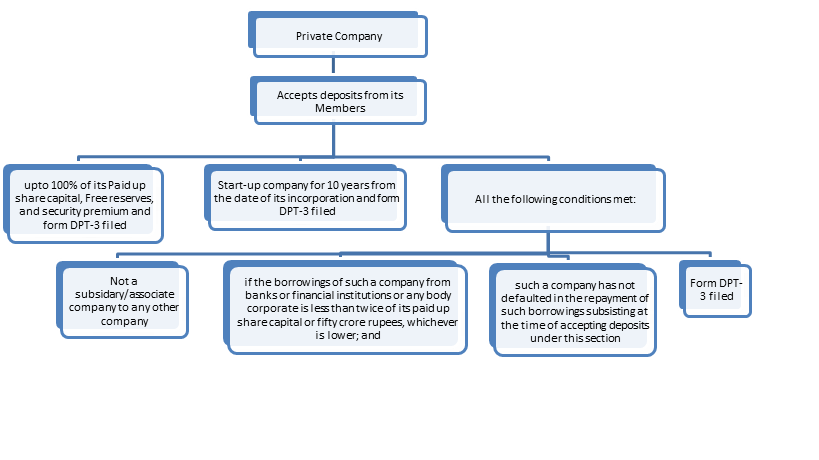
Learn about the new requirements for filling DPT-3 forms for deposits by corporates in India and ensure compliance with the latest rules.
The concept of conversion of Compulsory Convertible Preference Shares (CCPS) into Equity Shares is not governed by any section of the Companies Act, 2013 but if combined the certain Provisions of Companies Act, 2013, one can easily opine the conversion. By complying the provisions of Sections below mentioned conversion of Preference shares into Equity shares can be easily done.
LLP means a business where minimum two partners are required and there is no limit on the maximum number of partners. The liabilities of the partners are limited up to the extent of Capital contribution done by each partner in LLP.
Understanding compliance for NGOs in India. Learn about the legal framework and regulations that govern these non-profit organizations.
Discover the benefits of forming section 8 companies under the Companies Act, 2013. Explore how these companies promote charitable objects and limit dividend payments to members.
Get clarity on the word not defined under Companies Act, 2013. Learn how to interpret provisions and discover the relevant statute to define such words.
Interim Dividend means the Dividend declared by the Board of Directors & there is no need of Member’s approval. The declaration of an interim dividend need not be only once a year, it may be at any time the directors choose & they may be several declarations in the course of 1 year
Uncover the key balance sheet ratios under Companies Act, 2013. Learn about the current ratio and its significance in assessing short-term obligations.