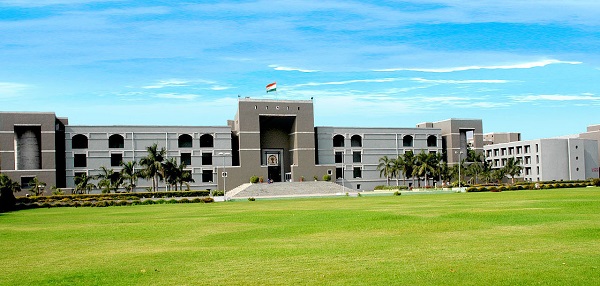
PCIT Vs Sabarkantha District Co. Op. Milk Producers Union Ltd. (Gujarat High Court)
Summary: The Gujarat High Court dismissed the Revenue’s Tax Appeals arising from the common order dated 19.02.2025 passed by the Income Tax Appellate Tribunal, Ahmedabad, concerning Assessment Years 2016-17 and 2018-19. The appeals raised questions concerning deduction under Section 80P(2)(d) of the Income-tax Act, 1961, additional depreciation under Section 32(1)(iia), and the eligibility of milk cans and equipment used for artificial insemination and laboratory testing for additional depreciation.
The assessee, a Cooperative Society engaged in procurement of milk and related activities, had filed its return for A.Y. 2016-17 on 30.11.2016 declaring total income of Rs.11,05,58,640/-. During scrutiny, the Assessing Officer proposed disallowance of the interest and dividend income claimed as deductible under Section 80P(2)(d). The Assessing Officer also disallowed additional depreciation of Rs.8,31,15,592/- relating to additions in new machinery in the preceding year and additional depreciation of Rs.1,07,64,866/- claimed on Milk Cans and equipment. The CIT(A), relying upon the assessee’s own case for A.Y. 2012-13, allowed the assessee’s appeals. The Tribunal subsequently dismissed the Revenue’s appeal.
On the Section 80P(2)(d) issue, the Revenue’s Senior Standing Counsel submitted that the issue was no longer res integra and was covered by the Gujarat High Court’s earlier decision in the assessee’s own case in Tax Appeal No. 473 of 2014. In that decision, the Court had upheld the deduction under Section 80P(2)(d) on interest earned from investments with Cooperative Banks and Societies, observing that the statutory requirement was satisfied where the income was received from investments in Cooperative Societies and Cooperative Banks. The Court therefore held that the issue raised in Question A stood settled against the Revenue.

The Court also considered the additional depreciation issue relating to milk cans and equipment. It referred to its judgment and order dated 10.12.2018 in Tax Appeal No. 1312 of 2018, where the Assessing Officer had treated milk cans as plants for the purpose of allowing normal depreciation at 15%. The Tribunal in that case had held that, having treated the milk cans as plants, additional depreciation could not be disallowed if the other statutory conditions were satisfied. The High Court accordingly answered Question C in favour of the assessee and against the Revenue.
In relation to Question B, the Court considered Section 32(1)(iia) and the amendment introduced by the Finance Act, 2015 with effect from 01.04.2016. The provision permitted additional depreciation at 20% of the actual cost in respect of new plant and machinery acquired and installed after 31.03.2005 by an assessee engaged in the manufacture of articles or things. The third proviso to Section 32(1)(ii), effective from 01.04.2016, provided that where an asset acquired during the previous year was put to use for less than 180 days, the remaining 10% of additional depreciation would be allowed in the immediately succeeding previous year. The Court held that, since the matter concerned A.Y. 2016-17, there could be no debate regarding the availability of the balance additional depreciation under the provision applicable to that assessment year. A TaxGuru explanation of the Finance Act, 2015 similarly records the amendment allowing the balance additional depreciation in the immediately succeeding previous year. Finance Act, 2015 introduced this change with effect from 01.04.2016.
Accordingly, the Gujarat High Court answered Questions A, B and C in favour of the assessee and against the Revenue. The Tax Appeals were dismissed with no order as to costs.
Cases Discussed
- Tax Appeal No. 473 of 2014 — The Gujarat High Court relied upon its earlier decision in the assessee’s own case, holding that the Section 80P(2)(d) issue was settled and answering the question against the Revenue.
- Banaskantha District Cooperative Milk Producers Union, ITA No. 3599/AHD/2009 for A.Y. 2005-06 — Referred to in the assessee’s earlier case as the Tribunal decision on identical facts concerning the deduction issue.
- Tax Appeal No. 1813 of 2010 — The Gujarat High Court noted in the earlier case that the Tribunal’s decision in Banaskantha District Cooperative Milk Producers Union had been confirmed by the Division Bench.
- Tax Appeal No. 1312 of 2018 — The Gujarat High Court relied upon its judgment dated 10.12.2018 concerning additional depreciation on milk cans and the treatment of such cans as plant.
FULL TEXT OF THE JUDGMENT/ORDER OF GUJARAT HIGH COURT
1. Heard learned Senior Standing Counsel Mr. Karan Sanghani for the appellant-revenue and learned advocate Mr. Manish Shah for the respondent-assessee.
2. By these appeals under Section 260A of the Income Tax Act, 1961 (for short ‘the Act’), the appellant-revenue has proposed the following questions of law arising out of common order dated 19.02.2025 passed by the Income Tax Appellate Tribunal, ‘A’ Bench, Ahmedabad (for short ‘the Tribunal’) in ITA No. 1648/Ahd/2024 for A.Y. 2018-19 and ITA No. 1588/Ahd/2024 for A.Y. 2016-17:
“[A] “Whether, given the facts and circumstances of the case and in accordance with the law, the Appellate Tribunal is justified in allowing deduction under section 80P(2)(d) of the Income-tax Act, 1961, without appreciating that the assessee failed to furnish necessary documentary evidences to prove that the investments were made out of own funds and not out of borrowed funds?”
[B] “Whether, given the facts and circumstances of the case and in accordance with the law, the Appellate Tribunal is justified in allowing additional depreciation under section 32(1)(ii) of the Act in respect of machinery installed in the preceding year, without appreciating that retrospective amendment introduced by the third proviso to section 32(1)(ii) of the Act by the Finance Act, 2015 being inapplicable to the year under consideration?”
[C] Whether given the facts and circumstances of the case and in accordance with the law, the Appellate Tribunal is justified in allowing additional depreciation under Section 32 of the Act on CANs and Equipment used for artificial insemination and laboratory testing, without appreciating that the same do not qualify the definition of “plant and machinery” used in the manufacturing or production process as required under the Act?”
3. As both these Tax Appeals have common question of fact and law, the facts of Tax Appeal No. 695 of 2025 are taken as a lead matter.
4. Brief facts of the case are that the assessee is a Cooperative Society engaged in the business of procurement of milk and related activities and filed its e-return of income for A.Y. 2016-17 on 30.11.2016 declaring total income of Rs.11,05,58,640/-. The case of the assessee was selected for complete scrutiny under CASS and, therefore, notice under Section 143(2) of the Act was issued on 17.7.2016. During the course of assessment, the Assessing Officer observed that interest and dividend income on which deduction under Section 80P(2)(d) of the Act was claimed, was required to be disallowed. It was further observed that additional depreciation claimed for addition in new machinery in preceding year to the tune of Rs.8,31,15,592/- was also required to be disallowed. The Assessing Officer further disallowed the additional depreciation claim on Milk Cans and equipment amounting to Rs.1,07,64,866/-.
5. Being aggrieved by the assessment order, the assessee preferred an appeal before the Commissioner of Income Tax (Appeals) [for short ‘CIT(A)’]. The CIT(A) taking adoption from the assessee’s own case for the A.Y. 2012-13 vide order dated 03.07.2024 allowed the appeals preferred by the assessee.
6. The appellant-department being aggrieved by the order of the CIT(A), preferred an appeal before the Tribunal. The Tribunal by way of impugned order dated 19.02.2025, dismissed the appeal preferred by the department, which has resulted into filing of the present Tax Appeals.
7. At the outset, learned Senior Standing Counsel Mr. Karan Sanghani has stated that the issue with regard to question No. A is no more res integra and is categorically covered by this Court. This Hon’ble Court in assessee’s own case in Tax Appeal No. 473 of 2014, has categorically observed as under:
“3.0. Now, so far as proposed question A i.e. order passed by the learned Tribunal upholding the order of the learned CIT(A) in deleting the disallowances of Rs.1,42,19,515/ u/s. 80IB of the Act is concerned, it appears that the learned Tribunal has relied upon its earlier order in the case of Banaskantha District Cooperative Milk Producers Union rendered in ITA No.3599/AHD/2009 for AY 200506 wherein on identical facts it was held that even if no separate books were maintained or separate balance sheet were filed deduction under Section 80IB of the Act cannot be denied. It is reported that decision of the Tribunal in the case of Banaskantha District Cooperative Milk Producers Union (supra) has been confirmed by the Division Bench of this Court vide order dated 23.1.2012 passed in Tax Appeal No.1813 of 2010. In view of the above, when the decision of the learned Tribunal in the case of Banaskantha District Cooperative Milk Producers Union (supra) upon which, the learned Tribunal has relied upon, has been confirmed by this Court. We see no reason to interfere with the impugned judgment and order passed by the learned Tribunal. Under the circumstances, proposed question A is answered against the Revenue.
4.0. Now, so far as proposed question no. B i.e. whether the Appellate Tribunal has substantially erred in upholding the order of the CIT(A) in deleting the disallowances of Rs.1,42,19,515/ under Section 80(P)(2) (d) of the Act is concerned, it is required to be noted that the assessee claimed deduction under Section 80(P)(2) (d) of the Act on the interest earned on the fixed deposit with Cooperative Bank and the Societies and it has been found that as such the income was received from the investment in Cooperative Societies and Cooperative Bank. Considering Section 80(P)(2)(d) of the Act when the only requirement was that the income should be received from investment in Cooperative Societies and the Cooperative Bank which in the present case has been fulfilled, it cannot be said that the learned Tribunal has committed any error in deleting disallowance of Rs. 1,42,19,515/ under Section 80(P(2)(d) of the Act. We are in complete agreement with the view taken by the learned Tribunal. Under the circumstances, proposed question B is also answered against the revenue.
5.0. In view of the above and for the reasons stated above, present Tax Appeal fail and same deserve to be dismissed and is accordingly dismissed”.
8. In wake of settled issue of law by this Court in assessee’s own case in Tax Appeal No. 473 of 2014, the appeals qua Question No.1 stand dismissed.
9. Learned Senior Standing Counsel Mr. Sanghani further submitted that as far as the issue with regard to Question-C is concerned, this issue is also concluded by way of judgment and order dated 10.12.2018 passed by this Court in Tax Appeal No. 1312 of 2018. This Court in the said order has observed in Para-3 as under:
“3. Insofar as question (C) is concerned, the Assessing Officer had disallowed Rs.33,80,446/- claimed on account of additional depreciation on milk cans on the ground that the milk cans are for collecting and storage purposes and being movable assets are not installed and, therefore, cannot be treated as plants in view of the provisions of section 32(1)(iia) of the Act. The Tribunal has taken note of the fact that the Assessing Officer has himself treated the milk cans as plants and allowed normal depreciation at the rate of 15% and has, accordingly, held that once the Assessing Officer has himself considered milk cans as plants, additional depreciation cannot be disallowed if other conditions are satisfied. The Tribunal, after considering the definition of “plant” as contemplated under section 43(3) of the Act, has found that milk cans are plant as per the said definition and has, accordingly, deleted the disallowance”.
10. In wake of such settled legal position wherein this Court has categorically observed in assessee’s own case that Cans cannot be defined as Plant, Question No. C is answered in favour of the assessee and against the revenue.
11. As far as Question–B is concerned, the Tribunal has categorically observed that Section 32(1)(iia) of the Act provides for additional depreciation at the rate of 20% of actual cost to be claimed by the assessee in respect of new plant and machinery which has been acquired and installed after 31.03.2005, where the assessee is engaged in the manufacture of articles or things. It is to be noted that vide Finance Act, 2015 with effect from 1.4.2016, third proviso of Section 32(1)(ii) of the Act has been inserted which provides if asset is acquired by the assessee during previous year and is put to use for the purpose of business or profession for a period of less than 180 days then the remaining 10% of the additional depreciation shall be allowed in the immediate subsequent previous year. Therefore, it is clear from the insertion of the proviso itself that with effect from 1.4.2016, the Act allows claim of balance 10% additional depreciation in subsequent years. However, the issue of additional depreciation before the insertion of above proviso, is pending before this Court. The present issue pertains to the A.Y. 2016- 17 and, therefore, there cannot be debate about additional depreciation as per Section 32(1)(iia) of the Act as far as the present Assessment Year is concerned. In view of the same, Question -B is answered in favour of the assessee and against the revenue.
12. In view of the discussion made hereinabove, Question Nos. A, B and C are answered in favour of the assessee and against the revenue.
The appeals are accordingly dismissed with no order as to costs.