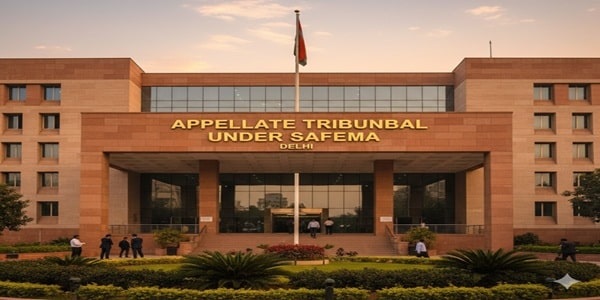
Indian Overseas Bank Vs Padmaadevi Sugars Ltd. (Appellate Tribunal under SAFEMA, New Delhi)
Tribunal Refuses to Condon a Delay of 1,566 Days
The Appellate Tribunal dismissed two appeals against a confirmed benami attachment after refusing to condone a delay of 1,566 days. The liquidator continued to pursue remedies before the insolvency forums after the NCLT expressly directed him to approach the Benami Act authorities. Indian Overseas Bank, a secured creditor, waited for the liquidator’s litigation to conclude. The Tribunal held that neither explanation established sufficient cause under section 46(2) of the Prohibition of Benami Property Transactions Act, 1988.
Attachment of the Sugar Factory and Mortgaged Assets
Indian Overseas Bank and other lenders held security over the company’s sugar factory, approximately 89.21 acres of land, and its plant and machinery. The NCLT admitted the company into the corporate insolvency resolution process on 15 October 2018 and subsequently ordered liquidation on 20 April 2021.
Meanwhile, the Initiating Officer issued notice under section 24(1) and provisionally attached the secured assets on 1 November 2019. By an order dated 10 November 2021 under section 26(3), the Adjudicating Authority held that the company was a benamidar of V. K. Sasikala and confirmed the attachment. The bank and the company, through its liquidator, filed their statutory appeals on 9 April 2026.
Continuing Before the Wrong Forum Undermined the Claim of Good Faith
The liquidator argued that the interplay between the Insolvency and Bankruptcy Code, 2016 (IBC) and the Benami Act was unsettled. He sought the benefit of section 14 of the Limitation Act, 1963, invoking the principle that time spent pursuing a remedy before a forum lacking jurisdiction may be excluded where the proceedings were prosecuted with due diligence and in good faith.
The Tribunal examined what the liquidator did after receiving a clear ruling on the proper forum. On 25 April 2022, the NCLT held that the challenge belonged before the Benami authorities. It reiterated that position on 14 June 2022. The liquidator nevertheless pursued an appeal before the NCLAT, which upheld the NCLT on 18 August 2022, and then approached the Supreme Court.
In S. Rajendran v. Deputy Commissioner of Income Tax (Benami Prohibition), 2026 INSC 187, decided on 24 February 2026, the Supreme Court confirmed that the NCLT and NCLAT lacked jurisdiction to examine the validity of the Benami Act attachment. For the Appellate Tribunal, the earlier NCLT directions were decisive in assessing diligence. The liquidator had been told where the remedy lay and still did not file the statutory appeal.
High Court Liberty Did Not Extend the 45-Day Appeal Period
The liquidator also relied on the Madras High Court’s order dated 5 August 2024, which disposed of his writ petition with liberty to work out his remedy after the Supreme Court decided the pending civil appeal. The Tribunal held that this liberty left him free to pursue the statutory remedy, subject to the applicable law of limitation.
Section 46(1) prescribes 45 days from the date of the adjudication order to file an appeal. Under section 46(2), the Tribunal may entertain a delayed appeal if satisfied that sufficient cause prevented timely filing. Relying on Balwant Singh v. Jagdish Singh (2010) 8 SCC 685 and Esha Bhattacharjee v. Raghunathpur Nafar Academy (2013) 12 SCC 649, the Tribunal assessed the parties’ conduct and held that the asserted strength of the appeals on merits could not cure the inadequate explanation for delay.
Secured Creditor’s Reliance on the Liquidator Was Insufficient
Indian Overseas Bank argued that it had received no notice of the benami proceedings despite its registered security interests. It said it reasonably believed that the liquidator was representing the common interests of secured creditors in the insolvency litigation.
The Tribunal held that the bank could have raised the alleged lack of notice in its own statutory appeal. Its decision to await the outcome of the liquidator’s proceedings did not establish that it had been prevented from appealing in time. The Tribunal therefore dismissed both condonation applications and both appeals as time-barred. The merits of the attachment and the bank’s security claims remained unexamined.
Author’s Comments
The ruling distinguishes an initial mistake in choosing a forum from continuing in that forum after an express ruling identifies the statutory remedy. The point at which a litigant learns where the appeal lies can be decisive in assessing diligence. The case also shows the limits of relying on a liquidator to protect a secured creditor’s individual rights. Where a creditor challenges an attachment on grounds specific to it, including lack of notice, its explanation for delay must account for when it could have pursued its own appeal.
Cases Discussed
- S. Rajendran Vs Deputy Commissioner of Income Tax (Benami Prohibition) & Ors., 2026 INSC 187 (Supreme Court) – NCLT and NCLAT lack jurisdiction to adjudicate challenges against attachments under the Benami Act.
- Balwant Singh Vs Jagdish Singh (2010) 8 SCC 685 (Supreme Court) – Negligence and failure to pursue available remedies cannot justify condonation of delay.
- Esha Bhattacharjee Vs Raghunathpur Nafar Academy (2013) 12 SCC 649 (Supreme Court) – Inordinate delay, lack of bona fides and negligent conduct are material considerations while examining sufficient cause.
- Roopinder Singh Vs Emaar MGF Ltd. & Ors., MANU/DE/8430/2025 (Delhi High Court) – Exclusion of time under Section 14 of the Limitation Act requires good faith and due diligence.
- Whirlpool Corporation Vs Registrar of Trade Marks, Mumbai & Ors. (Supreme Court) – Discussed concerning the availability of alternative statutory remedies.
- Embassy Property Developments Pvt. Ltd. Vs State of Karnataka (2020) 13 SCC 308 (Supreme Court) – Discussed concerning limitations on the jurisdiction of insolvency authorities over public law matters.
FULL TEXT OF THE JUDGMENT APPELLATE TRIBUNAL UNDER SAFEMA AT NEW DELHI
This Order disposes of the Application No. MP-PBPT-665/CHN/ 2026 in Appeal No. FPA-PBPT-201/CHN/2026 filed by the Indian Overseas Bank (IOB) and the Application No. MP-PBPT-668/CHN/
2026 in Appeal No. FPA-PBPT-202/CHN/2026 filed by M/s Padmaadevi Sugars Ltd., through Liquidator. The Appellants have sought Condonation of Delay of 1566 days in filing the Appeals. The Final Order under Section 26 (3) of the Prohibition of Benami Property Transaction Act, 1988 (PBPTA) was passed on 10.11.2021 in Reference No. R-1930/2020. The two Appeals against the said Final Order were filed on 09.04.2026 in this Tribunal.
2. Ld. Counsel for the Appellant M/s Padmaadevi Sugars Ltd., through Liquidator argued that the delay arose from bona fide pursue of statutory remedies under the Insolvency and Bankruptcy Code, 2016 (IBC) on account of unsettled and arguable legal position. The legal position governing the interplay between the PBPT Act and the Code, during the relevant period was genuinely unsettled and subject of active judicial debate. The Appellants’ case raised the following legal questions each of which was the subject of serious argument: (a) whether the moratorium under Section 14 of the Code barred the issuance and continuation of provisional attachment proceedings under the PBPT Act: (b) whether Section 238 of the Code, which carries a non-obstante clause giving the Code overriding effect over any other law, prevailed over Section 67 of the PBPT Act: (c) whether the NCLT, exercising its residuary jurisdiction under Section 60(5)(c) of the Code, had jurisdiction to entertain a challenge to the attachment of the corporate debtor’s assets under the PBPT Act; and (d) whether the properties of a corporate debtor could constitute benami property when the alleged benami transaction concerned only the shares of the Company, not its underlying assets. The Appellant further submit that during the period between November 2021 and February 2026, the law governing the interplay between the PBPT Act and the Code was neither clear nor settled. Multiple Ld. Tribunals and Courts examined the competing submissions, and none held the position of the Appellant to be so clearly misconceived as to disentitle them to a hearing on merits. Ld. Counsel submitted that the Hon’ble Supreme Court of India directed by its Judgment dated 24.02.2026 in Civil Appeal No. 7140 of 2022 in the matter of S Rajendran vs. Deputy Commissioner of Income Tax (Benami Prohibition) & Ors., 2026 INSC 187, that the Appellant Liquidator should avail of the remedy before the statutory authorities under the PBPTA. Ld. Counsel also contended that the delay is covered by the Order dated 05.08.2024 of the Hon’ble Madras High Court which disposed of Writ Petition No. 28357/2021 expressly granting liberty to the Appellant Liquidator to pursue his remedy after the disposal for the Civil Appeal pending before the Hon’ble Supreme Court. Ld. Counsel further contended that the grant of said liberty in effect resulted in extension of the period within which the Appellants could approach the appropriate forum for challenging the Impugned Order.
3. Ld. Counsel for the Appellant M/s Padmaadevi Sugars Ltd., through Liquidator submitted that Section 14 of the Limitation Act, 1963 provides for the exclusion from the computation of the period of limitation of the time spent in prosecuting proceedings in good faith in a Court which has no jurisdiction, provided that the proceedings were prosecuted with due diligence and good faith. The Appellant No. 2 – Shri S. Rajendran – is the Liquidator appointed by the NCLT. Chennai, under the Code. In that capacity, he is an officer of the Court, and not of the original management of the Company. He came into custody of the Company’s affairs only upon appointment by the NCLT, with limited access to the historical records, corporate decisions, and internal documentation of the Company that would ordinarily be available to the original management. The institutional constraints of the insolvency process – including the legal uncertainty about the applicable forum, the pendency of the Supreme Court proceedings, and the necessity of obtaining directions from the NCLT before taking significant steps in relation to the liquidation estate significantly constrained the Liquidator’s ability to independently move before this Tribunal at an earlier point. The Respondent cannot point to any prejudice caused to them by the delay. The provisional attachment and the Final Order remain in full force and have not been disturbed by any Court or Tribunal. The subject property – the sugar factory, 89.21 acres of land and all plant and machinery continues to stand attached pursuant to the Impugned Order. The Respondents have at no point been prejudiced in their ability to prosecute the confiscation proceedings or protect their interest in the subject property on account of the delay in preferring this Appeal. Conversely, the consequences of refusing condonation are severe and irreversible. Ld. Counsel submitted that this Tribunal has consistently held that in considering whether to condone delay, the Court or Tribunal may take into account the strength of the Applicant’s case on the merits, in order to assess whether the justice of the situation calls for condonation. The Appellant submitted that the accompanying Appeal raises grave and substantial questions of law and fact, including the following, which prima facie demonstrate that the Impugned Order is erroneous and requires Appellate examination on merits. Section 46(2) of the PBPT Act expressly empowers this Tribunal to condone delay beyond the prescribed period of 45 days, if it is satisfied that there was sufficient cause for not preferring the appeal within that period. The legislature has thus consciously vested this Tribunal with the power to condone delay of 1566 days, a power that must be exercised meaningfully and not withheld in cases where the justice of the situation demands condonation. The Hon’ble Supreme Court has, in many cases while affirming a stricter approach to government delays, also acknowledged that institutional delay arising from bona fide prosecution of proceedings in a different forum attracts a more sympathetic consideration. In the present case, the ‘sufficient cause’ is manifest and undeniable. Ld. Counsel therefore pleaded to allow the Application.
4. Ld. Counsel for the Appellant IOB explained that the Applicant is secured creditor of M/s Padmaadevi Sugars Limited (“Corporate Debtor”) under various term loans and working capital facilities extended long prior to the alleged benami transaction relied upon by the Respondent Authorities. The Corporate Debtor created equitable mortgages and other security interests over its sugar factory land admeasuring about 89.21 acres at Palayaseevaram, Kancheepuram District, together with plant, machinery and installations (“Secured Assets”), which were duly registered with the Registrar of Companies and formed part of a long-standing, disclosed security package in favour of the Applicants and other banks. Upon default by the Corporate Debtor, the Applicants and other consortium lenders invoked their statutory remedies under the Securitisation and Reconstruction of Financial Assets and Enforcement of Security Interest Act, 2002 (“SARFAESI Act”) as early as 2013, including issuance of a joint possession notice dated 03.05.2013 in respect of the Secured Assets. On 15.10.2018, the Hon’ble NCLT, Chennai, admitted an application under Section 7 of the Insolvency and Bankruptcy Code, 2016 against the Corporate Debtor, commenced its Corporate Insolvency Resolution Process (“CIRP”), and declared a moratorium under Section 14. The CIRP culminated in an order for liquidation dated 20.04.2021 and a Liquidator was appointed. While the CIRP and liquidation proceedings were pending, the Initiating Officer (“IO”) under the PBPT Act issued a notice dated 01.11.2019 under Section 24(1) to the Corporate Debtor, and simultaneously passed a Provisional Attachment Order under Section 24(3) in respect of the very same Secured Assets, treating the Corporate Debtor as an alleged “benamidar” for Smt. V. K. Sasikala. The Ld. Adjudicating Authority, Chennai, thereafter passed a Final Order dated 10.11.2021 under Section 26(3) of the PBPT Act in Reference No. R-1930/2020, holding that the Corporate Debtor was a benamidar of Smt. V. K. Sasikala and confirming the attachment of the Secured Assets (“Impugned Order”). The Applicants were not arrayed as parties before the Ld. Adjudicating Authority and did not receive notice of the proceedings, notwithstanding that the Secured Assets had, for many years, stood encumbered in their favour and formed part of the liquidation estate. Following the Impugned Order, extensive litigation ensued before the NCLT, NCLAT and ultimately the Hon’ble Supreme Court in proceedings initiated by the Liquidator of the Corporate Debtor, inter alia questioning the validity of PBPT attachments vis-à- vis the IBC regime. In those proceedings, the Applicant was also on record as secured creditors whose interests in the Secured Assets would be directly affected by the outcome, and participated through pleadings and representations before the Hon’ble Supreme Court in the broader challenge to the PBPT attachments within the IBC framework. In these proceedings, it has been specifically contended that the PBPT Act provides a self-contained Appellate structure (Sections 46, 49, 50) and that any challenge to PBPT orders must be carried to this Hon’ble Tribunal and thereafter to the High Court, not by way of collateral challenge in IBC fora. The Applicant, as secured creditor, was throughout actively engaged in the IBC proceedings and the connected Appeals, including before the Hon’ble Supreme Court, and bona fide believed that the issues concerning PBPT attachments and the Secured Assets would be adequately agitated and resolved within the IBC process by the liquidator acting in a representative capacity, with their own interests being projected as part of the common body of creditors. It is only in light of the subsequent developments and the clear emphasis, in the Supreme Court pleadings and arguments, on the need for parties aggrieved by PBPT orders to avail the appellate remedies within the PBPT Act itself, that the Applicant has now been advised that they too, as directly affected secured creditors whose pre-existing mortgages are seriously prejudiced by the Impugned Order, ought to file an independent Appeal before this Hon’ble Tribunal. The present Appeal is, therefore, being presented along with this application seeking condonation of delay.
5. Ld. Counsel for the Appellant IOB stated that the Applicant submits that any procedural misstep in initially proceeding under the IBC umbrella, rather than filing a direct PBPT Appeal, was due to genuine and complex inter-statutory interactions between IBC and PBPT, and not due to any deliberate inaction. The Liquidator was already challenging the PBPT attachment before the IBC fora, and the Applicant, as secured creditor, reasonably proceeded on the footing that the Liquidator actions would protect the common pool of creditors, including themselves. The Impugned Order itself records only the Corporate Debtor and the alleged beneficial owner as principal parties, and there is nothing in the case papers to indicate that the Applicant was independently impleaded or heard, despite its prior registered charges over the Secured Assets. The lack of direct participation at the adjudication stage, and the reliance on the liquidator’s representative role (including before the Hon’ble Supreme Court where the banks interests were projected as part of the creditor body), constitute a sufficient cause explaining why the Applicant itself did not earlier approach this Hon’ble Tribunal. The Applicant invokes, by parity of reasoning, this Hon’ble Tribunal’s power to condone delay in order to secure adjudication on merits rather than on a mere technical bar. Serious prejudice to longstanding, disclosed security interests would be caused otherwise. The very fact that such inter- statutory issues have required determination at the highest level demonstrates that the Applicants’ initial assumption-that its remedy lay within the IBC continuum was a reasonable, albeit in retrospect incomplete, understanding of the law. This contributes to “sufficient cause” for the delay. Ld. Counsel pleaded to allow the Application.
6. Ld. Counsel for the Respondent submitted that in the recent case of S. Rajendran vs. The Deputy Commissioner of Income Tax (Benami Prohibition) and Ors. (24.02.2026-SC): MANU/SC/0185/ 2026, the Hon’ble Supreme Court have clarified that IBC Moratorium cannot act as a shield in front of the attachment order passed under the PBPT Act, the Benami Act attachment orders are beyond the jurisdiction of NCLT/NCLAT and also that in situations of conflict between the PBPT Act and IBC, 2016, it will be the PBPT Act having more dominant purpose. The Hon’ble Court held as follows:
“20. Two Conflicting Statutory Regime: It has been argued by the Appellants that IBC being a special statute must prevail over Benami Act and hence NCLT is competent to adjudicate upon a challenge made to attachment proceedings under Benami Act by virtue of it being a special as well as later law. To this extent, reliance is placed on Solidaire India Ltd. Fair growth Financial Services Ltd. MANU/SC/0009/2001:2001: INSC:76: (2001) 3 SCC 71 At the same time, it must be borne in mind that the Benami Act is also a special legislation aimed at prohibiting and penalising benami transactions. What therefore must be seen is the dominant purpose and object of both the enactments. xxxxx
20.3. Benami Act is a complete and self-contained code governing identification, provisional attachment, adjudication confiscation of benami property, supported by a distinct appellate hierarchy. Exclusive jurisdiction over such determinations is conferred upon authorities constituted under the Benami Act. The IBC neither displaces this statutory mechanism nor empowers the NCLT to reopen findings rendered thereunder.
xxxxx
20.6. What emerges from the foregoing analysis is that the jurisdiction of authorities under IBC cannot be expansively construed so as to trench upon fields that are founded in public law domain. Where the subject matter of the dispute pertains to the exercise of sovereign statutory power, particularly in relation to determination of legality of title, attachment, or confiscation and vesting thereof, the adjudicatory fora under the IBC must necessarily yield to the specialised mechanism created by such statute. Proceedings under Benami Act squarely fall within the public law domain. They are not in the nature of inter se disputes between private parties concerning proprietary rights, nor are they recovery proceedings capable of being subsumed within insolvency resolution. The Benami Act represents a sovereign exercise aimed at identifying and extinguishing benami transactions. The attachment and eventual confiscation of property thereunder operate in rem and culminate in vesting of the property in the Central Government free from encumbrances. Such consequences are penal and deterrent, rooted in statutory illegality, and are enforced through a distinct adjudicatory hierarchy whose jurisdiction is expressly insulated from ordinary civil fora……….
xxxxx
20.7. In view of the above discussion, permitting the NCLT to examine the correctness of attachment or adjudication under the Benami Act by invoking Section 60(5) of the IBC would amount to elevating it to the status of a judicial review forum over sovereign action, a course expressly disapproved in the line of authority commencing from Embassy Property (supra) and consistently reiterated thereafter. The IBC, concerned as it is with insolvency resolution and value maximization of lawfully owned assets, cannot be employed as a mechanism to dilute or override statutory proceedings undertaken in the public law sphere for confiscation of tainted property.
20.8. The properties in question, having been provisionally attached and confirmed by the Adjudicating Authority under the Benami Act, stand vested in the Central Government under Section 27, subject to statutory appeal. Those determinations remain operative. The NCLT cannot, in exercise of insolvency jurisdiction, disregard or nullify a statutory vesting effected under another enactment. The IBC does not provide an indirect route to challenge sovereign acts validly undertaken under a penal statute.”
The contention of the Appellant is baseless and thus, denied. It was submitted by the Ld. Counsel for the Respondent that though the Hon’ble Supreme Court of India in the recent case of S. Rajendran vs. The Deputy Commissioner of Income Tax (Benami Prohibition) and Ors. (24.02.2026 – SC): MANU/SC/ 0185/2026, have clarified the proposition of law that IBC Moratorium cannot act as a shield in front of the attachment order passed under the PBPT Act, the Benami Act attachment orders are beyond the jurisdiction of NCLT/NCLAT and also that in situations of conflict between the PBPT Act and IBC, 2016, it will be the PBPT Act having more dominant purpose. However, the Appellant cannot take the defence of this Judgement alone in the delay of the filing of Appeal when the law was itself very clear prior to the judgement of the Hon’ble Supreme Court of India. Section 67 of the PBPT Act gives an overriding effect to the Act and that the proceedings under Benami Act squarely fall within the public law domain. They are not in the nature of inter se disputes between private parties concerning proprietary rights, nor are they recovery proceedings capable of being subsumed within insolvency resolution whereas the IBC, 2016 cannot be employed as a mechanism to dilute or override statutory proceedings undertaken in the public law sphere for confiscation of tainted property. Further the Hon’ble Supreme Court have held in many cases such as the one in Whirlpool Corporation vs. Registrar of Trade Marks, Mumbai and Ors. (26.10.1998 SC): MANU/SC/0664/1998, that while an alternative remedy does not absolutely bar the High Court’s jurisdiction under Article 226, the court will exercise judicial restraint and refuse to entertain writ petitions if a built-in Appellate mechanism exists. This principle strictly applies to fiscal and financial laws like the PBPT Act as well to prevent the thwarting or delaying of proceedings. Ld. Counsel further submitted that the Appellants are not able to sufficiently establish the requirement of good faith and due diligence as required to be proved under Section 14 of the Limitation Act, 1963. The contention of the Applicants that the forum of NCLT /NCLAT may not have been a correct forum yet the challenge before such forum was in bona fide manner, is dubious to the fact that the PBPT Act, 1988 itself provides for express statutory remedies in the form of Appeals under Section 46 before this Hon’ble Appellate Tribunal and then under Section 49 before the Hon’ble High Court. Therefore, there was never been any doubt regarding the fact that the challenge of any PBPT Act order would lie before this Hon’ble Tribunal. Ld. Counsel further submitted that in the case of Roopinder Singh vs. Emaar MGF Ltd. and Ors. (04.11.2025-DELHC): MANU/DE/8430/ 2025, the Hon’ble Delhi High Court have held that:
“29. Section 14 of the Limitation Act seeks to protect a litigant who, in good faith, has pursued a remedy before a court that ultimately lacks jurisdiction or competence to decide the matter. In essence, it ensures that the time spent bona fide litigating before an incompetent forum is excluded while calculating the period of limitation for filing the same claim before a competent forum. This protection extends not only to suits but also to applications filed before courts of first instance, appellate, or revisional jurisdiction.
30. However, to invoke the benefit of this section, inter alia, two essential conditions must be satisfied, namely, the litigant must have acted with due diligence, meaning that all reasonable steps were taken without unnecessary delay; and the proceeding must have been pursued in good faith.”
The Judgment (supra) of the Hon’ble Delhi High Court makes it very clear that Section 14 of the Limitation Act, 1963 requires that the prior proceeding should have been prosecuted in good faith and with due diligence and it is also true that Section 14 will not help a party who is guilty of negligence, lapse or inaction. Ld. Counsel submitted that a liquidator appointed by the NCLT does not have legally limited access to the company, and any factual difficulty or lack of access cannot be used to condone a delay beyond the statutory limitation period. However, even if this contention is considered to be true, still the limited access or administrative transition cannot serve as a valid excuse to bypass the statutory timeline for filing an Appeal before the Appellate Tribunal under the PBPT Act, 1988 especially when the delay subsists for more than 1500 days. The granting of condonation would cause greater injustice to the Respondent as until and unless the statutory remedy of the Appellants is not substantially exhausted the confiscation will not absolutely take effect and thereby, defeating the very purpose of the PBPT Act, which is enacted by the legislature to confiscate the property to curb black money and tax evasion from the Government. Hence, the PBPT Act being falling in the public law domain, the condoning of such delay will lead to greater injustice not only to the Respondent but also to the Public at large. Ld. Counsel therefore pleaded to dismiss the two Applications and consequently the Appeals as well.
7. We have considered the rival submissions and the material on record. It is an admitted fact that the Impugned Order passed on 10.11.2021 was not challenged before this Appellate Tribunal till 09.04.2026, but a Writ Petition No. 28357 of 2021 was filed before the Hon’ble Madras High Court challenging the Impugned Order under Article 226 of the Constitution of India, by the Appellant M/s Padmaadevi Sugars Ltd., through Liquidator. The Hon’ble Madras High Court disposed of the said Writ Petition on 05.08.2024. The Hon’ble Supreme Court in Civil Appeal No. 7140 of 2022 (2026 INSC 187) and other related Appeals, dismissed the Appeals. It is also on record that the Appellant filed Misc. Application No. 1372-1373/2019 before the NCLT, Chennai on 03.11.2019. The NCLT, Chennai dismissed the Liquidator Application on 25.04.2022 holding that the challenge must lie before the Benami Authorities and not NCLT. The Appellant IOB by its own admission, though actively engaged in the IBC proceedings and the connected Appeals believed that the issues would get resolved within the IBC process, and its own interest would be protected in such proceedings as secured creditor. The moot question to be decided here is whether the filing and pursuing proceedings in Tribunal/Courts other than this Tribunal would constitute a sufficient cause as to explain the period of delay of 1566 days in filing the two Appeals before this Tribunal.
8. The provisions of Section 46 (1) and (2) of the PBPTA is as follows:
“46. Appeals to Appellate Tribunal
(1) Any person, including the Initiating Officer, aggrieved by an order of the Adjudicating Authority may prefer an appeal in such form and along with such fees, as may be prescribed, to the Appellate Tribunal against the order passed by the Adjudicating Authority under sub- section (3) of section 26, within a period of forty-five days from the date of the order.
(2) The Appellate Tribunal may entertain any appeal after the said period of forty-five days, if it is satisfied that the appellant was prevented, by sufficient cause, from filing the appeal in time.
In view of the aforementioned provisions, we need to determine whether the Appellants were prevented from filing the Appeals within a period of 45 days of the date of passing the Final Order on 10.11.2021 by a cause which can be regarded as ‘sufficient’. The Appellants have not raised the issue as to when they received the Impugned Order. We find that the Appellant M/s Padmaadevi Sugars Ltd., through Liquidator, instead of filing the Appeal before this Tribunal within 45 days i.e. 24.12.2021 took the following alternative steps:
a. On 15.12.2021 the Appellant filed Writ Petition No. 28357 of 2021 in the Hon’ble Madras High Court. The Writ Petition was disposed of on 05.08.2024 with liberty ‘to work out their remedy after the disposal of the Civil Appeal pending before the Hon’ble Apex Court.’
b. On 09.07.2022 the Appellant filed an Appeal No. CA (AT) (I) 612/2022 before the NCLAT (National Company Law Appellate Tribunal), Chennai against the NCLT Order dated 25.04.2022, which had clarified, while disposing of the MA Nos. 1372-1373/2019 that the remedy against the Impugned Order lies only under the PBPTA. On 18.08.2022 the NCLAT dismissed the Appeal and held that the remedy lies under the PBPTA only.
c. On 27.09.2022 the Appellant filed an Appeal No. CA 7140/2022 challenging the Order of NCLAT before the Hon’ble Supreme Court. On 24.02.2026 the Hon’ble Supreme Court upheld the Order dated 18.08.2022 of the NCLAT.
The Appeal was finally filed by the two Appellants before this Tribunal on 09.04.2026.
9. The Appellants have relied upon the Order dated 05.08.2024 passed by the Hon’ble High Court of Madras in WP No. 28357 of 2021. The Appellants have argued that the Order (supra) of the Hon’ble Madras High Court preserve their right to approach the appropriate forum and hence the delay was covered by the liberty granted by the Hon’ble High Court. To appreciate the Order (supra) of the Hon’ble High Court, we reproduce Paragraphs 2, 3 and 5:
“2. It is the case of the petitioner that the petitioner is the liquidator of M/s. Padmaadevi Sugars Ltd (in short ‘the company) appointed by the NCLT Chennai. The NCLT, Chennai in CP(IB)/768/2018 vide order dated 15.10.2018 initiated Corporate Insolvency Resolution Process (in short ‘CIRP’) of the Company and further vide order dated 20.04.2021 in I.A.No.648 to 651 & 364 of 2020 ordered liquidation of the company. In the year 1996 and 2008, the Indian Overseas Bank and Bank of India on various dates sanctioned various credit facilities to the Company. The credit facilities sanctioned to the company were secured by creating mortgage on the assets of the company, including the sugar factory of the company. On 24.12.2019, the then Resolution Professional of the Company received a Show Cause Notice dated 01.11.2019, issued under Section 24(1) of the Prohibition of Benami Property Transaction Act, 1988 by the second respondent, along with a Provisional Attachment Order dated 01.11.2019 bearing F.No.10/PBPT/PSL/199, wherein the immovable property of the company under Liquidation, situated at Palayaseevaram, Kancheepuram District, Tamilnadu was attached. The first respondent based on the findings of the second respondent, has passed the impugned order dated 10.11.2021 holding that the sugar factory belonging to the Company is a benami property. Challenging the same, the present writ petition has been filed.
3. The learned counsel for the petitioner submits that the prayer sought for in this writ petition has already been challenged before the National Company Law Tribunal, Division Bench II, Chennai, however, the same was negatived vide order dated 25.04.2022. Aggrieved over the same, the petitioner preferred an appeal before the National Company Law Appellate Tribunal in Company Appeal (AT) (CH) (Ins) No.292 of 2022 and the same was also dismissed vide judgment dated 18.08.2022, which was challenged before the Hon’ble Apex Court in Civil Appeal No.7140 of 2022. He further submits that the earlier liquidator has been changed and the new liquidator has been appointed for the petitioner company. Hence, he prayed this Court to direct the petitioner to work out their remedy after the disposal of the Civil COP Appeal pending before the Hon’ble Apex Court.
xxxxx
5. In the light of the submission made by the learned counsel for the petitioner, this Court grants liberty to the petitioner to work out their remedy after the disposal of the civil appeal pending before the Hon’ble Apex Court.”
We therefore observe that in the light of the prayer made by the Petitioners, the Hon’ble Court granted them the liberty to work out the remedy. Such liberty may include filing of Appeal before this Tribunal, however, such liberty cannot be interpreted as to imply that delay, if any, in filing the Appeal before this Tribunal cannot be adjudicated in the context of the statutory provisions.
10. An argument has been made that the period of delay gets covered by Section 14 of the Limitation Act, 1963, since much of the delay was attributable to the time spent in proceedings before the Tribunal/ Court. The relevant provisions of Section 14 of the Limitation Act, 1963 are reproduced:
“14. Exclusion of time of proceeding bona fide in court without jurisdiction. —
(1) In computing the period of limitation for any suit the time during which the plaintiff has been prosecuting with due diligence another civil proceeding, whether in a court of first instance or of appeal or revision, against the defendant shall be excluded, where the proceeding relates to the same matter in issue and is prosecuted in good faith in a court which, from defect of jurisdiction or other cause of a like nature, is unable to entertain it.
(2) In computing the period of limitation for any application, the time during which the applicant has been prosecuting with due diligence another civil proceeding, whether in a court of first instance or of appeal or revision, against the same party for the same relief shall be excluded, where such proceeding is prosecuted in good faith in a court which, from defect of jurisdiction or other cause of a like nature, is unable to entertain it.
(3) Notwithstanding anything contained in rule 2 of Order XXXIII of the Code of Civil Procedure, 1908 (5 of 1908), the provisions of sub-section (1) shall apply in relation to a fresh suit instituted on permission granted by the court under rule 1 of that Order where such permission is granted on the ground that the first suit must fail by reason of a defect in the jurisdiction of the court or other cause of a like nature.
Explanation.—
For the purposes of this section,—
(a) in excluding the time during which a former civil proceeding was pending, the day on which that proceeding was instituted and the day on which it ended shall both be counted;
(b) a plaintiff or an applicant resisting an appeal shall be deemed to be prosecuting a proceeding;
(c) misjoinder of parties or of causes of action shall be deemed to be a cause of a like nature with defect of jurisdiction.”
Reading of the provisions makes it obvious that the underlying condition for the invocation of Section 14 of the Limitation Act, 1963 is that the time spent in proceeding the same matter in a Court without jurisdiction shall be excluded from computation of the limitation period, only if such proceeding is undertaken in good faith and is bona fide. The Appellants have contended that they pursued the Appeal in good faith in other Courts and not before this Tribunal because the position as to the legal position governing the interplay between the PBPTA and the IBC was unsettled. We do not find the argument to be convincing particularly so when the NCLAT vide its Order dated 18.08.2022 had dismissed the Appeal filed by the Appellant M/s Padmaadevi Sugars Ltd., through Liquidator against the Order dated 25.04.2022 of NCLT, Chennai. The Adjudicating Authority and the Appellate Authority prescribed under the IBC had made categorical finding that the remedy of Appeal would lie under the PBPT Act. We note that the Impugned Order was passed on 10.11.2021 and the necessary clarification as to which Authority is the Appellate Authority came about in nine months from the passing of the Impugned Order. However, the Appellant continued to pursue the matter before the Hon’ble High Court of Madras and then before the Hon’ble Supreme Court of India.
11. The Hon’ble Supreme Court of India in its Judgment dated 24.02.2026 in Civil Appeal No. 7140 of 2022 in the matter of S. Rajendran vs. The Deputy Commissioner of Income Tax (Benami Prohibition) & Ors. with Civil Appeal No. 6971 of 2025 with Civil Appeal No. 6661 of 2023 with Civil Appeal No. 6662 of 2023 has not only gone into the details of the present case, but has also looked into the bona fides of the Appellant in pursing the matter before the NCLT/ NCLAT. We therefore cite the following Paragraphs of the Judgment:
“1. The present batch of appeals arises out of the impugned judgments and orders dated 18.08.2022 and 13.03.2023 passed by the National Company Law Appellate Tribunal, Chennai bench (hereinafter referred to as “NCLAT”). By the said impugned orders, the NCLAT declined to interfere with the decision of the National Company Law Tribunal (hereinafter referred to as “NCLT”) and refused to adjudicate the appellant- liquidators’ applications challenging the provisional attachment orders passed by the authorities under the Prohibition of Benami Property Transactions Act, 1988, (“Benami Act”), holding that the NCLT lacks jurisdiction to entertain such challenges and that the remedy lies exclusively before the competent forum constituted under the Benami Act. Accepting the concurrent findings of NCLT and NCLAT, we have held that orders passed under Benami Act cannot be questioned before authorities under the Insolvency and Bankruptcy Code, 2016 (“IBC”). For the reasons to follow, we dismiss these appeals.
I. Factual Background:
2. For the sake of convenience, we shall refer to the factual matrix of the lead appeal. The facts in the connected appeals, though pertaining to distinct corporate entity, are substantially similar in their material particulars and give rise to identical questions of law.
3. When an illegal sale, in the nature of a benami transaction came to light, investigation by the authorities under the Benami Act revealed that the promoters of the corporate debtor, M/s Padmaadevi Sugars Ltd., formerly S.V. Sugar Mills Ltd., the “Patel Group,” had transferred their 100% shareholding to the beneficial owner, V.K. Sasikala, through an intermediary, an advocate named Mr. S. Senthil, for a consideration of approximately Rs. 450 Crores, paid in demonetised high-value currency notes. As investigation concluded into commission of offence, authorities invoked Section 24 of the Benami Act and issued a show cause notice dated 01.11.2019.
4. The genesis of the controversy as portrayed in the show cause notice lies in search and seizure operation conducted under Section 132 of the Income Tax Act, 1961 in November 2017 against V.K. Sasikala and her associates. During these operations, incriminating documents that were unearthed contained explicit references to asset purchases made during the demonetization period i.e. November-December 2016, through entries marked “Patel: Sugar 386 + Bank Loan” and “Sugar Mill, Kancheepuram”. Further, investigation identified advocate S. Senthil as the intermediary who, upon confrontation, admitted under oath to authoring these notes at the dictation of V.K. Sasikala for purchasing these properties using demonetised currency.
5. The documentary trail was further corroborated by a subsequent search on 18.11.2017 at a serviced apartment used by the intermediary, where authorities recovered the original share certificates of M/s S.V. Sugar Mills Ltd. now Padmaadevi Sugars Ltd. standing in the names of the Patel family members, alongside an unsigned Memorandum of Understanding (MoU). Confronted with this, Shri Hitesh Shivgan Patel, representing the management of the corporate debtor, recorded a sworn statement admitting that the Patel Group had negotiated the sale of the sugar factory and assumed bank liabilities for a total consideration of Rs. 450 Crores. Crucially, he admitted that this consideration was received entirely in demonetised currency between November and December 2016, and that they had signed a blank MoU to effectuate this transfer.
6. In the meanwhile, the corporate debtor M/s Padmaadevi Sugars Ltd. was subjected to corporate insolvency resolution proceedings (CIRP) on the basis of an application instituted by the financial creditors. The application was admitted by the NCLT on 15.10.2018 and the moratorium commenced. However, after the failure of the resolution process, NCLT proceeded further and passed an order for the liquidation of corporate debtor on 20.04.2021. We may mention at this very stage that in so far as the other set of appeals arising out of M/s Senthil Papers and Board Pvt. Ltd., the CIRP commenced on 14.11.2017, and order of liquidation was passed on 14.02.2019.
7. Returning to the proceedings under the Benami Act, based on the crystallization of the evidence as discussed above, the authorities issued a show cause notice dated 01.11.2019 under Section 24(1) of the Benami Act to the RP, representing the corporate debtor, characterizing it as the benamidar and the transaction as a “benami transaction”. The rationale provided was that while the beneficial owner, V.K. Sasikala, had paid the full consideration of Rs. 450 Crores and obtained physical possession of the share certificates through her agent, the legal title to the shares and the underlying assets (the sugar plant and machinery) was deliberately not transferred in the records. This arrangement was allegedly designed to mask the true ownership while holding the property for the immediate or future benefit of the beneficial owner. This was followed up by a provisional attachment order on 01.11.2019 under Section 24(3) of the Benami Act, attaching the immovable properties of the corporate debtor, including the factory land and plant machinery.
8. In view of the fact that the corporate debtors came to be represented by their respective liquidators, the Adjudicating Authority under the Benami Act also issued notices under Section 26(3) confirming the attachment of the property held benami by corporate debtor for and on behalf of the beneficiary V.K. Sasikala.
9. The provisional attachment order dated 01.11.2019, was initially challenged by the RP on the ground that it is void ab initio due to the moratorium under Section 14 of the IBC. However, as the corporate debtor was ordered into liquidation on 20.04.2021, application filed by the RP was rendered infructuous. Consequently, the liquidator filed a fresh application seeking a stay on the attachment order and to enable the liquidation process to continue on the ground that the attached properties formed part of the liquidation estate.
10. The NCLT took up the application and by its order dated 25.04.2022, in the case of Padmaadevi Sugars, held that the challenge to the order of attachment under the Benami Act must be before the statutory authorities under that Act and not before the authorities under the
IBC. In other words, NCLT held that such an application is not maintainable under IBC. Similar orders were passed by NCLT even in case of M/s Senthil Papers on 29.03.2022.
11. Despite the clear and categorical order dated 25.04.2022 of the NCLT, the appellants filed an application for clarification about the forum before which the application is to be filed. Disposing the application, the NCLT, by order dated 14.06.2022, held that the parties can approach the authorities under the Benami Act for lifting the attachment, thereby reaffirming that it lacked jurisdiction to sit in appeal over decisions of Benami Authorities.
12. Even after the order dated 25.04.2022 and the clarificatory order dated 14.06.2022, instead of invoking proceedings under Benami Act, the appellant liquidator filed an appeal under Section 61 of IBC before NCLAT. By the judgments impugned before us, the appeals of M/s Padmaadevi Sugars and M/s Senthil Papers were dismissed on 18.08.2022 and 13.03.2023 respectively.
II. Analysis of the Impugned Orders:
13. The concurrent findings of NCLT and the NCLAT, while dismissing the applications for staying the attachment order under the Benami Act can be summarised as follows;
13.1 Firstly, both forums proceeded on the premise that the Benami Act, is a special legislation constituting a self-contained code. The NCLAT, in particular, placed heavy reliance on its earlier decision in Kiran Shah, Resolution Professional of KSL and Industries Ltd. v. Enforcement Directorate relating to Prevention of Money
Laundering Act, 2002, to hold that when a statute provides hierarchy of adjudicatory mechanisms, namely, the Adjudicating Authority, the Appellate Tribunal, and the High Court, an aggrieved party, even if it is a liquidator or RP, must exhaust the remedies in that special statute. It is further held that IBC cannot be converted into a parallel appellate forum to review the validity of attachment orders passed by a competent authority under a specialised enactment, as doing so would render the appellate machinery of the Benami Act otiose.
13.2 Secondly, regarding the applicability of the moratorium, the Tribunals drew a sharp distinction between actions initiated by creditors for the recovery of dues and sovereign actions initiated by the State for the confiscation of tainted property. The NCLT and NCLAT held that the protection under Section 14 of the IBC is designed to shield the corporate debtor from the depletion of assets by individual creditors seeking to enforce security interests or recover debts. Conversely, an attachment under the Benami Act constitutes a sovereign function exercised in the public interest to prohibit and punish benami transactions. Since the Benami proceedings are not in the nature of debt recovery but rather a statutory forfeiture of property held illegally, the moratorium under the IBC does not act as an automated stay against such proceedings.
13.3 Thirdly, the impugned orders held that the residuary jurisdiction conferred upon the NCLT under Section 60(5) of the IBC is not all-pervasive. While Section 60(5)(c) empowers the NCLT to decide questions of law or fact “arising out of or in relation to” the insolvency resolution, this jurisdiction does not extend to reviewing administrative or quasi-judicial orders passed under independent public law statutes. The NCLAT opined that determining whether a property is “benami” or not requires a trial on the pedigree of the title and the source of funds, which falls exclusively within the domain of the Adjudicating Authority under the Benami Act. Consequently, a challenge to the legality of the attachment order is not a question “arising out of” the insolvency, but one arising dehors the insolvency, and thus falls outside the NCLT’s jurisdictional competence.”
The Hon’ble Supreme Court of India in the Judgment dated 24.02.2026 (supra) has gone on to bring out in part IV of the Judgment titled as Analysis and Conclusions that whether the pursuance by the Appellant of Appeals before the Adjudicating Authority and the Appellate Authority was in good faith. The following Paragraphs from the aforementioned part IV of the Judgment are being reproduced:
“20.7 In view of the above discussion, permitting the NCLT to examine the correctness of attachment or adjudication under the Benami Act by invoking Section 60(5) of the IBC would amount to elevating it to the status of a judicial review forum over sovereign action, a course expressly disapproved in the line of authority commencing from Embassy Property (supra) [(2020) 13 SCC 308] and consistently reiterated thereafter. The IBC, concerned as it is with insolvency resolution and value maximisation of lawfully owned assets, cannot be employed as a mechanism to dilute or override statutory proceedings undertaken in the public law sphere for confiscation of tainted property.
20.8 The properties in question, having been provisionally attached and confirmed by the Adjudicating Authority under the Benami Act, stand vested in the Central Government under Section 27, subject to statutory appeal. Those determinations remain operative. The NCLT cannot, in exercise of insolvency jurisdiction, disregard or nullify a statutory vesting effected under another enactment. The IBC does not provide an indirect route to challenge sovereign acts validly undertaken under a penal statute.
21. A more fundamental objection is raised with reference to Section 36 of the IBC. The liquidation estate comprises only assets beneficially owned by the corporate debtor. Property held benami is, by definition, held in a fiduciary or representative capacity for the real owner. Section 36(4)(a)(i) excludes assets held in trust for third parties from the liquidation estate. In Controller of Estate Duty, Lucknow v. Aloke Mitra this Court reiterated that a benamidar possesses no beneficial interest and that title vests in the person who provided consideration. Where the corporate debtor is merely an ostensible holder, the property never forms part of its estate and cannot be administered in liquidation.
22. Section 36(3)(e) further recognises that property “subject to determination by a court or authority” forms part of the estate only to the extent of such determination. Once the Adjudicating Authority under the Benami Act has concluded that the corporate debtor is a benamidar, beneficial ownership stands negated. The legality and validity of such determinations are subject matter of appeal under the provisions of Benami Act alone. Insolvency proceedings cannot be utilised to convert property held for another into distributable
assets for creditors. The IBC contemplates distribution of the debtor’s estate, not assets impressed with a trust or held on behalf of a third party.
23. The reliance placed on Section 32A and the moratorium under Section 14 is answered on statutory grounds. Section 32A is event-based and triggered only upon approval of a resolution plan or completion of a liquidation sale to an unconnected third party. Absent such approval, the immunity does not arise. The provision does not validate defective title nor retrospectively convert benami property into assets of the corporate debtor.
24. Likewise, the moratorium under Section 14 is intended to preserve the debtor’s estate for orderly resolution; it does not interdict sovereign proceedings in rem for attachment or confiscation under penal statutes. Such proceedings are distinct from creditor enforcement and proceed on an independent statutory footing. The contention of the appellants that the attachment order is impermissible as the moratorium under Section 14 of the Act commenced on 15.10.2018 is not acceptable because the mandate of moratorium must be understood in the context of the applicability of the Act. The moratorium is intended to protect the corporate debtor from “creditor actions” aimed at debt recovery, not to shield “tainted assets” from sovereign actions against crime. In any event of the matter, the liquidator would have power and jurisdiction to deal with the property only when the corporate debtor has a beneficial interest in the said property.
25. Mr. Dwarakanath, also brought to our notice certain questionable transactions including statement of witnesses that were recorded. We are not inclined to examine the facts of the case in detail in order to ensure that the appellants’ remedies are not prejudiced in any way.
26. Returning to the facts of the case, we are of the opinion that the appellants could not have challenged the attachment order passed under the Benami Act before the statutory authorities under the IBC. We have no doubt in our mind that such invocation is not bonafide and is actually intended to circumvent and interdict the procedures contemplated under the Benami Act. Further, filing of appeal before NCLAT, despite the finding that the appropriate forum is not NCLT, but the statutory authorities under the Benami Act, leaves no doubt that it is a complete abuse of the process. The appellants have taken the precious time of the NCLT, NCLAT and also of this Court when the position of law is amply clear and there was no doubt whatsoever about the availability of the statutory remedies under the Benami Act.
27. Under these circumstances, the appeals have to be dismissed with exemplary costs.
28. For the reasons stated above, all the appeals are dismissed with costs quantified at Rs. 5 lakhs each. The amount shall be deposited with the Supreme Court Advocates on Record Association (SCAORA) within four weeks from the date of passing of this judgment.”
We find that the Hon’ble Supreme Court has opined that the Appellant could not have challenged the attachment order passed under the PBPTA before the statutory authority under the IBC. The Hon’ble Supreme Court has not only found that such invocation by the Appellant was not bona fide but was actually intended to circumvent and interdict the procedures contemplated under the PBPTA. The Hon’ble Supreme Court has observed that even after having found that the appropriate forum was not NCLT, the Appellant went on to file Appeal before NCLAT and did not take any step towards filing Appeal under the provisions of the PBPTA which leaves no doubt, that it was complete abuse of the process. We also infer that the Appellants cannot resort to the provisions of Section 14 of the Limitation Act, 1963, since they have failed to establish their bona fides that the matter was being prosecuted in good faith before the Tribunals (NCLT/ NCLAT) which have no jurisdiction. We therefore hold that the cause advanced by the Appellant in filing the Appeal with the delay of 1566 days is not sufficient.
12. Another argument which has been taken is that this Tribunal in a related matter vide its Order dated 16.12.2025 in the Application No. MP-PBPT-1516/CHN/2025 filed for Condonation of Delay in filing the Appeal No. FPA-PBPT-348/CHN/2025 in the matter of the Deputy Commissioner of Income Tax (BPU), Chennai vs. V. S. J. Dinakaran & Co. had allowed the Application for Condonation of Delay of 763 days. We find that the Tribunal in the said Order expressed satisfaction with the contention of the Counsel for the Appellant that the Appellant Department had lost the sight of the present case, in view of multiple litigations pertaining to the same parties. We note that unlike the said Application for Condonation of Delay, in the Applications presently before us there is no such plea that the Appellants had to file Appeals other than the two presently being considered. We also further note that the Order dated 16.12.2025 (supra) of this Tribunal has been upheld by the Hon’ble High Court of Madras vide its Judgment dated 02.04.2026 in CMA No. 65 of 2026 and CMP No. 635 of 2026. In the Special Leave to Appeal (C) No. 15486/2026 filed against the Judgment dated 02.04.2026 of the Hon’ble High Court of Madras, Notice has been issued. The Respondent have contested the argument made by the Appellant that being a Liquidator, it had limited access to the historical records and documents of the Company which would ordinarily be available to the management. We do not find that once the Liquidator was appointed by the NCLT in what manner could it be handicapped, so as to be prevented from filing the Appeal before this Tribunal particularly so in view of the fact that the Appeals were filed and pursued in other fora. We cannot also accept the argument that no prejudice would be caused to the Respondent if the application for Condonation of Delay is allowed. Besides being opposed by the Ld. Counsel for the Respondent on the ground that the confiscation of the tainted property could not take effect, we observe in view of our findings in the preceding Paragraph of this Order, that the requisites of the provisions of Section 46 (2) of the PBPTA are not satisfied.
13. The Appellant has also raised the issue of there being merit in the Appeal which involves grave questions of law and therefore pleaded that the Appeal needs to be decided on merit rather than on the issue of delay in filing the Appeal. We have already noted that the Hon’ble Supreme Court of India in the Judgment (supra) in the matter of S Rajendran has observed, “The appellants have taken the precious time of the NCLT, NCLAT and also of this Court when the position of law is amply clear and there was no doubt whatsoever about the availability of the statutory remedies under the Benami Act.” To answer the question on the issue of deciding an Appeal either on its merit or on consideration of delay in filing the Appeal, we rely upon the following two Judgments of the Hon’ble Supreme Court of India. The first of these Judgments is Balwant Singh v. Jagdish Singh, (2010) 8 SCC 685. The Judgment in Paragraphs 25 and 26 state the following:
“25. We may state that even if the term “sufficient cause” has to receive liberal construction, it must squarely fall within the concept of reasonable time and proper conduct of the party concerned. The purpose of introducing liberal construction normally is to introduce the concept of “reasonableness” as it is understood in its general connotation.
26. The law of limitation is a substantive law and has definite consequences on the right and obligation of a party to arise. These principles should be adhered to and applied appropriately depending on the facts and circumstances of a given case. Once a valuable right has accrued in favour of one party as a result of the failure of the other party to explain the delay by showing sufficient cause and its own conduct, it will be unreasonable to take away that right on the mere asking of the applicant, particularly when the delay is directly a result of negligence, default or inaction of that party. Justice must be done to both parties equally. Then alone the ends of justice can be achieved. If a party has been thoroughly negligent in implementing its rights and remedies, it will be equally unfair to deprive the other party of a valuable right that has accrued to it in law as a result of his acting vigilantly.”
We are unable to infer that under the present facts and circumstances of the case, the Appellant M/s Padmaadevi Sugars Ltd., through Liquidator conducted itself within the commonly understood norms of reasonableness. The Appellants could not have challenged the attachment Order passed under the Benami Act before the statutory authorities under the IBC. Despite the clear Order dated 25.04.2022 of the NCLT the Appellant filed an application for clarification about the forum before which the Application was to be filed, which was also disposed of on 14.06.2022 with the clarification that the Appellant should approach the authorities under the Benami Act for lifting the attachment. Even then, the Appellant went on to further file an Appeal against the said categorical Orders of NCLT before the NCLAT which upheld the said Orders. The inference which is inescapable is that the Appellant failed to take proper action, amounting to negligence, in implementing its rights and remedies and therefore, it will be unfair to deprive the Respondent of a valuable right that has accrued to it in law. The second of these Judgments is Esha Bhattacharjee v. Raghunathpur Nafar Academy, (2013) 12 SCC 649. The Hon’ble Supreme Court of India has laid down following principles in Paragraph 21 of the Judgment to determine the question presently before us:
“21. From the aforesaid authorities the principles that can broadly be culled out are:
21.1. (i) There should be a liberal, pragmatic, justice- oriented, non-pedantic approach while dealing with an application for condonation of delay, for the courts are not supposed to legalise injustice but are obliged to remove injustice.
21.2. (ii) The terms “sufficient cause” should be understood in their proper spirit, philosophy and purpose regard being had to the fact that these terms are basically elastic and are to be applied in proper perspective to the obtaining fact-situation.
21.3. (iii) Substantial justice being paramount and pivotal the technical considerations should not be given undue and uncalled for emphasis.
21.4. (iv) No presumption can be attached to deliberate causation of delay but, gross negligence on the part of the counsel or litigant is to be taken note of.
21.5. (v) Lack of bona fides imputable to a party seeking condonation of delay is a significant and relevant fact.
21.6. (vi) It is to be kept in mind that adherence to strict proof should not affect public justice and cause public mischief because the courts are required to be vigilant so that in the ultimate eventuate there is no real failure of justice.
21.7. (vii) The concept of liberal approach has to encapsulate the conception of reasonableness and it cannot be allowed a totally unfettered free play.
21.8. (viii) There is a distinction between inordinate delay and a delay of short duration or few days, for to the former doctrine of prejudice is attracted whereas to the latter it may not be attracted. That apart, the first one warrants strict approach whereas the second calls for a liberal delineation.
21.9. (ix) The conduct, behaviour and attitude of a party relating to its inaction or negligence are relevant factors to be taken into consideration. It is so as the fundamental principle is that the courts are required to weigh the scale of balance of justice in respect of both parties and the said principle cannot be given a total go by in the name of liberal approach.
21.10. (x) If the explanation offered is concocted or the grounds urged in the application are fanciful, the courts should be vigilant not to expose the other side unnecessarily to face such a litigation.
21.11. (xi) It is to be borne in mind that no one gets away with fraud, misrepresentation or interpolation by taking recourse to the technicalities of law of limitation.
21.12. (xii) The entire gamut of facts are to be carefully scrutinised and the approach should be based on the paradigm of judicial discretion which is founded on objective reasoning and not on individual perception.
21.13. (xiii) The State or a public body or an entity representing a collective cause should be given some acceptable latitude.”
From the aforementioned it is clear that the facts and the circumstances of the present case do not warrant ignoring the lack of ‘sufficient cause’ on the grounds of plea for the advancement of substantive merit, if in case there is one. We have carefully scrutinized the reasons for filing the Appeal before this Tribunal after 1566 days of delay and find that the Appellant has failed to give adequate and reasonable grounds in not filing the Appeal before this Tribunal, in spite of Orders to the contrary by the NCLT and the NCLAT. In this regard, the remarks of the Hon’ble Supreme Court of India in the Judgment (supra) in the matter of S Rajendran are scathing.
14. We find that the Ld. Counsel for the Appellant IOB is on record to state that they had bona fide belief that the issues concerning the attachment under the PBPTA and the IBC process being agitated by the Liquidator would be resolved within the IBC framework. Moreover, they believed that the Liquidator was acting in a representative capacity, with their own interest being projected as part of the common body of creditors. It is only in the light of the Judgment dated 24.02.2026 of the Hon’ble Supreme Court that they realized that they ought to have filed an independent Appeal before this Tribunal. In view of the discussions in the preceding Paragraphs of this Final Order, we cannot regard this pleading by the Appellant IOB to have awaited the proceedings being pursued by the Appellant M/s Padmaadevi Sugars Ltd., through Liquidator to culminate, as sufficient cause to condone the delay of 1566 days in filing the Appeal. Ld. Counsel has also raised the issue of having not been given notice to the proceedings before the Initiating Officer and the Ld. AA, who passed the Provisional Attachment Order and its confirmation respectively under the PBPTA. We are unable to appreciate that what prevented the Appellant in taking the remedial step on this very ground by filing an Appeal before this Tribunal. Having awaited the other Appellant to exhaust its litigation before other fora resulted in considerable delay for the Appellant IOB in filing the Appeal before this Tribunal on 09.04.2026 for causes which are neither sufficient nor adequate.
15. In view of the aforementioned discussions and findings, we dismiss the Applications Nos. MP-PBPT-665/CHN/2026 and MP- PBPT-668/CHN/2026 filed for Condonation of Delay in filing the Appeals. In view of the dismissal of the two Applications, the Appeals Nos. FPA-PBPT-201/CHN/2026 and FPA-PBPT-202/CHN/2026 filed by Indian Overseas Bank and M/s Padmaadevi Sugars Ltd., through Liquidator, respectively, are also dismissed being time barred. Other Applications pending, if any, are disposed of accordingly.