Slack Technologies Limited Vs ACIT (ITAT Mumbai)
Slack Subscription Is Not “Process Royalty”: Customer Pays for the Digital Dish, Not the Secret Recipe Behind It
Summary: The Mumbai Bench of the ITAT has held that subscription charges received by Slack Technologies Ltd., an Irish tax resident, from Indian customers for accessing its online communication platform did not constitute “royalty” either u/s 9(1)(vi) of the Income-tax Act or under Article 12(3) of the India-Ireland DTAA. The Tribunal explained the distinction through an interesting restaurant analogy: a customer purchasing a gourmet dish pays for the dish and not for the secret process or recipe used to prepare it. Likewise, a Slack subscriber pays for using the communication platform and does not obtain the technology, source code or proprietary process underlying the platform.
Slack Technologies Ltd. is incorporated and tax resident in Ireland. It provides a cloud-based communication platform which enables subscribers to conduct meetings, exchange messages, share files, create workspaces and collaborate on business projects. Access is provided through subscription plans for a specified period by using login credentials.
During AYs 2021-22 & 2022-23, Slack received subscription charges of ₹14.48 crore & ₹74.11 crore, respectively, from Indian customers. It did not offer these receipts to tax in India on the ground that they were neither royalty under the Act nor royalty under the India-Ireland DTAA. It relied principally upon the Supreme Court’s landmark ruling in Engineering Analysis Centre of Excellence Pvt. Ltd. v. CIT [2021] 432 ITR 471 (SC).
The AO rejected the claim. According to him, the subscription consideration was received for transferring a right in respect of a copyright, literary or scientific work. Alternatively, the AO reasoned that the software involved a computer process used to achieve a desired result and was, therefore, comparable to a patent, invention, design or process covered by the royalty provisions.
The DRP adopted a somewhat different route to reach the same conclusion. It observed that Slack’s software was hosted on Amazon Web Services and provided real-time communication, collaboration, data storage, file hosting, security and workflow-management facilities. According to the DRP, this was not a simple sale of software but the rendering of sophisticated services through Software as a Service (SaaS). Since the service continuously employed backend systems, data servers, network channels and proprietary digital processes, the DRP held that the subscription charges represented consideration for access to a patented or secret process.
The ITAT, however, found a fundamental flaw in this reasoning. The Tribunal noted that Slack retained complete ownership over its software, copyright and all related intellectual property rights. A customer was merely granted a limited, non-exclusive and non-transferable right to access the platform during the subscription period. The customer could neither make backup copies nor modify, reproduce or commercially exploit the software. Once the subscription expired, access to the platform ceased unless the plan was renewed.
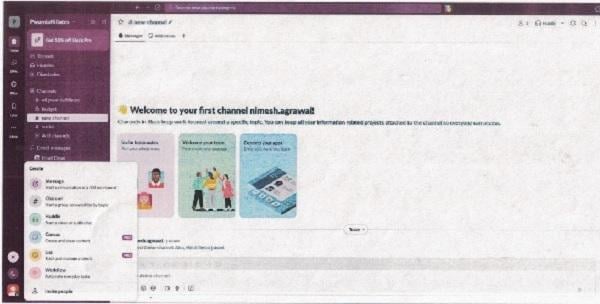
The Tribunal acknowledged that sophisticated processes were undoubtedly used in developing and operating Slack. Software development ordinarily involves system architecture, designing, implementation, testing, maintenance, cloud assurance, frontend interfaces, backend services and databases. The source code is the “lifeline and soul” of the software, because a person having access to it may reproduce the software or commercially exploit it.
However, there was no material to demonstrate that Slack had transferred its source code, proprietary technology, expertise or intellectual property rights to any Indian subscriber. The processes remained exclusively with Slack and were used by Slack itself to provide the digital service. Merely because a service provider uses complex or secret processes while rendering a service does not mean that the customer is given the use or right to use those processes.
The Tribunal compared Slack with commonly used platforms such as Cisco Webex, Zoom, Google Meet, WhatsApp & Facebook. Millions of users employ such platforms to communicate and exchange files, but it would be unrealistic to conclude that those users thereby obtain access to the technology or processes used to develop and operate the platforms.
The statutory and treaty definition of royalty requires consideration for the use or right to use a copyright, patent, trademark, design, secret formula or process. The decisive question, therefore, was whether Indian subscribers were paying for using Slack’s platform or for obtaining a right to use Slack’s proprietary process. The answer, according to the ITAT, was clearly the former.
The Tribunal illustrated the principle beautifully. When a customer visits a fine-dining restaurant and orders a gourmet dish, the amount paid is for the finished dish and not for the culinary process employed in preparing it. The restaurant is not required to disclose its recipe, and the customer is ordinarily not interested in acquiring it. In the same manner, Slack’s customers wanted the finished communication facility and not the technical process through which that facility was created.
The Department could not identify even a single customer who had acquired the right to modify Slack’s software, interfere with its design, replicate it or commercially exploit its intellectual property. Use of a proprietary process by Slack to provide a service and use of the finished platform by the subscriber are two entirely different activities. They could not be mixed together merely because the platform functioned through complex technology.
Accordingly, the ITAT held that the subscription receipts were not royalty under either Explanation 2(iii) to section 9(1)(vi) or Article 12(3)(a) of the India-Ireland DTAA. The amounts constituted Slack’s business receipts and, in the absence of a permanent establishment in India, were not taxable in India. The AO was directed to delete the additions. The claim for short credit of TDS was remitted to the AO for factual verification.
Author’s Comments
This ruling draws an important boundary in the taxation of SaaS & cloud-based subscriptions. The existence of sophisticated technology, continuous backend support or a secret digital process does not automatically convert an ordinary subscription fee into royalty. The Department must establish that the customer acquired the use or right to use the copyright or process itself. Where the intellectual property, source code and operational control remain with the foreign service provider and the subscriber merely enjoys the output or functionality of the platform, the payment ordinarily retains the character of business income, not royalty. The decision effectively reminds the Revenue that access to a technology-enabled service is not the same as access to the technology behind that service.
Cases Discussed
- Engineering Analysis Centre of Excellence Pvt. Ltd. v. CIT [2021] 432 ITR 471 (SC)
FULL TEXT OF THE JUDGMENT/ORDER OF ITAT MUMBAI
Caption appeals have been filed by the assessee challenging the final assessment orders passed u/s.143(3) read with section 144C(13) of the Income Tax Act, 1961 (‘the Act’ for short), pertaining to the assessment years (‘A.Y.’ for short) 2021-22 and 2022-23, in pursuance to the directions of learned Dispute Resolution Panel (‘ld. DRP’ for short).
2. Grounds raised in both the appeals are identical. Ground no.1, being general in nature, does not require adjudication. Ground nos. 2 and 3, if necessary, would be adjudicated at a later point of time. Ground nos. 4 and 5 are interrelated. The substantive issue on merits arising out of these two grounds relates to the nature and character of subscription fee received by the assessee, whether in the nature of royalty u/s. 9(1)(vi) of the Act read with Article 12(3) of the India-Ireland Double Taxation Avoidance Agreement (‘DTAA’ for short).
3. The relevant facts for deciding this issue, briefly stated are, the assessee is a non-resident corporate entity incorporated in Ireland and is a tax resident of that country. As stated by the Assessing Officer (‘A.O.’ for short), the assessee is working as a Rest of the World (‘ROW’) seller of Slack software- a communication software. The assessee sells/supplies the software on subscription basis. In the returns of income filed for the impugned assessment years, the assessee did not offer the subscription charges amounting to Rs.14,48,49,742/- and Rs.74,11,37,632/- respectively, claiming that the receipts are not in the nature of royalty either u/s. 9(1)(vi) of the Act or under Article 12(3) of India-Ireland DTAA. While claiming so, the assessee relied upon the decision of Hon’ble Supreme Court in case of Engineering Analysis Centre of Excellence Private Limited vs. CIT and Ors. [2021] 432 ITR 471 (SC). The returns filed by the assessee were selected for scrutiny.
4. In course of assessment proceedings, the AO called upon the assessee to furnish necessary details relating to the nature and function of the software sold. After verifying the details and referring to certain judicial precedents, the AO concluded that the receipts are towards consideration for transfer of all or any right in respect of copyright, literary, artistic or scientific work, hence, in the nature of royalty under Section 9(1)(vi) of the Act. Without prejudice, he held that the software being in the nature of process used by a computer to achieve a desired result and in the nature of property similar to a patent, invention, design, process, etc., is covered within the scope of royalty u/s. 9(1)(vi) of the Act and Article 12(3) of India-Ireland DTAA. Hence, while framing the draft assessment orders, he treated the receipts as ‘royalty’.
5. Against the draft assessment orders so framed, the assessee raised objections before learned DRP. While dealing with the objections raised by the assessee, learned DRP observed that the software is hosted on Amazon Web Services (‘AWS’ for short), which is the infrastructure provider. The panel observed, the assessee stores all data within AWS US region. Proceeding further, the panel held that the subscription fee received by the assessee is not for the sale of software, but for the provision of services through use of Software as a Service (SaaS) through software as a service process. The panel observed, the processes are used for rendering value-added, high-end services, which mediates communication and supports collaboration on business projects. It observed, the software provides a combination of processes which render cloud-based service, and the service is dependent upon constant process access via internet to the data servers and file hostage devices of the assessee. Thus, according to the panel, it is not a one-time sale of software, but constitutes engagement with customer and provision of access to process. Learned DRP held that the core project of the assessee is service, i.e., online communication, collaboration, file hosting, file sharing, etc., attained through online, cloud-based process. Hence it is not a case of software sale simpliciter but that of access to patented digital process and online services. Based on aforesaid reasoning, ld. DRP ultimately concluded that the receipts are in the nature of royalty. Based on the directions of learned DRP, the assessments were finalized.
6. Before us, learned counsel appearing for the assessee explained the exact functioning of the Slack software. She submitted, the software is nothing but an online platform for communication on subscription basis. She submitted, by using the platform, a subscriber can host a meeting, share messages, files, etc. She submitted, by choosing various subscription plans/packages a subscriber can access the platform using login ID credentials. She submitted, the assessee has given subscription to third-party customers in India simply for use of the platform and the facilities provided therein. No proprietary rights relating to the software were either transferred to the assessee nor any right to use the copyright was transferred. In this context, learned counsel drew our attention to the customer terms of services placed in the paper book. Referring to the terms and conditions contained therein, she submitted that the ownership of the copyrights and all related intellectual property rights are non-transferable and non-exclusive. She submitted, a customer is given access to use the platform as per the subscription plan. No backup copy of the software is permitted. In this context, she drew our attention to the list of the customers subscribing to the platform. She submitted, a subscription is either annual or for a particular period. Learned counsel submitted, while the AO has treated the receipts as royalty by stating that the receipts are towards transfer of copyright, ld. DRP has attempted to segregate the software and it’s features to conclude that what the assessee has delivered to the subscriber is the entire process and not software simpliciter. She submitted, the reasoning of the DRP is wholly irrational, as it cannot be said that while selling off-the-shelf software, the process involved for creating the software is also transferred/sold. Learned counsel submitted, the software sold by the assessee is a communication platform simpliciter and can be equated with Cisco WebEx, Zoom, etc. Thus, she submitted, under no circumstances, the receipts can be treated as ‘royalty’ either under Article 12(3) of India-Ireland DTAA or u/s.9(1)(vi) of the Act. In support of her contentions learned counsel relied upon the following judicial precedents:
| Sr. No. | Decision | Citation |
|---|---|---|
| 1 | MOL Corporation v. DCIT | [(2022) 137 taxmann.com 286 (Delhi Tribunal)] (Ground No.3 – Para 8.1 – 8.5) |
| 2 | CIT v. MOL Corporation | [IT Appeal No. 101 of 2O2s(Delhi HC] (Para 13 – C and Para 16) |
| 3 | CIT v. MOL Corporation | SLP No. 9157 of 2024 (SC) – SLP Dismissed |
| 4 | Salesforce.com Singapore Pte. Ltd. v. DCIT | [(2022) 137 taxmann.com 3 (Delhi Tribunal)] (Para 22 – 30) |
| 5 | CIT v. Salesforce.com Singapore Pte. Ltd. | [(2024) 465 ITR 257 (Delhi HC] (Para 2 – No question on process royalty) |
| 6 | CIT v. Salesforce.com Singapore Pte. Ltd. | [(2025) 177 taxmann.com 201 (SC)] – SIP Dismissed |
| 7 | GoTo Technologies Ireland Unlimited Company v. ACIT | [ITA no.i5i4/Del/2022 (Delhi Tribunal)] (Para 6) |
| 8 | CIT v. GoTo Technologies Ireland Unlimited | [ITA No.282 of 2024 (Delhi HC] (Para 7 -n} |
| 9 | Microsoft Regional Sales Pte. Ltd. v. DCIT | [(2022) 140 taxmann.com 70 (Delhi Tribunal)] (Ground No.3 – Para 7 -7.3} |
| 10 | ADIT v. Til Team Telecom International (P.) Ltd. | [(2011) 12 ITR (T) 688 (Mumbai Tribunal)] (Para 17 – 18) |
| 11 | Adore Technologies Pvt. Ltd. v. ACIT | [ITA No. 702/Del/202i (Delhi Tribunal)] (Para 25 – 29) |
| 12 | Datamine International Ltd. v. ADIT | [(2016) 48 ITR(T) 229 (Delhi Tribunal)] (Para 11) |
7. Strongly relying upon the observations of the AO and ld. DRP, ld. DR submitted that the customer/subscriber in India is not merely receiving the software, but it is receiving communication services, collaboration services, hosting, security, data storage, workflow management, continuous backend functionality. He submitted, every time a user creates channels, stores files, searches conversations, invokes integrations, routes messages and accesses archives, it is not merely receiving a passive output, but actively invoking Slack’s proprietary communication processes. Therefore, the customer’s interaction with the platform is itself the use of the process. Thus, he submitted that the use of process would qualify as ‘royalty’ both u/s. 9(1)(vi) of the Act and Article 12(3) of India-Ireland DTAA.
8. We have given a thoughtful consideration to rival contentions and perused the materials on record. We have also applied our mind to the judicial precedents cited before us. Undisputedly, the assessee is the creator/developer/owner of Slack software. The software, provided on subscription basis, described in simple terms is a communication platform providing for various services, such as, hosting of meetings, messages, sharing of files, etc. The terms and conditions of subscription entitle the customer/subscriber to create a workspace and invite users to that workspace. Once a customer subscribes to the platform, he is given access to log-in through email domain. The functioning of the software and the task it can perform can be visualised through the screenshot of the web page as under:
9. A customer/subscriber can select different plans for subscription, which may be annual or for a particular period. The details of subscription plans are as under:
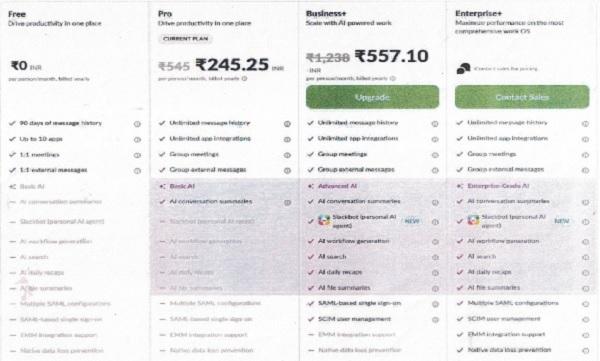
10. As could be seen from the pictorial depictions, the software sold by the assessee on subscription basis is simply a communication platform and nothing else. The terms and conditions of subscription clearly demonstrate that the developer of software, i.e., the assessee, not only owns, but will continue to own the services, including all intellectual property rights. The customer is merely granted a non-exclusive limited license to use the software and nothing more. While the AO has held that the assessee has transferred the right to use the copyright incorporated in the software along with the process, learned DRP referring to various features in the software has stated that it is not a case of mere sale of software, but the assessee is providing high-end services through digital process in real time, and such services have been rendered on account with the use of expertise, experience, technology with intellectual property rights, vested with the assessee. In this context, the following observations of learned DRP are relevant:
7.6.5. Summary:
Hence, this Panel holds that it is not mere software which has been provided by the Applicant, as claimed by the applicant. The “processes and service” involved in this case are the entire chain of processes from data servers, network channels, user interface, back-end services etc. Such activity requires constant and consistent application of experience and expertise, human as well as digital. Hence, the activity of the applicant has to be view from this angle.
The service provided is not mere “Sale of Software” as portrayed by the applicant; but rendition of Services through Digital Processes in real time. Such service has been rendered on account with the use of experience, expertise and technology and secret processes with Intellectual Property Rights vested in the applicant.
11. Before we deal with the acceptability or otherwise of the reasoning of learned DRP, it is necessary to observe, post COVID-19 there has been a paradigm shift in working system and conduct of business. The changed dynamics compelled not only the corporate world/private sector but even the Government/semi-Government establishments to adopt the culture of work-from-home. Business meetings, office work and judicial proceedings came to be conducted through virtual mode using various online platforms such as Cisco Webex, Zoom, Google Meet, etc. These platforms can be used through subscription either on annual basis or for a particular period. A subscriber is given access through subscription only for the use of the platform and the facilities provided therein. While providing access to the platform, the developer/owner of the software neither transfers the right to use the copyright or any intellectual property embedded therein to the subscriber. A subscriber is only given access to use the platform as per its subscription plan. Once the subscription plan ends, the subscriber cannot have access to the platform or use it unless the plan is renewed. By subscribing to the plan, a customer/subscriber does not get a vested right/title/interest in the software either to use it for indefinite period or replicate it or exploit it commercially. At least, no such instance has been brought on record by the departmental authorities to demonstrate any commercial exploitation of the software or transfer of ownership over the software.
12. As discussed earlier, while the AO has held that the assessee has transferred the right to use the copyright, learned DRP has held that the assessee has not sold the software simpliciter, but has sold it with the process involved in the software through which it is rendering value-added services to the subscribers. As far as, the observations of the AO are concerned, it can authoritatively be said that the AO has miserably failed to demonstrate that by subscribing to the software, customers have acquired the right to use the copyright. Therefore, it can be said that it is a sale of software simpliciter without transferring the right to use the copyright. In so far as, the observations of learned DRP that the assessee has provided value-added services by using complex processes of the software, we may say that the development of software progresses through various stages including architecture, system designing, implementation, testing, and cloud assurance, maintenance, etc. The most crucial parts in software development lifecycle is the archives, system designing and the implementation. The implementation involves coding, which is a very complex process involving programming language and tools to create front-line interface, back-end services, and databases. In other words, it is known as the Source Code. So to say, the Source Code is the lifeline and soul of the software. A person having access to the Source Code can not only replicate the software, but exploit it commercially.
13. Thus, it has to be seen whether in the facts of the present case the source code of the software was transferred. On a careful reading of the assessment order, as also the directions of learned DRP, we do not find any material brought on record to demonstrate that while selling the subscription plans to the subscriber/customer, the assessee has either transferred the source code or the intellectual property rights in the software. It is the reasoning of learned DRP that the assessee is providing high-end services through various digital processes. We fully concur with the observations of learned DRP that the assessee certainly is providing services to its customers/subscribers through complex processes involved in the software. However, the moot question is, whether such processes are transferred to the subscribers/customers or the assessee itself is using the processes to provide services. The answer to the aforesaid question can be found in the observations of learned DRP, wherein, it has observed that the assessee has provided complex, technical, and value-added services through processes. In other words, the processes are used by the assessee and not the subscribers.
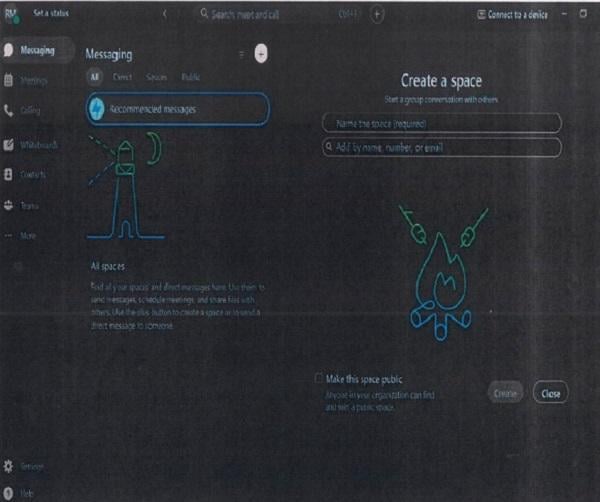
14. As on date, various online platforms are being used on regular basis for hosting meetings for office/business work, as also, judicial proceedings in Courts, Tribunals and before Quasi-Judicial Authorities. In this context, we may refer to the screenshot of the webpage of Cisco Webex, a widely used communication platform, as under:
15. A comparative analysis of the functions performed by the Slack software and Cisco Webex demonstrate that they are functionally similar. Unmistakably, it is the case of the department that what the assessee has provided to the customer / subscriber in India is a process. In this context, both the AO and ld. DRP have referred to Explanation 2, Clause (iii) under Section 9(1)(vi) of the Act and Article 12(3)(a) of the Treaty. As per Explanation 2(iii) under Section 9(1)(vi) of the Act, the receipts towards the use or right to use of any patent, invention, model, design, secret formula or process or trade mark or similar property is to be treated as ‘royalty’. Whereas, as per Article 12(3)(a) of the Treaty, any consideration for the use of or the right to use, any copyright of literary, artistic or scientific work (including cinematographic films, and films or tapes for radio or television broadcasting), any patent, trademark, design or model, plan, secret formula or process can be treated as ‘royalty’. Thus, in sum and substance, it is the say of the departmental authorities that the assessee has transferred the use, or the right to use of process.
16. At the cost of reiteration, we would like to stress that what the assessee has provided to the customers in India is an access to an online communication platform on subscription basis. The platform can only be used by subscriber for holding meetings, transferring files, sharing notes, etc. Neither the subscription agreement nor any other material available on record demonstrate that the assessee has transferred the use or right to use any process involved in the development of the software. The question which arises is, ‘whether the subscribers of the software are making payment for use of the platform or the right to use of the process?’ The answer to the aforesaid question would obviously be in the negative. Presently, millions of users use various online platforms like Cisco Webex, Zoom, Google Meet, WhatsApp, facebook etc. not only to communicate, but to share audio/video files, notes, etc. It would be preposterous to even assume that the persons using the platforms also have access to the technology or the processes involved in developing the software.
17. The issue can be further explained through a simple illustration. When a customer visits a fine dine restaurant and orders a gourmet dish, the cost the customer pays is of the dish and not the process involved in preparing the dish. Neither the service provider is obliged to reveal the process to the customer nor the customer is interested in acquiring the process that has gone into preparing the dish. What the customer wants is the finished product and not the process involved in creating the finished product.
18. In the facts of the present case, the customers/subscribers using assessee’s software/ platform are more than hundred. The department has not even referred to a single instance of a customer to demonstrate that by subscribing to the license to use the software/platform, it has acquired ownership over the intellectual property rights embedded in the software to use it as owner of the copyright to modify, make value addition, replicate and exploit commercially. If we accept the reasoning of the department, then it has to be understood that the customers/subscribers of the assessee are in a position to not only use the software indefinitely according to their will, but can exploit it commercially. No such fact has been established on record. On the contrary, the materials on record demonstrate that the subscribers/customers have only been given access to use the software and its features for the designated activities. The customers/subscribers have not been vested with any right to either modify the design of the software or tinker with the processes gone into developing the software. User of the process involved in the software by the assessee to provide services to the customers and permitting the customers to use the software simpliciter without having any access to the process, are two distinct activities, hence, cannot be mixed up. Once ld. DRP holds that the assessee uses the processes to render services to the customers/subscribers, that by itself demonstrates that the use or right to use the copyright or process has not been transferred to the customers/subscribers.
19. Thus, on overall consideration of facts and materials available on record and applying the ratio laid down in the judicial precedents cited before us, we are firmly of the view that the receipts do not fall within the definition of ‘royalty’, either under Article 12(3)(a) of the Treaty or under Explanation 2(iii) under Section 9(1)(vi) of the Act. Once it is held that the receipts are not in the nature of royalty, it can only be treated as business receipts of the assessee and in absence of a permanent establishment, are not taxable in India. Accordingly, the AO is directed to delete the additions.
20. In view of our decision in the foregoing paragraphs, ground no. 5 has become redundant. For the same reasons, the legal issue raised in ground nos. 2 and 3 in both the appeals, having become academic, are kept open. In ground no. 6 in both the appeals, the assessee has raised the issue of short grant of TDS credit. Having considered rival submissions, we direct the A.O. to factually verify assessee’s claim and allow TDS credit in accordance with law. Ground nos. 7, 8 and 9 being either consequential or premature, are dismissed.
21. In the result, both the appeals are partly allowed.
Order pronounced in the open court on 15.09.2026.