The Companies Act is a legislation that governs the formation, functioning, and management of companies. Explore the key provisions, compliance requirements, and legal framework under the Companies Act.
Company Law : Learn which companies must file MGT-7 or MGT-7A, when MGT-8 certification is mandatory, and how the Companies (Management and Admi...
CA, CS, CMA : A comprehensive guide covering 175 legal compliances for July 2026 under FEMA, Income Tax, GST, SEBI, Companies Act, Labour Laws, ...
Company Law : Learn how the Companies Act, 2013 regulates managerial remuneration through profit-linked limits, approval requirements, and gover...
Company Law : The article explains that SBI and PNB are statutory bodies created under separate Acts and are therefore not governed by the Compa...
Company Law : The article examines the Hamlin Trust ruling, where the NCLAT held that CFO appointments must satisfy Section 203 eligibility requ...
Company Law : ICSI has urged the MCA to ensure eligible companies comply with Section 203 by appointing Whole-time Company Secretaries. The repr...
Corporate Law : NSO has launched the Annual Survey of Incorporated Services Sector Enterprises (ASISSE) to collect comprehensive economic and oper...
Company Law : ICSI has requested the MCA to grant compliance relaxations following technical disruptions caused by the Data Centre fire. The pro...
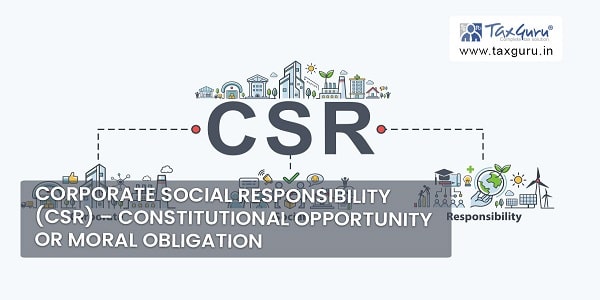
Company Law : The MCA has widened CSR eligibility by recognizing subscriptions to Zero Coupon Zero Principal Instruments as a valid CSR activity...
Company Law : Provisional list of audit firms of listed companies yet to file NFRA-2 for 2023-24. Filing deadline was 30.11.2025; fines apply fo...
Company Law : Madhya Pradesh HC dismissed a winding up petition, holding that a bona fide dispute over liability required adjudication before th...
Company Law : The NCLAT held that CFO nominees must satisfy the eligibility requirements under Section 203 of the Companies Act. It set aside th...
Company Law : Where a composite scheme of arrangement satisfies the procedural requirements of sections 230 to 232 of the Companies Act, 2013 an...
Company Law : NCLT Mumbai compounded the offence for failure to hold the AGM within the time prescribed under Section 96 of the Companies Act, 2...
Company Law : The NCLT Ahmedabad refused to condone a 4,215-day delay in filing an appeal for restoration of a struck-off company. The Tribunal ...
Company Law : MCA extends the Companies Compliance Facilitation Scheme, 2026 up to 31 August 2026 due to data center restoration following the...
Company Law : MCA has allowed companies to file Form DPT-3 for FY 2025-26 without additional fees until 31 July 2026 due to disruptions caused b...
Company Law : MCA notifies the New Development Bank under Section 2(11)(ii) of the Companies Act, 2013, specifying it as a body corporate for th...
Company Law : ROC Mumbai penalized a director after Form AOC-4 contained an incorrect AGM due date. The order emphasizes that directors are resp...
Company Law : ROC Mumbai imposed a penalty after finding that an individual held two Director Identification Numbers in violation of Section 155...
Section 185(1) of Companies Act 2013 primarily deals with the subject; Person to whom Company cannot give loan/ guarantee/ security. It basically covers individuals and firms: It states that, A Company shall not, directly or indirectly, advance any loan (including book debt) or give any guarantee or provide any security in connection with any loan […]
Learn the process of transferring shares to IEPF (Investor Education and Protection Fund) as mandated by the Companies Act, 2013. Discover the steps companies take and understand how to claim back these shares, ensuring compliance with the regulations.
Explore the responsibilities of auditors under the National Financial Reporting Authority (NFRA) in India. NFRA ensures fairness, transparency, and prevents corporate frauds by setting accounting and auditing standards. Auditors are expected to maintain independence, report irregularities, and comply with NFRA guidelines, contributing to a disciplined and transparent corporate sector. Stay informed about the key duties of auditors for investor protection.
Explore the key features of the Ministry of Corporate Affairs (MCA) 3.0 portal in India. With a new e-form system, e-payment, e-KYC, and e-Governance, MCA 3.0 aims to streamline company registration and compliance, making the process more efficient and convenient. Stay updated with the latest advancements in Indian business services.
Unlock the potential of Employee Stock Ownership Plans (ESOPs) in India by navigating compliance requirements. Explore the overview, compliance obligations, benefits, and tools to ensure seamless ESOP compliance. Empower your employees while safeguarding investor interests.
Surendra Kumar Singhi Vs Registrar of Companies, West Bengal & Anr (Calcutta High Court) Sub- What is the criteria for determining whether the director is an additional director or independent director? Also whether an additional director is liable for prosecution regarding the non reporting of fullest information and explanation in the Board’s report on comments […]
Employee Stock Option Plans (ESOPs) serve as a wonderful motivator for such companies to employ and retain resources committed to company’s goal.
1) Trademark validation is added in Incorporation Form. 2) Every User has to create his/her id on the portal and have to register DSC through their respective login. 3) E-MOA and E-AOA is added for Section 8 Company. 4) E-Form DIR-2 is added. Most of Physical Form has been removed. 5) NIC Code 2008 needs […]
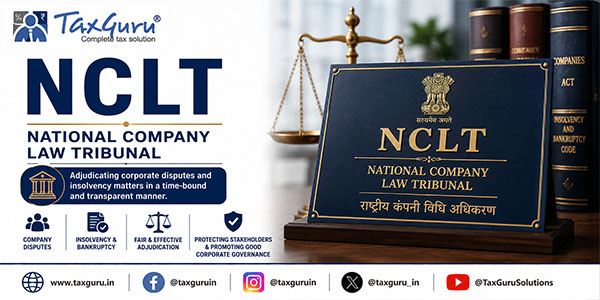
Compounding of Offences Under the Companies Act, 2013 The Companies Act, 2013 provides for the compounding of certain offences committed by companies or their directors, officers, and other employees. The Act empowers the National Company Law Tribunal (NCLT) or the Regional Director (RD) to compound the offences committed under the Act. The compounding of offences […]
Today new V3 portal has been implemented by Infosys with many changes on process of forms 1. Now every time to login in V3 requires an OTP creating a lot of inconvenience. 2. Now every DIN holder has update DSC in v3 again even if that was registered in V2 already. 3. To update the […]