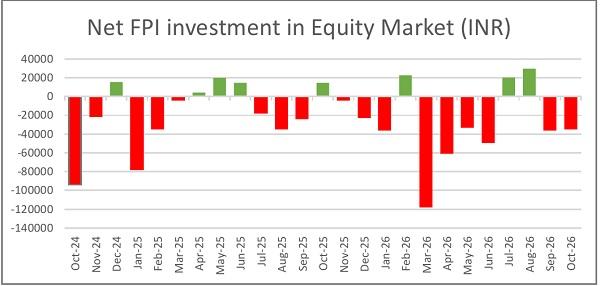
Summary: SEBI, through its consultation paper issued on 20 November 2026, has invited public comments on five proposals to strengthen governance of recognised stock exchanges, clearing corporations, including Limited Purpose Clearing Corporations (LPCCs), and depositories. The proposals concern Public Interest Directors (PIDs), Managing Directors (MDs), Executive Directors (EDs), board committees and stakeholder representation. They are proposed changes to the SECC Regulations, 2018 and the Depositories and Participants Regulations, 2018, rather than amendments already in force. For PIDs, SEBI proposes reducing the maximum age from 75 to 70 years and the aggregate tenure from three three-year terms to two. For MDs, it proposes a five-year maximum single term, eight years in one MII and twelve years across MIIs, with a fifteen-year transitional overall limit for existing MDs. For EDs, the proposed ceilings are eight years in one MII and sixteen across MIIs; combined ED and MD service would be capped at twelve years in one MII and twenty across MIIs. Existing officeholders could complete their ongoing terms. Other proposals extend simultaneous-directorship restrictions to associates of MIIs and limit each PID to four statutory committees.
Securities and Exchange Board of India
Consultation Paper on Strengthening the Governance of Market Infrastructure Institutions (MIIs)
SEBI- Nov 20, 2026 | Reports : Reports for Public Comments
Click here to provide your comments
1. Objective
1.1. The objective of this consultation paper is to seek comments / suggestions from the public and stakeholders on the proposals relating to strengthening the governance of recognised stock exchanges, recognised clearing corporations (including Limited Purpose Clearing Corporations) and depositories (collectively referred to as “Market Infrastructure Institutions” or “MIIs”) under the Securities Contracts (Regulation) (Stock Exchanges and Clearing Corporations) Regulations, 2018 (“SECC Regulations”) and the Securities and Exchange Board of India (Depositories and Participants) Regulations, 2018 (“D&P Regulations”).
2. Background
2.1. Market Infrastructure Institutions (MIIs), namely stock exchanges, clearing corporations and depositories, are the backbone of the securities market. They provide the platforms on which securities are traded, cleared, settled and held. They are governed by the Securities Contracts (Regulation) (Stock Exchanges and Clearing Corporations) Regulations, 2018 (SECC Regulations) and the Securities and Exchange Board of India (Depositories and Participants) Regulations, 2018 (D&P Regulations).
2.2. MIIs perform a first-line regulatory role over their members, participants and issuers. Public trust in the market therefore depends on the independence, competence and periodic renewal of their governing boards and senior leadership. The governance framework under the SECC Regulations and the D&P Regulations rests on three pillars: Public Interest Directors (PIDs), who hold a quasi-regulatory position on the board; a Managing Director (MD) and Executive Directors (EDs) who run the institution; and statutory committees through which the board discharges its oversight functions.
2.3. In view of the above, this consultation paper seeks comments / suggestions from the public and stakeholders on the following proposals related to the governance of MIIs:
2.3.1. Proposal 1: Reduction in the age limit of PIDs from 75 years to 70 years and the upper limit on number of terms across MIIs from 3 to
2. 2.3.2. Proposal 2: Revised limits on the term and tenure of MDs and EDs of MIIs.
2.3.3. Proposal 3: Extension of the restriction on simultaneous directorships of PIDs to associates of MIIs.
2.3.4. Proposal 4: Reduction in the cap on the number of statutory committees on which a PID may be a member, to four.
2.3.5. Proposal 5: Permitting the Chief Executive of the Association of Mutual Funds in India (AMFI), ex officio, to be appointed on the governing board of a recognised Limited Purpose Clearing Corporation (LPCC), subject to conditions including safeguards against conflicts of interest.
3. Proposal 1: Reduction in the age limit of PIDs from 75 years to 70 years and the upper limit on number of terms across MIIs from 3 to 2
3.1. Current Framework: A PID may be appointed subject to the maximum age limit of 75 years. The PID can be appointed for the term of 3 years. The said term is extendable by further term of 3 years in the same MII, or a third tenure of 3 years in another MII. The total limit is therefore 3 terms of 3 years each across MIIs.
3.2. Proposed Framework: A PID may be appointed subject to the maximum age limit of 70 years. The PID shall be appointed for the term of 3 years. A PID may serve one tenure of 3 years, a second tenure of 3 years on reappointment in the same MII or appointment in another MII. The total limit is, therefore, proposed to be of 2 terms of 3 years each across MIIs.
3.3. Rationale: The proposal is based on the following considerations:
3.3.1. Quasi-regulatory role. A PID is not an ordinary independent director. The PID sits on the board of an institution that performs first-line regulatory functions and is expected to safeguard the interests of the securities market and its investors, rather than those of any shareholder. The role therefore carries obligations that are closer to those of a regulator than of a company director.
3.3.2. A more demanding role than an ordinary non-executive role. PIDs meet separately among themselves, lead or sit on several statutory committees, take part in structured performance reviews and report on matters that may involve conflicts of interest for the MII or an impact on the market. The workload, time commitment and sustained alertness required are materially higher than for a non-executive director of a typical company. The age limit should reflect these demands.
3.3.3. Change in landscape and skill set requirement. MIIs operate in an environment of faster, technology-intensive and more interconnected markets, wider product ranges and greater expectations on resilience and risk management. The skills expected of a PID now include familiarity with rapidly changing technology, cyber and operational risk, and investor- protection practices, in addition to experience in law, finance, regulation or public administration. An age limit of 70 years supports a PID cohort whose experience and skills remain current and who can serve a full term with undiminished engagement.
3.3.4. Stops a narrow pool from recycling. Because a PID may serve up to 3 terms across MIIs, a small group of individuals can move from one MII to another over many years. A lower age limit and a lower term limit brings about periodic renewal of the PID cohort, opens the position to a wider and more diverse set of professionals and strengthens the independence of the board from long-standing familiarity. It also brings new ideas and initiatives.
4. Proposal 2: Revised limits on the term and tenure of MDs and EDs of MIIs
A. Managing Directors
4.1. Current Framework: The framework is as below:
4.1.1. The first tenure of an MD can be upto extendable upto 5 years.
4.1.2. An MD may serve a maximum of 10 years in a single MII. The person may then become MD of another MII for on similar terms again, totalling a maximum of 10 years.
4.1.3. There is no limit on the total term across MIIs. The maximum age limit is 65 years.
4.2. Proposed Framework: It is proposed that:
4.2.1. a single term of an MD shall not exceed 5 years;
4.2.2. an MD may serve a maximum of 2 terms, for a maximum period of 8 years, in a single MII;
4.2.3. an MD may serve 3 terms across MIIs; and
4.2.4. the total period as MD across the MIIs shall not exceed 12 years. However, for an individual already serving as an MD as on the date of commencement of this amendment, the overall period as an MD across MIIs shall not exceed 15 years, to provide for smooth transition.
4.3. Rationale: The proposal is based on the following considerations:
4.3.1. Key man risk and risk of entrenchment: The MD is the most influential executive of an MII. A long continuous tenure, followed by a similar tenure at another MII, can concentrate institutional knowledge, relationships and decision-making in one individual. Over time this raises the risk that the institution depends on a single person and that the MD becomes entrenched in a way that weakens the checks exercised by the board and by SEBI. A defined ceiling on tenure addresses this risk in advance.
4.3.2. Capping influence over the ecosystem: At present nothing limits the total period for which a person may head MIIs. A person can lead one MII for 10 years and then another for a further 10 years, and so on. As MIIs are interconnected through clearing, settlement, depository and market- data linkages, an individual who heads several of them in succession may carry a disproportionate influence over the whole ecosystem. Thus, total ceiling of 12 years across MIIs may keep that influence within a defined limit.
4.3.3. First-line regulatory nature of MIIs: MIIs frame and enforce rules for members and participants, and SEBI relies on them to detect and address problems at the first instance. The head of such an institution should hold office for a period that preserves objectivity and the ability to take unpopular decisions, and should not be positioned for an open-ended association with the institution or the industry it oversees.
4.3.4. Scope for evolution and new ideas: A fixed ceiling ensures regular leadership renewal. New leaders bring fresh perspectives, different mindsets and new approaches to technology, risk management and investor service, which supports continued evolution of the institution.
B. Executive Directors
4.4. Current Framework: The term and tenure of EDs are aligned with those of MDs.
4.5. Proposed Framework:
4.5.1. a single term of an ED shall not exceed 5 years;
4.5.2. as ED, a person may serve an aggregate of not more than 8 years in a single MII and not more than 16 years across MIIs; and
4.5.3. as ED and MD taken together, a person may serve an aggregate of not more than 20 years across MIIs, subject to a maximum of 12 years (as ED and MD together) in a single MII.
| Position held | Single term | Maximum in a single MII | Maximum across MIIs |
|---|---|---|---|
| ED | Up to 5 years | 8 years | 16 years |
| ED and MD together | Up to 5 years | 12 years | 20 years |
4.6. Rationale: The proposal is based on the following considerations:
4.6.1. Preventing EDs from becoming a successor channel across MIIs: If EDs are subject to the same terms as MDs, the position of ED can become a standing pipeline through which the same individuals move from ED to MD, and from one MII to another, for very long periods. The cap on aggregate service as ED, and on combined service as ED and MD, ensures that the ED position does not defeat the tenure limits proposed for MDs.
4.6.2. Support for succession and continuity planning: The ED position is a natural step in the development of future MDs. Defined aggregate limits give each MII a predictable framework to plan its leadership pipeline, to groom successors internally and to time transitions without sudden gaps in leadership.
4.6.3. Balance between key man risk and the growth expectations of the workforce: Limits on MD tenure address key man risk. At the same time, staff of MIIs who aspire to senior executive positions should see a credible and orderly path to growth. A ceiling of 8 years as ED in a single MII, with a combined ceiling of 12 years as ED and MD, allows a career path to the top while keeping all executive tenures within known bounds.
4.6.4. The outer limit of 20 years across MIIs, as ED and MD together, ensures that the total period for which an individual may hold executive directorships across the MII ecosystem is finite and predictable.
4.7. For the proposals 1 and 2, a PID, MD or ED holding office on the date of commencement of these amendments shall continue to hold office till the end of the ongoing term, as per the terms on which they were appointed.
5. Proposal 3: Extension of the restriction on simultaneous directorships of PIDs to associates of MIIs
5.1. Current framework: Under Regulation 24(4) of the SECC Regulations and Regulation 25(4) of the D&P Regulations, a PID on the board of an MII shall not act simultaneously as a director on the board of its subsidiary, on the board of any other MII or on the board of a subsidiary of such other MII. The restriction does not extend to associates of MIIs.
5.2. Proposed Framework: It is proposed that the restriction be enhanced so that a PID shall not hold simultaneous directorships on the boards of any MII, its subsidiaries or its associates.
| Entities on whose boards a PID cannot simultaneously be a director | Current | Proposed |
|---|---|---|
| Subsidiaries of the MII on whose board the PID sits | Yes | Yes |
| Any other MII | Yes | Yes |
| Subsidiaries of any other MII | Yes | Yes |
| Associates of the MII on whose board the PID sits | No | Yes |
| Associates of any other MII | No | Yes |
5.3. Rationale: The proposal is based on the following considerations:
5.3.1. An associate is a connected entity in substance. An associate is an entity which holds a significant control or voting power on an MII. In substance, such an entity is connected to the MII, and the interests of the two are closely aligned.
5.3.2. It closes the structuring gap. A restriction confined to MIIs and their subsidiaries can be avoided by placing an activity or investment in an associate, rather than in a subsidiary. Therefore, the the restriction needs to be extended to associates.
5.3.3. It protects the PID’s oversight role. A PID is expected to give independent, undivided and un-conflicted attention to the MII on whose board the PID sits. Simultaneous directorships in connected entities can divide the PID’s time and may also create conflict of interest. A wider restriction safeguards the independence of the PID and the credibility of the oversight role in the eyes of the market.
6. Proposal 4: Reduction in the cap on the number of statutory committees on which a PID may be a member, to four
6.1. Current Framework: An MII has 6 statutory committees in total as per SECC Regulations. A PID may be a member of at most 5 committees. The provision does not clearly state whether this limit applies to all committees of the board or only to statutory committees. If it applies to all committees, it is restrictive. If it applies only to statutory committees, a PID can be a member of 5 out of the 6 statutory committees.
6.2. Proposed Framework: It is proposed that the cap be fixed clearly at 4 statutory committees, that is, a PID may be a member of not more than 4 statutory committees of an MII.
6.3. Rationale: The proposal is based on the following considerations:
6.3.1. Clarity. A cap stated expressly in terms of statutory committees removes the present uncertainty about whether non-statutory committees count towards the limit, and gives MIIs and PIDs a single, clear standard to follow.
6.3.2. Meaningful participation. Statutory committees take decisions of regulatory importance, and PIDs are expected to take an active part in them. A PID who is a member of five of the six committees may leave very little scope to prepare for, attend and contribute to each of them. A cap of 4 allows more time and attention for each committee.
6.3.3. Distribution of oversight. A lower cap leads to wider participation by all PIDs in committee work, avoids reliance on a few PIDs for most committees and results in a more balanced allocation of responsibilities within the board.
7. Proposal 5: Permitting ex-officio representative of the Association of Mutual Funds in India (AMFI), to be appointed on the governing board of a recognised Limited Purpose Clearing Corporation (LPCC)
7.1. Background and Current Framework
7.1.1. In its board meeting held on September 29, 2020, SEBI had approved the proposals for amendments to the SECC Regulations and the relevant circulars to facilitate the setting up of a LPCC for clearing and settlement of repo transactions in corporate bonds. Mutual funds, being major lenders in the repo market and the dominant participants in the secondary market for corporate bonds, were considered to have the desired incentive for setting up the LPCC and AMCs were accordingly expected to contribute to its capital.
7.1.2. The memorandum placed before the SEBI Board on September 29, 2020 had, inter alia, proposed that a representative of AMFI for a fixed term and a representative of one of the top three public sector issuers of debt securities on a rotational basis, be permitted on the governing board of the LPCC in the category of shareholder directors. The rationale then given was that active participation of the stakeholders of the repo market on the governing board could be valuable, particularly in the initial years and that a representative of AMFI, a non-profit body representing the entire body of AMCs, would avoid the difficulty of accommodating representatives of individual AMCs.
7.1.3. The SEBI-Board approved the proposals with the following modification: “The representative of AMFI shall not be appointed on the governing board of the LPRCC.” The provision for the representative of public sector issuers was notified and presently forms sub-regulation (2) of Regulation 22C of the SECC Regulations.
7.1.4. Pursuant to the decision of the SEBI-Board, AMCs contributed Rs. 150 crore towards the share capital of the AMC Repo Clearing Ltd., the first LPCC, in proportion to their average AUM of open-ended debt oriented schemes for FY 2020-21, in terms of SEBI circular SEBI Circular No. SEBI/HO/IMD/DF2/CIR/P/2021/17 dated February 02, 2021. Total of 37 AMCs contributed to the capital. AMC Repo Clearing Limited (ARCL) was granted recognition as an LPCC and commenced operations in July 2023.
7.1.5. In terms of the Directions for Central Counterparties (CCPs) issued by RBI a CCP is required to have a minimum net worth of Rs. 300 crore. The net worth of ARCL stood at Rs. 138.98 crore as on June 30, 2026. In the absence of QCCP status granted by RBI, banks and primary dealers are required to hold significantly higher capital against their exposure to ARCL, which limits their participation. Further, no other entity including entities regulated by RBI are mandated to contribute to the capital of ARCL. Therefore, the ARCL is in risk of de-recognition if it fails to raise capital to comply with net worth requirement of RBI..
7.1.6. The proposal for representation of AMFI was considered by the SEBI- Board in 2020, before the LPCC was set up. Since then, the circumstances relating to the LPCC have changed materially, as brought out below, which warrant a fresh consideration of the matter:
7.1.6.1. ARCL is operational and growing. The traded value of tri-party repo cleared by ARCL rose from Rs. 33,778 crore in FY 2023- 24, its first year of operations, to Rs. 8.19 lakh crore in the first half of FY 2026-27 alone. The average daily value rose from Rs.211 crore to Rs. 6,656.79 crore over the same period..
7.1.6.2. Mutual funds are the principal users of the ARCL platform. In August 2026, mutual funds accounted for 98.49% of the lending value and 97.38% of the lending trades on ARCL. The repo rates on ARCL have been observed to be 15 to 25 basis points higher than the corresponding TREPS rates, and this benefit accrues to the investors in debt schemes.
7.1.6.3. While ARCL requires further capital, no other market participant has shown any concrete interest in significant capital contribution. The primary reason is that an investment in ARCL, a clearing corporation that bears counterparty risks, carried no dividend and exit until early 2027, and also its shares are not listable. In such a scenario, to prevent the functioning of an important MII from coming to a stop, AMCs are expected to contribute again. At the same time, there is no provision in the SECC Regulations for the AMCs, as a body, to be represented on its governing board.
7.1.6.4. The urgency of the capital requirement has increased as the timeline of compliance is nearing and ARCL also needs capital for development of its own clearing and settlement system, required to address RBI’s concerns on outsourcing.
7.1.6.5. Since contribution of further capital is required, representation of the owners would bring business interest and expenditure control for required activities in the governing board. The AMCs, as the owners of ARCL, have a direct interest in its commercial viability, cost structure, product development and growth in volumes. Their representation would complement the focus of the public interest directors on regulatory and risk management matters.
7.1.6.6. Further, governance standards of MIIs have been significantly enhanced since 2020. The functions of an MII are now segregated into three verticals under Part C of Schedule II of the SECC Regulations: critical operations; regulatory, compliance, risk management and investor grievance functions; and other functions including business development. The first two verticals are headed by executive directors who are key management personnel and are required to perform their functions in the interest of the securities market, without revenue-oriented objectives. This segregation, together with an independent internal audit, gives effect to three lines of defence within the MII: operations as the first line, risk management and compliance as the second line, and internal audit as the third line. Oversight is further exercised through the statutory committees of the governing board and through the performance review of public interest directors and the statutory committees. In this framework, the presence of one non-independent director representing the owners on the governing board of an LPCC is adequately counterbalanced.
7.2. Proposed Framework: It is proposed as follows:
7.2.1. The Chief Executive of AMFI, ex officio, may be appointed on the governing board of a recognised LPCC, notwithstanding the restrictions under sub-regulations (6) and (7) of Regulation 23 of the SECC Regulations.
7.2.2. Such appointment shall be subject to such conditions as may be specified by the SEBI, including those relating to contribution by AMCs to the share capital of the LPCC.
7.2.3. The Chief Executive of AMFI so appointed shall be deemed to be a nominee director and, in terms of the proviso to sub-regulation (1) of Regulation 23 of the SECC Regulations, shall be treated as a non- independent director. The requirement that the number of public interest directors shall not be less than the number of non-independent directors shall continue to apply.
7.2.4. The appointment shall be with the prior approval of SEBI under Regulation 24(1) of the SECC Regulations and subject to the fit and proper criteria. The director shall cease to hold office on the governing board of the LPCC upon ceasing to be the Chief Executive of AMFI.
7.2.5. Safeguards to prevent conflict of interest. As mutual funds are the principal trading participants on ARCL, the representation of AMFI on its governing board could give rise to conflicts of interest in matters such as risk parameters and default management. These are proposed to be addressed through the safeguards set out below by way of a circular:
7.2.5.1. the Chief Executive of AMFI as a Non-Independent Director shall not be a member of the Risk Management Committee, the Members Committee or the Regulatory Oversight Committee of the LPCC;
7.2.5.2. the Chief Executive of AMFI shall recuse from decisions of the governing board relating to risk management parameters, the Core Settlement Guarantee Fund, default management and matters relating to specific participants; and
7.2.5.3. the Chief Executive of AMFI shall not have access to data relating to individual participants.
7.2.6. The safeguards above are additional requirement proposed in view of the position of mutual funds as the principal participants on the LPCC.
7.3. Rationale: The proposal is based on the following considerations:
7.3.1. Representation through AMFI rather than individual AMCs. The capital of ARCL is held by 37 AMCs. Representation of individual AMCs would either be impracticable or would result in the larger AMCs being represented to the exclusion of others. AMFI, a non-profit body representing all AMCs, provides a collective voice for the shareholders, as recognised in the memorandum of 2020.
7.3.2. Representation through the Chief Executive of AMFI. The Chief Executive of AMFI is a full-time professional appointed by AMFI and is not an employee of any AMC. On the other hand, the Chairperson and the Vice-Chairperson of AMFI are serving heads of AMCs, whose mutual funds are participants on ARCL. Representation through the Chief Executive, ex officio, therefore avoids a conflict of interest at the level of an individual AMC and provides continuity, as the seat is attached to the office rather than to an individual directly linked to a particular AMC.
7.3.3. Linkage with further capital contribution. Linking the representation with further contribution by AMCs aligns the voice of the owners in governance with their capital commitment and provides an incentive for the capital infusion required by ARCL. Specifying the conditions by way of a circular would allow the SEBI to calibrate them to the capital requirement of the LPCC from time to time.
8. Proposal Summary:
| Sr. | Current Framework | Proposed Framework | Rationale for change (in brief) |
|---|---|---|---|
| Proposal 1 | Age limit of a PID is 75 years. Term is 3 years. A PID may serve a maximum of 3 terms of 3 years each across MIIs. | Age limit of PIDs to be reduced to 70 years. The maximum a PID may serve to be reduced to 2 terms of 3 years across MIIs. | The PID role is quasi-regulatory and more demanding than that of an ordinary non-executive director; the skill set required has changed; and a lower age limit widens the pool of candidates over time. |
| Proposal 2A | MD: up to 5 years per term, with a second term treated like a fresh appointment, so up to 10 years in one MII and a similar 10 years in another MII. No limit on total term across MIIs. Maximum age of 65 years. | Single term of not more than 5 years. Maximum of 2 terms and 8 years in a single MII, and maximum of 3 terms and 12 years as MD across the MIIs. (15 years across MIIs for the incumbents) | Guards against key man risk and entrenchment, caps influence over the ecosystem, reflects the first-line regulatory nature of MIIs and creates room for new ideas. |
| Proposal 2B | Term and tenure of EDs is aligned with that of MDs. | Single term of not more than 5 years. As ED: 8 years in a single MII and 16 years across MIIs. As ED and MD together: 12 years in a single MII and 20 years across MIIs. | Supports succession planning and balances key man risk with the career expectations of MII staff. |
| For the proposals 1 and 2, a PID, MD or ED holding office shall continue to hold office till the end of the ongoing term. | |||
| Proposal 3 | PIDs may not hold simultaneous directorships on the boards of a subsidiary of the MII, any other MII or a subsidiary of any other MII. | Restriction extended to associates of all MIIs. | An associate is a connected entity in substance; the change closes a structuring gap and protects the oversight role of the PID. |
| Proposal 4 | Six statutory committees in total. Per-PID limit of 5 committees, without clear delineation of whether the limit covers all committees or only statutory committees. | A PID may be a member of not more than 4 statutory committees. | Provides clarity, spreads oversight workload and allows each PID to give adequate attention to every committee. |
| Proposal 5 | No provision for representation of AMCs, the owners of the LPCC, on its governing board. | The Chief Executive of AMFI, ex officio, may be appointed on the governing board of a recognized LPCC as a non-independent director, with the prior approval of SEBI and subject to conditions specified by circular, including capital contribution by AMCs. | Gives the AMCs that own the LPCC a collective voice, linked to the further capital it needs. Avoids conflict at the level of an individual AMC. Safeguards address conflicts arising from mutual funds being the principal participants. |
9. Public comments
9.1. Kindly provide your comments on the following items, along with supporting rationale:
9.1.1. Whether the age limit of PIDs should be reduced from 75 years to 70 years and term limit of PIDs should be reduced from three terms to two terms, as proposed in paragraph 3?
9.1.2. Whether the term and tenure limits proposed for MDs in paragraph 4A (single term of up to 5 years; 8 years in a single MII; 12 years across MIIs) are appropriate?
9.1.3. Whether the term and tenure limits proposed for EDs in paragraph 4B (8 years and 16 years as ED; 12 years and 20 years as ED and MD together) are appropriate?
9.1.4. Whether the limitation of tenure of MDs/EDs/PIDs as proposed in paragraphs 3 and 4, may be relaxed as proposed in paragraphs 4.2 and 4.7 for the already appointed MDs/EDs/PIDs or for their current term?
9.1.5. Whether the restriction on simultaneous directorships of PIDs should be extended to associates of MIIs, as proposed in paragraph 5?
9.1.6. Whether the number of statutory committees on which a PID may be a member should be capped at 4, as proposed in paragraph 6?
9.1.7. Whether the Chief Executive of AMFI, ex officio, should be permitted to be appointed on the governing board of the LPCC, subject to conditions including capital contribution by AMCs, as proposed in paragraph 7.2?
9.1.8. Whether the safeguards proposed at paragraph 7.2.5 are adequate? If not, please suggest modifications or additional safeguards.
9.1.9. Any other comments on the detailed provisions of this consultation paper.
9.2. The comments / suggestions, along with the rationale, may be submitted latest by December 11, 2026 through the following link: https://www.sebi.gov.in/sebiweb/publiccommentv2/PublicCommentAction.do?doPublicComments=yes
9.3. Only in case of any technical issue in submitting the comments through the web-based public comments form, the comments may be sent through e-mail to [email protected] and [email protected] with the subject: “Strengthening the Governance of Market Infrastructure Institutions (MIIs)”.
Issued on: November 20, 2026