Summary: The October 2026 GST filing cycle requires different GSTR-3B deadlines for monthly filers and taxpayers enrolled in the Quarterly Return Monthly Payment (QRMP) scheme. Monthly returns for September 2026 are ordinarily due on 20 October, while QRMP returns for July–September 2026 generally fall due on 22 or 24 October depending on the principal place of business. These are statutory default dates, not a representation that every taxpayer has received no extension or portal-specific relief. Businesses should reconcile outward supplies reported in GSTR-1, auto-populated input tax credit from GSTR-2B, reverse-charge obligations, earlier adjustments and cash-ledger balances before filing. The compliance consequence of delay is not limited to late fees: unpaid tax can attract interest and mismatches can trigger system-generated notices. This guide explains the return structure, state classification, quarter-end payment distinction and practical review steps using the Central Goods and Services Tax Act, the CGST Rules and official GST portal guidance.
Why October 2026 has three ordinary GSTR-3B deadlines
The GSTR-3B filing date depends first on whether a registered person files monthly or has validly opted for QRMP. Under section 39 of the Central Goods and Services Tax Act, 2017, read with rule 61 of the CGST Rules, the ordinary monthly return is due by the twentieth day of the succeeding month. Accordingly, the September 2026 monthly return ordinarily falls due on 20 October 2026. The quarter July–September 2026 is different: eligible QRMP taxpayers furnish one GSTR-3B for the full quarter, using a state-specific twenty-second or twenty-fourth day deadline in October.
The statutory return date is not automatically extended merely because the portal is slow, the twentieth day is a holiday, or an accountant is unavailable. An actual extension requires a competent notification or other legally operative relief. Before treating any date as final, the taxpayer should examine its GST portal return dashboard, relevant central and state notifications and whether it is subject to a special registration category. The dates below are the ordinary rule 61 schedule, not a substitute for taxpayer-specific verification.
| Return category | Relevant tax period | Ordinary October 2026 deadline |
|---|---|---|
| Regular monthly GSTR-3B | September 2026 | 20 October 2026 |
| QRMP group A | July–September 2026 | 22 October 2026 |
| QRMP group B | July–September 2026 | 24 October 2026 |
- Which states belong to the 22 October group?
- Which states belong to the 24 October group?
- How to evaluate input tax credit rather than copy it
- 1. Is GSTR-3B for September 2026 due on 20 October for everyone?
- 2. Does the QRMP turnover limit apply separately to each GSTIN?
- 3. Must a QRMP taxpayer pay September tax through PMT-06 on 25 October?
- 4. Can all amounts shown in GSTR-2B be claimed automatically?
- 5. Is late filing interest the same as a late fee?
- 6. Does a DRC-01B or DRC-01C communication mean tax has been finally adjudicated?
- 7. What should be saved after GSTR-3B filing?
Which states belong to the 22 October group?
The twenty-second-day group includes principal places of business in Maharashtra, Gujarat, Madhya Pradesh, Chhattisgarh, Karnataka, Goa, Kerala, Tamil Nadu, Telangana and Andhra Pradesh, together with the union territories specified in rule 61, including Puducherry, Andaman and Nicobar Islands and Lakshadweep. The current state or union-territory identity and any statutory territorial reorganisations should be read with the latest notified text. A Maharashtra GSTIN under QRMP is ordinarily in the 22 October group; this classification is not determined by where the consultant is located.
Which states belong to the 24 October group?
The twenty-fourth-day group includes Delhi, Chandigarh, Jammu and Kashmir, Ladakh, Punjab, Haryana, Rajasthan, Uttar Pradesh, Uttarakhand, Himachal Pradesh, Bihar, Jharkhand, Odisha, West Bengal, Sikkim, Assam and the other specified north-eastern states. The test is the principal place of business of the GST registration, not the location of the customer or supplier. A legal entity with registrations in multiple states must apply the correct filing category to each GSTIN separately.
QRMP eligibility does not eliminate monthly tax payments
QRMP is a quarterly return scheme with monthly payment, not a general exemption from monthly GST compliance. The GST portal describes eligibility principally for taxpayers with PAN-based aggregate annual turnover up to ₹5 crore in the current and relevant preceding financial year, subject to the required earlier GSTR-3B having been filed and the taxpayer satisfying the portal option rules. Turnover is aggregated across GST registrations sharing the PAN; the ₹5 crore test is not repeated independently for every state registration. Eligibility and actual selection are separate questions: a taxpayer under the threshold may still remain a monthly filer.
For the first two months of a QRMP quarter, a taxpayer may have to make deposits through Form GST PMT-06 by the twenty-fifth day of the succeeding month, following the fixed-sum or self-assessment mechanism as applicable. For the July–September 2026 quarter, July and August payments require their own review. September is the third month: the quarter-end tax liability is discharged through the quarterly GSTR-3B filing rather than by treating 25 October as a standalone September PMT-06 due date. Businesses should not double-pay by mechanically applying a monthly calendar to the third month of a quarter.
GSTR-1, GSTR-2B and GSTR-3B serve different purposes
GSTR-1 is the outward-supply statement; GSTR-2B is a system-generated statement relevant to input-tax-credit review; GSTR-3B is the summary return through which tax liability and eligible credit are reported and discharged. The existence of auto-populated figures does not transfer legal responsibility for accuracy to the GST portal. The registered person must check taxable turnover, exports, exempt and nil-rated supplies, reverse-charge transactions, credit notes and the correct allocation of integrated, central and state tax.
A frequent control failure is to compare only gross invoice totals. Taxable value, tax rate, place of supply, debit notes, credit notes and amendments can each change the amount of output tax without changing the headline invoice count. A taxpayer should bridge the GSTR-1 liability with books and GSTR-3B, identify differences by document, and retain the reconciliation. Where a difference represents a real omission, the correction should follow the applicable statutory amendment mechanism; merely inserting a balancing number into GSTR-3B is not an adequate audit trail.
How to evaluate input tax credit rather than copy it
The recipient must consider the conditions under section 16, blocked credits under section 17(5), invoice possession, receipt of goods or services, supplier reporting, tax-payment-related conditions and any reversal obligation. GSTR-2B is important evidence but does not itself override statutory restrictions. Credit for personal consumption, specified motor vehicles, club memberships or works-contract construction can be blocked depending on the detailed facts and statutory exceptions. In addition, the recipient must examine the 180-day payment condition, supplier defaults and the special reversal and re-availment rules where applicable.
For September 2026, the review should also segregate credit relating to the earlier financial year from credit relating to FY 2026–27. The statutory deadline for claiming a prior-year credit and the earlier annual-return filing cutoff require separate assessment; a document appearing in the September statement does not prove that a late prior-year claim is valid. The finance team should maintain invoice-year tags and avoid relying solely on the accounting posting date.
Reverse charge, cash ledger and interest calculations
Reverse-charge mechanism liabilities arise in specified cases where the recipient, rather than the supplier, pays GST. They should be independently identified from purchase ledgers, vendor categories, import-of-services records and the applicable reverse-charge notifications. Reverse-charge tax generally needs payment through the electronic cash ledger, while the resulting input tax credit, if eligible, is claimed under the statutory conditions. Treating an eligible reverse-charge credit as if it automatically settles the original reverse-charge payment can create a cash shortfall.
Before filing, compare electronic cash ledger balances with the amount payable after permissible credit utilisation. Section 49 governs payment and utilisation, and restrictions on cross-utilisation must be observed. A return can appear arithmetically complete while still lacking sufficient cash to discharge tax, interest or late fees. Finance teams should confirm challan settlement and available ledger balance rather than assume that a generated challan equals successful payment.
Interest under section 50 is conceptually different from a filing late fee under section 47. For delayed payment, the rate and calculation depend on the statutory provision, notification and rules, including rule 88B. Interest on tax declared in a delayed section 39 return is generally examined by reference to the portion paid by debiting the electronic cash ledger, subject to statutory exceptions such as proceedings already initiated. Wrongly availed and utilised credit has a separate interest analysis. No single flat interest calculation should be applied to every mismatch without identifying the triggering provision and period.
| Control item | Evidence to retain | Typical risk if omitted |
|---|---|---|
| Outward tax reconciliation | Books-to-GSTR-1-to-GSTR-3B bridge | Understatement, mismatch notice |
| Input tax credit review | GSTR-2B, invoices, eligibility worksheet | Ineligible or time-barred credit |
| Reverse-charge register | Vendor category and RCM tax workings | Unpaid cash liability |
| QRMP payment trail | July/August PMT-06 challans and quarterly return | Duplicate or missed payment |
| Cash ledger and filing proof | CIN, offset record, ARN, filed return | Unpaid tax or incomplete filing |
Late fees, mismatches and filing restrictions
Late filing can trigger statutory late fees under section 47, subject to applicable caps, concessions and notifications. It can also impede the ability to file subsequent returns or complete other portal actions. The actual amount is taxpayer-specific: nil returns, turnover classes, periods and notified relief may alter the result. A business should calculate the portal-generated late fee but also verify the legal basis, particularly where it believes an extension or waiver applies.
Rule 88C and Form GST DRC-01B address prescribed differences between liability reported in outward-supply statements and liability discharged in GSTR-3B. Rule 88D and Form GST DRC-01C address specified excess input-credit claims compared with available credit statements. A mismatch alert is not automatically a final adjudicated demand, but ignoring the prescribed explanation or payment window may have further consequences. The company should respond with documentary evidence and avoid submitting an unsupported generic explanation.
A practical pre-filing workflow for October 2026
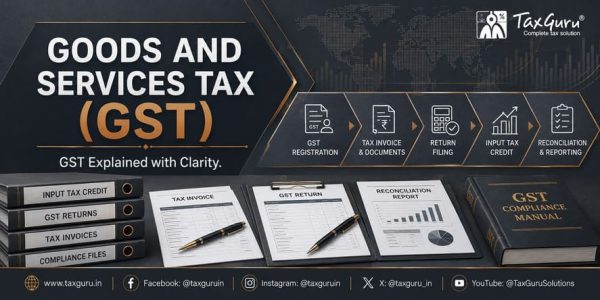
First, confirm the filing frequency and state-wise GSTIN position. Second, freeze the September sales ledger or July–September quarter ledger, as applicable, and reconcile amendments and credit notes. Third, compare GSTR-2B with the purchase register and remove ineligible credits. Fourth, quantify reverse-charge tax and other cash-only payments. Fifth, check earlier-quarter and earlier-year corrections, interest, late fees and any outstanding mismatch communications. Sixth, verify ledger balances and pay the correct amounts. Finally, download the filed return, ARN, challans and supporting reconciliation into the compliance file.
The compliance reviewer should record who prepared the reconciliation, who authorised adjustments and who approved the final tax payment. This is particularly important for groups with shared service centres, several GSTINs or high invoice volumes. An approval trail reduces the risk that an accounting entry is changed after the return is filed without a corresponding tax adjustment. Where facts are disputed, the review note should distinguish the statutory requirement from the company’s interpretation and record the basis for that interpretation.
Conclusion
The immediate October 2026 priority is to identify whether each GSTIN is a monthly filer or a QRMP filer and then apply the correct 20, 22 or 24 October ordinary due date. Filing on time is necessary but not sufficient: return quality depends on reconciled outward tax, eligible input credit, correctly discharged reverse charge and documented cash-ledger payments. Taxpayers should confirm any subsequent official notification before treating these default dates as unchanged.
Frequently Asked Questions
1. Is GSTR-3B for September 2026 due on 20 October for everyone?
No. Twenty October is the ordinary deadline for monthly filers. Eligible QRMP filers submit a July–September quarterly GSTR-3B by 22 or 24 October according to their principal place of business and the rule 61 state group.
2. Does the QRMP turnover limit apply separately to each GSTIN?
No. The scheme uses PAN-based aggregate annual turnover, ordinarily up to ₹5 crore, alongside the other conditions. However, the actual filing option is managed for the relevant GST registrations.
3. Must a QRMP taxpayer pay September tax through PMT-06 on 25 October?
September is the third month of the July–September quarter. The tax for that month is reconciled and discharged with the quarterly GSTR-3B; the first-two-month PMT-06 framework should not be applied mechanically to September.
4. Can all amounts shown in GSTR-2B be claimed automatically?
No. Section 16 eligibility, section 17(5) blocked credits, receipt of supplies, supplier reporting, reversal rules and time limits must be considered. GSTR-2B is an important reconciliation source, not an automatic statutory entitlement.
5. Is late filing interest the same as a late fee?
No. Interest under section 50 concerns specified delayed tax payments or wrongly availed and utilised credit. Late fee under section 47 concerns delay in furnishing prescribed returns and is subject to applicable statutory or notified caps.
6. Does a DRC-01B or DRC-01C communication mean tax has been finally adjudicated?
Not necessarily. These are prescribed mismatch-related procedures with opportunities to pay or explain. The notice, portal workflow, underlying figures and subsequent statutory process must be examined separately.
7. What should be saved after GSTR-3B filing?
Retain the filed return and ARN, challan/CIN details, electronic-ledger offset, outward-tax reconciliation, GSTR-2B eligibility worksheet, reverse-charge computation, approvals and any mismatch explanations.
Key Takeaways
- Monthly September 2026 GSTR-3B: ordinary deadline 20 October 2026; quarterly QRMP: ordinarily 22 or 24 October by state group.
- QRMP has PAN-based eligibility and monthly-payment obligations for the first two months, but not a separate September PMT-06 due date.
- Reconcile GSTR-1, books, GSTR-2B, credit restrictions, reverse charge and cash ledger before filing.
- Interest, late fees and system mismatch communications require separate statutory analyses.
Primary Sources and Further Reading
CBIC: CGST Rules, rule 61 and QRMP state groups: https://cbic-gst.gov.in/pdf/10112020_CGST-Rules-2017_Part-A_Rules.pdf
GST portal: QRMP eligibility and opt-in FAQs: https://tutorial.gst.gov.in/userguide/returns/FAQs_change_profile.htm
GST portal: GSTR-3B nil return and filing controls: https://tutorial.gst.gov.in/userguide/returns/GSTR3B_-_File_Nil_Return.htm
Related TaxGuru coverage: October 2026 statutory compliance calendar
Related TaxGuru coverage: October 2026 tax compliance calendar
*****
Disclaimer: This article is a general educational explanation of the ordinary GST return framework as reviewed on 13 October 2026. It is not legal, tax, accounting or professional advice for a particular GSTIN or transaction. Due dates, exemptions, portal functions, notifications, state-specific provisions and interest or fee relief may change, and the latest official law and taxpayer dashboard must be checked before action. Examples and control suggestions are illustrative, not an assurance of eligibility or compliance. Readers should consult a qualified professional where facts or notices are disputed. TaxGuru accepts no responsibility for any loss, penalty, interest, assessment, omission or consequence arising from reliance on this article.