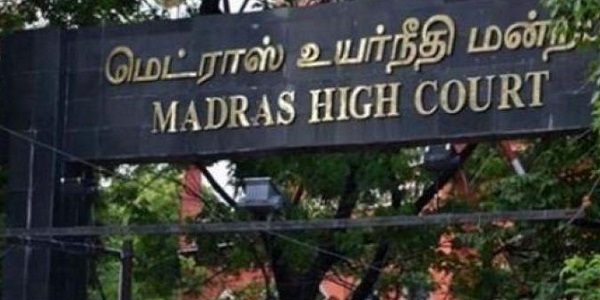
The Madhya Pradesh High Court, in the case of Paper Trade Links v. Union of India, ruled that denying a party the opportunity for cross-examination is a violation of natural justice principles. The court was responding to a writ petition challenging an order that imposed tax liability and penalties, which was based on witness statements without allowing the petitioner to cross-examine those witnesses. The High Court rejected the respondent’s argument that the delay caused by the petitioner or the voluntary nature of the statements justified the denial. Citing prior Supreme Court rulings, the court emphasized that the right to cross-examine is a fundamental aspect of fair adjudication, especially when an order relies on witness testimony. The court therefore set aside the original order and sent the matter back to the adjudicating authority to allow for cross-examination, reaffirming that this procedural right cannot be dismissed on procedural grounds alone.
Facts:
Paper Trade Links (“the Petitioner”) challenged the order dated 16.01.2023 passed by the Assistant Commissioner, CGST & CX, Indore (“the Respondent”), whereby tax liability and penalty were imposed under the CGST Act.
The Petitioner contended that no opportunity of cross-examination was granted regarding the witnesses, whose statements were relied upon to impose the demand.
The Respondent contended that the witnesses’ statements were made voluntarily under Section 70 of the CGST Act, and the Petitioner had caused delays in the proceedings; hence, cross-examination was rightly denied.
The Petitioner approached the High Court via writ petition, claiming that the denial of cross-examination amounted to breach of natural justice and sought setting aside of the impugned order.
Issue:
Whether denial of cross-examination to the assessee, despite reliance on witness statements in the adjudication order, violates principles of natural justice under the CGST regime?
Held:
The Hon’ble Madhya Pradesh High Court in Writ Petition No. 6061 of 2023 held as under:
- Observed that, the right of cross-examination is recognized under the Indian Evidence Act and is integral to the principles of natural justice.
- Noted that, the adjudicating authority denied the cross-examination solely on the basis of delay caused by the Petitioner and the voluntariness of the witnesses’ statements, which are not valid grounds to reject such a request.
- Noted the Supreme Court’s ruling in Ayaaubkhan Noorkhan Pathan v. State of Maharashtra, [AIR 2010 SC 58), where it was held that cross-examination is an essential facet of natural justice.
- Held that, when an adjudication order relies upon witness statements, the assessee must be given an opportunity to cross-examine such witnesses.
- Held that, the writ petition is maintainable despite availability of alternate remedy, when principles of natural justice are violated.
- Further held that, the impugned order be set aside and the matter be remanded back to the adjudicating authority to proceed further from the stage of cross-examination.
Our Comments:
The Madhya Pradesh High Court emphasized that where reliance is placed on witness statements in a quasi-judicial proceeding, the opportunity for cross-examination cannot be dispensed with unless waived or proved irrelevant.
The judgment closely follows the dicta of the Supreme Court in Ayaaubkhan Noorkhan Pathan v. State of Maharashtra [AIR 2010 SC 58). In that case, the Apex Court held that cross-examination is fundamental to fair adjudication, particularly when the outcome rests upon such statements. The decision drew upon earlier authorities like State of M.P. v. Chintaman Sadashiva Vaishampayan[AIR 1961 SC 1623) which laid down that denial of cross-examination amounts to a violation of the principles of natural justice.
The Revenue’s rejection of cross-examination on procedural grounds, i.e., delay and the nature of Section 70 of the CGST Act, 2017, under which, statements taken, was found to be legally untenable. Section 70 only provides the mechanism for recording statements during investigation and it does not, by itself, displace the procedural safeguard of cross-examination during adjudication.
In the case of J&K Cigarettes Ltd. & Ors. Vs. Collector of Central Excise & Ors [WP (c) No. 1854 of 1992] the Court upheld the constitutional validity of Section 9D of the Central Excise Act but clarified that it should be invoked only in exceptional circumstances, as an extension of the doctrine of necessity. It was held that statements recorded during investigation are not ipso facto admissible and the burden lies on the department to establish the conditions justifying their use without cross-examination. The Court also held that the right to cross-examination is an essential facet of natural justice and cannot be denied merely on procedural grounds.
Relevant Provisions:
Section 70 of the Central Goods and Services Tax Act, 2017
70. Power to summon persons to give evidence and produce documents
(1) The proper officer under this Act shall have power to summon any person whose attendance he considers necessary either to give evidence or to produce a document or any other thing in any inquiry in the same manner, as provided in the case of a civil court under the provisions of the Code of Civil Procedure, 1908 (5 of 1908).
(1A) All persons summoned under sub-section (1) shall be bound to attend, either in person or by an authorised representative, as such officer may direct, and the person so appearing shall state the truth during examination or make statements or produce such documents and other things as may be required.
(2) Every such inquiry referred to in sub-section (1) shall be deemed to be a “judicial proceedings” within the meaning of section 193 and section 228 of the Indian Penal Code (45 of 1860).”
Section 138 of the Indian Evidence Act, 1872 [Equivalent of Section 143 of the Bharatiya Sakshya Adhiniyam, 2023]
“138. Order of examinations-
Witnesses shall be first examined-in-chief, then (if the adverse party so desires) cross-examined, then (if the party calling him so desires) re-examined. The examination and cross-examination must relate to relevant facts, but the cross-examination need not be confined to the facts to which the witness testified on his examination-in-chief.
Direction of re-examination. – The re-examination shall be directed to the explanation of the matters referred to in cross-examination; and, if new matter is, by permission of the Court, introduced in re-examination, the adverse party may further cross-examine upon that matter.”
*****
(Author can be reached at [email protected])