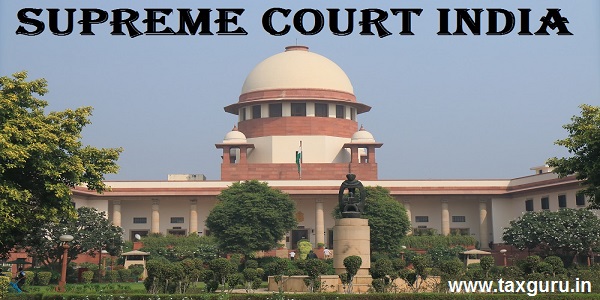
Ramsakhi Gupta Vs ICICI Lombard General Insurance Co. Ltd. & Anr. (Supreme Court of India)
Third-Party Goods Stored Under Bailment Are Not Excluded From Insurance as “Goods Held in Trust”: SC
Summary: In Ramsakhi Gupta v. ICICI Lombard General Insurance Co. Ltd. & Anr., 2026 INSC 1276, Civil Appeal No. 9051 of 2026, decided on 26 November 2026, the Supreme Court held that agricultural produce stored by farmers in a warehouse for a fee was held under a contract of bailment. The insurer could not invoke an exclusion for “goods held in trust or on commission” merely because the produce belonged to third parties. Reading the policy as a whole, the Court restored compensation for the damaged stock and awarded total compensation of ₹38,28,356 with interest at 7% per annum from the date of the consumer complaint.
Hailstorm Damaged the Warehouse and the Farmers’ Produce
Ramsakhi Gupta operated Nikhra Warehouse at Dabra in Madhya Pradesh. Farmers stored agricultural produce there against payment of storage charges. The produce was hypothecated to the State Bank of India, and insurance of the stock was required in connection with that arrangement. The policy covered the warehouse building for ₹50 lakh and the stock stored in it for ₹1.50 crore.
On 13 March 2007, a severe hailstorm damaged the warehouse’s asbestos roof. Heavy rain followed, and water entered the premises, damaging the building and part of the stored produce. The occurrence and the existence of insurance cover on that date were undisputed. The controversy centred on whether the policy covered produce belonging to farmers and how the loss should be quantified.
Third-Party Ownership Alone Did Not Establish a Trust
The insurer relied on General Exclusion Clause 5, which referred to goods held in trust or on commission. Its surveyor assessed the building damage but declined to quantify the loss to the stock on the ground that the produce belonged to third parties and was held in trust. The National Consumer Disputes Redressal Commission accepted that interpretation and restricted the award to ₹1,44,401 for building damage.
The Supreme Court examined the actual relationship between the farmers and the warehouse proprietor. Under section 148 of the Indian Contract Act, 1872, bailment involves delivery of goods for a purpose on the understanding that they will be returned or dealt with according to the owner’s directions when that purpose is fulfilled. Here, the farmers delivered produce for paid storage, and the proprietor took custody for that defined purpose. Those facts established a bailor–bailee relationship. The fact that title remained with the farmers was consistent with bailment and, by itself, did not bring the goods within the exclusion.
The Policy Had to Be Read as a Whole
The Court reaffirmed that an insurance contract must be construed according to its own terms, taking account of the nature and purpose of the cover. That exercise required reading the stock cover, the exclusion and the agreed bank clause together. The bank clause formed part of the arrangement under which the stock had been insured and had to be considered in deciding the reach of the exclusion.
The Court also drew on Canara Bank v. United India Insurance Co. Ltd. in recognising that farmers can be beneficiaries of insurance services even though they did not sign the policy. In the present case, the entitlement to indemnity followed from the policy as construed in light of the storage arrangement. The insurer’s argument about an additional premium for goods held in trust lost significance once the produce was found to have been held under bailment.
Surveyor’s Report Was Relevant but Open to Rebuttal
Referring to section 64UM of the Insurance Act, 1938, as it stood at the relevant time, the Court explained that an approved surveyor’s report has statutory significance, but its conclusions may be displaced by more reliable evidence. Here, the insurer’s surveyor had made no assessment of the actual stock loss. The Court therefore examined the stock register, the Revenue Inspector’s panchnama and the Tehsildar’s assessment. It accepted the ₹36,83,955 awarded by the State Commission for damage to the produce. Nearly 19 years had passed since the loss, and the Court decided the amount on the existing record.
For the building, the Court accepted the surveyor’s net assessment of ₹1,44,401, which the National Commission had upheld. The separate findings on stock and building damage produced a combined award of ₹38,28,356, with 7% annual interest from the date of the complaint.
Author’s Comments
The judgment is significant for warehouse operators because ownership and custody answer different questions. Ownership identifies whose goods were damaged. The terms on which the operator took custody determine whether the goods were held under bailment, trust or commission. Here, the paid storage arrangement explained why the farmers retained title and why their produce nevertheless fell within the stock cover.
The ruling also distinguishes a surveyor’s assessment of loss from the surveyor’s interpretation of coverage. The Court accepted the surveyor’s quantified building loss and relied on contemporaneous revenue records for the stock loss. The surveyor’s refusal to value the stock rested entirely on an exclusion that the Court found inapplicable.
Cases Discussed:
- Canara Bank Vs United India Insurance Company Limited (Supreme Court of India); (2020) 3 SCC 455 – Relied upon by the appellant and applied by the Supreme Court regarding the bailor–bailee relationship between farmers and storage operators, the interpretation of insurance policies and the recognition of beneficiaries as consumers despite absence of privity of contract.
- Suraj Mal Ram Niwas Oil Mills Pvt. Ltd. Vs United India Insurance Co. Ltd. (Supreme Court of India); (2010) 10 SCC 567 – Relied upon by the insurer regarding strict construction of the terms and conditions of insurance contracts.
- United India Insurance Co. Ltd. Vs Harchand Rai Chandan Lal (Supreme Court of India); (2004) 8 SCC 644 – Relied upon by the insurer regarding determination of insurance liability according to the express terms of the policy.
- Polymat India Pvt. Ltd. Vs National Insurance Co. Ltd. (Supreme Court of India); (2005) 9 SCC 174 – Relied upon by the insurer regarding interpretation of insurance contracts without rewriting their terms.
- Bachhaj Nahar Vs Nilima Mandal (Supreme Court of India); (2008) 17 SCC 491 – Relied upon by the insurer in connection with the pleadings and the permissible scope of relief.
- Khaema Fibres Ltd. Vs New India Assurance Co. Ltd. (Supreme Court of India); (2023) 15 SCC 327 – Relied upon by the insurer concerning assessment of insurance claims and the evidentiary significance of surveyors’ reports.
- National Insurance Co. Ltd. Vs Seema Malhotra (Supreme Court of India); (2001) 3 SCC 66 – Relied upon by the insurer in support of its submissions concerning contractual insurance obligations and premium requirements.
- Vikram Greentech India Limited Vs New India Assurance Company Limited (Supreme Court of India); (2009) 5 SCC 599 – Discussed regarding the essential elements of an insurance contract and the principle that the terms of an insurance policy must be construed according to the agreement between the parties.
- Shivram Chandra Jagarnath Cold Storage Vs New India Assurance Company Limited (Supreme Court of India); (2022) 4 SCC 539 – Applied regarding strict interpretation of exclusion clauses and adoption of an interpretation favourable to the insured where the policy admits of more than one construction.
- Texco Marketing Private Limited Vs Tata AIG General Insurance Company Limited (Supreme Court of India); 09/11/2022; (2023) 1 SCC 428 – Applied regarding the insurer’s burden of establishing the applicability of an exclusion clause and the requirement that such a clause must not defeat the principal object of the insurance contract.