Summary: Call Detail Records (CDRs) are important electronic evidence in commercial disputes, criminal trials, corporate investigations and employee misconduct inquiries. However, telecom portal printouts, call history screenshots and oral testimony do not automatically establish the admissibility of such records. In Pooranmal v. State of Rajasthan, 2026 INSC 217, decided on 10 March 2026, the Supreme Court reiterated that call detail records cannot be admitted as secondary electronic evidence without the mandatory statutory certificate under Section 65B of the Indian Evidence Act, 1872. The testimony of telecom nodal officers could not substitute this certification requirement. Section 63 of the Bharatiya Sakshya Adhiniyam, 2023, which replaced the earlier provision, prescribes certification requirements involving the person responsible for the relevant computer or communication device and an expert. The article examines the distinction between proving the existence of a call and establishing its contents, subscriber identity and geographical location. It explains practical evidentiary challenges involving vendor disputes, insider information leaks and corporate telephony systems. Businesses should obtain properly certified telecom records, preserve internal electronic logs, establish subscriber identity independently and initiate retrieval before the applicable retention period expires. The article also discusses common certification mistakes, judicial directions for obtaining telecom records and practical measures to protect electronic evidence during litigation. While statutory evidence rules do not strictly bind arbitral tribunals, proper certification and preservation remain important safeguards for establishing reliability. Businesses must distinguish the admissibility of electronic records from their authenticity, evidentiary weight and ability to establish disputed facts.
- Call Detail Records as Evidence in Commercial and Criminal Disputes
- What a Call Detail Record Is, and What It Is Not
- Legal Framework Governing Call Detail Records and Electronic Evidence
- Section 63 of Bharatiya Sakshya Adhiniyam, 2023
- Mandatory Certification of Electronic Records and Competent Signatories
- Supreme Court's Position on Admissibility of Call Detail Records
- Pooranmal v. State of Rajasthan: Telecom Officers' Testimony Cannot Replace Certificate
- Mandatory Certification Under Anvar P.V. and Arjun Panditrao Khotkar Judgments
- Practical Examples of Call Detail Records in Business Disputes
- 1. Vendor Disputes and Proof of Commercial Communication
- 2. Insider Information Leaks and Employee Misconduct Investigations
- 3. Corporate Telephone Lines, Cloud Telephony and PBX Records
- Common Mistakes When Producing Call Detail Records as Evidence
- Practical Steps for Obtaining, Certifying and Preserving Call Detail Records
- Conclusion: Establishing the Admissibility and Reliability of Electronic Evidence
- Cases Discussed
Call Detail Records as Evidence in Commercial and Criminal Disputes
The company’s sales head says he called the supplier at 4.10 pm and canceled an order worth ₹40 lakh before the cut-off. The supplier claims he did not receive any such call and has already booked the consignment. The company pulls a printout of the call log from its telecom account and files it in the dispute. Everyone in the room assumes the call is now proved.
Probably no. In March 2026, the Supreme Court upheld the acquittal of a man in a murder case based on call detail records that did not have the certificate as provided in the law, even with two telecom nodal officers having turned as witnesses in the court. The same reasoning applies in a commercial dispute, a fraud inquiry, or an arbitration.
What a Call Detail Record Is, and What It Is Not
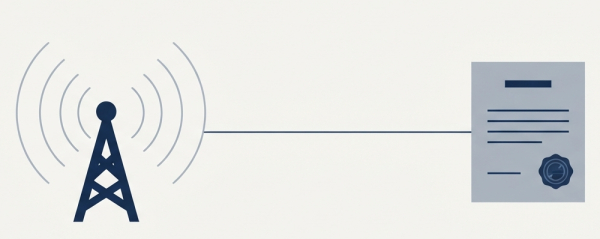
A call detail record (CDR) is a record created automatically by a telecom operator’s systems. Normally, it contains the numbers dialing and receiving the call, date and time, call duration, and the cell tower that the call has been processed by. It does not record what was said. For recordings of the conversation itself, a different set of evidentiary questions arises, which I have discussed in an earlier article on CCTV footage and call recordings.
A CDR is therefore evidence of contact, timing and approximate presence, not of content.
Legal Framework Governing Call Detail Records and Electronic Evidence
Section 63 of Bharatiya Sakshya Adhiniyam, 2023
CDR is computer generated electronic record. It is admissible under section 63 of the Bharatiya Sakshya Adhiniyam, 2023 (BSA) which replaced section 65B of the Indian Evidence Act, 1872 with effect from 1 July 2024.
Mandatory Certification of Electronic Records and Competent Signatories
A printout or copy of an electronic record shall be deemed to be a document if it is certified as per the Act and the certificate is produced with the record when it is produced (Section 63). Under the BSA, that certificate follows the format in the Schedule and is signed both by the person in charge of the computer or communication device and by an expert. Under Section 65B(4) of the old Act, the certificate had to be signed by a person occupying a responsible official position.
This is more than a practical question for a third-party CDR. It needs to be someone who can testify to how such data was generated and maintained by the telco operator’s own systems, not the customer that downloaded the data.
Supreme Court’s Position on Admissibility of Call Detail Records
Pooranmal v. State of Rajasthan: Telecom Officers’ Testimony Cannot Replace Certificate
In Pooranmal v. State of Rajasthan, 2026 INSC 217 (decided 10 March 2026, bench of Vikram Nath, Sandeep Mehta and N.V. Anjaria, JJ.), the prosecution’s case against the appellant rested on recoveries and call detail records showing frequent contact with a co-accused around the time of the offence. The nodal officers from both telecom service providers were called upon to testify as witnesses in court. The prosecution maintained that such testimonies rendered any lack of Section 65B certificates irrelevant.
Mandatory Certification Under Anvar P.V. and Arjun Panditrao Khotkar Judgments
The Court did not accept that. Relying on Anvar P.V. v. P.K. Basheer, (2014) 10 SCC 473, and Arjun Panditrao Khotkar v. Kailash Kushanrao Gorantyal, (2020) 7 SCC 1, it held that without the certificate the call detail records were inadmissible and could not be used to support the prosecution’s case. The guilty verdict was overturned. Additionally, the Court determined that the other factors were not reliable either, so the CDR issue was not the only factor behind the dismissal, but it eliminated one of the three legs of the prosecution’s argumentative case.
The case came from a criminal prosecution, but the test for admissibility of electronic documents is equally applicable in civil, commercial and arbitral proceedings under the Evidence Act and BSA.
Practical Examples of Call Detail Records in Business Disputes
1. Vendor Disputes and Proof of Commercial Communication
A vendor dispute. A company wants to prove that its purchase manager called a vendor on a particular date to confirm a delivery schedule. The company’s own call history screenshot shows the call. Screenshots and portal printouts carry the problems discussed in my article on screenshots as evidence. The safer route is a certified CDR from the telecom operator, produced with the Section 63 certificate.
2. Insider Information Leaks and Employee Misconduct Investigations
An insider leak. A company suspects an employee of passing pricing information to a competitor. The company can establish that the employee’s official number was in frequent contact with a competitor’s executive. But showing that the number belongs to that person requires independent proof such as subscriber records, and showing what was discussed requires other evidence.
3. Corporate Telephone Lines, Cloud Telephony and PBX Records
Calls on company lines. In cases where the business uses the cloud-based telephony or PBX service, these logs become the electronic records of that company. The duly filled certificate by the person responsible for the management of the system along with the expert’s part is the key to admissibility.
Common Mistakes When Producing Call Detail Records as Evidence
- Treating a printout from a telecom app, online portal or customer-care email as sufficient proof.
- Calling the telecom nodal officer to testify and assuming this replaces the certificate. Pooranmal shows it does not.
- Having an employee of the litigating company certify records generated on the operator’s servers. A certifier can speak only to what they actually control.
- Filing the certificate late or only after objection, instead of tendering it together with the record.
- Presuming that a tower location shows exactly where a person stood. A tower sector indicates the area served by that tower; it is not a GPS fix. This is my practical observation and not a holding of the Court.
- Skipping proof that the number belongs to the person alleged.
Practical Steps for Obtaining, Certifying and Preserving Call Detail Records
1. Act early. Telecom licensees are required under the Unified Licence (clause 39.20, as amended by the Department of Telecommunications on 21 December 2021) to keep CDR, EDR and IPDR for at least two years. After that, the data may no longer exist.
2. Do not expect direct supply. The DoT has stated in an RTI reply that licence conditions do not require operators to provide CDRs to the general public. In practice, a private party usually needs a court direction, and in criminal matters an order or notice under Section 94 of the Bharatiya Nagarik Suraksha Sanhita, 2023 (production of documents and things, including electronic communication).
3. Ask for the certificate at the time of retrieval, in the Schedule format, signed by the operator’s competent officer and the expert.
4. Tender the CDR and the certificate together, as one package.
5. Prove subscriber identity separately through customer application records or other independent evidence.
6. Preserve your own logs. For company phones and telephony platforms, export the logs in a documented manner and record who exported them, when, and from which system. See my article on preserving electronic records in litigation.
Conclusion: Establishing the Admissibility and Reliability of Electronic Evidence
The call log appears to be an objective document since it was made by a machine. It is precisely this characteristic that makes the law wary and requires proof of its reliability. A court of law can admit such evidence only after being satisfied regarding both its source and integrity. And in a recent decision of the Supreme Court, where a life sentence hung on the call log, it was reiterated that the certificate is a sine qua non and the testimony does not substitute it. When dealing with CDRs in a business context, the initial question is not “what does the log say?” but “how do we prove the log?“
Disclaimer: This article is for general information and legal awareness only and is not legal advice. The law and its judicial interpretation may change. Readers should obtain advice specific to their facts.
Cases Discussed
- Anvar P.V. Vs P.K. Basheer (Supreme Court of India); Civil Appeal No. 4226 of 2012; 18/09/2014; (2014) 10 SCC 473.
- Arjun Panditrao Khotkar Vs Kailash Kushanrao Gorantyal (Supreme Court of India); Civil Appeal Nos. 20825-20826 of 2017; 14/07/2020; (2020) 7 SCC 1.
- Pooranmal Vs State of Rajasthan (Supreme Court of India); 10/03/2026; 2026 INSC 217.