Summary: Rising international crude oil prices have emerged as a significant concern for the Indian economy, with the Indian crude oil basket reportedly reaching approximately $120 per barrel in October 2026, approaching levels last recorded in March 2012. According to the economic assessment highlighted by Fynnedge, sustained increases in energy prices could create widespread financial pressure on households, businesses, oil marketing companies and government finances. India’s substantial dependence on imported crude oil makes the economy particularly vulnerable to fluctuations in international petroleum prices. Higher import costs can increase the country’s external payment obligations, weaken corporate profitability, intensify inflationary pressures and complicate fiscal management. The report emphasises that the ultimate economic impact will depend on the duration of elevated oil prices, global supply conditions, geopolitical developments and government policy responses.
Introduction
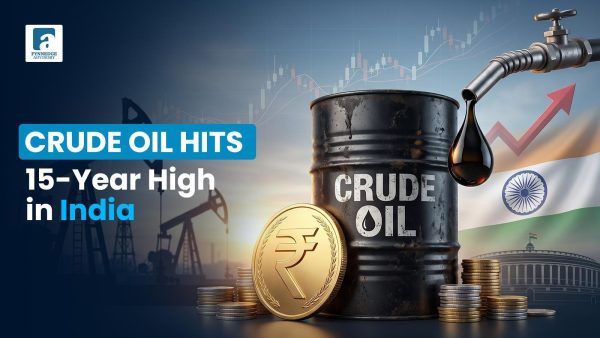
New Delhi, Oct 26, 2026: Renowned economic advisory agency Fynnedge points out that one must be careful while tracking rising energy prices and their impact on the family budget, business costs and lending. The Indian crude oil basket has recently hit a near 15-year high, which has raised fears over the solvency of oil companies, inflationary concerns and government finances.
The average price of a barrel of crude oil in India was about $120 as of October 2026. This is the lowest since March 2012, when the average price was measured at $123.61 per barrel. The incessant rise in global oil prices has put pressure on India’s economy because the country is heavily dependent on imported crude oil.
Higher Prices Affect Oil Marketing Organisations
The rise in crude prices has put oil marketing organisations (OMCs) such as Indian Oil Corporation, Bharat Petroleum Corporation, and Hindustan Petroleum Corporation into trouble. They are facing greater procurement costs, but passing the entire rise in price onto the consumers is not easy.
Despite a series of four price hikes of around ₹7.50 per litre for petrol and diesel in May, oil retailers are facing under-recoveries.
Under-recoveries on diesel have increased to around ₹20 per litre, according to industry estimates. Petrol was previously seen at ₹8 per litre. Should international crude oil prices remain high, then oil companies will face further financial pressure and may decide to alter retail fuel prices further.
This will depend on several factors, including how much refining capacity each company has and how much marketing they do.
Inflation Risks Impact Households and Businesses
The rise in crude oil prices will also have an impact outside the energy sector. As fuel prices rise, this may have an impact on transport, manufacturing, logistics and distribution. Companies that use fuel or petroleum-based materials may see an increase in their costs, which can be passed on to the consumer.
India’s wholesale inflation has already started to be impacted. In September 2026, wholesale price index-based inflation rose to 11.4%. As oil prices remain high there could be a further increase in costs for production which will impact retail inflation.
The Reserve Bank of India has increased their consumer price inflation projections to 5.2% and increased the policy repo rate to 5.5%.
Households may see increased transport costs, higher prices for essentials and pressure on their monthly budgets. If families are looking to purchase something significant or have existing EMIs, they may want to look at how they are spending.
Government Faces Pressure on Revenue and Subsidies
The rising cost of crude oil is also creating difficulties for the central government. India must balance the need to protect consumers from sharp fuel-price increases against the financial burden of providing support to oil companies.
The government has already reduced the special additional excise duty on petrol and diesel by ₹10 per litre. However, the report noted that central excise duty collections declined by nearly 23% year-on-year to ₹86,687 crore between April and August 2026. This could limit the scope for further reductions if revenue pressures persist.
Fertiliser subsidies represent another major concern. More than 58% of the FY27 budget allocation of ₹1.70 trillion had been used during the first five months of the financial year. If the existing trend continues, the annual fertiliser subsidy bill could rise to approximately ₹3 trillion, significantly exceeding the original allocation.
Higher energy and subsidy expenses could make it harder for the government to maintain its planned fiscal deficit while funding other development priorities.
India’s Oil Import Bill Continues to Increase
India’s dependence on imported crude oil makes the economy particularly sensitive to international price movements. According to the report, crude oil imports increased by 46.4% to $90.6 billion during April–September 2026. The net oil and gas import bill also rose by 35% to $81.1 billion.
A sustained increase in import costs can put pressure on the current account deficit and the rupee. It can also affect the availability of government funds for infrastructure, public services, and other spending priorities.
The broader economic impact will depend on global oil supply conditions, geopolitical developments, currency movements, and how long prices remain elevated.
What Could Happen If Oil Prices Remain High?
The outlook for the coming months remains uncertain. If crude oil prices stay elevated, India could face continued inflationary pressure, reduced profitability among oil marketing companies, and greater strain on public finances.
The report also cited an economic scenario in which crude oil prices reach $130 per barrel and remain there for two to three quarters. Under that scenario, India’s GDP growth could slow to 6.4% in FY27, while the fiscal deficit could rise to 5.6% of GDP. These figures represent a conditional projection, not a confirmed outcome.
For consumers and businesses, the key factor will be whether the price increase is temporary or continues for an extended period. A sustained rise would require closer attention to operating costs, household spending, and financial planning.
Conclusion
India’s crude oil basket reaching a nearly 15-year high has created challenges for oil marketing companies, consumers, and government finances. Higher import expenses, inflation risks, and rising subsidy requirements could affect the country’s economic outlook if international prices remain elevated.
As highlighted by the financial perspective associated with Fynnedge, keeping track of changing economic conditions can help individuals and businesses make more informed financial decisions. However, the long-term impact will depend on global energy prices, government policy decisions, and the duration of the current oil-price surge.