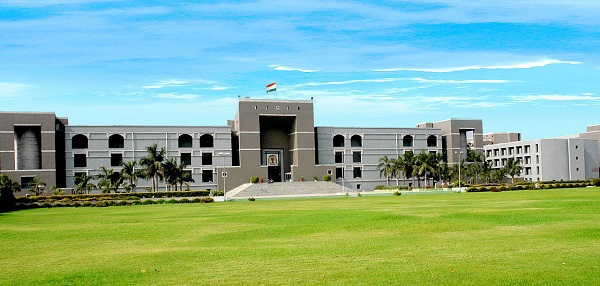
Parswanath Kherappa Hotpeti Vs Union of India & Others (Karnataka High Court)
Summary: The Karnataka High Court, Dharwad Bench, in Sri Parswanath Kherappa Hotpeti Vs Union of India & Others, considered a writ petition concerning reimbursement of differential Goods and Services Tax arising from the transition from the Karnataka Value Added Tax regime to GST in respect of government works contracts. The petitioner, a consulting engineer and contractor, sought reimbursement of additional GST liabilities incurred on contracts entered into before the introduction of GST. He also challenged recovery proceedings initiated under Section 79 of the CGST/KGST Acts, including proceedings involving Forms GST DRC-07 and DRC-13. The petition further sought directions for calculating differential tax, framing reimbursement guidelines and restraining coercive recovery.
The petitioner submitted that government departments and other contracting authorities were required to compensate contractors for the additional tax burden arising from the change in the indirect tax regime. The High Court observed that the controversy was already governed by its earlier decision in Sri Chandrashekaraiah Vs State of Karnataka, decided on 11 April 2023, and the subsequent Division Bench judgment dated 10 June 2026 in W.A. No. 1587/2023 and connected appeals. The original Single Judge decision had prescribed a methodology for separating works executed before and after 1 July 2017, calculating applicable VAT and GST liabilities, adjusting input tax credit, determining the differential tax burden and considering reimbursement through supplementary agreements.
The Division Bench, however, modified the earlier directions by distinguishing contractual reimbursement obligations from statutory GST liabilities. It held that reimbursement of incremental GST was a matter between contractors and their respective employers and that contractual arrangements could not alter the statutory scheme governing the levy, assessment and recovery of GST. Consequently, directions permitting revised returns contrary to statutory provisions, waiving interest or penalties, relaxing statutory limitation periods or restricting the tax authorities’ recovery powers were held unsustainable. The direction concerning differential tax reimbursement was confined to the concerned employers and did not extend to GST authorities.
The High Court also considered the subsequent order in W.P. No. 100867/2026 and connected proceedings, which applied the surviving portions of the earlier reimbursement guidelines. Under those directions, contractors could seek determination of the differential tax burden from their employers, while retaining the right to challenge assessment orders through appropriate statutory proceedings. The Court accordingly disposed of the present writ petition in terms of the Division Bench judgment and the subsequent Coordinate Bench order. It did not independently determine the amount reimbursable to the petitioner or expressly quash the challenged recovery proceedings.
During the hearing, the petitioner’s counsel informed the Court that a recovery notice demanding ₹2,73,76,632 had been issued under Section 79 of the KGST Act. Referring to Section 79(1)(c)(iv), counsel requested liberty to approach the competent authority for amendment, revocation or extension of time concerning the notice. The High Court observed that, if the statute conferred such a right, the petitioner could make an appropriate representation and the authority would consider it in accordance with law. The writ petition was disposed of with these observations, preserving the distinction between contractual claims for GST reimbursement and statutory tax recovery proceedings.
Cases Discussed
- Sri Chandrashekaraiah Vs State of Karnataka (Karnataka High Court); W.P. No. 9721/2019 and connected petitions, including W.P. No. 19067/2019; 11/04/2023 — The Coordinate Bench prescribed guidelines for calculating differential tax liabilities arising from the transition from KVAT to GST and reimbursement by government employers.
- Office of Principal Commissioner GST and Central Excise & Others Vs R Chandrashekhar S/o Ramaiah (Karnataka High Court, Division Bench); W.A. No. 1587/2023 and connected appeals; 10/06/2026; NC:2026:KHC:28975-DB — The Division Bench held that incremental GST reimbursement was a matter between contractors and employers and set aside directions affecting statutory GST assessment, recovery, interest, penalties and return-filing requirements.
- W.P. No. 100867/2026 and connected matter (Karnataka High Court) — The Coordinate Bench applied the surviving reimbursement guidelines following the Division Bench modifications and preserved the petitioners’ remedies against assessment orders.
FULL TEXT OF THE ORIGINAL JUDGMENT/ORDER OF KARNATAKA HIGH COURT
This writ Petition is filed by the petitioner seeking for the following reliefs:
“Wherefore, the Petitioner respectfully prays that this Hon’ble Court may be pleased to:
a. Issue a writ of mandamus directing Respondent Nos. 8, 9 and 16 to consider the representation dated 01/07/2024, 04/01/2025 and 03/02/2025 vide ANNEXURE D, D1, D2 and reimburse the GST amounts paid by the Petitioner in respect of works executed under the contracts.
b. Issue a writ of mandamus directing the Respondent No.1 to 7 and 10 to 15 to calculate and pay the differential tax liabilities/GST amount incurred by the petitioner consequent upon the transaction from the VAT regime to the GST regime in respect of the works calculated under contracts in question.
c. Direct the Respondent authorities to calculate and pay the differential GST amount arising due to transition from the VAT regime to the GST regime.
d. Direct Respondent No.1 to frame appropriate policy guidelines for reimbursement of GST in respect of works contracts entered into prior to introduction of GST.
e. Issue a writ of certiorari or any other appropriate writ quashing the proceedings under Section 79(3) of the CGST/KGST Act including recovery proceedings against the petitioner passed in FORM GST DRC 07 bearing no DCCT/AUDIT/DWD/GST/2025-26/B-161 dt. 05/02/2026 for the assessment period of 2022-23 passed by Respondent No.4 vide ANNEXTURE-E and FORM GST DRC-13 dated 13/02/2026, for the assessment of 2019-2021 passed by Respondent No.5 vide ANNEXURE- E 1 in the interest of justice and equity.
f. Issue a writ of mandamus restraining the respondents from taking any coercive steps for recovery of the alleged tax pending disposal of this writ petition;
g. Grant such other reliefs as this Hon’ble Court deems fit in the circumstances of the case”
2. Heard, Smt.Veena Hegde, learned counsel appearing for the petitioner; Smt.Nandini Somapur, learned AGA appearing for respondent Nos.2 to 11 and 17; Sri.Girish Hulmani, learned counsel appearing for respondent Nos.1 and 20; Sri. S.K. Kayakamath learned counsel appearing for Respondent 13; Sri.Akshaya B.M. and Sri.Shivakumar Gowda, learned counsel appearing for respondent No.14; Sri.G.I.Gacchhinmath, learned counsel appearing for Respondent No.15; Sri.V.Shivaraj Hiremath, learned counsel appearing for respondent No.16; Sri. K.L.Patil learned counsel for Respondent No.19 and Sri.P.R.Bentur, learned counsel appearing for respondent No.21.
3. The lis involved in this petition is no more res integra in view of the judgment passed by the Coordinate Bench of this Court in W.P.No.19067/2019 and other connected matters dated 11.04.2023.
4. Subsequently, in the appeal by the Revenue Authorities in Writ Appeal in W.A.No.1587/2023 and other connected matters, the Hon’ble Division Bench of this Court on 10.06.2026 modified the order passed by the learned Single Judge in terms of Paragraph Nos.8, 9, 10, 11 and 12. The said Paragraphs read as under:
“8. The dispute as to whether the writ petitioners would be entitled to reimbursement of the incremental tax paid or payable by them on account of the levy of GST is strictly a matter between the writ petitioners and the Employers with whom they had entered into the contracts. The contracts between the writ petitioners and the Employers would not alter the statutory scheme for the levy of GST. Thus, the liability of the writ petitioners to pay Goods and Services Tax (whether under the Central Goods and Services Tax Act, 2017, the State Goods and Services Tax Act, 2017 or the Integrated Goods and Services Tax Act, 2017) is required to be determined strictly in accordance with the provisions of the relevant statute. The question of the levy of GST, assessment, recovery, and enforcement is a matter of statutory prescription.
9. In view of the above, no directions could be issued permitting the filing of any revised returns contrary to the provisions of the statute. The plenary directions to waive the penalty, interest under the GST Acts or the limitation for filing returns/revised returns are also unsustainable.
10. The controversy as to the incremental tax burden arising on account of the change in the tax regime is, in essence, one between the writ petitioners and the Employers. In the context of such a dispute, no directions could be issued to the tax authorities regarding the levy, assessment, and collection of tax, penalty, or interest.
11. In the aforesaid view, the direction issued to the respondents to reimburse the differential tax is required to be construed as a direction only to the concerned Employers and not to the tax authorities.
12. Accordingly, the impugned order, to the extent it issues directions to the tax authorities, is set aside. The appeal is disposed of in the aforesaid terms.”
5. Thereafter, in subsequent Writ Petition, the Coordinate Bench of this Court in W.P.No.100867/2026 and connected matter passed the order at Paragraph Nos.3 to 7, which read thus:
“3. It is jointly submitted by the learned counsel for the petitioner and the learned AGA that the question that arises for consideration in the present writ petitions is with regard to the adjustment of Goods and Service Tax [GST] consequent to coming into force of the Central Goods and Service Taxes Act, 2017 [CGST Act]. It is further submitted that a Co-ordinate Bench of this Court in the case of Chandrashekharaiah Vs. State of Karnataka1 has disposed of the writ petitions by issuing various guidelines. The operative portion of the said order is as under:
ORDER
(i) Petitions are hereby disposed of.
(ii) The Respondents-State and other Govt agencies/Respondents who have entered into works contract with the Petitioners are issued the following directions/guidelines:-
(a) Calculate the works executed pre-GST (prior to 1-7-2017) under KVAT regime and payments received by the Petitioners.
(b) The payments received by the Petitioners pre-GST for such of the works executed before 1-7-2017 are to be assessed under KVAT tax regime – either under COT or VAT scheme as applicable.
(c) Calculate the balance works to be completed or completed after 1-7-2017, in the original contract.
(d) Derive the rate of materials, KVAT items required or used to complete the balance works.
(e) Deduct the “KVAT” amount from those materials and the service tax, if applicable.
(f) Add the applicable “GST” on those items.
(g) Input Credit on the materials is to be arrived at and be set off as against the output GST, for those assessed under regular VAT.
(h) Further, the “tax difference” should be calculated on such balance works executed or to be executed after 1-7-2017 separately.
(i) Based on the result obtained on calculation of the tax difference on the contract value, concerned department/authority has to decide whether agreement needs to be changed or not.
(j) A supplementary agreement may be signed with the Petitioners for the revised GST-inclusive work value for the Balance Work completed or to be completed as determined above and in case the revised GST-inclusive work value for the Balance Work, completed or to be completed after 1-7-2017, is more than the original agreement work value, the Petitioners are to be paid/reimbursed, as the case may be, the differential tax amount by the concerned employer; so also, in case payments for works completed pre-GST are made post-GST, the concerned employer has to pay or reimburse, as the case may be, the differential tax amount, to the Petitioners.
(iii)Petitioners are directed to submit comprehensive representations to the respective employers/Respondents within a period of 4 weeks from the date of receipt of a copy of this order, irrespective of whether they have completed the works pre-GST or post-GST or payments were received or yet to be received post-GST.
(iv) If such representations are submitted, the respective employers/Respondents are directed to consider and dispose of the same in the light of the aforesaid directions/guidelines as expeditiously as possible and at any rate within a period of 8 weeks from the date of submission of the representations.
(v) In view of the interim orders passed by this Court in the present petitions, such of the petitioners who had not filed their GST returns during the period after 1-7-2017 are permitted to file their returns/amended returns, pursuant to the calculation of the differential tax as per procedure above under GST regime, without insisting on interest or penalty or limitation.
(vi) The GST authorities are also directed not to take precipitative action against the Petitioners for a period of 6 months from the date of receipt of a copy of this order.
(vii) Liberty is reserved in favour of the petitioners to challenge any order/decision passed/taken by the respondents or the authorities, subsequent to this order and also take recourse to such remedies as available in law.”
4. It is further jointly submitted that the judgment of the Co-ordinate Bench of the Court in the case of Chandrasekharaiah1 was the subject matter of challenge before the Division Bench of this Court in the case of Office of Principal Commissioner GST and Central Excise and others Vs R Chandrashekhar S/o. Ramaiah2. The Division Bench has partly allowed the said appeals. The operative portion of the order of the Division Bench is as under:
“8. The dispute as to whether the writ petitioners would be entitled to reimbursement of the incremental tax paid or payable by them on account of the levy of GST is strictly a matter between the writ petitioners and the Employers with whom they had entered into the contracts. The contracts between the writ petitioners and the Employers would not alter the statutory scheme for the levy of GST. Thus, the liability of the writ petitioners to pay Goods and Services Tax (whether under the Central Goods and Services Tax Act, 2017, the State Goods and Services Tax Act, 2017 or the Integrated Goods and Services Tax Act, 2017) is required to be determined strictly in accordance with the provisions of the relevant statute. The question of the levy of GST, assessment, recovery, and enforcement is a matter of statutory prescription.
9. In view of the above, no directions could be issued permitting the filing of any revised returns contrary to the provisions of the statute. The plenary directions to waive the penalty, interest under the GST Acts or the limitation for filing returns/revised returns are also unsustainable.
10. The controversy as to the incremental tax burden arising on account of the change in the tax regime is, in essence, one between the writ petitioners and the Employers. In the context of such a dispute, no directions could be issued to the tax authorities regarding the levy, assessment, and collection of tax, penalty, or interest.
11. In the aforesaid view, the direction issued to the respondents to reimburse the differential tax is required to be construed as a direction only to the concerned Employers and not to the tax authorities.
12. Accordingly, the impugned order, to the extent it issues directions to the tax authorities, is set aside. The appeal is disposed of in the aforesaid terms.”
5. In view of the judgment of the Division Bench, as referred above, the operative direction Nos.(v) and (vi) as ordered in case of Chandrashekharaiah1 have been set aside.
6. In view of the aforementioned, the present writ petitions are allowed in terms of the operative direction Nos.(i), (ii)(a) to (ii)(f), (iii), (iv) and (vii) as held in the case of Chandrashekharaiah1 as noted above.
7. Since the petitioner has also impugned the assessment orders in the present writ petitions, the petitioner is at liberty to assail the same in appropriate proceedings. The concerned authorities shall not take into account time period spent by the petitioner in prosecuting the present petitions.’’
6. In view thereof, the Writ Petition stands disposed of as per the order passed by the Hon’ble Division Bench in W.A.No.1587/2023 as well as the Coordinate Bench of this Court in W.P.No.100867/2026.
7. At this stage Smt.Veena Hegde, learned counsel appearing for the petitioner submits that now a notice has been issued under Section 79 of the KGST Act, demanding Rs.2,73,76,632/- vide Annexure-E1.
8. Smt.Veena Hegde, learned counsel appearing for the petitioner referred to Section 79(1)(c)(iv) of the Act, submits that the officer issuing a notice under sub-clause (i) may, at any time, amend or revoke such notice or extend the time for making any payment in pursuance of the notice and submits that she may be reserved liberty to make a representation in terms of Section 79(1)(c)(iv). If the law entails the party any such right, it is for the party to represent the said authority and it is for the authority to consider the same in accordance with law in terms of the provisions of the GST Act.
9. With these observations, the Writ Petition is disposed of.
1 Order dated 11.04.2023 in W.P.No.9721/2019.
2 Judgment dated 10.06.2026 in W.P.No.1587/2023 C/w W.A.No.1599/2023, W.A.No.1638/2023, W.A.No.1647/2023 & W.A.No.25/2024 : NC:2026 KHC:28975-DB