Shaurya Alloys Pvt Ltd Vs State of Punjab And Another (Punjab and Haryana High Court)
The Punjab and Haryana High Court disposed of a batch of 424 writ petitions concerning the scope and constitutional validity of Section 16(2)(c) of the Goods and Services Tax Act, 2017, read with Section 155. The petitioners questioned whether purchasers who had paid GST to their suppliers could be required to ensure its deposit with the Government when they had no means of verifying that payment. Alternatively, they sought a reading down of the provision to restrict reversal to cases involving fraud, collusion or non-existent transactions. The Court examined the original return-matching architecture, its non-implementation, the substitution of Section 41 and omission of Sections 42 and 43 from 01.10.2022, and the introduction of Rule 37A from 26.12.2022. It rejected the constitutional challenge, holding that actual payment of tax to the Government forms the foundation of the statutory ITC concession. Taking account of Maruti Enterprises v. Union of India and Bhandari Scrap Traders v. Union of India, it declined to confine Section 16(2)(c) only to fraudulent or collusive transactions. However, the provision could not be isolated from the recovery provisions, procedural safeguards and statutory framework applicable to the relevant tax period.
The Court laid down guidelines for pending and future proceedings before the proper officers of the Central Government, Punjab, Haryana and Chandigarh. Subsequent or retrospective cancellation of a supplier’s registration, nil or short tax liability in the supplier’s return, or an alert or complaint may justify inquiry but cannot, by itself, justify denial or reversal of the purchaser’s ITC. Before issuing a notice, the officer must examine the suppliers, invoices, tax periods, amount involved, precise default, circumstances of non-payment and recovery proceedings against the supplier, and record the required satisfaction. The notice must disclose the grounds and relied-upon material, which must be supplied subject to lawful privilege. Where Section 74, or the applicable fraud limb of Section 74A, is invoked, the foundational facts connecting the purchaser with fraud, wilful misstatement or suppression must appear in the notice itself; the supplier’s fraud cannot automatically be attributed to the purchaser. The purchaser remains responsible under Section 155 for establishing eligibility through invoices, proof of receipt, transport documents, stock records and other relevant evidence. Officers must consider that evidence, examine the relevance of retrospective cancellation, ascertain recovery from suppliers, prevent double recovery, and consider permissible availment or re-availment under Section 41(2) and Rule 37A, subject to Section 17(5)(i). Later conditions cannot be applied retrospectively. Purchaser registration cannot be cancelled merely because the supplier’s registration was subsequently cancelled. Personal hearing, reasoned consideration of cross-examination requests and specific findings on disputed statutory conditions are required.
For cases pending at the notice stage, the petitioners were permitted to file replies or supplementary replies with supporting material within eight weeks, followed by a reasoned decision after hearing. Missing particulars and material must be supplied. Where adjudication orders had already been passed, officers were directed to revisit the matters and pass fresh reasoned orders after personal hearing, with supplementary notices or corrigenda and an opportunity to reply where appropriate. The Court expressly clarified that it was not interfering with the impugned orders, which would abide by the fresh decisions. Deposits, recoveries and ledger reversals would similarly be adjusted or refunded with admissible interest where warranted. No fresh coercive recovery action could be taken under the impugned notices or orders until the fresh decisions. All factual and legal pleas remained open, and proceedings against defaulting suppliers could continue. Suggestions for portal alerts, real-time tax-payment verification, registration checks and reverse charge for certain supplies were commended for policy consideration without issuing a mandamus. The petitions and pending miscellaneous applications were disposed of.
Cases Discussed
- Gheru Lal Bal Chand v. State of Haryana, 2011 SCC OnLine P&H 13205 (Punjab and Haryana High Court) — VAT protection for genuine purchasers, distinguished from the GST framework.
- On Quest Merchandising India (P.) Ltd. v. Government of NCT of Delhi, 2017 SCC OnLine Del 11286 (Delhi High Court) — Reading down the DVAT condition for bona fide purchasers.
- Commissioner of Trade and Tax, Delhi v. Arise India Ltd., 2018 SCC OnLine SC 3859 (Supreme Court) — Dismissal of the challenge to the Delhi High Court’s VAT ruling.
- Shanti Kiran India (P.) Ltd. v. CTT Dept., 2013 SCC OnLine Del 50 (Delhi High Court) — Supplier registration cancellation and absence of a tax-payment verification mechanism.
- Commissioner Trade and Tax Delhi v. Shanti Kiran India (P.) Ltd., 2025 SCC OnLine SC 2389 (Supreme Court) — Protection of bona fide purchasers under the DVAT scheme.
- National Plasto Moulding v. State of Assam, SCC Online Gau 1596 (Gauhati High Court) — Application of the On Quest approach to the controversy before that Court.
- Sahil Enterprises v. Union of India, 2026 SCC OnLine Tri 4 (Tripura High Court) — Reading down Section 16(2)(c) for bona fide transactions.
- M/s Instakart Services Private Limited v. Union of India and Others, 2026 SCC OnLine Kar 2469 (Karnataka High Court) — Purchaser-protective interpretation of the GST condition.
- Maruti Enterprises v. Union of India, 2026 SCC OnLine Guj 4013 (Gujarat High Court) — Constitutional validity and the statutory reversal, recovery and re-availment scheme.
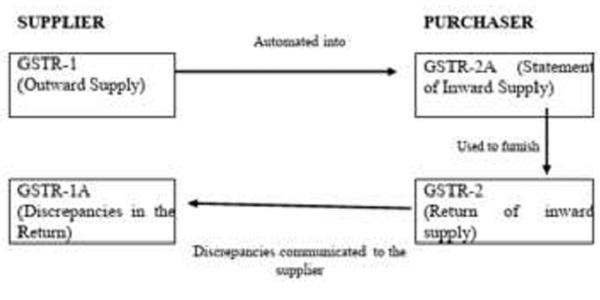
- Bhandari Scrap Traders v. Union of India, 2026 SCC OnLine SC 1570; order dated 24.07.2026 (Supreme Court) — Affirmation of the Gujarat High Court’s approach and distinction between GST and DVAT.
- Commissioner, Central Excise and Customs v. Larsen & Toubro Ltd., (2016) 1 SCC 170 (Supreme Court) — Need for machinery provisions to support fiscal assessment.
- State of Maharashtra v. Suresh Trading Company, (1997) 11 SCC 378 (Supreme Court) — Effect of retrospective cancellation on persons relying on a current registration.
- Aman Kumar Rathaur v. State of Punjab, CM No.20301-CWP-2023 in CWP No.5902 of 2023; decided on 08.12.2023 (Punjab and Haryana High Court) — Ordinary reluctance to interfere with show cause notices involving disputed facts.
- State of Punjab v. M/s Shiv Enterprises, 2023 (96) GST 120 (Supreme Court) — Prematurity of writ interference at the notice stage.
- Roshan Sharma v. Deputy Commissioner of Revenue, State Tax, (2025) 112 GST 43 (Calcutta High Court) — Statutory appeal where fraudulent ITC allegations require factual examination.
- Roshan Sharma v. Deputy Commissioner of Revenue, State Tax, SLP (C) No.31296 of 2025; order dated 09.03.2026 (Supreme Court) — Direction to pursue the appellate remedy.
- Heinz India (P) Ltd. v. State of U.P., (2012) 5 SCC 443 (Supreme Court) — Machinery for assessment and recovery of tax.
- K.T. Moopil Nair v. State of Kerala, AIR 1961 SC 552 (Supreme Court) — Constitutional consequences of discriminatory taxation and absent assessment machinery.
- Rai Ramkrishna v. State of Bihar, AIR 1963 SC 1667 (Supreme Court) — Constitutional scrutiny of discriminatory or confiscatory taxation.
- Jagannath Baksh Singh v. State of U.P., AIR 1962 SC 1563 (Supreme Court) — Assessment and recovery machinery in fiscal legislation.
- State of A.P. v. Nalla Raja Reddy, AIR 1967 SC 1458 (Supreme Court) — Absence of machinery in the challenged land-revenue enactments.
- Vishnu Dayal Mahendra Pal v. State of U.P., (1974) 2 SCC 306 (Supreme Court) — Statutory guidance for assessment machinery.
- D.G. Gose and Co. (Agents) (P) Ltd. v. State of Kerala, (1980) 2 SCC 410 (Supreme Court) — Guidance and machinery for determination of annual value.
- Bhawani Cotton Mills Ltd v. State of Punjab and another, 1967 SCC OnLine SC 39 (Supreme Court) — Inability to ascertain prior tax payment and impermissible taxation at multiple stages.
- M/s G.R. Infra Projects Limited Ratlam v. State of Madhya Pradesh and others, 2025:MPHC-IND:31486; decided on 19.08.2026, as cited in the supplied text (Supreme Court) — Foundational allegations for Section 74 must appear in the notice itself.
- M/s Tata Steel Limited v. Union of India and others, 2026 INSC 920; Civil Appeal arising out of SLP (C) No.16859 of 2026; decided on 25.08.2026 (Supreme Court) — Independent officer satisfaction and specific foundational facts for extended limitation.
FULL TEXT OF THE JUDGMENT/ORDER OF PUNJAB AND HARYANA HIGH COURT
1. This bunch of 424 writ petitions revolves around the scope of Section 16(2)(c) of the Goods and Services Tax Act, 2017 (for short, the ‘Act of 2017’). The question that falls for consideration before us is, what exactly is the obligation cast upon a purchasing dealer who has already paid tax to the supplier, to ensure deposit of such tax by the supplier with the Government, notwithstanding the fact that purchasing dealer has no means to access or ascertain that the supplier has deposited the tax collected from it with the Government, under the Act of 2017?
2. The vires of Section 16(2)(c) of the Act of 2017 is thus questioned on the ground that the provision is contrary to the legal maxim lex non cogit ad impossibilia, e., a person cannot be asked to perform an impossible act, and, thus, it contravenes Articles 14, 19(1)(g), 21, 265, and 300A of the Constitution of India. In the alternative, the petitioners contend that Section 16(2)(c) of the Act of 2017 be read down in a manner consistent with the scheme envisaged in the Act of 2017. It is only in exceptional circumstances, such as those involving a non-existent supplier, fraud or similar circumstances, should responsibility for the supplier’s failure to deposit tax collected from the purchasing dealer, be fastened upon the purchaser.
3. These petitions have been argued highlighting different facets of Input Tax Credit (for short, ‘ITC’) conceived of in the Act of 2017 so that the statutory scheme is analyzed in its proper perspective and provides necessary guidance to the Goods and Services Tax officials, henceforth.
4. Accordingly, we are not referring to the individual facts of each case and the reference to facts shall be limited to specific instances, wherever required, for appreciation of the aspects relating to implementation of ITC in the GST regime.
ACT OF 2017
5. Before referring to the contentions urged on behalf of the petitioners and controverted by the revenue, it would be apt to briefly refer to the object for which the Act of 2017 was promulgated and the GST scheme introduced therein which contains Section 16(2)(c) itself.
6. With an intent to streamline the indirect tax regime and to mitigate the cascading effect of taxation, the Parliament enacted the Act of 2017. It replaced multiple indirect taxes by introducing the GST framework, intending to ensure compliance and reduce costs for businesses and consumers. The Central Goods and Services Tax, State Goods and Services Tax, and Integrated Goods and Services Tax allocate tax responsibilities between the Centre and the States based on whether the supply is intra-State or inter-State. The scheme has the object of simplifying the tax structure, advancing ease of doing business, bringing in increased transparency, and helping in the reduction of prices.
7. Section 2(59) of the Act of 2017 defines “input” to mean any goods other than capital goods used or intended to be used by a supplier in the course or furtherance of business. Section 2(62) then defines “input tax“, in relation to a registered person, as Central Tax, State Tax, Integrated Tax, or Union Territory Tax paid by such registered person. Section 2(63) defines ‘ITC’ as the credit of input tax. Under the Act of 2017, every supplier who crosses the prescribed threshold limit of aggregate turnover is required to get itself registered under Section 22(1) of the Act of 2017. The procedure for registration as also the rights and obligations of a registered dealer are elaborately contained in the Act as well as the Rules framed thereunder.
8. Moving away from fundamental taxable events like manufacture, sale, or provision of service, GST predominantly centers on supply. Section 7(1) of the Act of 2017 defines “supply” broadly to include sale, transfer, barter, exchange, finance, rental, lease, or disposal made for consideration in the course or furtherance of business. Schedule I to the Act of 2017 mandates tax on specific transactions executed even without consideration; Schedule II to the Act delineates whether a composite transaction is a supply of goods or a supply of services; while Schedule III provides the negative list of items that neither form part of the supply of goods nor of services.
9. The ‘levy and collection of tax’ are dealt with in Section 9 of the Act of 2017, which provides the mechanism for charging tax, also containing provisions relating to the payment of tax under the reverse charge mechanism. Chapter V of the Act of 2017 deals with ‘ITC’. Section 16 of the Act of 2017 provides for the eligibility and conditions for availing ITC. Sub-section (2) of Section 16 of the Act of 2017 starts with a non-obstante clause specifying that no registered person shall be entitled to the credit of any input tax in respect of any supply of goods or services or both unless: (i) he is in possession of a tax invoice or debit note issued by a supplier registered under this Act or such other taxpaying documents as may be prescribed; (ii) he has received the goods or services or both; (iii) the tax charged in respect of such supply has been actually paid to the Government, either in cash or through utilisation of ITC admissible in respect of the said supply and has furnished the return under Section 39.
10. Section 16(2) of the Act of 2017 is reproduced:-
“(2) Notwithstanding anything contained in this section, no registered person shall be entitled to the credit of any input tax in respect of any supply of goods or services or both to him unless,–
(a) he is in possession of a tax invoice or debit note issued by a supplier registered under this Act, or such other tax paying documents as may be prescribed;
(b) he has received the goods or services or both. [Explanation. – For the purposes of this clause, it shall be deemed that the registered person has received the goods or, as the case may be, services-
(i)where the goods are delivered by the supplier to a recipient or any other person on the direction of such registered person, whether acting as an agent or otherwise, before or during movement of goods, either by way of transfer of documents of title to goods or otherwise;
(ii)where the services are provided by the supplier to any person on the direction of and on account of such registered person.]
(c) subject to the provisions of [section 41 or section 43A] [Substituted ‘section 41’ by Act No. 31 of 2018, dated 29.8.2018.], the tax charged in respect of such supply has been actually paid to the Government, either in cash or through utilisation of input tax credit admissible in respect of the said supply; and
(d) he has furnished the return under section 39:
Provided that where the goods against an invoice are received in lots or instalments, the registered person shall be entitled to take credit upon receipt of the last lot or instalment:
Provided further that where a recipient fails to pay to the supplier of goods or services or both, other than the supplies on which tax is payable on reverse charge basis, the amount towards the value of supply along with tax payable thereon within a period of one hundred and eighty days from the date of issue of invoice by the supplier, an amount equal to the input tax credit availed by the recipient shall be added to his output tax liability, along with interest thereon, in such manner as may be prescribed:
Provided also that the recipient shall be entitled to avail of the credit of input tax on payment made by him of the amount towards the value of supply of goods or services or both along with tax payable thereon.”
11. As already noted, every supplier who crosses the prescribed limit of aggregate turnover specified in the Act of 2017 is required to get itself registered under Section 22(1). The procedure for registration, as well as the obligations imposed by law on such a registered person are elaborately specified in the statute. Sub-section (10) of Section 25 of the Act of 2017 contemplates grant or rejection of registration only after due verification, in such manner and within such period as may be prescribed.
12. Rule 8 of the Central Goods and Services Tax Rules, 2017 (for short, the ‘CGST Rules’), provides the manner of applying for registration. As per Form GST REG-01, the applicant is required to compulsorily submit his/her photograph, constitution of business, proof of his/her principal place of business, as well as bank account-related proof. Only after verification of these documents and upon the satisfaction of the authority so arrived at is the registration allowed. The registered entity is provided access to the GST portal pursuant to the registration certificate granted in Form GST REG-06. Every registered entity can interact with another registered entity by accessing the GST portal at www.gst.gov.in by entering its registration number. The date of registration, status of registration, principal place of business, as well as the filing table for each financial year, are visible on the portal to the registered entity/user.
13. The statutory scheme governing the availment of ITC under the Act of 2017, demonstrates that the condition governing the purchasing dealer’s entitlement to ITC in respect of tax deposited by the selling dealer, is subject to compliance with the obligations expressly imposed under the Act and the Rules. Section 31 mandates that every registered person supplying taxable goods shall issue a tax invoice containing the description, quantity and value of the goods, the tax charged thereon, and such other particulars as may be prescribed. Section 35 obligates every registered person to maintain true and correct accounts relating to the production or manufacture of goods, inward and outward supplies, stock of goods, ITC availed, and such other particulars as may be prescribed. Rule 56 of the CGST Rules further requires the maintenance of all relevant documents, including tax invoices, bills of supply, delivery challans, credit notes, debit notes, receipt vouchers, payment vouchers and refund vouchers, besides complete particulars regarding the addresses of the supplier, purchaser, and the premises where the goods are stored. Rule 36 prescribes the documentary requirements for claiming ITC. Under Rule 36(1), ITC can be availed of, inter alia, on the strength of the invoice issued by the supplier under Section 31, subject to the condition that the prescribed particulars are contained therein. These are the broad statutory requirements required to be fulfilled by the purchasing dealer.
14. The Act of 2017 originally contained a return-filing architecture under the Act of 2017 incorporating a comprehensive mechanism for verification and reconciliation between the supplier and the recipient. Under Section 37(1) of the Act of 2017 read with Rule 59(1) of CGST Rules, every registered person was required to furnish details of outward supplies in Form GSTR-1 by the 10th day of the succeeding month. The details furnished by the supplier were automatically communicated to the purchaser through Form GSTR-2A under Rule 59(3). Thereafter, under Section 38(1) read with Rule 60(1), the purchaser was required to verify, validate, modify or delete such details and furnish Form GSTR-2 between the 10th and the 15th day of the succeeding month. The modifications made by the purchaser in Form GSTR-2 were thereafter communicated to the supplier under Section 38(3) read with Rule 59(4), enabling the supplier to either accept or reject the proposed modifications. Upon completion of this reconciliation process, both parties were required to furnish a consolidated monthly return in Form GSTR-3 under Section 39(1) read with Rule 61. Part A of Form GSTR-3 was automatically generated on the basis of Forms GSTR- 1 and GSTR-2 under Rule 61(2), while the taxpayer discharged his tax liability through Part B under Rule 61(3). The system of returns can be explained by the following diagram:-
15. On the strength of the aforesaid statutory framework, learned Counsels for the petitioners argue that the original scheme envisaged a robust system of matching and reconciliation, whereby discrepancies were intended to be identified and rectified through an automated statutory process before any adverse consequence could follow.
16. Section 16(2)(c) makes the availment of ITC conditional upon the actual payment of tax to the Government by the supplier. The provision is expressly made subject to Section 41 of the Act of 2017. Section 41 provided for self-assessed ITC being provisionally credited to the electronic credit ledger of the registered person. Under Section 41(2), such provisional credit could be utilised towards the payment of self-assessed output tax. The statutory mechanism for addressing the short payment or non-payment of tax was contained in Section 42, which specifically dealt with the matching, reversal and reclaim of ITC.
17. Section 42 of the Act of 2017 is reproduced:-
“Section 42. Matching, reversal and reclaim of input tax credit
(1) The details of every inward supply furnished by a registered person (hereafter in this section referred to as the “recipient”) for a tax period shall, in such manner and within such time as may be prescribed, be matched—
(a) with the corresponding details of outward supply furnished by the corresponding registered person (hereafter in this section referred to as the “supplier”) in his valid return for the same tax period or any preceding tax period;
(b) with the integrated goods and services tax paid under section 3 of the Customs Tariff Act, 1975 in respect of goods imported by him; and
(c) for duplication of claims of input tax credit.
(2) The claim of input tax credit in respect of invoices or debit notes relating to inward supply that match with the details of corresponding outward supply or with the integrated goods and services tax paid under section 3 of the Customs Tariff Act, 1975 (51 of 1975) in respect of goods imported by him shall be finally accepted and such acceptance shall be communicated, in such manner as may be prescribed, to the recipient.
(3) Where the input tax credit claimed by a recipient in respect of an inward supply is in excess of the tax declared by the supplier for the same supply or the outward supply is not declared by the supplier in his valid returns, the discrepancy shall be communicated to both such persons in such manner as may be prescribed.
(4) The duplication of claims of input tax credit shall be communicated to the recipient in such manner as may be prescribed.
(5) The amount in respect of which any discrepancy is communicated under sub-section (3) and which is not rectified by the supplier in his valid return for the month in which discrepancy is communicated shall be added to the output tax liability of the recipient, in such manner as may be prescribed, in his return for the month succeeding the month in which the discrepancy is communicated.
(6) The amount claimed as input tax credit that is found to be in excess on account of duplication of claims shall be added to the output tax liability of the recipient in his return for the month in which the duplication is communicated.
(7) The recipient shall be eligible to reduce, from his output tax liability, the amount added under sub-section (5), if the supplier declares the details of the invoice or debit note in his valid return within the time specified in sub-section (9) of section 39.
(8) A recipient in whose output tax liability any amount has been added under sub-section (5) or sub-section (6), shall be liable to pay interest at the rate specified under sub-section (1) of section 50 on the amount so added from the date of availing of credit till the corresponding additions are made under the said sub-sections.
(9) Where any reduction in output tax liability is accepted under sub-section (7), the interest paid under sub-section (8) shall be refunded to the recipient by crediting the amount in the corresponding head of his electronic cash ledger in such manner as may be prescribed:
Provided that the amount of interest to be credited in any case shall not exceed the amount of interest paid by the supplier.
(10) The amount reduced from the output tax liability in contravention of the provisions of sub-section (7) shall be added to the output tax liability of the recipient in his return for the month in which such contravention takes place and such recipient shall be liable to pay interest on the amount so added at the rate specified in sub-section (3) of section 50.”
17. Under Section 42(1), the details of inward supplies furnished by the purchaser were required to be matched with the corresponding outward supplies furnished by the supplier. Upon successful matching, the provisional ITC became final under Rule 70. Such matching was required to take place only with the “valid return” of the supplier. Section 2(117) defines a “valid return” as a return furnished under Section 39(1) on which the self-assessed tax has been paid in full. This itself ensured that a return could not attain validity unless the supplier had discharged the self-assessed tax liability, thereby eliminating any possibility of a mismatch arising after a valid return had been accepted. Section 42(3) read with Rule 71(1) provided that where the ITC claimed by the recipient exceeded the tax declared by the supplier, or where the supplier failed to declare the outward supply in a valid return, such discrepancy was required to be communicated electronically to both parties through Forms GST MIS-1 and GST MIS-2 before the last date of the month in which the matching was carried out. Rule 71(2) specifically afforded an opportunity to both the supplier and the recipient to rectify such discrepancies in their respective returns for the month in which the discrepancy was communicated. Only where neither party corrected the discrepancy that Rule 71(4) read with Section 42(5), permitted the disputed amount to be added to the output tax liability of the recipient in the succeeding month’s return. Section 42(7) entitled the purchaser to reclaim the amount once the supplier subsequently corrected the mismatch, while Section 42(9) mandated the refund of the interest recovered from the recipient upon such reconciliation. Rule 70 also provided that the final acceptance of ITC, including subsequent acceptance after the rectification of an earlier mismatch, was required to be communicated electronically to the recipient through Form GST MIS-1.
18. It is in the light of the aforesaid provisions relating to payment of tax and verification of the tax-related information furnished by the selling dealer, which was made available to the purchasing dealer through the statutory mechanism, that compliance with Section 16(2)(c) of the Act of 2017 was to be ensured.
19. However, the scheme originally conceived of in the Act of 2017 was not implemented in its entirety, for various reasons, even though detailed provisions to support the GST regime remained on the statute book. As a result, the scheme of verification contained in the Act of 2017 and the checks to be put by matching the figures could not be implemented.
20. It is asserted by the petitioners and not disputed by the Department that the GST scheme, as was initially conceptualized in the Act, containing provisions for verification and matching etc., could not be implemented due to various technical glitches. The Department while allowing provisions for matching/verification to continue on the statute book introduced other concept of temporary monthly returns, Form GSTR-3B, and the statement in Form GSTR-2A. Section 42 of the Act of 2017 largely remained unimplemented though it remained on the statute.
21. The automated mechanism of matching/verification which was initially conceptualized could not be implemented and the taxpayer had to rely upon its own books of accounts at the time of availment and utilization of ITC. In the absence of returns in Forms GSTR-2 and GSTR-3, the matching concept remained only on paper and was never implemented.
The petitioners have placed reliance upon the following notifications to point out that the scheme originally conceptualized in the Act of 2017, to implment smooth functioning of the GST regime, was not implemented. The summary of the notifications evidencing it are reproduced below:-
| Notification No.20/2017-Central Tax, dated 08.08.2017 | Time Limit to file GSTR-3 for the months of July 2017-August 2017 extended |
| Notification No.29/2017-Central Tax dated 05.09.2017 | Due date for furnishing GSTR-1, GSTR-2 and GSTR-3 for the month of July 2017 and August 2017 extended |
| Notification No.30/2017-Central Tax dated 05.09.2017 | Due date for furnishing GSTR-1, GSTR-2 and GSTR-3 for the month of July 2017 extended |
| Notification No.54/2017-Central Tax dated 30.10.2017 | Due date for furnishing GSTR-1, GSTR-2 and GSTR-3 for the month of July 2017 extended |
| Notification No.56/2017-Central Tax dated 15.11.2017 | Return in Form GSTR-3B mandated till March 2018 |
23. That ultimately, vide Notification No.44/2018-Central Tax, dated 10.09.2021, the time limit for filing GSTR-2 (Under Section 38(1)) and GSTR-3 (Under Section 39(1)) was deferred indefinitely for the F.Ys. 2017-18 and 2018-19. No further extension was granted and the original return, conceived of in the statute, was kept in abeyance.
24. Realising the aforesaid constraints, an amendment was introduced in the Act of 2017 w.e.f. 01.10.2022, deleting the concept of matching of figures as was originally conceptualized. The GST Council, in its 43rd GST Council Meeting, approved amendments to the entire framework of automation under the GST regime. As per Annexure A to the Agenda for the 43rd GST Council Meeting, the statutory framework related to matching, provisional credit and return reconciliation, as envisioned Sections 16, 37, 38, 39, 41, 42, 43, 43A and 47 was substantially amended; with Sections 42 and 43 being omitted and Section 41 being substituted. The elaborate system of matching of returns was deleted/omitted. By incorporating the amendment, the statute provided that provisional ITC would no longer be available to the purchaser. Section 41, which earlier provided for the claim and provisional acceptance of ITC, was amended to provide for the final availment of ITC.
25. As per the amended Section 41, every registered person could avail ITC on a self-assessment basis. However, where ITC was availed but the tax was not deposited by the supplier in respect of such ITC, the ITC benefit was to be reversed by the purchaser along with interest. It is urged that the purchaser did not have any mechanism to ascertain whether the tax had been deposited by the supplier or not. This was for the reason that the concept of matching had been done away with and no information was provided to either the supplier or the purchaser regarding discrepancies in each other’s returns. The said amendments were brought into force w.e.f. 01.10.2022.
26. Since the matching concept was deleted, Rule 37A was instead inserted vide the Central Goods and Services Tax (Fifth Amendment) Rules, 2022, w.e.f. 26.12.2022. Rule 37A of the CGST Rules provided for the reversal of ITC in cases of non-payment of tax by the supplier and the re-availment thereof if the selling dealer later deposited the tax. Rule 37A, as introduced in the CGST Rules, is reproduced hereinafter:-
“Rule 37A. Reversal of input tax credit in the case of nonpayment of tax by the supplier and re-availment thereof. Where input tax credit has been availed by a registered person in the return in FORM GSTR-3B for a tax period in respect of such invoice or debit note, the details of which have been furnished by the supplier in the statement of outward supplies in FORM GSTR-1, as amended in FORM GSTR-1A, if any, or using the Invoice Furnishing Facility, but the return in FORM GSTR-3B for the tax period corresponding to the said statement of outward supplies has not been furnished by such supplier till the 30th day of September following the end of the financial year in which the input tax credit in respect of such invoice or debit note has been availed, the said amount of input tax credit shall be reversed by the said registered person while furnishing a return in FORM GSTR-3B on or before the 30th day of November following the end of such financial year.
Provided that where the said amount of input tax credit is not reversed by the registered person in a return in FORM GSTR-3B on or before the 30th day of November following the end of such financial year during which such input tax credit has been availed, such amount shall be payable by the said person along with interest thereon under section 50.
Provided further that where the said supplier subsequently furnishes the return in FORM GSTR-3B for the said tax period, the said registered person may re-avail the amount of such credit in the return in FORM GSTR-3B for a tax period thereafter.”
27. The requirement on part of purchasing dealer even after insertion of Rule 37A primarily was to ascertain whether the supplier has furnished the return in Form GSTR-3B or not?
28. Moreover, for the period prior to insertion of Rule 37A there existed no provision whereunder the purchasing dealer could re-claim ITC even after the seller deposited tax with the Government. Most of the petitions in this bunch relates to pre-37A period and therefore the law relating to obligation of purchasing dealer to avail ITC where the selling dealer had not deposited the tax collected by it needs to be examined with reference to pre-37A period also in this bunch of petitions.
29. Verifying whether the return submitted by selling dealer is correct or not is otherwise neither contemplated in the statutory scheme nor does it seem possible for the purchasing dealer to ascertain it in the absence of automated process of verification/matching. Thus, the requirement on part of purchasing dealer to satisfy the condition in Section 16(2)(c) of the Act of 2017, by ensuring deposit of tax by the selling dealer in Government Treasury, had become questionable due to non-implementation of the initial GST scheme conceived of in the Act of 2017.
SECTION 16(2)(C) AS SEEN BY DIFFERENT COURTS
30. The tax regime under the Act of 2017 has been a subject matter of consideration before different High Courts and the Supreme Court of India. The Hon’ble Courts have examined the issue in the context of the statutory schemes applicable before them. Some of these judgments were delivered in the context of the Value Added Tax regime. Since many of the aforesaid judgments were delivered arising out of Value Added Tax Act, therefore a comparative table containing the provisions of the Haryana Value Added Tax Act, 2003 vis-à-vis the Act of 2017 is extracted hereinafter, for better appreciation of the judgments:-
| Provision under Haryana VAT Act | Provisions under Central GST Act |
|---|---|
| Determination of input tax | Eligibility and conditions for taking input tax credit. |
| 8. (1) Input tax in respect | 16. |
| of any goods purchased by | (1) |
| a VAT dealer shall be the | xxx |
| amount of tax actually | (1) Notwithstanding anything contained |
| paid to the State on the | in this section, no registered person shall |
| sale of such goods to him | be entitled to the credit of any input tax in |
| and shall, in case of a | respect of any supply of goods or services |
| dealer who is liable to pay | or both to him unless,— |
| tax under Sub-section (1) | (a) to (b) XXX |
| of Section 3 or, as the case may be, makes an | (c) subject to the provisions of section 41, the tax charged in respect of such supply |
| application for | has been actually paid to the |
| registration in time under | Government, either in cash or through |
| Sub-section (2) of section | utilization of input tax credit admissible |
| 11, include the tax paid under this Act and the Act of 1973 in respect of goods (except capital goods) held in stock by him on the day he becomes liable to pay tax but shall not include tax actually paid in respect of goods specified in | in respect of the said supply; and |
| Schedule-E used or disposed of in the circumstances mentioned against such goods: | |
| Burden of proof. | Burden of proof. |
| 5. Where any asses see | 155. Where any person claims that he is |
| claims—
(a) to (e) XXX |
eligible for input tax credit under this Act, the burden of proving such claim shall lie |
| (f) that he is entitled to any deduction from gross turnover or any deduction of input tax from the tax calculated on the sale of goods;
(a) to (j) XXX the burden of so providing shall be on him |
on such person. |
31. A Division Bench of this Court in Gheru Lal Bal Chand v. State of Haryana, 2011 SCC OnLine P&H 13205, read down Section 8(3) of the Haryana Value Added Tax Act, 2003 to hold that if the selling dealer has collected the tax, then no liability can be fastened upon the purchasing dealer on account of non-payment of tax by the selling dealer into the Treasury unless fraud, collusion, or connivance between the registered selling dealer or its predecessor and the registered purchasing dealer is established.
“33. Further, the selling-registered dealer who had collected tax from the purchasing-registered dealer acts as an agent for the Government as held in Atul Fasteners Ltd.’s case [2007] 7 VST 278 (SC) ; (2007) 4 SCC 471. Still further, paid would mean and embrace within it ought to have been paid as enunciated in Elphinstone Spinning and Weaving Mills Co. Ltd.’s case AIR 1971 SC 2039. Moreover, the apex Court in B. R. Enterprises v. State of U. P. [2000] 120 STC 302 (SC) ; (1999) 9 SCC 700, Calcutta Gujarathi Education Society v. Calcutta Municipal Corporation (2003) 1 RC 587 ; (2003) 10 SCC 533 and M. Nagaraj v. Union of India (2006) 8 SCC 212 has interpreted the rule of reading down statutory provisions to mean that a statutory provision is generally read down so as to save the provision from being pronounced to be unconstitutional or ultra vires. The rule of reading down is to construe a provision harmoniously and to straighten crudities or ironing out creases to make a statute workable
34. To conclude, no liability can be fastened on the purchasing registered dealer on account of non-payment of tax by the selling registered dealer in the treasury unless it is fraudulent, or collusion or connivance with the registered selling dealer or its predecessors with the purchasing registered dealer is established.”
32. A similar principle, though in a different statutory scheme was considered in the backdrop of the provisions of the Delhi ValueAdded Tax Act, 2004, the Delhi High Court made similar observations in On Quest Merchandising India (P.) Ltd. v. Government of NCT of Delhi, 2017 SCC OnLine Del 11286. The Delhi High Court in On Quest (supra) read down Section 9(2)(g) to hold that the expression “dealer or class of dealer” occurring in Section 9(2)(g) should be interpreted as not including a purchasing dealer who has bona fide entered into purchase transactions with validly registered selling dealers who have issued tax invoices in accordance with Section 50. The relevant paragraphs of the judgment passed by the Delhi High Court in On Quest (supra) reads thus:-
“39. Applying the law explained in the above decisions, it can be safely concluded in the present case that there is a singular failure by the Legislature to make a distinction between purchasing dealers who have bona fide transacted with the selling dealer by taking all precautions as required by the DVAT Act and those that have not. Therefore, there was need to restrict the denial of ITC only to the selling dealers who had failed to deposit the tax collected by them and not punish bona fide purchasing dealers. The latter cannot be expected to do the impossible. It is trite that a law that is not capable of honest compliance will fail in achieving its objective. If it seeks to visit disobedience with disproportionate consequences to a bona fide purchasing dealer, it will become vulnerable to invalidation on the touchstone of article 14 of the Constitution.
*****
41. The court respectfully concurs with the above analysis and holds that in the present case, the purchasing dealer is being asked to do the impossible, i.e., to anticipate the selling dealer who will not deposit with the Government the tax collected by him from those purchasing dealer and therefore avoid transacting with such selling dealers. Alternatively, what section 9(2)(g) of the DVAT Act requires the purchasing dealer to do is that after transacting with the selling dealer, somehow ensure that the selling dealer does in fact deposit the tax collected from the purchasing dealer and if the selling dealer fails to do so, undergo the risk of being denied the ITC. Indeed section 9(2)(g) of the DVAT Act places an onerous burden on a bona fide purchasing dealer.
*****
53. In light of the above legal position, the court hereby holds that the expression “dealer or class of dealers” occurring in section 9(2)(g) of the DVAT Act should be interpreted as not including a purchasing dealer who has bona fide entered into purchase transactions with validly registered selling dealers who have issued tax invoices in accordance with section 50 of the Act where there is no mismatch of the transactions in Annexures 2A and 2B. Unless the expression “dealer or class of dealers” in section 9(2)(g) is “read down” in the above manner, the entire provision would have to be held to be violative of article 14 of the Constitution.
54. The result of such reading down would be that the Department is precluded from invoking section 9(2)(g) of the DVAT to deny ITC to a purchasing dealer who has bona fide entered into a purchase transaction with a registered selling dealer who has issued a tax invoice reflecting the TIN number. In the event that the selling dealer has failed to deposit the tax collected by him from the purchasing dealer, the remedy for the Department would be to proceed against the defaulting selling dealer to recover such tax and not deny the purchasing dealer the ITC. Where, however, the Department is able to come across material to show that the purchasing dealer and the selling dealer acted in collusion then the Department can proceed under section 40A of the DVAT Act.”
33. The judgment of the Delhi High Court in On Quest (supra) came to be considered by the Hon’ble Supreme Court of India in Commissioner of Trade and Tax, Delhi v. Arise India Ltd., (2018) SCC OnLine SC 3859 at the instance of the Commissioner of Trade and Tax, Delhi, where the special leave petition was dismissed without interference with the judgment of the Delhi High Court. The relevant paragraphs of the judgment passed by the Supreme Court in Arise India Ltd., (supra) reads as under:-
“1. On hearing learned Additional Solicitor General appearing for the petitioner, we are not inclined to interfere with the impugned order [Reported as On Quest Merchandising India Pvt. Ltd. v. Government of NCT of Delhi, (2018) 56 GSTR 177 (Delhi); 2017 SCC OnLine Del 11286.]. The special leave petition is dismissed
2. The learned Additional Solicitor General, however, submits that a batch of petitions were decided by the impugned order and there are some of the cases where the purchase transactions are not bona fide like the present case and those cases ought to have been remitted back to the competent authority.
3. The learned Additional solicitor General submits that the petitioner would move the High Court with necessary particulars for directions in this behalf for which liberty is granted, as prayed for.”
34. It is further submitted that in cases involving the retrospective cancellation of the registration of the selling dealer, relevant observations have been made by the Delhi High Court in Shanti Kiran India (P.) Ltd. v. CTT Dept., (2013) SCC OnLine Del 50. The matter having arisen under the Delhi Value Added Tax Act, the High Court held that, in the absence of any mechanism enabling a purchasing dealer to verify whether the selling dealer had deposited the tax for the period in question, and in the absence of notification in a manner that could be ascertained by persons in business that a dealer’s registration had been cancelled, the benefit of ITC under Section 9(1) could not be denied. Furthermore, the Court noticed that the cancellation of the registration of both selling dealers had occurred after the transactions with the appellant. The VAT authorities observed that the scanty amounts deposited by the selling dealers were incommensurate with the transactions recorded and straightaway proceeded to hold that they had colluded with the appellant. Such a priori conclusions were based on no material or inquiry and were, accordingly, held to be unworthy of acceptance. The Delhi High Court in Shanti Kiran (supra) has held as under:-
“14. In the present case, section 9(1) grants input-tax credit to purchasing dealers. Section 9(2), on the other hand, lists out specific situations where the benefit is denied. The negative list, as it were, is restrictive and is in the nature of a proviso. As a result, this court is of the opinion that the interpretation placed by the Tribunal that there is statutory authority for granting input-tax credit, only to the extent tax is deposited by the selling dealer, is unsound and contrary to the statute. It is also iniquitous because an onerous burden is placed on the purchasing dealer—in the absence of clear words to that effect in the statute—to keep a vigil over the amounts deposited by the selling dealer. The court does not see any provision or methodology by which the purchasing dealer can monitor the selling dealer’s behaviour, vis-a-vis the latter’s VAT returns. Indeed, section 28 stipulates confidentiality in such matters. Nor is this court in agreement with the Tribunal’s opinion that insertion of clause (g) to section 9(2) is clarificatory. As observed earlier, section 9(2) is an exception to the general rule granting input-tax credit to dealers who qualify for the benefit. The conditions for operation of the exception are well defined. The absence of any condition such as the one spelt out in clause (g) and its addition in 2010, rules out legislative intention of its being a mere clarification of the law which always existed. This court is further of the opinion that the Bombay High Court judgment in Mahalaxmi Cotton Ginning [2012] 51 VST 1 (Bom) is of no assistance to the Revenue, because there, the court had to deal with the Constitutionality of section 48(5) of the local VAT law. The court applied the well-established principle of greater deference to policy makers and Legislatures in economic and fiscal matters, and upheld the statute, which had said that set off (a provision similar to input-tax credit under section 9(1) of the Delhi VAT Act) would be permissible only to the extent of the amounts actually paid. The High Court held that :
“The words ‘actually paid’ into the Government treasury signify that a claim for set off cannot be in excess of the tax in respect of which the set off is claimed that has been deposited into the treasury. The plain and natural meaning of the expression ‘actually paid’ into the treasury is that the tax on purchases of which a set off is claimed must actually and physically have been deposited into the treasury. A constructive or notional deposit would not fulfil the mandate of the provision. The State Legislature has used language of a mandatory nature that leaves its intent beyond any doubt. The exception which is carved out in the substantive part of sub-section (5) is where a claimant-dealer is liable to pay purchase tax on the purchase of the said goods effected by him. The proviso creates an exception where tax is deferred or deferrable under any Package Scheme of Incentives implemented by the State Government. In that event a deeming fiction is created by the proviso under which the tax is deemed to have been received in the Government treasury for the purposes of the sub-section. In all other cases, an actual deposit of taxes is mandated before a set off is allowed.
15. In the present case, as noticed previously, the VAT Act is silent; section 9(2)(g) was introduced only with effect from April 1, 2010. Therefore, the Bombay High Court decision is not of any assistance to the Revenue.
16. This court is of the opinion that in the absence of any mechanism enabling a purchasing dealer to verify if the selling dealer deposited tax, for the period in question, and in the absence of notification in a manner that can be ascertained by men in business that a dealer’s registration is cancelled (as has happened in this case) the benefit of input-tax credit, under section 9(1) cannot be denied. Furthermore, this court notices that the cancellation of both selling dealers’ registration occurred after the transactions with the appellant. The VAT authorities observed that the scanty amounts deposited by the selling dealers was incommensurate with the transactions recorded, and straightaway proceeded to hold that they colluded with the appellant. Such a priori conclusions are based on no material, or without inquiry, and accordingly unworthy of acceptance.
17. In view of the above discussion and findings, this court answers the substantial question framed in favour of the assessee, and against the Revenue. It is held that the appellant is entitled to the credit claimed, which shall be worked out and given, after due verification, in accordance with law, within two months from today. The appeals are allowed in the above terms, with no order as to costs.”
35. In Commissioner Trade and Tax Delhi v. Shanti Kiran India (P.) Ltd., 2025 SCC OnLine SC 2389, the Supreme Court upheld the judgment of the Delhi High Court.
“3. There is no dispute that on the date of transaction, the seller dealer(s) were registered with the Department. However, after the transaction, the registration of those seller dealer(s) was cancelled, and they defaulted in depositing the tax collected by them from the purchaser dealer(s). The High Court vide impugned judgment and order(s) found respondent(s) bona fide purchaser dealer(s) who had paid taxes in good faith to registered seller dealer(s) and, therefore, entitled to the benefit of ITC and, accordingly, allowed the said benefit to them after due verification of invoices.
4. A similar issue later arose for consideration before the High Court in On Quest Merchandising India P. Ltd. v. Government of NCT of Delhi [(2018) 56 GSTR 177 (Delhi); 2017 SCC OnLine Del 11286.] in the context of the provisions of section 9(2)(g) of the Delhi Value Added tax Act, 2004 [ DVAT Act.] .
5. Section 9(1) of the DVAT Act permits ITC to a registered dealer in respect of turnover of purchases occurring during the tax period where the purchase arises in the course of his activities as a dealer and the goods are to be used by him directly or indirectly for the purpose of making sales which are liable to tax under section 7 of the DVAT Act. Sub-section (2) of section 9 sets out the conditions under which such ITC would not be allowed. Clause (g) of sub-section (2) of section 9 made ITC benefit available to a purchasing dealer only when the tax paid by the purchasing dealer has actually been deposited by the selling dealer with the Government or has been lawfully adjusted against output tax liability and correctly reflected in the return filed for the respective tax period. Reading down clause (g) of sub-section (2) of section 9, in On Quest Merchandising India P. Ltd. v. Government of NCT of Delhi [(2018) 56 GSTR 177 (Delhi); 2017 SCC OnLine Del 11286.] , the Delhi High Court held (paras 53 and 54, pages 207 and 208 in 56 GSTR):
“62. In light of the above legal position, the court hereby holds that the expression ‘dealer or class of dealers’ occurring in section 9(2)(g) of the DVAT Act should be interpreted as not including a purchasing dealer who has bona fide entered into purchase transactions with validly registered selling dealers who have issued tax invoices in accordance with section 50 of the Act where there is no mismatch of the transactions in annexures 2A and 2B. Unless the expression ‘dealer or class of dealers’ in section 9(2)(g) is ‘read down’ in the above manner, the entire provision would have to be held to be violative of article 14 of the Constitution.
63. The result of such reading down would be that the Department is precluded from invoking section 9(2)(g) of the DVAT to deny ITC to a purchasing dealer who has bona fide entered into a purchase transaction with a registered selling dealer who has issued a tax invoice reflecting the TIN number. In the event that the selling dealer has failed to deposit the tax collected by him from the purchasing dealer, the remedy for the Department would be to proceed against the defaulting selling dealer to recover such tax and not deny the purchasing dealer the ITC. Where, however, the Department is able to come across material to show that the purchasing dealer and the selling dealer acted in collusion then the Department can proceed under section 40A of the DVAT Act.”
6. The aforesaid decision of the High Court was challenged before this court in Special Leave to Appeal (Civil) No. 36750 of 2017 [Commissioner of Trade and Taxes v. Arise India Ltd., (2024) 129 GSTR 542 (SC); 2018 SCC OnLine SC 3859.] . The said special leave petition was disposed of without interfering with the order of the High Court.
7. In light thereof, as we find that there is no dispute regarding the selling dealer being registered on the date of transaction and neither the transactions nor invoices in questions have been doubted, based on any inquiry into their veracity, we do not find a good reason to interfere with the order of the High Court directing for grant of ITC benefit after due verification. The appeals lack merit and are, accordingly, dismissed.”
The aforesaid decision was rendered in the context of the Delhi Value Added Tax Act, 2004.
36. It is further submitted that it has been held by the Gauhati High Court in National Plasto Moulding v. State of Assam, SCC Online Gau 1596. A similar view has also been taken by the Tripura High Court in Sahil Enterprises v. Union of India, 2026 SCC OnLine Tri 4, and by the Karnataka High Court in M/s Instakart Services Private Limited v. Union of India and Others, 2026 SCC OnLine Kar 2469 that the aforesaid reasoning has relevance in the context of the GST regime. In these decisions, the relevant provisions of the Act of 2017 have accordingly been read down to save the statute from the vice of arbitrariness and thereby offending Articles 14 and 19 of the Constitution of India.
“5. The Delhi High Court in the said judgment has observed as under (pages 198, 199, 207 and 208 in 56 GSTR:
“39. Applying the law explained in the above decisions, it can be safely concluded in the present case that there is a singular failure by the Legislature to make a distinction between purchasing dealers who have bona fide transacted with the selling dealer by taking all precautions as required by the DVAT Act and those that have not. Therefore, there was need to restrict the denial of ITC only to the selling dealers who had failed to deposit the tax collected by them and not punish bona fide purchasing dealers. The latter cannot be expected to do the impossible. It is trite that a law that is not capable of honest compliance will fail in achieving its objective. If it seeks to visit disobedience with disproportionate consequences to a bona fide purchasing dealer, it will become vulnerable to invalidation on the touchstone of article 14 of the Constitution….
41. The court respectfully concurs with the above analysis and holds that in the present case, the purchasing dealer is being asked to do the impossible, i.e., to anticipate the selling dealer who will not deposit with the Government the tax collected by him from those purchasing dealer and therefore avoid transacting with such selling dealers. Alternatively, what section 9(2)(g) of the DVAT Act requires the purchasing dealer to do is that after transacting with the selling dealer, somehow ensure that the selling dealer does in fact deposit the tax collected from the purchasing dealer and if the selling dealer fails to do so, undergo the risk of being denied the ITC. Indeed section 9(2)(g) of the DVAT Act places an onerous burden on a bona fide purchasing dealer….
53. In light of the above legal position, the court hereby holds that the expression ‘dealer or class of dealers’ occurring in section 9(2)(g) of the DVAT Act should be interpreted as not including a purchasing dealer who has bona fide entered into purchase transactions with validly registered selling dealers who have issued tax invoices in accordance with section 50 of the Act where there is no mismatch of the transactions in annexures 2A and 2B. Unless the expression ‘dealer or class of dealers’ in section 9(2)(g) is ‘read down’ in the above manner, the entire provision would have to be held to be violative of article 14 of the Constitution.
54. The result of such reading down would be that the Department is precluded from invoking section 9(2)(g) of the DVAT to deny ITC to a purchasing dealer who has bona fide entered into a purchase transaction with a registered selling dealer who has issued a tax invoice reflecting the TIN number. In the event that the selling dealer has failed to deposit the tax collected by him from the purchasing dealer, the remedy for the Department would be to proceed against the defaulting selling dealer to recover such tax and not deny the purchasing dealer the ITC. Where, however, the Department is able to come across material to show that the purchasing dealer and the selling dealer acted in collusion then the Department can proceed under section 40A of the DVAT Act.”
*****
7. Having gone through the above referred judgments, we are of the view that the controversy raised in this batch of writ petitions is squarely covered by the decision of the Delhi High Court in the case of On Quest Merchandising India Pvt. Ltd. [On Quest Merchandising India Pvt. Ltd. v. Government of NCT of Delhi, (2018) 56 GSTR 177 (Delhi); 2017 SCC OnLine Del 11286.]. Hence, the show-cause notices impugned in the present writ petitions and the consequential orders are set aside. However, the Department is free to act in those cases, where the purchase transactions are not bona fide, in accordance with law.
8. With these observations, these writ petitions are disposed of.”
37. The Gujarat High Court, however, in the case of Maruti Enterprises v. Union of India, 2026 SCC OnLine Guj 4013 has held that Section 16(2)(c) of the Act of 2017 is not rendered ultra vires the Constitution of India only because the purchasing dealer is left remediless inasmuch as the revenue is empowered to initiate recovery proceedings against the supplier under Sections 73 and 74 of the Act of 2017 and once the supplier discharges its tax liability in respect of the original transactions then the purchasing dealer becomes entitled to re-claim credit in the immediately succeeding month by virtue of Rule 37A. The Court also observed that purchasing dealer may pursue appropriate remedies against the supplier and the mere fact that specific statutory mechanism for effecting recovery at the instance of purchasing dealer would not render Section 16(2)(c) ultra vires. The conclusion was reached in the context of the statutory mechanism contained in Section 41 and Rule 37A, providing for reversal and subsequent re-availment of ITC, as also the recovery mechanism against the defaulting supplier under Section 73 and 74 of the Act of 2017. The relevant paras of the judgment passed by the Gujarat High Court in Maruti Enterprises (supra) reads as under:-
“62. The scheme of ITC under the GST framework does not envisage a situation where the purchasing dealer is left remediless. The Revenue is empowered to initiate recovery proceedings against the supplier under Sections 73 and 74 of the CGST Act for failure to discharge tax liability in respect of the original transaction. Further, in terms of Rule 37A of the CGST Rules, 2017 once the supplier discharges such tax liability, the purchasing dealer becomes entitled to re-avail the credit in the immediately succeeding month. Thus, the statutory mechanism does not permanently deprive the purchasing dealer of ITC; rather, the credit is restored upon payment of tax into the Government treasury. Mere delay or hardship in availing ITC, therefore, cannot constitute a valid ground for reading down Section 16(2)(c) of the CGST Act.
63. Section 41(2) of the CGST Act adequately addresses the concerns of the purchasing dealer. The provision, in its plain terms, balances the interests of revenue with those of the recipient by permitting re-availment of credit upon payment by the supplier. The contention regarding double taxation is misconceived. It is well settled that ITC is not a constitutional or vested right, but a statutory concession, subject to the conditions and restrictions prescribed under the Act. Where the statute provides for reversal and re-availment of credit, the same cannot be characterised as double taxation so as to invalidate the provision.
64. Even in a situation where the supplier fails to remit the tax collected from the purchasing dealer, the latter is not without recourse. The purchasing dealer may pursue appropriate remedies against the supplier, while the Government retains the authority to recover the unpaid tax from the defaulting supplier. The mere absence of a specific statutory mechanism enabling recovery by the purchasing dealer from the supplier cannot, by itself, render Section 16(2)(c) of the CGST Act ultra vires.
*****
89. Since we are not inclined to read down Section 16(2) (c) of the CGST Act, the question of declaring it ultra vires Part III of the Constitution of India, including Article 14 of the Constitution of India, does not arise. However, we expect the Government to address the issue of genuine purchasers at the earliest.”
38. The judgment of the Gujarat High Court in Maruti Enterprises (supra) has been affirmed with dismissal of SLP by the Supreme Court in Bhandari Scrap Traders v. Union of India, 2026 SCC OnLine SC 1570 vide order dated 24.07.2026, wherein the Supreme Court held as:-
“1. Though we are informed that a special leave petition has been entertained in relation to the decision of the Tripura High Court in Sahil Enterprises v. Union of India1, we find from the judgment passed by the High Court of Tripura that the exercise undertaken by the High Court of Gujarat in the judgment, presently under challenge, was not undertaken by it.
2. The distinction and differences between the provisions of the Delhi Value Added Tax Act, 2004, and the Central Goods and Services Tax Act, 2017, brought out by way of a detailed analysis from paragraph 42 onwards in the impugned judgment along with the scheme of availing Input Tax Credit (ITC) under the GST regime, as set out in paragraph 56 of the impugned judgment, clearly demonstrate that there is no possibility of drawing parity between the provisions of the two enactments, so as to treat a purchasing dealer under the CGST Act on par with a purported bonafide purchasing dealer under the Delhi VAT Act in relation to ITC, when the supplier-dealer fails to pay the requisite tax.
3. Further, the High Court of Gujarat has also referred to the provisions of Section 41 of the CGST Act and also Sections 73 and 74 thereof in the context of the purchasing dealer under the CGST regime being entitled to re-avail the reversed ITC after the supplier-dealer is made to discharge the tax liability.
4. In that view of the matter, the High Court was fully justified in holding that no grounds were made out to declare Section 16(2)(c) of the CGST Act as unconstitutional or read down the provisions thereof. We find ourselves in complete and respectful agreement with the views expressed by the High Court of Gujarat and affirm and uphold the impugned judgment.”
38.1 The aforesaid judgment of the Supreme Court, therefore affirms the reasoning of the Gujarat High Court with reference to the statutory scheme considered therein. The effect of these judgments, in terms of their applicability to the statutory framework and the period involved in the present batch, however, would require examination in light of the statutory provisions governing the relevant period and the factual premise upon which the present batch arises.
39. It is in this background, having regard to the statutory schemes contemplated, and the different views expressed by the High Courts in the decisions noticed above, that we are required to examine the questions posed for our consideration in this bunch of writ petitions.
CONTENTIONS ON BEHALF OF THE PETITIONERS
40. On behalf of the petitioners, Mr. Sandeep Goyal, learned Senior Counsel has highlighted the scheme of the Act of 2017 and submitted as under:-
“(i) That the statutory mechanism which comprised of Section 16(2), 37, 38, 39, 41, 42, 155 and the rules made thereunder were only partly implemented. In the absence of the same, ensuring the compliance by the seller became impossible, thus, attracting the principles of lex non-cogit ad imposibilia. Section 16(2)(c) cannot be implemented in isolation as the scheme cannot expect a person to implement some provisions of the law, which could have been complied with only if the executive had not discarded the supporting provisions. Realising this vacuum in the implementation in the scheme, the legislature changed the scheme w.e.f. 01.10.2022 and amended section 41 to enable the buyer to take credit on a final instead of provisional basis merely on the filing GSTR-3B by the seller, de hors of its correctness. The shift in the scheme indicates Section 16(2)(c) was impossible to comply to wit it was impossible to ensure that the seller had discharged its output liability through proper means.
(ii) That even after 01.10.2022, 16(2)(c) has been made subject to Section 41 which only requires the buyer to ensure that return in GSTR-3B (Section 39(1)) has been filed the seller for the month for which the buyer has availed the ITC, based on GSTR-1 filed by the seller and not the correctness of the said return filed by the seller.
(iii) The scheme of the Act requires the Tax Payer (TP) to avail and utilize input tax credit in a definite “tax period” which is a month. As on the date of such decision making, the TP only has his books of accounts that he can rely upon. He has made the payment of tax to his supplier through Banking Channels, who has collected the same in his capacity as an agent to the government. The TP does not have the means to determine as to whether the tax has actually been deposited to the government and without any formal assessment, the TP cannot have the knowledge as to whether the ITC utilized is “admissible”. Therefore, the provision of Section 16(2)(c) read with Section 155 is impossible to be complied with by the TP who has to ensure that: –
a. Tax has actually been paid by the supplier
b. The ITC utilized by the supplier is “admissible” to the supplier.
c. It is also pertinent to mention that the supplier himself cannot foresee if the ITC utilized by him today will be declared to be “inadmissible” tomorrow.”
41. Learned Senior Counsel for the petitioner has placed an illustration as a test case to buttress his argument that in most of the cases, the purchasing dealer will not be able to know the incident of default on part of selling dealer in a series of transactions rendering it impossible for the purchasing dealer to ensure deposit of tax with the Government Treasury by the selling dealer. The illustration assumes a supply chain starting from a kabadiwala to a customer:-
“Kabad iwala has plastic |
Plastic Manufacturer who purchases “kabad” for manufacture of plastic |
Button Manufacturer purchases the plastic to manufacture a button |
Shirt manufacturer purchases the button to manufacture a shirt |
The wholesaler purchases the shirt to trade it further |
The retailer purchases the shirt to sell it to the customer |
The shirt is purchased by the customer |
L5 |
L4 |
L3 |
L2 |
L1 |
TP |
C |
In the above mentioned chain, there can be following scenarios:
Scenario Facts Action by the Department
| Scenario | Facts | Action by the Department |
|---|---|---|
| Scenario 1 | L1 collects the tax the TP but neither deposits the same to the government nor files his returns. TP has all the requisite documents. | ITC is denied to TP being inadmissible under Section 16(2)(c) |
| Scenario 2 | L5 collects tax from L4, L4 from L3, L3 from L2, L2 from L1 and L1 from the TP but L5 does not deposit the same to the Government and files an outward tax liability of “NIL”. The ITC of L4, L3, L2, L1 and consequently of the TP becomes ineligible. TP has all the requisite documents. | ITC is denied to TP being inadmissible under Section 16(2)(c) |
| Scenario 3 | The tax has been collected by L1, but has not been deposited with the Government. L1 is a company that has gone into Corporate Insolvency Resolution Process under the IBC, 2016. The Government submitted its dues to the Resolution Professional. The dues are accepted but no payment is proposed to the Government in the resolution plan. The resolution plan is passed and becomes final and binding upon the Government.
TP has all the requisite documents. |
ITC is denied to TP being inadmissible under Section 16(2)(c) |
| Scenario 4 | The registration of L5 has been cancelled with a retrospective effect. Since his registration is cancelled with retrospective effect, the ITC availed by L4, L3, L2 and L1 are declared to be inadmissible. Therefore, the tax collected from TP has not been received by the Government, despite the TP having all the documents as required by the Act. | ITC is denied to TP being inadmissible under Section 16(2)(c) |
| Scenario 5 | The registration of L5 has been cancelled with a retrospective effect. Since his registration is cancelled with retrospective effect, the registrations of L4, L3, L2 and L1, down the line, are also cancelled with retrospective effect on the suspicion that they have not received goods and the invoices in respect of the said goods are also presumed to be invalid. Therefore, any ITC availed becomes inadmissible and therefore, the tax collected from TP has not been received by the Government, despite the TP having all the documents as required by the Act. | ITC is denied to TP being inadmissible under Section 16(2)(c) |
| Scenario 6 | L4 purchased goods from grey market and in connivance with L5 takes the invoices from L5 for a commission. L3 purchases the plastic from L4 not knowing the source of the goods purchased by L4. Now, an investigation is conducted against L5 and L4 wherein it is discovered that an ingenuine transaction has taken place between them. Since the ITC availed by L4 is without receipt of goods from L5, the ITC of L3, L2, L1 and the TP shall be rejected by the department. TP has all the requisite documents.” | ITC is denied to TP being inadmissible under Section 16(2)(c) |
42. Learned Senior Counsel for the petitioner further submits that in this entire chain of transactions, the entire chain gets affected who may not be privy to the transactions with the TP. It makes it practically impossible to know that a default has been committed by the L5 or L4 within the taxable period or thereafter. Asking TP to discharge the onus regarding the payment of tax by the Supplier through Admissible ITC is not possible at all. Even if the transactions between the chain of L4 up to the TP are genuine, the retrospective cancellation of L5 would affect the genuineness of credit in the hands of all the persons in the chain, rendering the whole mechanism of ITC as contrary to the basic scheme of the Act which is focused on the removal of cascading effect of taxes as it leads to double taxation in the hands of TP. It is emphatically submitted, that the grievance of the petitioners before this Court is only regarding the genuine transactions with its sellers and not with regard to any such transaction which is declared as ingenuine except on the ground of nonpayment of tax by the seller/ retrospective cancellation of any predecessor dealer in the chain of supply.
43. Complementing the submissions of Mr. Sandeep Goyal, learned Senior Counsel, Mr. Puneet Agrawal, representing some of the petitioners, has argued that in the absence of implementation of the GST regime, in its entirety, as was originally conceptualized, the substantive provision contained in Section 16(2)(c) of the Act of 2017 could not be effectuated. Learned counsel has placed heavy reliance upon the judgment of the Supreme Court in Commissioner, Central Excise and Customs v. Larsen & Toubro Ltd., 2016 (1) SCC 170, to urge that substantive provisions require statutory machinery and procedure for making the assessment and, in the absence of such statutory machinery, the entire aspect would be left administrative in character, rendering the statute itself vulnerable to being held ultra vires Articles 14 and 19 of the Constitution of India. Paragraph 33 of the judgment in Larsen & Toubro (supra) is relied upon.
44. It is thus urged that, in the absence of implementation of the GST machinery conceptualized in the Act of 2017, the same cannot be considered to have been implemented prior to 01.10.2022.
45. Mr. Puneet Agrawal, learned counsel, further submits that GST is a tax admissible on every transaction and buyers cannot be held endlessly liable to find the whereabouts of a supplier who made supplies years ago. After the introduction of a completely new machinery to implement Section 16(2)(c), which was finally effectuated by the introduction of substituted Section 41 and Rule 37A w.e.f. 26.12.2022, the respondents are completely estopped from taking the stand that the petitioner’s (recipient’s) ITC can be denied on the basis that the supplier has not paid the tax or that the supplier’s credit was faulty. The legislature, by way of a clear deeming fiction, provided that the only responsibility of the buyer is to check whether the supplier has indeed filed its return and nothing more. It is further submitted that the legislature has brought stringent provisions for recovery and imposes strict limitations qua the erring supplier, and any non-payment by the supplier is evident to the tax authorities in the very next month. The respondents have all the powers and the obligation to take action against such erring suppliers.
46. Learned counsel for the petitioner further invited our attention to the provisions of Section 75(12) of the Act of 2017, which provides that the moment there is a mismatch, e., where the tax shown in the statement of outward supplies (GSTR-1) exceeds the tax shown by the supplier in its return through which tax is paid (GSTR-3B), the Government can straightaway recover the same without even making an assessment against such an erring supplier.
47. It is submitted that the moment there is a mismatch between the electronically filed GSTR-1 and GSTR-3B, the system reflects such a mismatch on the Department’s portal, and immediately thereafter the Department can resort to action under Rule 88C of the CGST Rules (introduced w.e.f. 26.12.2022), whereby the Department requires such an erring supplier to explain the difference or pay the same. Hence, the recipient’s ITC cannot be denied on the basis that, upon a later scrutiny by the Department, it was found that despite the supplier having filed the return, it had not paid the full tax or had not paid it by using valid ITC.
48. It is, therefore, submitted that even the respondents justify the applicability of Section 16(2)(c) only in cases of fraud etc., and not otherwise. The petitioners submit that they are not even for a moment suggesting that ITC would be available where the goods have not been supplied or in cases involving fraud or collusion between the supplier and the purchasing dealer but the routine application of Section 16(2)(c) to deny ITC to the purchasing dealer in situations other than aforesaid cases of fraud etc., is wholly arbitrary.
49. Mr. Agrawal, learned counsel for the petitioner, has also placed reliance upon the judgment of the Supreme Court in State of Maharashtra v. Suresh Trading Company, (1997) 11 SCC 378, wherein the Supreme Court held that whatever may be the effect of a retrospective cancellation upon the selling dealer, it can have no impact on any person who has acted upon the strength of a registration certificate when the registration was current. The argument of the Department that it was the duty of persons dealing with registered dealers to ascertain whether a state of facts existed which would justify the cancellation of registration was rejected by the Supreme Court. The aforesaid decision in Suresh Trading (supra) was reaffirmed in the recent judgment of the Supreme Court in M/s Shanti Kiran India (P) Ltd. (supra).
50. It is lastly urged that various documents have been produced by the petitioner, such as tax invoices, payment proofs, movement proofs, etc., which have been duly recorded by the authority, but the authorities, without examining such material, have proceeded to routinely pass orders against the petitioner(s).
51. While adopting the arguments of Mr. Sandeep Goyal, and Mr. Puneet Agrawal, learned counsels for the petitioner, Ms. Urvashi Dhugga, learned counsel, who also represents some of the petitioners, submitted that Section 16(2)(c) cannot be read in isolation so as to distort the entire scheme contained in the Act of 2017. She also submitted that retrospective cancellation of suppliers’ registration on the slightest of pretexts is causing grave hardship to the purchasing dealer, particularly when the existence of a tax invoice and the supply of goods are not disputed. It is also urged that the purchasing dealer cannot anticipate, at the time of entering into transactions with the selling dealer, that at some point in the future, the selling dealer’s registration would be cancelled, thereby imposing liability to pay tax on the part of the purchasing dealer all over again. It is also urged that the department is under an obligation to proceed against the selling dealer, notwithstanding cancellation of its registration, in accordance with law, and the mere failure to do so would not justify the instance of double taxation upon the purchasing dealer. She further placed reliance upon Section 76 of the Act of 2017 to submit that the liability of a person collecting tax to deposit it with the Government Treasury is absolute, and any failure on part of the selling dealer confers a right upon the authority to recover such amount of tax along with interest and penalty. Therefore, as a matter of routine, the purchasing dealer cannot be saddled with the responsibility to reverse the ITC, thereby imposing an obligation of double taxation. Moreover, the legislature never intended to completely absolve the selling dealer of the obligation to deposit the tax collected by it by utilizing the purchasing dealer all over again. It is further argued that the purchasing dealer cannot be made to act as a guarantor of the selling dealer and to ensure compliance on the part of the selling dealer. It is moreover urged that limited cases of fraud, non-existent sellers, or cases where the actual transfer of goods has not taken place cannot be relied upon to harass an honest purchasing taxpayer who has documents and proof of the transaction in its possession. No intendment in a fiscal statute is possible, nor can any section or proviso be rendered superfluous by laying importance on just one provision, thereby completely distorting the statutory scheme.
SUBMISSIONS ON BEHALF OF THE RESPONDENTS
52. Mr. Sourabh Goel, learned Senior Standing Counsel, leading the arguments on behalf of the revenue, submits that the entitlement to avail ITC is not an absolute or vested right but a statutory benefit, which can be availed only upon strict fulfilment of the conditions and restrictions prescribed under the Act of 2017. It is contended that Section 16 of the Act of 2017 expressly makes the availment of ITC conditional upon the satisfaction of all statutory requirements, namely, possession of a valid tax invoice or other prescribed document, receipt of goods or services, actual payment of tax in respect of the supply to the Government, and furnishing of the return under Section 39. It is, therefore, argued that mere possession of a tax invoice or payment of consideration along with tax to the supplier does not, by itself, confer an indefeasible right upon the recipient to avail or retain ITC where the mandatory requirements of Section 16(2), particularly clause (c), remain unfulfilled.
53. It is further submitted that the investigations conducted by the Department have revealed that, in several cases, the transactions were not genuine despite being supported by invoices and banking channels. According to learned Senior Standing Counsel, there are cases where payments shown to have been made to the supplier were, in fact, routed through different bank accounts, in certain cases, the amounts were immediately withdrawn in cash; and in others, the supplier discharged the entire output tax liability exclusively through ITC without any cash payment to the Government. It is argued that the utilisation of wholly ineligible or fraudulent ITC for discharging output tax liability cannot constitute actual payment of tax within the meaning of Section 16(2)(c), and such transactions necessarily warrant factual scrutiny by the Department.
54. In support of the aforesaid contention, reliance is placed upon the judgment of the Gujarat High Court in Maruti Enterprises (supra) which, according to the Revenue, has subsequently been affirmed by the Supreme Court in Bhandari Scrap Traders (supra). It is submitted that the Gujarat High Court categorically held that actual payment of tax to the Government is an indispensable condition for claiming ITC and that Section 16(2)(c) cannot be diluted merely because the recipient possesses a valid invoice or has paid consideration to the supplier. Learned Senior Standing Counsel further submits that the High Court, while examining the constitutional validity of Section 16(2)(c), also relied upon Clause 5(b) of the Statement of Objects and Reasons accompanying the legislation, which expressly contemplates availability of ITC only “in respect of taxes paid“, thereby demonstrating the legislative intent that the benefit of credit is intrinsically linked with actual tax payment.
55. It is further contended that, although Section 16(2)(c) permits payment of tax either in cash or through admissible ITC, the expression “payment of tax” must be understood in the context of the entire statutory scheme. Reference is made to Rule 86B of the CGST Rules to submit that the manner of discharging output tax liability has itself been regulated by the legislature in specified situations. According to the Revenue, where the supplier discharges tax liability by utilising fraudulent or ineligible ITC, such payments cannot be treated as valid compliance in terms of Section 16(2)(c), since the ITC utilised itself lacks legal admissibility. It is thus argued that the recipient cannot derive a statutory benefit from a chain of transactions founded upon fraudulent credit.
56. Learned counsel further submits that the statutory system merely facilitates processing of claims of eligible ITC but was never intended to conclusively certify the genuineness of every transaction. It is argued that departmental officers are empowered to undertake factual verification through examination of returns, invoices, e-way bills, vehicle movement records, banking transactions and statements recorded during investigation to ascertain whether the transactions are genuine. It is submitted that, once the Department forms a prima facie opinion regarding fraudulent availment or utilisation of ITC on the basis of such material, the burden is placed upon the claimant by virtue of Section 155 of the Act of 2017 to establish his entitlement to the credit claimed.
57. It is further argued that proceedings initiated under the GST Act are primarily civil in nature, and therefore the Department is not required to establish fraud beyond reasonable doubt before issuing a show cause notice. According to the learned counsel, only a prima facie satisfaction based upon objective material is necessary for initiating proceedings under the Act. It is submitted that fraudulent ITC cases often involve organized networks operating through multiple entities created in the names of relatives, associates or other persons, resulting in circular trading and fictitious transactions, which necessitate detailed investigations and independent verification. In such circumstances, it is contended that grant of cross-examination cannot be treated as an invariable requirement, particularly where the so-called proprietors are merely dummy persons and the actual operators remain behind the fraudulent entities.
58. It is next contended that the petitioners’ reliance upon the original provisions of Section 41 is misplaced. Learned counsel submits that the original statutory framework itself contained a comprehensive mechanism under Section 42 dealing with matching, reversal and reclaim of ITC, and therefore the concept of reversal of inadmissible credit existed from the inception of the GST regime. It is argued that the substitution of Section 41 with effect from 01.10.2022 and the omission of Sections 42 and 43 merely rationalised and restructured the statutory mechanism without creating a new liability. According to the Revenue, the legislative amendments streamlined the operational framework while retaining the substantive requirement that only eligible ITC could ultimately be retained by the taxpayer.
59. He further submits that the return-filing architecture under the GST regime has gradually evolved with technological advancements and now provides adequate safeguards for taxpayers. It is contended that the auto-populated Form GSTR-2A displays details of supplies furnished by the supplier, indicates ineligible credits separately, and enables the recipient to verify whether returns have been filed for the relevant tax periods. According to the Revenue, the present electronic system adequately alerts taxpayers regarding discrepancies and provides sufficient opportunity to ensure compliance with the statutory requirements before availing ITC.
60. Lastly, learned Senior Standing Counsel addresses the contention regarding deposits made during proceedings under Section 74 of the CGST Act. It is submitted that amounts deposited pursuant to proceedings under Section 74, which deal with cases involving fraud, willful misstatement or suppression of facts, cannot subsequently be characterised as mere voluntary deposits. It is further argued that the statutory bar contained in Section 17(5)(i) operates independently and does not conflict with the provisions relating to re-availment of ITC under Section 41 read with Rule 37A. According to the Revenue, while Rule 37A permits re-availment where the supplier subsequently discharges the tax liability, such benefit is unavailable in cases falling under Section 74, where the payment itself arises from proceedings founded upon fraud. It is, therefore, submitted that ITC attributable to tax paid pursuant to proceedings under Section 74 is not eligible for subsequent re-availment.
61. Complementing the submissions advanced by Mr. Sourabh Goel, learned Senior Standing Counsel, Dr. Sukant Gupta, learned Senior Standing Counsel (appearing in CWP No.32931 of 2025), contended that respondent No.3 had issued a SCN dated 27.06.2025 to the petitioner recording that one of the petitioner’s suppliers, M/s Gulsheela and Sons, had been found to be indulging in bogus billing and passing on fake ITC to its recipients. According to the respondents, the petitioner had consequently availed inadmissible input tax credit in contravention of Section 16(2) of the Act of 2017. It is argued that the writ petition filed at the stage of issuance of SCN need not be entertained as the petitioner has the right to submit reply whereafter all factual aspects would be gone into by the Department. The petitioner, it is submitted, has a complete opportunity to file its reply, explain its stand, and establish that the underlying purchases were genuine. Only after consideration of such reply and the passing of an adverse order, if any, would a cause arise for invoking the statutory appellate remedy.
62. Learned counsel further submitted that if, upon consideration of the petitioner’s reply, it is found that the petitioner neither had knowledge of nor was complicit in the supplier’s default and had exercised due diligence, the statutory framework, including the appellate remedy under Section 107 of the Act of 2017, is fully capable of granting complete relief without necessitating any assumption of constitutional infirmity in Sections 16(2)(c) or 155 of the Act of 2017. Conversely, if collusion or bogus billing is established, the petitioner cannot invoke constitutional protection in the abstract. On this premise, it was urged that the writ petition, having been instituted even before responding to the SCN, is premature.
63. In support of the aforesaid submissions, reliance was placed upon M/s Shanti Kiran India (P) Ltd., (supra) wherein the Hon’ble Supreme Court held that ITC cannot ordinarily be denied to a bona fide purchasing dealer who has paid tax to a registered selling dealer in good faith merely because the selling dealer subsequently failed to deposit the tax with the Government. It was observed that the Department’s remedy ordinarily lies against the defaulting selling dealer for recovery of tax, though ITC may still be denied where evidence establishes collusion between the purchasing dealer and the selling dealer. It was also emphasized that bona fide purchasers entering into genuine transactions with registered dealers stand protected.
64. Reliance was also placed upon the order passed by this Court in Aman Kumar Rathaur v. State of Punjab (CM No.20301-CWP-2023 in CWP No.5902 of 2023, decided on 08.12.2023), wherein, while relying upon State of Punjab v. M/s Shiv Enterprises, 2023 (96) GST 120 (SC), it was held that interference under Article 226 of the Constitution against a SCN is ordinarily unwarranted. The Court observed that disputed questions of fact are required to be examined by the statutory authorities, and the assessee must place the relevant material before the competent authority, which would thereafter proceed in accordance with law. The writ petition in that case was consequently dismissed by relegating the petitioner to the statutory remedy.
65. Learned counsel further relied upon Roshan Sharma v. Deputy Commissioner of Revenue, State Tax, (2025) 112 GST 43 (Cal), wherein the Calcutta High Court held that where the dispute regarding ITC involves allegations of fraud and has already been adjudicated by the Department, the proper and efficacious remedy is to invoke the statutory appellate jurisdiction rather than seek adjudication in writ proceedings involving disputed factual issues. It was pointed out that the said view was affirmed by the Hon’ble Supreme Court in SLP (C) No.31296 of 2025, Roshan Sharma v. Deputy Commissioner of Revenue, State Tax, by order dated 09.03.2026, whereby the petitioner was directed to avail the appropriate appellate remedy and was permitted to raise all contentions available in law before the Appellate Authority.
66. Reliance was lastly placed upon M/s Sahil Enterprises (supra), wherein the Tripura High Court held that Section 16(2)(c) of the Act of 2017 ought not to be interpreted so as to deny ITC in respect of bona fide transactions, and that the provision should be read down and applied only where the transaction is found to be non-genuine, collusive, or fraudulent and intended to defraud the revenue.
67. We have heard Mr. Sandeep Goyal, Mr. Puneet Agrawal and Ms. Urvashi Dhugga, learned counsel for the petitioner(s) and Mr. Sourabh Goel and Dr. Sukant Gupta, learned Senior Standing Counsels for the revenue.
SCOPE OF SECTION 16(2(C)
68. It is in the context of the above submissions and having regard to the different views expressed in the decisions noticed above on the issue, that we are called upon to interpret the true import of Section 16(2)(c) of the Act of 2017.
69. We have already noticed the statutory scheme contained in the Act of 2017, of which Section 16(2)(c) was a part, and which made the actual payment of tax by the selling dealer a condition for the purchasing dealer to claim the benefit of ITC.
70. We have also referred to the scheme originally conceived of in the Act of 2017 containing elaborate provisions for matching and verification of returns by the purchasing dealer and selling dealer. The returns to be submitted by them had to match with the deposit of tax, and any failure in this regard alerted the purchasing dealer to the discrepancy, and thus enabled them to take the action to approach the selling dealer in order to secure the deposit of tax.
71. If the provisions conceptualized in the Act of 2017 were implemented in its entirety there was hardly any scope for a purchasing dealer to complain about the obligation imposed on it by virtue of Section 16(2)(c) of the Act of 2017.
72. However, the provisions contained in the Act of 2017 were not implemented in its entirety and only part of it was pressed into service for various reasons, which are not of significance. The technical glitches or the initial reluctance of business to adapt to new provisions can be construed as teething troubles in the implementation of a new scheme. Nevertheless, it is the non-implementation of GST scheme in its entirety which has led to complications in executing Section 16(2)(c) of the Act of 2017.
73. The Act of 2017 originally contained a scheme where ITC was to be credited to the electronic credit ledger on self-assessed basis and was to be utilized only for payment of self-assessed output tax as per the return. Section 42 then contemplated matching, reversal and reclaim of ITC. Section 42 was not implemented and was ultimately deleted vide Finance Act, 2022 w.e.f. 01.10.2022. Section 41 was also substituted providing for availment of credit of eligible input tax, on self-assessment basis by way of credit to the electronic credit ledger. The concept of provisional availment of ITC and later its matching has been done away with w.e.f. 01.10.2022.
74. Section 16(2)(c) was actually a part of the GST scheme contained in the Act of 2017 with provisions incorporated therein containing mechanism of verification and matching etc., such that Section 16(2)(c) of the Act of 2017 was capable of being given effect to. It, i.e., Section 16(2)(c) of the Act of 2017, cannot be construed as standalone provision bereft of other provisions which contained the mechanism for its implementation.
75. If it is treated to be a standalone provision without any mechanism put in place in the statute to ascertain whether the selling dealer has deposited tax or to secure its deposit with the Government then the maxim lex non cogit ad impossibilia meaning that the law cannot impose an impossible obligation would clearly get attracted exposing the provision to a possible challenge on the ground of violating Articles 14 and 19 of the Constitution of India.
76. In Larsen & Tubro (supra) the Supreme Court has held as under in para 33 of the judgment:-
“33 The aforesaid finding in G.D. Builders case [2013 SCC OnLine Del 4543 : (2013) 32 STR 673] is in fact contrary to a long line of decisions which have held that where there is no machinery for assessment, the law being vague, it would not be open to the assessing authority to arbitrarily assess to tax the subject. Various judgments of this Court have been referred to in the following passages from Heinz India (P) Ltd. v. State of U.P. [(2012) 5 SCC 443 : (2012) 3 SCC (Civ) 184 : (2012) 3 SCC (Cri) 198] This Court said : (SCC pp. 455-57, paras 15-21)
“15. This Court has in a long line of decisions rendered from time to time, emphasised the importance of machinery provisions for assessment of taxes and fees recoverable under a taxing statute. In one of the earlier decisions on the subject a Constitution Bench of this Court in K.T. Moopil Nair v. State of Kerala [AIR 1961 SC 552] examined the constitutional validity of the Travancore-Cochin Land Tax Act (15 of 1955). While recognising what is now well-settled principle of law that a taxing statute is not wholly immune from attack on the ground that it infringes the equality clause in Article 14, this Court found that the enactment in question was violative of Article 14 of the Constitution for inequality was writ large on the Act and inherent in the very provisions under the taxing section thereof. Having said so, this Court also noticed that the Act was silent as to the machinery and the procedure to be followed in making the assessment. It was left to the executive to evolve the requisite machinery and procedure thereby making the whole thing, from beginning to end, purely administrative in character completely ignoring the legal position that the assessment of a tax on person or property is a quasi-judicial exercise.
16. Speaking for the majority Sinha, C.J. said : (K.T. Moopil case [AIR 1961 SC 552] , AIR p. 559, para 9)
9. … Ordinarily, a taxing statute lays down a regular machinery for making assessment of the tax proposed to be imposed by the statute. It lays down detailed procedure as to notice to the proposed assessee to make a return in respect of property proposed to be taxed, prescribes the authority and the procedure for hearing any objections to the liability for taxation or as to the extent of the tax proposed to be levied, and finally, as to the right to challenge the regularity of assessment made, by recourse to proceedings in a higher civil court. The Act merely declares the competence of the Government to make a provisional assessment, and by virtue of Section 3 of the Madras Revenue Recovery Act, 1864, the landholders may be liable to pay the tax. The Act being silent as to the machinery and procedure to be followed in making the assessment leaves it to the Executive to evolve the requisite machinery and procedure. The whole thing, from beginning to end, is treated as of a purely administrative character, completely ignoring the legal position that the assessment of a tax on person or property is at least of a quasi-judicial character.’
17. In Rai Ramkrishna v. State of Bihar [AIR 1963 SC 1667] this Court was examining the constitutional validity of the Bihar Taxation on Passengers and Goods (Carried by Public Service Motor Vehicles) Act, 1961. Reiterating the view taken in K.T. Moopil Nair [AIR 1961 SC 552] this Court held that a statute is not beyond the pale of limitations prescribed by Articles 14 and 19 of the Constitution and that the test of reasonableness prescribed by Article 304(b) is justiciable. However, in cases where the statute was completely discriminatory or provides no procedural machinery for assessment and levy of tax or where it was confiscatory, the Court would be justified in striking it down as unconstitutional. In such cases the character of the material provisions of the impugned statute may be such as may justify the Court taking the view that in substance the taxing statute is a cloak adopted by the legislature for achieving its confiscatory purpose.
18. In Jagannath Baksh Singh v. State of U.P [AIR 1962 SC 1563] this Court was examining the constitutional validity of U.P. Large Land Holdings Tax Act 31 of 1957. Dealing with the argument that the Act did not make a specific provision about the machinery for assessment or recovery of tax, this Court held : (AIR pp. 1570-71, para 17)
‘17…. if a taxing statute makes no specific provision about the machinery to recover tax and the procedure to make the assessment of the tax and leaves it entirely to the executive to devise such machinery as it thinks fit and to prescribe such procedure as appears to it to be fair, an occasion may arise for the courts to consider whether the failure to provide for a machinery and to prescribe a procedure does not tend to make the imposition of the tax an unreasonable restriction within the meaning of Article 19(5).An imposition of tax which in the absence of a prescribed machinery and the prescribed procedure would partake of the character of a purely administrative affair can, in a proper sense, be challenged as contravening Article 19(1)(f).’
19. In State of A.P. v. Nalla Raja Reddy [AIR 1967 SC 1458] this Court was examining the constitutional validity of the Andhra Pradesh Land Revenue (Additional Assessment) and Cess Revision Act, 1962 (22 of 1962) as amended by Amendment Act 23 of 1962. Noticing the absence of machinery provisions in the impugned enactments this Court observed : (AIR p. 1468, para 22)
‘22…. if Section 6 is put aside, there is absolutely no provision in the Act prescribing the mode of assessment. Sections 3 and 4 are charging sections and they say in effect that a person will have to pay an additional assessment per acre in respect of both dry and wet lands. They do not lay down how the assessment should be levied. No notice has been prescribed, no opportunity is given to the person to question the assessment on his land. There is no procedure for him to agitate the correctness of the classification made by placing his land in a particular class with reference to ayacut, acreage or even taram. The Act does not even nominate the appropriate officer to make the assessment to deal with questions arising in respect of assessments and does not prescribe the procedure for assessment. The whole thing is left in a nebulous form. Briefly stated under the Act there is no procedure for assessment and however grievous the blunder made there is no way for the aggrieved party to get it corrected. This is a typical case where a taxing statute does not provide any machinery of assessment.’
The appeals filed by the State against the judgment of the High Court striking down the enactment were, on the above basis, dismissed.
20. Reference may also be made to Vishnu Dayal Mahendra Pal v. State of U.P [(1974) 2 SCC 306] and D.G. Gose and Co. (Agents) (P) Ltd. v. State of Kerala [(1980) 2 SCC 410] where this Court held that sufficient guidance was available from the Preamble and other provisions of the Act. The members of the committee owe a duty to be conversant with the same and discharge their functions in accordance with the provisions of the Act and the Rules and that in cases where the machinery for determining annual value has been provided in the Act and the rules of the local authority, there is no reason or necessity of providing the same or similar provisions in the other Act or Rules.
21. There is no gainsaying that a total absence of machinery provisions for assessment/recovery of the tax levied under an enactment, which has the effect of making the entire process of assessment and recovery of tax and adjudication of disputes relating thereto administrative in character, is open to challenge before a writ court in appropriate proceedings. Whether or not the enactment levying the tax makes a machinery provision either by itself or in terms of the Rules that may be framed under it is, however, a matter that would have to be examined in each case.”
77. We find force in the contention of the petitioners that, where the substantive provisions contained in the Act of 2017 providing for matching and verification of returns were not implemented, to nevertheless enforce the liability under Section 16(2)(c), without the corresponding mechanism contemplated under the statute having been implemented, would be rendering the statute vulnerable to challenge as being ultra vires.
78. The aforesaid principle assumes significance where the statutory scheme requires the purchasing dealer to bear a liability dependent upon an event occurring at the hands of the selling dealer, while the former has no statutory means of ascertaining whether such event has occurred. In somewhat similar situation, a Constitution Bench of the Supreme Court in Bhawani Cotton Mills Ltd v. State of Punjab and another, 1967 SCC OnLine SC 39 had an occasion to examine the scenario where liability to pay tax was imposed on the person not liable to pay it and the provision was sought to be justified on the ground that such tax paid could later be recovered. The Court observed as under:-
“ …….At that stage, the question naturally arises, as to whether there is anywhere in the Act or the rules any provision, by which the person, sending the return, will be able to know that the tax, in respect of the declared goods purchased by him, have already been paid by another dealer and that the value of the purchases, effected by him, need not be shown In his return. He cannot take an off-hand chance in this matter, because there are very heavy penalties imposed on a dealer, for failure to include in the returns sent by him, any transactions in respect of which he is liable to pay tax. If that is the position at the end of a year, when the final return is sent, the position becomes still worse when the quarterly returns, accompanied by payment of taxes, are to be sent during the course of the accounting year itself.
Counsel for the respondent has pointed out that, if a dealer wants to claim exemption, under sub-clause (vi) of section 5(2)(a), rule 27-A provides for his getting a declaration from the dealer, to whom the goods are resold, in which case, the dealer is absolved from the liability to pay tax. We have gone through the various statements contained in the said rule, as well as the forms, to which it refers, but they are not decisive, either way. There will also be cases where a non-registered dealer may have intervened and even if such dealers intervene, it is clear that under section 15(a) of the Central Act the tax cannot be levied at more than one stage. There is no machinery by which a dealer can ascertain whether his vendor of the declared goods has paid the tax already. Even otherwise, it will be seen that if a dealer, A, sells the declared goods to B, six months after the close of the year (B being a registered dealer), A becomes liable to purchase tax. But, if B sells the identical declared goods, again, after the period mentioned in sub-clause (vi), he will also be liable to pay purchase tax. That means, in respect of the same item of declared goods, more than one person is made liable to pay tax and the taxis also levied at more than one stage. That is not permissible under section 15(a) of the Central Act. If goods are resold to a non-registered dealer, within the period, sub-clause (vi) will not help the original purchaser. We may also point out, at this stage, that sub-clause (vi) of section 5(2)(a) negatives the assumption that the normal rule, under the Act, in respect of declared goods is to levy the tax on the first purchaser.
Mr. Bishan Narain, counsel for the State, faced with these difficulties, no doubt, referred us to the provisions contained in section 12 of the Act relating to refunds. Counsel pointed out that the manner in which a purchaser can claim refunds is also elaborately indicated in rules 48 to 55 of the Rules. If persons, like the appellants, satisfied the authorities concerned that they had paid amounts, by way of tax, which they were not legally bound to pay, it was open for them to ask for refunds of such excess amounts paid. Therefore, even assuming that, in the first instance, the appellant has paid the purchase tax and, later on, it is found that it is not liable for the same, section 12 of the Act would afford adequate relief. We are not impressed with this argument. The position is not so simple. Even in the matter of obtaining refunds, there can be no controversy, that the appellant will have to place, before the officer concerned, particulars of transactions connected with the commodity in question, and also the basis on which it claims the relief. It will be absolutely difficult, if not impossible, for persons like the appellant to collect materials in this behalf, because, there is no provision contained either in the Act or the Rules, on the basis of which it will be entitled to be supplied with all the material information relevant for sustaining a request for refund. If the Central Act makes it mandatory that the tax can be collected only at one stage, in our opinion, it is not enough for the State to say that a person, who is not liable to pay tax, must, nevertheless, pay it in the first instance, and then claim refund at a later stage. We may state that the question as to how far a party can ask for refund, without the order of assessment being set aside, by appropriate proceedings, is highly doubtful; because, at the time when the actual order of assessment is passed, in certain cases, it may not be possible for a party to say whether he is entitled to exemption or not, under sub-clause (vi) of section 5(2)(a) of the Act. If a person is not liable for payment of tax at all, at any time, the collection of a tax from him, with a possible contingency of refund at a later stage, will not make the original levy valid; because, if particular sales or purchases are exempt from taxation altogether, they can never be taken into account, at any stage, for the purpose of calculating or arriving at the taxable turnover and for levying tax ”
79. At this juncture, we would like to refer to Section 76 of the Act of 2017 which reads as under:-
“Section 76. Tax collected but not paid to Government.-
(I) Notwithstanding anything to the contrary contained in any order or direction of any Appellate Authority or Appellate Tribunal or court or in any other provision of this Act or the rules made thereunder or any other law for the time being in force, every person who has collected from any other person any amount as representing the tax under this Act, and has not paid the said amount to the Government, shall forthwith pay the said amount to the Government, irrespective of whether the supplies in respect of which such amount was collected are taxable or not.
(2) Where any amount is required to be paid to the Government under sub-section (1), and which has not been so paid, the proper officer may serve on the person liable to pay such amount a notice requiring him to show cause as to why the said amount as specified in the notice should not be paid by him to the Government and why a penalty equivalent to the amount specified in the notice should not be imposed on him under the provisions of this Act.
(3) The proper officer shall, after considering the representation, if any, made by the person on whom the notice is served under sub-section (2), determine the amount due from such person and thereupon such person shall pay the amount so determined.
(4) The person referred to in sub-section (1) shall, in addition to paying the amount referred to in sub-section (1) or sub-section (3), also be liable to pay interest thereon at the rate specified under section 50 from the date such amount was collected by him to the date such amount is paid by him to the Government.
(5) An opportunity of hearing shall be granted where a request is received in writing from the person to whom the notice was issued to show cause.
(6) The proper officer shall issue an order within one year from the date of issue of the notice.
(7) Where the issuance of the order is stayed by an order of the court or Appellate Tribunal, the period of such stay shall be excluded in computing the period of one year.
(8) The proper officer, in his order, shall set out the relevant facts and the basis of his decision.
(9) The amount paid to the Government under sub-section (1) or sub-section (3) shall be adjusted against the tax payable, if any, by the person in relation to the supplies referred to in sub-section (1).
(10) Where any surplus is left after the adjustment under sub-section (9), the amount of such surplus shall either be credited to the Fund or refunded to the person who has borne the incidence of such amount.
(11) The person who has borne the incidence of the amount may apply for the refund of the same in accordance with the provisions of section 54.”
80. Section 76 of the Act of 2017 specifically deals with a situation where a selling dealer has not deposited tax even after collecting it from the purchasing dealer. The statute empowers the proper officer to serve notice on the person liable to pay such amount and after considering reply, if any, determine the amount payable along with interest in terms of Section 50 of the Act of 2017.
81. GST scheme therefore contains elaborate provision to deal with instances of non-deposit of tax collected by the selling dealer from the purchasing dealer. Where the supplier has collected tax from the purchasing dealer but has failed to deposit the same, the liability of the supplier is specifically recognised and provision is made for determination and recovery of such amount under Section 76 of the Act of 2017.
82. Section 76 of the Act of 2017 cannot be rendered otiose in the GST scheme on account of indiscriminate invocation of Section 16(2) (c) of the Act of 2017. This would lead to an anomalous situation, wherein the person liable to pay tax is spared and obligation to pay tax is imposed on the purchasing dealer even though it has already paid tax on the transaction. The statutory intent will be frustrated in such an eventuality. Section 16(2)(c) would have to be construed in harmony with the statutory mechanism, rather than in a manner which, without regard to the statutory mechanism applicable to the relevant period, places the entire consequence of the selling dealer’s default upon the purchasing dealer.
83. Moreover, prior to introduction of Rule 37A of the CGST Rules, there existed no statutory provision for the purchasing dealer to re-avail the reversed ITC even if the selling dealer subsequently deposited the tax payable by it. In such exigency, the purchasing dealer could, in substance, end up bearing a further tax burden in respect of the same transaction, while the selling dealer, continues to remain liable in terms of the statutory provisions, notwithstanding the remedy available by virtue of Section 76 of the Act of 2017. Moreover, reversing ITC in most of the cases years after the transaction is bound to adversely impact smooth business transaction and would certainly not contribute to ease of doing business. The buyers cannot be held endlessly liable to trace out the whereabouts of suppliers from whom purchases were made years ago.
84. Even under Rule 37A of the CGST Rules, the purchasing dealer is required to reverse the input tax credit where the selling dealer has not furnished the corresponding return, within the period prescribed under the said Rule. The purchasing dealer, thereafter, has to await the furnishing of the corresponding return by the selling dealer, whereupon the credit so reversed can be re-availed in the subsequent return. Thus, even after the introduction of Rule 37A, the consequence of the default of the selling dealer is required to be borne, in the first instance, by the purchasing dealer by way of reversal of the credit, with the benefit of such credit being available for re-availment only upon the subsequent compliance of the selling dealer. It is, therefore, not a case of refund of the tax paid by the purchasing dealer, but one where the credit availed by the purchasing dealer is required to be reversed and can thereafter be re-availed in the manner prescribed.
85. The statutory framework, as it has evolved over time, contains several provisions that impose strict limitations qua the defaulting supplier, which operate to identify and address defaults on the part of the supplier. The scheme substituted is as under:-
“1) If GSTR-1 for a month is not filed, GSTR-1 for subsequent months cannot be filed. [Section 37(4) w.e.f. 01.10.2022 @ Page 25 of provision set / compilation 1]
(ii) Return under Section 39 cannot be filed if return has not been furnished for any previous tax period. [Section 39(10) as it existed w.e.f. 01.07.2017 @ Page 32 of index of provision / compilation 1].
(iii) Return under Section 39 cannot be filed if return for any of previous tax period or GSTR-1 for the said tax period has not been furnished. [Section 39(10) w.e.f. 01.10.2022 at page 41 of index of provision / compilation 1].
(iv) GSTR 1 cannot be filed if GSTR-3B for preceding two months have not been furnished. [Rule 59(5) w.e.f. 22.12.2020 at page 83 of index of provision / compilation 1].
(v) 4 GSTR I cannot be filed if GSTR-3B for preceding months have not been furnished. [Rule 59(6)(a) w.e.f. 01.01.2022 at page 95 of index of provision / compilation 1].
(vi) Recipient is required to reverse ITC if he fails to pay consideration along with tax to the supplier within 180 days from the date of issue of invoice. [2nd proviso below Section 16(2)]
(vii) Rule 138E (b) restricts a person from generating E-way bills if two consecutive returns not filed.
(viii) Section 29(2)(c) allows department to cancel registration if six consecutive returns not filed. [r/w Rule 21(h)]
Reference is further invited to the provisions of Section 75(12) of CGST Act which provides that the moment there is a mismatch i.e. tax shown in statement of outward supplies (GSTR-1) exceeds the tax shown by the supplier in its return vide which tax is paid (GSTR-3B), the Government can straightaway make recovery without even making an assessment on such an erring supplier. To Quote:
Section 75. General provisions relating to determination of tax.-
****
(12) Notwithstanding anything contained in section 73 or section 74 or section 744, where any amount of self-assessed tax in accordance with a return furnished under section 39 remains unpaid, either wholly or partly, or any amount of interest payable on such tax remains unpaid, the same shall be recovered under the provisions of section 79. Explanation.-For the purposes of this sub-section, the expression “self- assessed tax” shall include the tax payable in respect of details of outward supplies furnished under section 37, but not included in the return furnished under section 39,
[Emphasis Supplied]
The moment there is a mismatch on the electronically filed GSTR-1 and GSTR-3B, the system shows such a mismatch on the department’s portal, and immediately thereafter the department can resort to action under Rule 88C of CGST Rules [introduced w.e.f. 26.12.2022], whereby the department requires such an erring supplier to explain the difference or to pay up the same.
86. The issue needs to be examined from another angle of incidence of tax. Imposition of tax is a compulsory levy under a statute. The liability to pay tax can be imposed upon a person who is liable to pay tax. In the GST regime, the ultimate incidence of tax is on the ultimate purchaser and the tax collected in the process, at different stages, is made available as ITC, subject to the conditions prescribed under the Act. The incidence of tax must therefore remain on the taxable person and ought not to be imposed on a person not liable to pay tax i.e., the purchasing dealer where it has already paid tax to the selling dealer. Where ITC is reversed in case of purchasing dealer, despite the tax having already been paid by such dealer to the selling dealer, then the purchasing dealer is exposed to a further tax burden in respect of the same transaction. This consequence, cannot be viewed in isolation of the statutory scheme contemplated, and it is to be examined in terms of the statutory mechanism governing reversal and subsequent re-availment of ITC, and the liability of the selling dealer.
87. The position however would stand on a different footing, in cases where the material on record indicates collusion, fraud, non-existent selling dealer, where the goods or services have not in fact been received, or where other circumstances are established which otherwise render the claim to ITC inadmissible. In such circumstances, the issue is not only one of the subsequent non-payment of tax by the selling dealer, but of the underlying entitlement of the purchasing dealer to the ITC itself.
88. In this bunch of matters, however, we have come across large number of cases where 16(2)(c) of the Act of 2017 has been invoked in a routine and mechanical manner only because the registration of selling dealer has been cancelled without probing further of the causes which led to such cancellation. There is apparently a lack of clarity on part of the GST officials of the true import of Section 16(2)(c) of the Act of 2017 which is why it is being regularly invoked.
89. In a large number of cases, the Department has not even issued notices under Section 74 of the Act of 2017 to the purchasing dealer, while its registration is retrospectively cancelled relying upon the fact that ITC is availed on purchases made from seller whose registration is subsequently cancelled. The mere availability of the mechanism contemplated under Rule 37A of the CGST Rules cannot, by itself, justify such action. Rule 37A operates within the circumstances and for the period contemplated by the Rule, and provides for reversal and subsequent re-availment of ITC upon the supplier furnishing the corresponding return. It cannot be invoked as a general justification for retrospectively denying ITC merely because the registration of the selling dealer has subsequently been cancelled.
90. The provisions as discussed hereinabove, will, therefore, have to be kept in mind by the proper officer when it proposes to take shelter of Section 16(2)(c) of the Act of 2017. Proper application of mind on part of the proper officer is required, particularly in instances where the purchasing dealer is able to satisfy other conditions specified in Section 16(2) of the Act of 2017 by producing tax invoice, actual movement of goods/services and other relevant material. In such cases, the mere fact that the selling dealer has subsequently failed to deposit the tax with the Government cannot, by itself and without examination of the surrounding circumstances, result in mechanical reversal of the ITC. The aforesaid requirement would, however, have to be applied with reference to the statutory mechanism applicable to the period in question and the material available before the proper officer.
91. Though in this bunch of writ petitions, the vires of Section 16(2)(c) of the Act of 2017 has been challenged, but the attempt at doing so is, at best, feeble. The emphasis laid on behalf of the petitioners is to read down the provision so as to make it consistent with the statutory scheme and restrict the liability of the purchasing dealer to refund the ITC only in cases of fraud, collusion, paper transactions without any actual movement of goods, etc.
92. Section 16 provides for eligibility and conditions for availing ITC. Sub-section (1) thereof provides that every registered person shall, subject to such conditions as may be prescribed and, in the manner, specified in Section 49, be entitled to take credit of input tax charged on any supply of goods or services or both to him which are used or intended to be used in the course or furtherance of his business, and the said amount shall be credited to the electronic credit ledger of such registered person. Sub-section (2) of Section 16 starts with a non-obstante clause and restricts the benefit of ITC in respect of any supply of goods or services or both unless such person is in possession of a tax invoice or debit note issued by the supplier registered under the Act of 2017 e.f. 01.10.2022; such invoice or debit note is furnished by the supplier in the statement of outward supplies (GSTR-01), and such details have been communicated to the recipient of such invoice or debit note in the manner specified in Section 37; he has received the goods or services or both, the manner of receipt of goods being specified in the Explanation. It is only then, subject to the provisions of Section 41, when the tax charged in respect of such supply has actually been paid to the Government either in cash or through utilisation of ITC, that the registered person acquires eligibility for taking ITC. Therefore, only when the aforesaid conditions stipulated in Section 16(2)(a) and (b) are met does the purchaser become entitled to avail ITC.
93. The law, therefore, requires that the purchaser shall pay the supplier within 180 days from the date of issue of the invoice; otherwise, the ITC shall have to be reversed along with interest.
94. We find substance in the petitioners’ contention that as per the initial mechanism contemplated in the Act of 2017, any default on the part of the seller in depositing the tax could be known by the buyer in a time-bound manner. This enabled the purchaser to claim ITC. The purchasing dealer was provided with a statutory means of verifying the corresponding information. The initial scheme, therefore, contained requisite safeguards for the purchasing dealer to ascertain whether the selling dealer had deposited the tax or not. It is in the above context that the law placed the burden of proof upon the person claiming ITC. Section 155 of the Act of 2017 reads as under:-
“Section 155- Burden of Proof
Where any person claims that he is eligible for input tax credit under this Act, the burden of proving such claim shall lie on such person.”
95. Burden of proof under Section 155 was saddled upon the person claiming ITC in view of the mechanism contemplated in the Act of 2017 permitting the purchasing dealer to know whether the selling dealer had deposited the tax or not. In this regard, we may refer to the petitioners’ arguments that the taxpayer was required to furnish details of outward supply in Form GSTR-1 by the 10th of every succeeding month. The details so furnished by the supplier in Form GSTR-1 got communicated to the purchaser in terms of Rule 59(3) of the CGST Rules in Form GSTR-2A. On the basis of such details made available to the purchaser, the purchaser had to verify the details of his inward supplies as per the communication received in Form GSTR-2A and accordingly prepare the details of his inward supplies in Form GSTR-2 under Section 38(1) read with Rule 60(1). Such details were to be furnished after the 10th of the succeeding month but on or before the 15th day of such month succeeding the tax period. The details modified, deleted, or excluded by the purchaser and furnished in Form GSTR-2 were communicated to the supplier under Section 38(3) read with Rule 59(4), who was to accept or reject the modifications made by the purchaser. On the basis of reconciliation made between the supplier and the purchaser, a monthly return was to be electronically furnished under Section 39(1) read with Rule 61(1). As per Rule 61(2) of the CGST Rules, Part A of Form GSTR-3 was to be automatically generated on the basis of information furnished through Forms GSTR-1 and GSTR-2. The taxpayer would thereafter discharge his liability in Part B of Form GSTR-3. The initial scheme specified in the Act of 2017, therefore, enabled the purchasing dealer to verify and reconcile the relevant tax information furnished by the selling dealer.
96. However, since the original scheme was not implemented and had to be diluted due to technical glitches or the issuance of various notifications, no mechanism was accessible for matching the data, nor did the GST mechanism enable the purchasing dealer to know whether Form GSTR-3B furnished by the supplier was correct or whether the tax admissible had been paid by the selling dealer. It is in this context that the GST Council, in its 43rd GST Council Meeting, approved amendments to the entire system of automation under the GST regime, and various sections such as Sections 42 and 43 were entirely deleted. The system of provisional ITC was done away with and was substituted with final availment of ITC at the initial stage based on self-assessment. However, where the tax itself had not been paid by the supplier on such ITC, the ITC availed, along with interest, was to be reversed. It was with effect from 26.12.2022 that Rule 37A was added to the CGST Rules. It provided for re-availment of reversed ITC due to non-payment of tax by the supplier once the supplier paid such tax along with interest in terms of Section 50 of the Act of 2017.
97. It is worth noticing that prior to the introduction of Rule 37A of the CGST Rules, there existed no statutory mechanism for re-availment of reversed credit which had been reversed on account of nonpayment of tax by the selling dealer, even if the selling dealer deposited the unpaid tax later along with interest. Therefore, in respect of matters governed by the statutory framework prior to the amendment of Rule 37 w.e.f. 01.10.2022 and the introduction of Rule 37A of the CGST Rules w.e.f. 26.12.2022, the purchasing dealer did not have the benefit of the specific re-availment mechanism subsequently incorporated in Rule 37A. This assumes significance in cases where reversal is sought, on account of a subsequent default by the selling dealer, despite the purchasing dealer having paid the tax component to the selling dealer, possessed the requisite tax invoice and actually received the goods or services. The purchasing dealer also had no corresponding statutory mechanism under the ITC framework for immediate re-availment of the reversed credit upon subsequent payment by the selling dealer.
98. Having elaborately examined the GST scheme, we are of the view that Section 16(2)(c) of the Act of 2017 does not suffer from any constitutional infirmity warranting its invalidation, though, as we shall presently indicate, it cannot be construed and applied as a standalone provision. The condition that the tax charged in respect of a supply must have been actually paid to the Government is not a condition extraneous to the concept of ITC, it constitutes its very foundation. The Statement of Objects and Reasons of the Act of 2017 itself contemplates the availability of ITC in respect of taxes paid, and the credit of input tax, being a statutory concession, is available only upon fulfilment of the conditions subject to which it is conferred. The competence of Parliament to prescribe such a condition is not in question, nor have the petitioners seriously contended that such a condition, in the abstract, falls outside the wide latitude which the legislature enjoys in matters of fiscal policy. As already noticed in paragraph 91 hereinabove, the challenge to the vires is, at best, feeble, and the real grievance of the petitioners is directed against the manner in which the provision is being invoked. The vice complained of, namely, that the purchasing dealer is called upon to perform an impossible act, does not inhere in the text of Section 16(2)(c). It arises when the provision is torn out of the statutory scheme of which it is an integral part and is applied in a routine and mechanical manner, as noticed in paragraphs 88 and 89 hereinabove. The possibility of a provision being applied improperly or arbitrarily in individual cases is not a ground to invalidate the provision itself. The remedy lies in ensuring that the power is exercised in the manner, and subject to the safeguards, which the statute contemplates. We are also conscious that the Gujarat High Court in Maruti Enterprises (supra) has upheld the constitutional validity of Section 16(2)(c) of the Act of 2017, and the Special Leave Petition against the said judgment has been dismissed by the Supreme Court in Bhandari Scrap Traders (supra), with the observation that no parity can be drawn between the provisions of the Delhi Value Added Tax Act, 2004 and the Act of 2017 so as to treat a purchasing dealer under the latter on par with a bona fide purchasing dealer under the former. Judicial discipline, therefore, also counsels us against reading down the provision on the lines of Gheru La! Ba! Chand (supra) and On Quest (supra), so as to confine its operation only to cases of fraud, collusion or non-existent transactions. The challenge to the vires of Section 16(2)(c), read with Section 155 of the Act of 2017, is accordingly repelled.
99. Upholding the validity of the provision, however, does not conclude the matter. Section 16(2)(c) read with Section 155 of the Act of 2017 cannot be construed as a standalone provision, so as to mechanically saddle liability on the purchasing dealer to reverse ITC on the failure of the selling dealer to deposit tax with the Government, without the proper officer first examining, after affording due opportunity of hearing to the purchasing dealer, the circumstances in which the selling dealer has failed to deposit the tax, the genuineness of the transaction, and the statutory mechanism available for recovery of such tax in the relevant period. The existence of the remedy against the selling dealer, including under Section 76 of the Act of 2017, is a relevant part of the statutory scheme which cannot be rendered toothless. At the same time, where the transaction itself is found to involve collusion or fraud, or where there has been no actual receipt of goods or services, or where the purchasing dealer otherwise fails to establish its entitlement to ITC, the consequences contemplated in Section 16(2)(c) would follow in accordance with law. Section 16(2)(c) opens with the words “subject to the provisions of section 41” and operates within a scheme which, as it has evolved, also comprises clauses (aa) and (ba) of Section 16(2), the substituted Section 41 and the proviso to sub-section (2) thereof, Sections 73, 74, 75(12), 76 and 79, Section 155, and Rules 36, 37A and 88C of the CGST Rules. A provision forming part of an integrated statutory scheme has to be construed and applied in harmony with the other parts of that scheme, so that each is given effect and none is rendered otiose. The Gujarat High Court in Maruti Enterprises (supra) itself sustained the provision on the premise that the purchasing dealer is not left remediless, inasmuch as the revenue is empowered to proceed against the defaulting supplier and the credit stands restored upon payment of tax by the supplier, and it expressed the expectation that the Government would address the issue of genuine purchasers at the earliest. That premise can hold good only if Section 16(2)(c) is invoked with due regard to that mechanism. Likewise, it is the revenue’s own case, as noticed in paragraph 56 hereinabove, that the burden under Section 155 is placed upon the claimant once the Department, upon verification of returns, invoices, e-way bills, vehicle movement records, banking transactions and statements recorded during investigation, forms a prima facie opinion of fraudulent or ineligible availment of ITC. The cases before us, however, demonstrate that the provision is being invoked de hors these safeguards. It is, therefore, necessary to lay down guidelines governing the invocation of Section 16(2)(c) by the proper officers of the Central Government, the States of Punjab and Haryana, and the Union Territory of Chandigarh. These guidelines do not dilute or add to the conditions contained in Section 16(2). They only ensure that the conditions are enforced in the manner the statute itself contemplates.
100. Before setting out the guidelines, we may notice two recent pronouncements of the Supreme Court bearing upon the invocation of the extended period of limitation under Section 74 of the Act of 2017, since a considerable number of the notices impugned before us have been issued under that provision. In M/s G.R. Infra Projects Limited Ratlam v. State of Madhya Pradesh and others, 2025:MPHC-IND:31486, decided on 19.08.2026, the Supreme Court declined to look into the counter affidavit filed by the State to sustain a notice issued under Section 74 and held as under:-
“5. We refused to look at the counter affidavit on the trite principle that when an authority has issued a notice or an order, the requirements to make the notice or order valid should be contained in such notice or order and cannot be supplanted by a counter affidavit in Court, where the notice or order is alleged to be invalid for reason to non-application of mind, the requirements having not met and so on and so forth.
*****
10. A bare reading of the notice would indicate that but for a bland statement of ‘fraud or concealment of facts’ nothing is stated as to how fraud was inferred or concealment of facts were detected. In fact, the ‘or’ employed indicates that even the assessing officer was not sure that the assessment was proceeded by reason of fraud or on the ground of concealment of facts. What is required for the extended time to be applied are the allegations, which lead to the inference of a fraud or the concealment as attempted by the assessee resulting in suppression of facts, should emanate from the notice itself. It cannot be a mechanical use of the words ‘fraud, willful misstatement or suppression of facts’ without listing out the aspects which persuades the assessing officer to conclude that there has been employed either of these surreptitious devices by the assessee.”
101. The aforesaid principle has been reiterated by the Supreme Court in M/s Tata Steel Limited v. Union of India and others, 2026 INSC 920 (Civil Appeal arising out of SLP (C) No.16859 of 2026, decided on 25.08.2026), in the following terms:-
“11. At the outset we have to notice that the proceedings under Section 73/74 can be initiated only on the satisfaction of the Assessing Officer. Even if observations/objections are made on audit, the Assessing Officer should enter his satisfaction before a notice is issued. Insofar as a notice under Section 74, the satisfaction should be not only of mismatch of ITC and short payment of tax having occurred, as is alleged in this case, the Officer should be satisfied that either fraud/willful misrepresentation/suppression had led to such mismatch or short payment of tax.
*****
14. It is not mere lip service to the provisions that is intended when an extended limitation period is provided for recovering an excess benefit availed, short payment or excess refund, from the assessee, especially when the allegation is of fraud/willful misrepresentation/suppression. The foundational facts which led to the inference arrived at of fraud/willful misrepresentation/suppression should be evident from the notice itself. The mere employment of such words will not indicate an application of mind, upon which alone the satisfaction can be arrived at. The words are not to be mechanically recited in the notice to enable recovery outside the normal limitation provided under the statute”
102. The principle that emerges is that where the Department seeks to invoke Section 74 of the Act of 2017 against a purchasing dealer, the foundational facts leading to the inference of fraud, willful misstatement or suppression of facts on the part of the noticee must emanate from the notice itself, and the deficiency cannot be made good subsequently by way of an affidavit before the Court. The fraud of the selling dealer does not, by itself, become the fraud of the purchasing dealer, unless the notice discloses the facts connecting the purchasing dealer with such fraud.
103. In the light of the aforesaid discussion, we hold that Section 16(2)(c) of the Act of 2017 shall be read and invoked in consonance with the statutory scheme, in accordance with the following guidelines:-
(i) Section 16(2)(c) shall not be invoked against a purchasing dealer in a routine or mechanical manner. The subsequent cancellation, including retrospective cancellation, of the registration of the selling dealer; the reflection of ‘nil’ or short tax liability in the return of the selling dealer; or the receipt of an alert or intimation from some source or complaint etc., may furnish a legitimate starting point for an inquiry, but shall not, by themselves, constitute the basis for denial or reversal of ITC availed by the purchasing dealer.
(ii) Before issuing a show cause notice to a purchasing dealer founded upon Section 16(2)(c), the proper officer shall apply his mind to the material available and record his satisfaction as to factors such as: (a) the particulars of the selling dealer, the invoices, the tax periods and the amount of ITC involved; (b) the precise nature of the default, i.e., whether the tax charged has not been paid at all, has been short paid, or has been discharged through utilisation of ITC which is itself inadmissible; (c) the circumstances in which the selling dealer has failed to deposit the tax; and (d) the proceedings, if any, initiated against the selling dealer for recovery of such tax, including under Sections 73, 74, 75(12) read with Section 79, or Section 76 of the Act of 2017, and the status thereof.
(iii) Investigation leading to issuance of Show Cause Notice should be carried out in order to establish some direct link of the petitioner with the suppliers in order to satisfy the violation of conditions mentioned in Section 16 (2).
(iv) The show cause notice shall disclose the aforesaid particulars, the material on which the proposed denial or reversal of ITC is founded, the details of the supplier(s) from whom ITC is alleged to have been wrongly availed, and the manner in which it is alleged to have been wrongly availed. The documents relied upon, such as alert notices, inspection reports, panchnamas, statements recorded during investigation, and e-way bill, vehicle registration, toll and banking data, shall be supplied to the noticee, subject to any privilege lawfully claimed.
(v) Where Section 74 of the Act of 2017 (or, for the period to which it applies, Section 74A on the ground of fraud, wilful misstatement or suppression of facts) is invoked, the notice shall itself contain the foundational facts from which the inference of fraud, wilful misstatement or suppression of facts on the part of the noticee is drawn, in terms of R. Infra Projects (supra) and Tata Steel (supra). A bald or mechanical recital of these expressions shall not suffice, and the deficiency cannot be supplied by a counter affidavit or by subsequent explanation. The fraud of the selling dealer shall not be attributed to the purchasing dealer unless the notice discloses the facts connecting the purchasing dealer with such fraud.
(vii) The burden under Section 155 of the Act of 2017 lies upon the purchasing dealer to establish its eligibility to ITC. The purchasing dealer may discharge the burden by producing material such as the tax invoice; proof of receipt of goods or services, including e-way bills, transport receipts, weighbridge slips and stock and consumption records etc.. The proper officer shall consider such material and deal with it in the order.
(vii) Where the denial of ITC is premised upon the retrospective cancellation of the registration of the selling dealer, the proper officer shall examine the grounds on which, and the date from which, the registration has been cancelled, and whether such grounds have any bearing on the genuineness of the particular supply made to the purchasing dealer.
(viii)The existence of the statutory remedy against the selling dealer is a relevant consideration which cannot be rendered toothless. The proper officer shall ascertain and record the status of the proceedings against the selling dealer and, where the selling dealer falls within the jurisdiction of another authority, whether Central or State, shall communicate with the jurisdictional officer concerned. Where tax in respect of the same supply has been recovered from, or deposited by, the selling dealer, that fact shall be taken into account so that the same tax is not realised twice, and the purchasing dealer shall be entitled to avail or re-avail the credit to the extent permissible under the proviso to Section 41(2) of the Act of 2017 and Rule 37A of the CGST Rules, subject to Section 17(5)(i) of the Act of 2017, the applicability of which shall be examined on the facts of each case.
(ix) The proper officer shall apply the statutory framework as it stood during the tax period in question, bearing in mind the distinct phases of the scheme, namely, (a) the period prior to 01.10.2022, when the original Section 41 was in force and Sections 42 and 43, though on the statute book, were never operationalised, and when no mechanism for re-availment of reversed credit existed; (b) the period from 01.10.2022, when Section 41 was substituted, Sections 42 and 43 were omitted and clause (ba) was inserted in Section 16(2); and (c) the period from 26.12.2022, when Rule 37A was inserted in the CGST Rules. A condition or mechanism introduced by a later amendment, including clause (aa) of Section 16(2) with effect from 01.01.2022, shall not be applied to a period prior to its coming into force. In respect of the period prior to 26.12.2022, the absence of a re-availment mechanism shall be borne in mind while determining the consequence of the default of the selling dealer.
(x) The registration of a purchasing dealer shall not be cancelled, much less with retrospective effect, merely because ITC has been availed on purchases made from a selling dealer whose registration has subsequently been cancelled, without independent satisfaction as to the existence of a ground under Section 29(2) of the Act of 2017 and compliance with the procedure prescribed therefor.
(xi) An opportunity of personal hearing shall be afforded in terms of Section 75(4) of the Act of 2017. Where the statements of third persons are relied upon and the noticee seeks their cross-examination, the request shall be considered and decided by a reasoned order, having regard to whether such statements form the basis of the proposed action.
(xii) The order shall set out the relevant facts and the basis of the decision, as mandated by Section 75(6) of the Act of 2017, deal with the reply and the documents produced by the noticee, and record a specific finding on each of the conditions of Section 16(2) which is in dispute. Where Section 74 has been invoked, the order shall also record a specific finding as to the fraud, willful misstatement or suppression of facts attributable to the noticee.
(xiii) The fact that the purchasing dealer has deposited an amount during the course of investigation, whether through Form GST DRC-03 or otherwise, shall not, by itself, dispense with the requirement of the show cause notice disclosing the foundational facts. The character of such deposit and its effect shall be determined by the proper officer on the facts of each case.
(xiv) The aforesaid guidelines shall govern all proceedings pending before the proper officers as well as proceedings initiated hereafter.
104. We are also of the view that a number of suggestions placed before us, merit consideration at the appropriate level. These include the display of an immediate alert on the common portal upon initiation of proceedings for cancellation of the registration of a supplier; a technology-driven mechanism enabling real-time verification by the recipient of the payment of tax by the supplier against specific invoices; alerts to the recipients where a supplier defaults in complying with Rule 86B of the CGST Rules; random physical verification of registrations at the threshold, coupled with biometric and PAN/Aadhaar based authentication; and the notification of supplies such as scrap from the unorganised sector under the reverse charge mechanism. These are matters of policy within the domain of the Government and the GST Council, and we refrain from issuing any mandamus in that regard. We, however, commend them for consideration, echoing the expectation expressed by the Gujarat High Court in paragraph 89 of Maruti Enterprises (supra) that the Government would address the issue of genuine purchasers at the earliest.
105. Coming to the individual cases, we have, as noticed in paragraph 4 hereinabove, refrained from examining the facts of each case. The impugned show cause notices and orders have been issued or passed without the benefit of the guidelines laid down hereinabove, and many of them appear to have been founded solely upon the default or the retrospective cancellation of the registration of the selling dealer. At the same time, the revenue has asserted that in several cases the transactions are not genuine, and that assertion cannot be rejected without an examination of the facts, which is best undertaken by the proper officer. Balancing these considerations, we deem it appropriate to dispose of the writ petitions with the following directions:-
(i) Where the proceedings are at the stage of show cause notice, the Petitioners shall be at liberty to file a reply or supplementary reply, along with supporting materials, within a period of eight weeks. The proper officer shall thereafter decide the matter by passing a reasoned and speaking order, after granting an opportunity of hearing, keeping in view the guidelines laid down hereinabove.
(ii) Where the show cause notice does not disclose the particulars or the material contemplated by the aforementioned guidelines, the proper officer shall supply the same to the noticee.
(iii) Where any supplementary notice or corrigendum is issued introducing a new ground or provision other than the one originally invoked, the noticee shall be at liberty to raise any objection in that regard, which shall be decided in the fresh order.
(iv) In cases where orders have been passed by the adjudicating authority, the proper officer shall re-visit the matter in the light of the guidelines set out in this judgment, after affording an opportunity of personal hearing, and shall pass a fresh reasoned order in accordance with law. While undertaking such an exercise, the proper officer may issue a supplementary notice or corrigendum along with the particulars or the material contemplated by the aforementioned guidelines and shall provide a proper opportunity to the petitioner(s) to file their Reply.
(v) It is clarified that the orders impugned in the present petitions are not being interfered with. However, they shall abide by the fresh orders that shall be passed in pursuance to this judgment.
(vi) Any amount deposited by or recovered from the petitioners, including by way of reversal of ITC or debit to the electronic credit or cash ledger, shall also abide by the fresh decision of the proper officer and shall be adjusted or refunded, along with interest as admissible, in accordance with law, wherever warranted.
(vii) No fresh coercive action regarding recovery etc., shall be taken against the petitioners pursuant to the impugned show cause notices or orders till the decision of the proper officer, in light of the above observations.
(viii) All pleas on merits, including those on fact and law are left open.
(ix) We make it clear that nothing in this judgment shall preclude the Department from proceeding against the defaulting selling dealers, in accordance with law.
106. The writ petitions stand disposed of in the above terms.
107. All pending miscellaneous application(s), if any, shall also stand disposed of.