Corporate Law : India’s Social Security Code consolidates multiple labour welfare laws into a unified framework covering organised, unorganised,...
Corporate Law : The Code on Wages and the 2026 Rules introduce a uniform wage definition and cap exclusions at 50% of total remuneration. Employer...
Corporate Law : India’s new Labour Codes introduce a uniform wage definition and 50% cap on exclusions, affecting PF, gratuity, bonus, and salar...
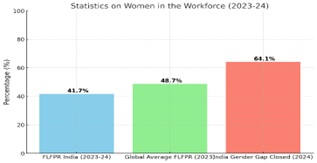
Corporate Law : The paper examines whether recent labour law reforms deliver real gender equality or merely formal compliance. It concludes that d...
Corporate Law : Dhara Verma Abstract The labour welfare laws in India provide essential maternity and paternity benefits to workers which demonstr...
Corporate Law : The ruling clarifies that digital processes are encouraged but not mandatory, ensuring workers rights are protected even through p...
Company Law : The law removes sector-based exclusions and extends minimum wage protection to all employees. It confirms universal coverage acros...
Corporate Law : The FAQs explain the uniform wage definition and the 50% allowance cap across all Codes. Gratuity applies prospectively from 21 No...
Corporate Law : The Code retains trade union rights, collective bargaining, and strike provisions with notice requirements. It confirms continued ...
Corporate Law : Raising factory and licensing thresholds does not remove safety and welfare protections. All establishments with 10 or more worker...
Corporate Law : The Supreme Court held that compensatory allowances form part of “ordinary wages” for overtime calculation. Executive circular...
Corporate Law : The Karnataka High Court has set aside a prosecution order against Natural Remedies Private Limited. The court found that the Comm...
Corporate Law : Punjab & Haryana High Court directs that temporary employees cannot be replaced by another set of temporary staff but can be repla...
Corporate Law : The Telangana High Court addressed jurisdiction and employment status in Godrej Agrovet Ltd. Vs Presiding Officer. Key aspects of ...
Corporate Law : The Bombay High Court sets aside the Industrial Court's interim relief, reinstating employer rights to transfer and discipline emp...
Corporate Law : The Industrial Relations Code (Amendment) Bill, 2026 (Bill No. 33 of 2026), introduced in the Lok Sabha, seeks to amend section 10...
Corporate Law : The government has notified a clear wage ceiling for supervisory roles. Earnings above this limit remove such employees from worke...
Corporate Law : The Government has issued draft Coal Mines Safety Regulations, 2026 under the OSHWC Code, detailing safety standards, certificatio...
Corporate Law : The draft Central Rules lay down detailed procedures to operationalised the Industrial Relations Code, replacing older dispute and...
Corporate Law : The notification introduces draft rules under the OSH Code to unify and modernise labour regulation. The key takeaway is a shift t...
This research paper delves into the employment law challenges associated with remote work arrangements in India, exploring the legal framework, regulatory considerations, and the impact on various aspects of the employer-employee relationship.
Learn about India’s Code on Wages 2019, consolidating old laws for uniform minimum wage, timely pay, equal remuneration, and simplified compliance.
An analytical review of the Industrial Disputes Bill 2009, its amendments, causes of disputes, and comparison with the Industrial Relations Code, 2020.
Explore the impact, benefits, and concerns around India’s four new Labour Codes aimed at simplifying compliance and expanding worker protections.
Explore how climate change affects labour rights, worker safety, and green jobs, highlighting the need for Just Transition and inclusive labour policies.
Understand workplace safety laws in India, key employee rights, and the role of labor codes like the Occupational Safety and Industrial Relations Codes.
Explore Industrial Relations Code, 2020: its impact on dispute resolution timelines, tribunal reforms, conciliation mechanisms, and ongoing challenges in implementation.
Industrial Relations Code of 2020 is India’s largest labor reform in more than seven decades, a conscious transition from a disparate, protectionist mindset to an integrated framework that balances worker well-being and economic vibrancy.
This blog examines change introduced by Code on Wages, 2019 in comparison with older legislation it supersedes and presents its possible implications on employment rights in India.
In this blog, we shall discuss Industrial Relations Code, 2020, analyzing its background, major provisions, and how it resets labor dispute management. We will also compare IRC with existing laws, analyzing its implications on industrial relations in India.