Follow Us:

Case Law Details

Case Name : Oakton Global Technology Service Centre (India) Private Limited Vs Income Tax Appellate Tribunal (Telangana High Court)
Related Assessment Year :
Become a Premium member to Download. If you are already a Premium member, Login here to access.

Oakton Global Technology Service Centre (India) Private Limited Vs Income Tax Appellate Tribunal (Telangana High Court)

Telangana High Court Upholds ITAT’s Rejection of Rectification Application Under Section 254(2) of Income-tax Act

The Telangana High Court has reaffirmed the limited scope of rectification proceedings under Section 254(2) of the Income-tax Act, 1961, holding that the provision can only be invoked to correct mistakes apparent from the record and cannot be used as a mechanism to revisit or review the merits of an appellate order passed by the Income Tax Appellate Tribunal (ITAT).

The Court dismissed the writ petition filed by the assessee challenging the ITAT’s refusal to rectify its earlier appellate order, observing that substantive grievances regarding alleged legal errors must be pursued through the appellate process and not through rectification proceedings.

Introduction

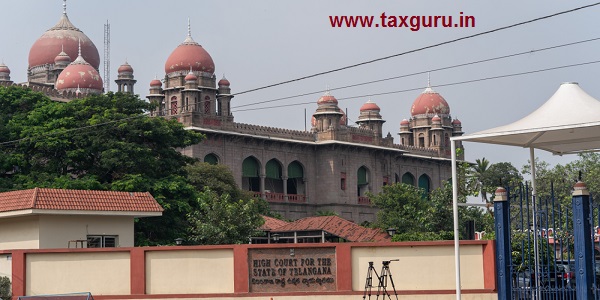
In Oakton Global Technology Service Centre (India) Private Limited vs Income Tax Appellate Tribunal & Another, the Telangana High Court examined the scope of rectification powers vested in the ITAT under Section 254(2) of the Income-tax Act.

The petitioner contended that while deciding the appeal for Assessment Year 2012-13, the ITAT had failed to consider several judicial precedents cited by the assessee and therefore the appellate order required rectification.
The Court, however, agreed with the Tribunal’s view that rectification jurisdiction cannot be converted into a review mechanism for reconsideration of the merits of the case.

Case Background

The dispute originated from:

  • ITAT Order dated 12.06.2024 in ITA No. 309/Hyd/2017;
  • Assessment Year: 2012-13.

Following the ITAT’s decision, the assessee filed a Miscellaneous Application under Section 254(2) of the Income-tax Act seeking rectification of the order.

The assessee argued that:

  • Several judgments and case laws relied upon during the hearing had not been considered by the Tribunal;
  • Failure to consider those authorities constituted an apparent mistake on record;
  • The order therefore required rectification.

However, by order dated 17.01.2025, the ITAT rejected the rectification application.

The rejection order was challenged before the Telangana High Court through the present writ petition.

Key Legal Issue

The principal question before the Court was:

Can Section 254(2) of the Income-tax Act be invoked to seek reconsideration of legal findings on the ground that certain judicial precedents were allegedly not considered by the ITAT?

Petitioner’s Arguments

The petitioner contended that:

  • The ITAT failed to consider several judgments cited by the assessee.
  • Such omission constituted a mistake apparent from the record.
  • The Tribunal ought to have exercised its powers under Section 254(2) and rectified the appellate order.

The petitioner further informed the Court that an appeal against the original ITAT order had already been filed raising substantial questions of law, though it was yet to be numbered.

ITAT’s Findings

While rejecting the rectification application, the Tribunal relied upon the Supreme Court decision in:

CIT v. Reliance Telecom Limited

The Tribunal held that:

  • Section 254(2) is confined to correcting mistakes apparent from the record;
  • The provision does not authorize review or reconsideration of findings on merits;
  • Alleged errors in appreciation of facts or law cannot be corrected through rectification proceedings.

Court’s Observations

The Telangana High Court agreed with the Tribunal’s reasoning and observed that:

1. Scope of Section 254(2) Is Extremely Limited

The Court reiterated that rectification jurisdiction exists only for correcting:

  • Obvious mistakes;
  • Patent errors;
  • Mistakes apparent from the record.

The provision cannot be invoked for:

  • Re-appreciation of evidence;
  • Reconsideration of legal conclusions;
  • Review of findings on merits.

2. Rectification Cannot Become a Review Mechanism

The Court noted that the petitioner was effectively attempting to reopen issues already decided by the Tribunal.

Such an exercise would amount to:

  • Reviewing the appellate order;
  • Re-arguing the appeal;
  • Seeking a fresh adjudication.

These objectives fall outside the scope of Section 254(2).

3. Appropriate Remedy Is Through Statutory Appeal

The Court took note of the fact that the petitioner had already filed an appeal against the ITAT’s original order.

The Bench observed that:

  • Any legal or factual errors allegedly committed by the Tribunal can be examined in appellate proceedings;
  • The appellate court is the proper forum for challenging such findings.

4. No Error in ITAT’s Rejection Order

After examining the impugned order, the Court concluded that:

  • The ITAT had correctly interpreted Section 254(2);
  • No jurisdictional error had been committed;
  • The rejection of the rectification application was legally justified.

Final Judgment

The Telangana High Court held that:

  • The grievances raised by the petitioner do not fall within the scope of Section 254(2) of the Income-tax Act.
  • Alleged non-consideration of case laws cannot be treated as a rectifiable mistake warranting review of the appellate order.
  • The petitioner is free to pursue the statutory appeal already filed against the original ITAT order.

Accordingly:

√ The writ petition was dismissed.

√ No order as to costs was passed.

Author’s Analysis

1. Rectification Is Not a Substitute for Appeal

This judgment reiterates a settled principle of tax jurisprudence:

Section 254(2) cannot be used as an alternative appellate remedy.

Where a party seeks reconsideration of legal findings, the proper course is to file an appeal and not a rectification application.

2. Reliance Telecom Principle Reaffirmed

The Court’s reliance on the Supreme Court ruling in CIT v. Reliance Telecom Limited strengthens the consistent judicial view that rectification powers are narrow and cannot be expanded into review jurisdiction.

3. Importance of Distinguishing Between Error and Apparent Error

Not every alleged legal mistake qualifies as a “mistake apparent from the record.”

The distinction remains critical because:

  • Apparent mistakes may be rectified;
  • Debatable legal issues must be resolved through appeals.

4. Prevents Abuse of Rectification Proceedings

The judgment discourages repeated attempts to reopen concluded issues through miscellaneous applications, thereby preserving finality in appellate adjudication.

5. Guidance for Taxpayers and Practitioners

Taxpayers should carefully evaluate whether an issue truly constitutes:

  • A patent error apparent on record; or
  • A substantive legal dispute requiring appellate scrutiny.

Filing rectification applications for issues that effectively seek review may result in dismissal and unnecessary litigation. Practical Takeaways

√ Section 254(2) is limited to correcting obvious mistakes apparent from the record.

√ Non-consideration of arguments or case laws generally does not convert rectification proceedings into a review mechanism.

√ Challenges to legal findings of the ITAT should ordinarily be pursued through statutory appeals.

√ Miscellaneous applications cannot be used to re-argue issues already decided on merits.

√ Courts continue to strictly interpret rectification provisions to preserve the distinction between rectification and appellate review.

Conclusion

The Telangana High Court in Oakton Global Technology Service Centre (India) Private Limited vs ITAT reaffirmed the narrow scope of rectification under Section 254(2) of the Income-tax Act. The Court held that rectification powers are confined to correcting apparent mistakes and cannot be used to revisit or review substantive findings already rendered by the Tribunal.

Key Takeaway: Taxpayers seeking reconsideration of legal conclusions or alleged errors in appreciation of law must pursue statutory appellate remedies, as rectification proceedings under Section 254(2) remain restricted to patent and obvious mistakes appearing on the face of the record.

FULL TEXT OF THE JUDGMENT/ORDER OF TELANGANA HIGH COURT

Sri Santosh Sagar Kapilavai, learned counsel appears for petitioner and Sri K. Sudhakar Reddy, learned Senior Standing Counsel for Income Tax appears for respondents.

2. The order dated 12.06.2024 passed by the Income Tax Appellate Tribunal, Hyderabad ‘A’ Bench, Hyderabad (for short ‘ITAT’), in ITA.No.309/Hyd/2017, pertaining to Assessment Year 2012-13 was made subject for rectification in a proceeding under Section 254 of the Income-tax Act, 1961 (for short ‘the Act’) which has been rejected by the learned ITAT vide order dated 17.01.2025 impugned herein.

3. We have heard learned counsel for the parties and gone through the impugned order as well.

4. It appears that the petitioner herein sought rectification of the order dated 12.06.2024 passed by the learned ITAT in Miscellaneous Application by invoking the provision under Section 254(2) of the Act with the assertion that the learned ITAT failed to consider various case laws cited by the petitioner/assessee in support of the contention. The learned Tribunal however opined that the powers under Section 254(2) of the Act as held in the case of CIT v. Reliance Telecom Limited1 are conferred to correct and/or rectify the mistakes apparent from the record and not beyond that. Observations on merits which may have been decided erroneously within the jurisdiction of the ITAT are such which are not amenable to correction in a proceeding under Section 254(2) of the Act.

5. It is submitted by the learned counsel for the petitioner that the petitioner has already preferred an Income-tax Appeal against the order dated 12.06.2024 passed by the learned ITAT by raising substantial questions of law. However, it is yet to be numbered. In our view, the grounds urged on behalf of the petitioner are not fit to be entertained in a proceeding under Section 254(2) of the Act. It is for the parties to draw the attention of the learned appellate Court to such errors, if any, which the learned ITAT may have committed in course of passing the appellate order. Therefore, we do not find any error in the impugned order dated 17.01.2025.

The instant Writ Petition is accordingly dismissed. There shall be no order as to costs.

Miscellaneous applications, if any pending, shall stand closed.

Note:

1 (2021) 133 taxmann.com 41 (SC)

Author Bio

Adv Akruti Goyal, a practicing CA handling GST compliance from 2015-2021. Qualified as a lawyer in 2019 and since 2022 enrolled as a practicing advocate with core in GST litigation and Income Tax matters . Appearing before all forums i.e., Adjudicating authorities, Appellate authorities, Appellate View Full Profile

My Published Posts

Telangana HC Grants GST Recovery Stay Until Tribunal Becomes Operational Telangana HC Allows GST Taxpayer to Withdraw Writ Petition & File Appeal Telangana HC Directs Registrar to Process Sale Deed or Pass Speaking Order JAO Cannot Bypass Faceless Reassessment Framework: Telangana HC Telangana HC Allows Manual Application for Revocation of Cancelled GST Registration View More Published Posts

Join Taxguru’s Network for Latest updates on Income Tax, GST, Company Law, Corporate Laws and other related subjects.

Leave a Comment

Your email address will not be published. Required fields are marked *

Search Post by Date
June 2026
M T W T F S S
1234567
891011121314
15161718192021
22232425262728
2930