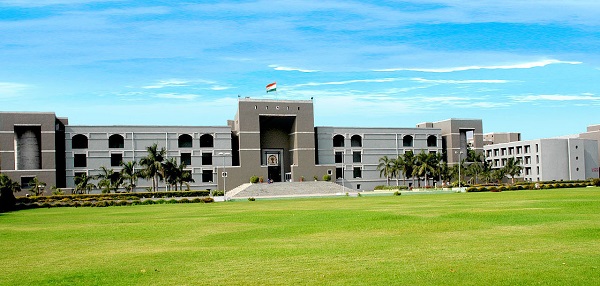
Atofina Peroxides India Ltd. Vs DCIT (Madras High Court)
Summary: The Madras High Court considered two appeals filed by Atofina Peroxides India Ltd. against a common order of the Income Tax Appellate Tribunal concerning Assessment Years 1993-94 and 1994-95. The Tribunal had upheld disallowances relating to foreign travel expenses, an addition based on estimated variation in consumption of raw materials, and a contribution of Rs.3,00,000/- made to Lady Ampthill Hospital.
The Tribunal found that the assessee had not substantiated its foreign travel expenses with the necessary bills and vouchers. On the issue of raw material consumption, the assessee, which was engaged in manufacturing polymerization initiators and cross-linking agent formulations, had been asked by the Assessing Officer to furnish details of the manufacturing processes, including the quantity of finished products, wastage, shortages, handling loss and other losses. According to the Tribunal, the brief note furnished by the assessee did not provide the necessary information. The Assessing Officer compared the quantitative information relating to raw materials consumed and goods manufactured and made an addition of Rs.13,02,479/- on account of excess consumption of raw materials. The CIT(A) upheld the addition.
The Tribunal further observed that the assessee had not furnished the necessary information regarding shortages, wastages and losses. It also noted that the information relating to quantity and percentage of production, wastage, yield and shortage was required in the audit report under Section 44AB, but that information had not been provided. According to the Tribunal, the material furnished by the assessee was insufficient to establish the comparative variation in consumption of raw materials with reference to production. It consequently upheld the addition.

The third issue concerned the assessee’s contribution of Rs.3,00,000/- to Lady Ampthill Hospital. The assessee claimed the amount as staff welfare expenditure, contending that the contribution enabled its employees to obtain medical facilities at concessional rates. The Assessing Officer and CIT(A), however, found that the assessee had not produced evidence establishing that its employees actually derived any benefit from the contribution. The Tribunal consequently upheld the disallowance.
The assessee approached the Madras High Court under Section 260A of the Income-tax Act, 1961. The appeals were admitted on 10.8.2010 on questions concerning the estimated variation in consumption of raw materials and, in one appeal, the allowability of the contribution made to Lady Ampthill Hospital under Section 37 of the Act.
Before the High Court, the assessee contended that the Tribunal was not justified in sustaining the disallowances. On the hospital contribution, the assessee argued that the payment was made for the benefit of its employees and therefore ought to have been allowed as business expenditure under Section 37. The Revenue contended that, in the absence of evidence demonstrating that the employees actually benefited from the contribution, the expenditure was not allowable.
The High Court held that the findings recorded by the Tribunal were findings of fact which had concurred with the findings of the two authorities below. According to the Court, all three authorities had found against the assessee because the assessee had failed to produce relevant evidence. This failure related to the expenses claimed, the contribution to Lady Ampthill Hospital and the variation in raw material consumption and production.
The Court observed that unless the findings recorded by the Tribunal were found to be perverse, an appeal under Section 260A could not be maintained merely to challenge concurrent findings of fact. Although the appeals had been admitted on the framed questions of law, the Court found that the questions did not really constitute questions of law arising from the Tribunal’s order.
The High Court therefore concluded that, in the absence of relevant evidence produced by the assessee, the authorities had no other option but to draw an adverse inference against it. The appeals were accordingly dismissed, and the questions framed were answered against the assessee and in favour of the Revenue.
FULL TEXT OF THE JUDGMENT/ORDER OF MADRAS HIGH COURT
The Assessee has filed the Appeals agreed by the common order passed by the learned Tribunal for the Assessment Years 1993-94 and 1994-95 whereby the Tribunal upheld the disallowances of foreign travel expenses, addition made on estimated variation in consumption of raw material and contribution of Rs.3,00,000/- made to one Lady Ampthill Hospital.
2. The relevant finding of the order passed by the Tribunal is quoted below for ready reference:-
“3. We have heard both the counsels. We find that orders of the lower authorities are reasonable on this issue. The assessee cannotthe expected to claim allowance of foreign travel expenses by merely claiming to be the same for business purposes without substantiating the same with necessary bills and vouchers. As such, the orders of a lower authorities on this issue are affirmed and the assessee’s appeal is dismissed.
….. …..
5. The next common issue raised pertains to the excess consumption of raw materials. The assessee is a manufacturer polymerization initiators and cross linking agent formulations. The assessee was requested by the assessing officer to furnish details regarding the manufacturing processes of these products. The assessing officer wanted to find out the quantity of finished products, quantum of wastage and shortage occurred during the manufacturing process as well as the quantumloss and handling loss. The assessee filed a very brief note which did not satisfy the assessing officer. In order to verify the percentage of yield of finished products from the major raw materials, the assessing officer referred to the quantitative information in respect of each class of raw materials consumed and goods manufactured. The assessing officer compared the ratio of total of anyother kind of losses such as evaporation perused the records. The learned D.R. averred that the assessee has neither maintained nor provided the necessary details as required in this case. He particularly adverted the A.O.’s observation that the explanation given by the assessee was silent about the production of raw materials consumed in the previous year with the current assessment year and held that consumption was more to the extent of Rs.13,02,479/- as excess consumption of raw materials. Upon assessee’s appeal, the learned CIT(A) did not find the assessee’s explanation sufficient and upheld the order of the Assessing Officer.
6. We have heard both the counsels and perused the records. The learned D.R. averred that the assessee has neither maintained nor provided the necessary details as required in this case. He particularly adverted the A.O.’s observation that the explanation given by the assessee was silent about the shortages/wastages/losses. He also averred that there is a specific column in the audit report underSection 44AB where the assessee is required to give several information on the quantity and percentage of production, wastage, yield and shortage, etc. Thisinformation was not given by the assessee in the said report. The information, as required by the lower authorities from the assessee did not elicit appropriate information to arrive at the comparative variation in the consumption of the raw materials with reference to the production.
…..
8. Upon considering the entire spectrum of the case, we find that expenses have to be justified not only with regard to the substantive/documentary evidence but also by the verificatory evidence that the amount spent was actually for the purpose of the business. To put it in other words, it needs to be established in this case that raw material said to have been consumed for production was actually so consumed. This can be established only by reference to this necessary data of consumption, production, wastage & losses and the correlation between the same. The assessee for obvious reasons has not furnished the necessary details in this regard in report under Section 44AB and not fully complied with information required by the A.O. Hence, the assessee has not established that the increase in consumption which in other words means abnormal shortage/wastage/loss is actually justified. As such the uphold the order of the lower authorities and decide the issue against the assessee.
…….. ……
14. One issue raised in ITA 1852 is regarding disallowance of contributions made to the Lady Amphthill Hospital. On this issue, it is to be noted that the assessee has made contribution of Rs.3,00,000/- towards the hospital and claimed the sum as the admissible expenses on account of staff welfare. The assessee has claimed that the contribution would enable the employees to have medical facilities at a confessional rate. However, it has been noted by the A.O. and the learned CIT(A) that the assessee has not given any proof for his assertion that the employees actually got any benefit out of the contribution. Since the assessee has not brought anything to support the assertion that his contribution to the hospital actually provided any benefit/succour to the employees of the assessee and office. Thereafter he made comparison with production figures and estimated excess consumption. In our opinion, this basis of segregation of electricity expenses is not cogent enough to warrant an addition on comparative analysis. As such, we reverse the orders of the learned CIT(A) in this case and decide the issue in favour of the assessee.”
3. These two Appeals were admitted by a co-ordinate Bench of this Court on 10.8.2010 by separate orders and the questions of law framed are quoted below for ready reference:-
“T.C.A.No.670 of 2010
i) Whether, on the facts and in the circumstances of the case, the Tribunal was justified in law in upholding the addition of the estimated variation in consumption of raw materials? and
ii) Whether, on the facts and in the circumstances of the case, the Tribunal was justified in holding that the appellant had not established the increase in consumption of raw materials in spite of the break-up of raw materials and production details furnished by the appellant?
T.C.A.No.671 of 2010
i. Whether, on the facts and in the circumstances of the case, the Tribunal was justified in law in upholding the addition of the estimated variation in consumption of raw materials?
ii. Whether, on the facts and in the circumstances of the case, the Tribunal was justified in holding that the appellant had not established the increase in consumption of raw materials, in spite of the break-up of raw materials and production details furnished by the appellant? and
iii) Whether, on the facts and in the terms of the case, the Tribunal was justified in law in holding that the contribution made to Lady Ampthill Hospital by which the employees were entitled to concessional facilities, is not an allowable deduction?”
4. The learned counsel Mr.Venkat Narayanan appearing for the Assessee sought to urge that the learned Tribunal was not justified in upholding the disallowances of the expenses made by the lower Appellate Authority.
5. The learned Senior Standing Counsel Mr.T.Ravikumar appearing for the Revenue contended before us that in the absence of any evidence produced by the Assessee during the course of assessment proceedings and even the appeal proceedings, the Authorities below were justified in answering the questions against the Assessee, particularly on the issue of contribution made to the tune of Rs.3,00,000/- to Lady Ampthill Hospital.
6. The learned counsel appearing for the Assessee sought to urge that the contribution was made for the benefit of the employees of the Assessee and therefore, it ought to have been allowed as a business expenditure under section 37 of the Act.
7. The learned Senior Standing Counsel appearing for the Revenue urged that for want of evidence that the employees of the Assessee are benefited by the contribution made by the Assessee, it was not admissible as a business expenditure.
8. Having heard the learned counsel appearing for the parties, we are of the opinion that the findings of facts are rendered by the learned Tribunal upholding the findings of the two Authorities below and thus, all the three Authorities have concurrently held against the Assessee that only for want of production of relevant evidence by the Assessee, the Authorities below came to the conclusion that the expenses incurred by the Assessee on various items as well as the contribution made to Lady Ampthil Hospital were not allowable expenses and the additions made on variation in the raw materials and production was also justified and unless such findings rendered by the Tribunal are found to be perverse by this court, the Appeals under Section 260A of the Act are not maintainable.
9. Even though these Appeals were admitted on the questions of law quoted above, we do not find them to be really questions of law arising from the order of the learned Tribunal.
10. Therefore, we are satisfied that there is no merit in the present Appeals filed by the Assessee and in the absence of any relevant evidence produced by the Assessee, the Authorities had no other option, but, to draw an adverse inference against the Assessee. Therefore, the Appeals of the Assessee are dismissed and questions, as framed, are answered against the Assessee and in favour of the Revenue.