
England and Wales Cricket Board Limited Vs ACIT (ITAT Delhi)
Summary: ITAT Delhi partly allowed the appeal of England and Wales Cricket Board Limited (ECB), a UK-incorporated company engaged in the commercial promotion, marketing, organisation, administration and financing of competitive and international cricket in England and Wales, for Assessment Year 2023-24. The principal disputes concerned taxability in India of fees received for grant of live cricket broadcasting rights and release fees received from Indian Premier League (IPL) franchises for permitting English players to participate in the IPL. During the relevant year, ECB received Rs.14,60,64,457 towards non-live broadcasting rights, Rs.2,44,78,38,154 towards live broadcasting rights and Rs.4,96,14,735 as Rights Fees. ECB had itself offered the consideration relating to non-live broadcasting rights and Rights Fees to tax.
The Assessing Officer, however, held that there was no material distinction between live and non-live broadcasting and consequently treated the consideration for live broadcasting rights as royalty taxable in India. The AO also brought Rs.6,26,00,764 received as player release fees to tax under Article 18(2) of the India-UK DTAA. On the live broadcasting issue, the Tribunal followed the Delhi High Court rulings in CIT v. Delhi Race Club (1940) Ltd., CIT v. Fox Network Singapore Pte. Ltd. and CIT v. Sri Lanka Cricket. It held that live broadcasting is a one-time event that does not confer an enduring benefit upon the broadcaster; a live feed is neither a “scientific work” nor a work in which copyright subsists. Repeat broadcasts and highlights fall in the category of non-live broadcasts, and ECB had already offered the corresponding non-live revenue to tax. Consequently, the fee attributable to live broadcasting rights could not be classified as royalty either under Article 13(3) of the India-UK DTAA or under section 9(1)(vi) of the Income-tax Act, 1961.
The Tribunal also rejected the Revenue’s alternative request to disturb the contractual 95:5 allocation between live and non-live broadcasting rights and substitute a 75:25 allocation. It noted that the 95:5 allocation had been mutually agreed between ECB and Sony and that the Revenue had accepted the same ratio in Fox Network Singapore Pte. Ltd. and Sri Lanka Cricket. The decisions in Trans World International LLC v. DCIT and ADIT v. Global Cricket Corporation P. Ltd., where different allocations had been adopted on their peculiar facts, could not establish a universal allocation rule.
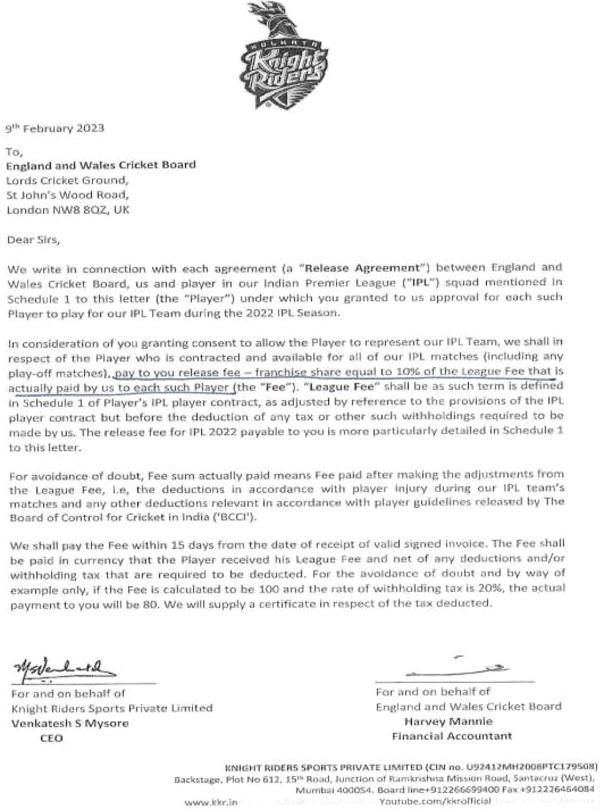
On the second substantive issue, the Tribunal examined the release letter and found that ECB’s release fee was equivalent to 10% of the League Fee actually paid by the IPL franchise to the concerned player, but was payable over and above the League Fee and was not a portion of the player’s fee. Referring to Article 18 of the India-UK DTAA and relying upon the Bombay High Court ruling in DCIT v. Wizcraft International Entertainment P. Ltd., the Tribunal held that Article 18 applies to income derived by an athlete from his personal activities and, under paragraph (2), to income arising from such personal activities that accrues to another person. On the facts, the release fee received by ECB for permitting players to participate in the IPL was distinct from the League Fee paid to the players and Article 18 was therefore not attracted in ECB’s case. The additions relating to the release fee were accordingly deleted. Grounds concerning interest under sections 234A and 234B were dismissed as the levy was mandatory and consequential. ECB’s appeal was thus partly allowed.
Cases Discussed
- CIT Vs Sri Lanka Cricket — Followed; consideration for live broadcasting rights was held not to constitute royalty where the right was confined to live telecast and did not confer an enduring benefit.
- Trans World International LLC Vs DCIT, ITA Nos. 1960-61 and 2146/Del/2024, decided on 18.06.2025 — Considered on allocation between live and non-live broadcasting rights; held distinguishable because allocation depends upon the peculiar facts of the relevant agreement.
- Trans World International LLC Vs DCIT, 467 ITR 583 (Delhi High Court) — Relied upon by the assessee in support of the allocation of consideration between live and non-live rights.
- CIT Vs Fox Network Singapore PTE Ltd. — Followed; live transmission fee cannot be classified as royalty and the 95:5 live/non-live allocation was relevant to the Tribunal’s determination.
- Lex Sportel Vision (P) Ltd. Vs ITO — Relied upon by the assessee in support of the 95:5 allocation between live and non-live broadcasting rights.
- ADIT (IT) Vs Global Cricket Corporation P. Ltd. — Considered and distinguished; alteration of allocation in that case arose from its peculiar facts, including absence of a contractual breakup.
- DCIT Vs Wizcraft International Entertainment P. Ltd., 364 ITR 227 (Bombay High Court) — Followed on Article 18; payment to a foreign event-management entity for bringing artistes to India did not arise from the artistes’ personal activities and Article 18(2) was therefore inapplicable.
- CIT Vs Delhi Race Club (1940) Ltd., 51 taxmann.com 550 (Delhi High Court) — Followed; copyright and broadcast rights are distinct and live telecast/broadcast does not itself have copyright so as to make consideration for live telecast royalty.
- ESPN Star Sports — Referred to in Delhi Race Club (1940) Ltd. for the distinction between copyright and broadcasting reproduction rights.
- Akuate Internet Services (P) Ltd. & Anr. Vs Star India (P) Ltd. & Anr., FA(OS) 153/2013 (Delhi High Court) — Referred to in the quoted portion of Delhi Race Club; the minimum creativity requirement for copyright was absent in a live telecast of an event.
- National Basketball Association and NBA Properties Inc. Vs Motorola Inc., 105 F.3d 841 (1997) — Referred to in the quoted Delhi High Court judgment for the proposition that a sports event is a performance rather than a copyrightable work.
FULL TEXT OF THE JUDGMENT/ORDER OF ITAT DELHI
This appeal by the assessee is directed against assessment order dated 16.01.2026 passed 143(3) r.w.s.144C(13) of the Income Tax Act, 1961 (hereinafter referred to as ‘the Act’), for AY 2023-24.
2. The assessee is a company incorporated in United Kingdom (UK) and is engaged in commercial promotion and marketing of cricket matches including organization, administration, financing of competitive cricket and international cricket in England & Wales. During the period relevant to assessment year under appeal, the assessee received revenue from live/non-live broadcasting of cricket matches. The revenue received/accrued to the assessee from India during the relevant assessment year is as under:-
| Nature of revenue | Amount of revenue (in Rs.) |
|---|---|
| Fee for grant of non-live broadcasting rights | 14,60,64,457 |
| Fee for grant of live broadcasting rights | 2,44,78,38,154 |
| Rights Fees | 4,96,14,735 |
3. The assessee offered revenue from non-live broadcasting rights and Rights fees to tax in its return of income for the subject assessment year. The Assessing Officer (AO) held that there is no difference between non-live broadcasting and live broadcasting, therefore, the fee received by the assessee for live broadcasting rights is also liable to be taxed in India as royalty.
3.1. Further, the AO held that the fee received for release of player Rs.6,26,00,764/- is also liable to be taxed in India under Article 18(2) of India-UK Double Taxation Avoidance Agreement (DTAA). The assessee in appeal has assailed both the aforesaid additions made by AO.
4. Shri Ajay Vohra, appearing on behalf of the assessee submits that the assessee has offered to tax non live broadcasting rights fee and Right fee to tax as royalty. Whereas, fee recieved for grant of live broadcasting rights is not in the nature of royalty, hence, the same is not exigible to tax in India under the provisions of India-UK DTAA. The ld. Counsel submits that the assessee has entered into a media rights agreement with Sony Pictures Network India P. Ltd. (Sony) on 02.03.2018. As per the said agreement, the assessee is entitled to rights fee. In lieu of payment of rights fee, the assessee granted right and license to exercise the Live Rights in any Broadcast format during the term and within the Licensed Territory in respect of Licensee Matches. The ld. Counsel has drawn our attention to Media Rights Agreement 2018-2022 at pages 17 to 89 of the paper book dated 02.03.2018 and the subsequent renewal agreement dated 29.07.2022 at pages 90 to 108 of the paper book. The ld. Counsel pointed that as per clause 11 of the said Media Rights Agreement which deals with Intellectual Property Rights (IPR), the assessee would own and retain ownership of all IPR in and archive data provided by on behalf of or under license issued by the assessee. The ld. Counsel submits that now the issue is settled by Hon’ble Delhi High Court in the case of CIT vs. Delhi Race Club (1940) Ltd. reported as 51 taxmann.com 550 (Delhi) wherein it has been held that there is distinction between a copyright and broadcast right, broadcast or live coverage does not have a ‘copy right’. Hence, payment made for live telecast of horse races is not in the nature of royalty as per Explanation 2 to section 9(1)(vii) of the Act. Similar view has been taken by the Hon’ble Delhi High Court in the case of CIT vs. Fox Netwrok Singapore PTE Ltd. 158 taxmann.com 434 (Delhi) and in the case of CIT vs. Sri Lanka Cricket, reported as 182 taxmann.com 537 (Delhi).
5. In respect of ground no. 4 and 5 of appeal qua Release Fee, the ld. Counsel submits that the Release Fee is different from the fee received by the player. It is not part of player fee. The ld. Counsel referred to Release Letter at page 114 and 115 of the paper book to show that release fee is over and above the League Fee received by the player. To buttress his arguments with regard to taxability of Release Fee, the ld. Counsel placed reliance on decision rendered in the case of DCIT vs. Wizcraft International Entertainment P. Ltd. 364 ITR 227 (Bombay).
6. Per contra, Shri M.S. Nethrapal, representing the department defended the impugned order and prayed for upholding the addition with respect of fee received for grant of live broadcasting rights as royalty. Without prejudice, the ld. DR submits that the assessee in an arbitrary manner has allocated Rights fee between live rights and non-live rights in the ratio of 95:5, respectively. There is no rational for such allocation. The ld. DR placed reliance on the following decisions to contend that the allocation of rights fee for non-live broadcast be increased from 5% to 25%:
ADIT (IT) vs. Global Cricket Corporation P Ltd., 145 taxmann.com 570 (Mum Trib); &
Trans World International LLC vs. DCIT in ITA 1960-61 and 2146/Del/2024 for AY 2013-14 to 2015-16 decided on 18.06.2025
7. In respect of release fee received from Indian Premier League (IPL) franchise, the ld. DR furnished following written submissions: –
“The Assessee has received release fees from IPL franchises towards granting consent to English players to participate in the IPL tournament through various teams. The fees have been paid after the conclusion of IPL 2022 and is based on agreement entered into between the IPL franchise/team, ECB and the individual players). The release fees are also contingent to the League Fee payable to each such player and is determined at 10% of the League Fee.
On page 18 of the assessment order, the extracts are also provided which is reproduced. The Assessee contends that no tax is payable on this release fee received from IPL franchises under the Article 18(2) of the India-UK DTAA and that the players) receive 100% of the match league fees. These contentions cannot be accepted and the same is also reiterated on page 18. The gist of the same is reproduced:
(1) the League Fees is related to the performance each player and each player has a different League Fee under the contract with the IPL team. There is a performance element in the League fee received by the players, a percentage of which is paid to ECB as Release fee to allow the players to play in IPL. If the player does not participate in a match then the league fee payable to the player is reduced and hence the release fee is also reduced.
(2) Release fee is not separate from the fees received by the player, as is claimed by the assessee, as it is a percentage of the League fee received by the player. Hence, the League fee is shared between the players and the assessee.
(3) The assessee’s argument that release fees are “separate and distinct” because players receive “100 per cent of their league fees” is a distinction without a difference and fundamentally misunderstands Article 18(2) jurisprudence. Article 18(2) does not require that the person receiving the diverted income must share or receive a portion of the athlete’s fee; rather, it applies whenever income arising from the athlete’s personal activities accrues to another person, regardless of whether that person receives it as a “share” or as a “percentage” or in any other form
(4) OECD Commentary affirmatively establishes that payments are taxable under Article 18(1) and (2) when they constitute “a consideration for personal activities” and there exists a “close connection” between the payment and the athlete’s activities. Prize money awarded to sports competitors, payments to athletes for participation in tournaments, and compensation derived from the exploitation of an athlete’s playing status all fall within Article 18’s scope. Release fees, being a percentage of league fees that vary by player performance, clearly exhibit such a close causal and economic connection and should be analyzed similarly.
(5) The economic and legal substance of the release fee arrangement reveals that the assessee is not a passive bystander granting “permission,” but an active participant with control and beneficial interest and determines which athletes may participate, receives a fixed financial benefit contingent on participation, enters into contractual arrangements with franchises and league bodies ;and exercises control over the terms and conditions of athlete participation.
(6) The Assessee is clearly in a position to profit from the athlete’s personal activities and, under Article 18(2), should be taxed on such income in the country where those activities are performed. The assessee’s labeling of this arrangement as “permission” rather than “profitsharing” does not change the legal character; the substance is that the assessee is economically benefiting from the athlete’s performance in India and should bear tax thereon in India.
(7) The receipt of release fees by the assessee terminates upon the player’s withdrawal or nonparticipation (hence the fee is conditional on continued performance).
(8) No independent valuation, market study or arm’s-length analysis supports the claim that the permission itself (divorced from performance) has an economic value justifying the 10 per cent figure.
(9) The assessee receives no compensation for granting permission in the abstract; it receives compensation because and in proportion to the player’s actual participation and performance in league matches.
(10) The player’s net receipt is only 90 per cent of the negotiated league fee and the assessee’s 10 per cent is taken from what would otherwise be payable to the player, making it economically a charge on the player’s compensation.”
8. Rebutting, the submission made by DR, the ld. Counsel for the assessee stated that the allocation of rights fee between live and non-live broadcasting fee cannot be arbitrarily changed. The allocation of fees is as per the agreement. The ld. Counsel asserted that in the case of Fox Net (supra) and Sri Lanka Cricket (supra) the Revenue has accepted allocation of 95:5, the Revenue has not filed any appeal against findings of the Tribunal on the said issue. To support his argument, the ld. Counsel placed reliance on following decisions:
1. Trans World International LLC TWI v. Dy. CIT (IT) 467 ITR 583 (Del.); &
2. Lex Spartel Vision (P) Ltd. vs. ITO, 158 taxmann.com 129 (Delhi Trib.)
9. We have heard the submissions made by rival sides and have examined the orders of lower authorities. We have also considered the documents and the decision relied by respective sides during the course of submissions.
10. In ground no.2 & 3 of appeal, the assessee has assailed the assessment order in treating License Fee of Rs.247,78,38,194/-for grant of live broadcasting rights as ‘royalty’, taxable in India under Article 13 of the India-UK DTAA.
11. The assessee during the period relevant to assessment year under appeal has received license fees for grant of non-live broadcasting rights, as well as, fee for live broadcasting rights. The assessee has offered to tax fee received for grant of non-live broadcasting rights. The stand of assessee is that the fee for grant of live broadcasting rights is not taxable in India as it neither falls under the definition of ‘royalty’ or ‘copy right’. The AO has held that the fees for grant of live broadcasting rights received by the assessee is in the nature of royalty. We find that the similar issue has been considered by the Hon’ble Delhi High Court in the case of CIT vs. Delhi Race Club (1940) Ltd. (supra). The Hon’ble High Court after examining the meaning of expression ‘copy right’ under the provision of Copy Right Act 1957 and the expression royalty as defined under section 9(1)(vii) of the Act held that the payment made for live telecast of horse races is not royalty within the meaning of section 9(1)(vii) of the Act. The relevant excerpts from the judgment in the aforesaid case is as under:-
16. A live T.V coverage of any event is a communication of visual images to the public and would fall within the definition of the word „broadcast‟ in Section 2(dd). That apart we note that Section 13 does not contemplate broadcast as a work in which „copyright‟ subsists as the said Section contemplates ‘copyright’ to subsist in literary, dramatic, musical and artistic work, cinematograph films and sound recording Similar is the provision of Section 14 of the Copyright Act which stipulates the exclusive right to do certain acts. A reading of Section 14 would reveal that „copyright‟ means exclusive right to reproduce, issue copies, translate, adapt etc. of a work which is already existing.
17. Adverting to the facts of this case we note that the assessee was engaged in the business of conducting horse races and derived income from betting, commission, entry fee etc. and had made payment to other centres whose races were displayed in Delhi. It is not known whether such races had any commentary or analysis of the event simultaneously. It is not the case of the Revenue that the live broadcast recorded for rebroadcast purposes. Having held that the broadcast/live telecast is not a work within the definition of 2(y) of the Copyright Act and also that broadcast/ live telecast doesn‟t fall within the ambit of Section 13 of the Copyright Act, it would suffice to state that a live telecast/broadcast would have no “copyright”. This issue is well settled in view of the position of law as laid down by this Court in ESPN Star Sports case (supra), wherein this Court after analysing the provisions of the Copyright Act was of the view that legislature itself by terming broadcast rights as those akin to „copyright‟ clearly brought out the distinction between two rights in Copyright Act, 1957. According to the Court, it was a clear manifestation of legislative intent to treat copyright and broadcasting reproduction rights as distinct and separate rights. It also held that the amendment of the Act in 1994 not only extended such rights to all broadcasting organizations but also clearly crystallized the nature of such rights. The Court did not accept the contention of the respondent that the two rights are not mutually exclusive by holding that the two rights though akin are nevertheless separate and distinct.
18. In view of the aforesaid position of law which brought out a distinction between a copyright and broadcast right, suffice would it be to state that the broadcast or the live coverage does not have a ‘copyright.’ The aforesaid would meet the submission of Mr.Sawhney that the word ‘Copyright’ would encompass all categories of work including musical, dramatic, etc. and also his submission that the Copyright Act acknowledges the broadcast right as a right similar to ‘copyright’. In view of the conclusion of this Court in ESPN Star Sports case (supra), such a submission need to be rejected.
In this regard we also quote for benefit the judgment of this Court in the case of Akuate Internet Services (P) Ltd. & Anr. vs. Star India (P) Ltd. & Anr. FA(OS) 153/2013 as relied upon by learned counsel for the respondent assessee wherein a Division Bench of this Court has applied the test of’minimum requirement of creativity’ for claiming a right under the Copyright Act, which is absent in a’live telecast of an event’.
We note for benefit that the United States Court of Appeal Second Circuit Ruling in National Basket Ball Association and NBA Properties NIC vs. Motorola INC 105 F3d 841 (1997) held that a sports event is a performance and not a work. It is not copyrightable.
19. Insofar as the submission of Mr.Sawhney that the live telecast of an event is the outcome of „scientific work‟ and payment thereof would be covered under the definition of „royalty‟ is concerned, the said submission is also liable to be rejected first it runs contrary to his earlier submission and also for the simple reason the clause (v) to explanation 2 to clause (vi) or sub section 1 of Section 9 would relate to work which includes films or video tapes for use in connection with television or tapes for use in connection with radio broadcasting. It is to be seen whether consideration for transfer of all or any rights of „scientific work‟ including films or video tapes would include a live telecast. The clause is an inclusive provision for films or video tapes for use in connection with television or tapes for use in connection with radio broadcasting. We note such a case was not set up by the appellant revenue before the authorities below. It was held by the Assessing Officer that when any person pays any amount for getting rights/licence to telecast any event (which is a copyright of particular person i.e. no one can copy it for direct telecast or deferred telecast) then amount so paid is to be treated as „royalty‟ and very much covered under Section 9(1)(vi). In other words, the ground of the Revenue was limited to the aspect of copyright. That apart we find, no such ground has been taken by the appellant/Revenue even in this appeal. The „scientific work‟ has not been defined in the Act nor in the Copyright Act. It is not necessary that because the live telecast of an event is being done at a distant place, the same would be a „scientific work‟. Even otherwise, even by stretching this meaning, it is difficult to include a live broadcast within „scientific work‟. Clause (v) expressly uses the words „including films or video tapes for use in connection with television or tapes for use in connection with radio broadcasting‟. These words become relevant to understand the scope of this part of the provision. Suffice to state, when reference is made to films or video tapes, then the intent of the provision is related to work of visual recording on any medium or video tape and can be seen on the television. Surely such a work does not include a live telecast. This submission is also need to be rejected. Insofar as the submission of Mr.Sawhney that analysis, commentary and use of technology to live feed make the broadcast a subject matter of distant copyright is concerned, again neither such a case was set up before the authorities, nor in this appeal. In fact it is not known nor pleaded that the live telecast, in this case, was accompanied by commentary, analysis etc. It is an issue of fact, which cannot be gone into or raised at this stage.”
[Emphasized by us]
12 Thereafter, in the case of CIT vs. Sri Lanka Cricket (supra), the Hon’ble Delhi High Court while deciding a similar issue followed the decision rendered in the case of Delhi Race Club (1940) Ltd. (supra) and held as under:-
“6. Since the right to show cricket matches was confined to live telecast and the payment made was only for the match(es) held in the series (within 12 months) and not subsequent matches, such amount paid to the respondent cannot be considered as a royalty. ‘Because, royalty presupposes enduring benefits’. In case the licensee has a right to record or preserve the feed and he continues to derive benefit of that recording and has right to re-telecast or show those matches in future, beyond the period or event(s) other than such event, then only, the payment made to the licensee in appropriate case, can be treated as royalty. However, it is not the case in the present agreement or transaction, hence the amount in question cannot be considered as royalty.”
Similar view has been taken with respect to remuneration received from live broadcasting rights for sports in the case CIT vs. Fox Network Group Singapore PTE Ltd. (supra). The Hon’ble High Court following the decision rendered in the case of Delhi Race Club (1940) Ltd. (supra) concluded that since a live feed cannot constitute a ‘scientific work’ in which copy right can subsist, fees received towards live transmission could not be classified as royalty income u/s.9(1)(vii) of the Act.
13 The term royalty as defined in India UK DTAA Article 13 is as under:
“3. For the purposes of this Article, the term “royalties” means :
(a) payments of any kind received as a consideration for the use of, or the right to use, any copyright of a literary, artistic or scientific work, including cinematography films or work on films, tape or other means of reproduction for use in connection with radio or television broadcasting, any patent, trade mark, design or model, plan, secret formula or process, or for information concerning industrial, commercial or scientific experience; and
(b) payments of any kind received as consideration for the use of, or the right to use, any industrial, commercial or scientific equipment, other than income derived by an enterprise of a Contracting State from the operation of ships or aircraft in international traffic.”
Broadcasting of a Live match is a one time event. Live transmission does not bring enduring benefit to the broadcaster. The repeat broadcast of match or any highlights of the match falls under the category of non-live broadcast, the revenue from non-live broadcast has already been offered to tax by the assessee. As explained by the Honorable High Court in the cases referred above, live Broadcasting is neither ‘scientific work’ nor any ‘copyright’ subsists in such rights. Therefore, any fee received towards live broadcasting rights cannot be classified as royalty under Article 13(3) of India-UK DTAA or section 9(1)(vii) of the Act.
14 The revenue has made an alternate prayer that the allocation fee in the ratio 95:5 for live broadcasting and non-live broadcasting rights is unacceptable. The ld. DR has made prayer for reallocation of fees in the ratio of 75:25 for live and non-live rights, respectively. We find that the allocation of rights fee between the live rights and non-live rights in the ratio 95:5 has been mutually decided between assessee and Sony. The said ratio has been accepted by the revenue in the case CIT vs. Fox Network Singapore Pte. Ltd. (supra), as well as in the case CIT vs. Sri Lanka Cricket (supra). We see no reason to disturb the ratio of allocation of rights fee mutually agreed between two parties by virtue of agreement without there being any material to substantiate that the ratio mutually decided is unjustified. The DR has referred to the decision in the case Trans World International LLC vs. DCIT (supra) and ADIT vs. Global Cricket Corporation P. Ltd. (supra) wherein the allocation was modified from 95:5 to 90:10 and 90:25, respectively. We find that the ratio of allocation in the aforesaid cases was changed in peculiar facts of the said cases and, hence, the said principle cannot be applied universally. In the case of Global Cricket Corporation Ltd. (supra)the agreement did not provide any breakup of consideration for live and non-live feed. Hence, we find no merit in the alternate prayer made by ld. DR.
15. In light of our above findings, the assessee succeeds on ground no. 2 and 3 of appeal
16. In ground no. 4, 5.1 and 5.2 of appeal, the assessee has assailed the assessment order with regard to Release fee of Rs.6,26,00,764/- received from IPL franchises. The AO has held that the said amount received by the assessee from IPL franchises for allowing English players to participate in IPL is taxable under Article 18 of India-UK DTAA. The ld. Counsel for the assessee has drawn our attention to release letter at page 114 and 115 of the paper book, the same is reproduced herein below:-
–
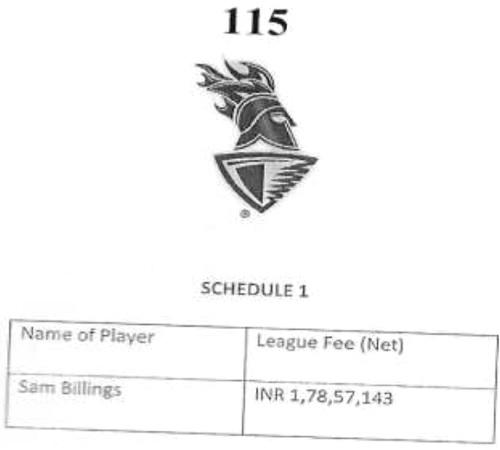
A perusal of same would show that the assessee is entitled to receive release fee which shall be equivalent to 10% of the League Fee that is actually paid by the franchise to the player. The said amount received by the assessee is over and above, the League Fee paid to the player and is not part of the fee paid to the player by franchise. Here it would be relevant to refer to the provisions of Article 18 of India-UK DTAA, the same reads as under:-
ARTICLE 18 ARTISTES AND ATHLETES
1. Notwithstanding the provisions of Articles 15 (Independent personal services) and 16 (Dependent personal services) of this Convention, income derived by entertainers (such as stage, motion picture, radio or television artistes and musicians) or athletes, from their personal activities as such may be taxed in the Contracting State in which these activities are exercised.
2. Where income arising from personal activities are such exercised in a Contracting State by an entertainer or athlete accrues not to that entertainer or athlete himself but to another person, that income may, notwithstanding the provisions of Articles 7 (Business profits), 15 (Independent personal services) and 16 (Dependent personal services) of this convention be taxed in that Contracting State.
3 . The provisions of paragraphs 1 and 2 of this Article shall not apply if the visit to a Contracting State of the entertainer or the athlete is directly or indirectly supported, wholly or substantially, from the public funds of the other Contracting State, including a political sub-division or local authority of that other State.
17. A bare perusal of Article 18 would show that it refers to the amount received or accrued to the athlete/player only and not to any other person or body. As per Article 18(1) income derived by athlete/player from his personal activities may be taxed in contracting state in which these activities are exercised. Thus, it is the amount received by the player which is taxable in India and the provision of Article 18 are not attracted in the case of assessee. In the case of Wizcraft International Entertainment (P) Ltd., the Hon’ble Bombay High Court hold that where payment is made to Event Management Company based outside India to bring artists in India, the payment made to agent did not arise from personal activities, clause (2) of Article 18 would not apply. Therefore, we find merit in ground no. 4. 5.1 and 5.2 of appeal, hence, the same are allowed.
18. In ground no. 5 and 6 of appeal, the assessee has assailed levy of interest u/s.234A and 234B of the Act, respectively. Charging of interest u/s.234A and 234B of the Act is mandatory and consequential, hence, ground no. 5 and 6 of appeal are dismissed.
19. In the result, appeal of the assessee is partly allowed in the terms aforesaid.
Order pronounced in the open court on Friday the 21 st day of August, 2026





