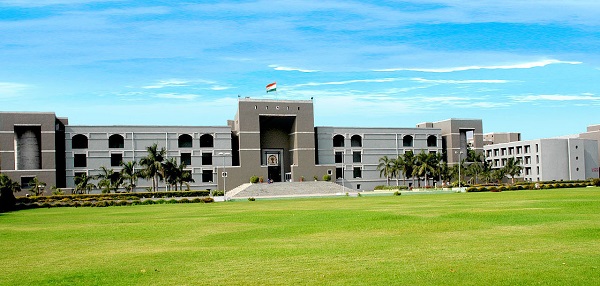
Union of India Vs B. Chandrashekar (Karnataka High Court)
Karnataka HC Upholds CAT’s Direction to Reconsider Pay Parity Claim of Income-Tax Department’s Official Language Staff – Fresh Administrative Decision Not Barred by Res Judicata
The Karnataka High Court dismissed four writ petitions filed by the Union of India, CBDT & Income Tax Department authorities, thereby upholding the Central Administrative Tribunal’s direction to reconsider claims of employees working in the Official Language/Hindi Translation cadre for actual monetary benefits of upgraded pay scales from 11 February 2003.
The dispute arose from revision of pay scales for Junior Hindi Translators, Senior Hindi Translators and Assistant Directors (Official Language) in the Central Secretariat Official Language Service. The revised scales were granted notionally from 1 January 1996 and with actual monetary effect from 11 February 2003. Subsequently, the Government sought to restrict these benefits to CSOLS employees and exclude similarly designated employees in other departments.
In earlier proceedings, the employees were ultimately granted the upgraded pay scale notionally from 1 January 1996 but actual monetary benefits only from 17 March 2015, being the date of filing their original applications. The earlier orders attained finality and were implemented. However, the Tribunal had also observed that if equivalent benefits were granted to similarly situated employees as a matter of policy, the same could be extended to these employees.
The employees thereafter made fresh representations relying upon instances where allegedly similarly situated employees had received monetary benefits from 11 February 2003. Their representations were rejected on 8 September 2021. On challenge, the CAT set aside that rejection and directed the competent authority to reconsider the claim after examining the instances relied upon and giving the employees an opportunity of hearing.
The High Court rejected the Department’s contention that the subsequent proceedings were barred by res judicata. It drew an important distinction between the two rounds of litigation: the first determined the employees’ original entitlement, whereas the second challenged a fresh administrative decision dated 8 September 2021, alleging failure to properly consider subsequent instances of parity. Thus, the CAT was not reopening or modifying its earlier final orders.
Importantly, the High Court clarified that the CAT had not granted monetary benefits from 11 February 2003, nor directed payment of arrears or interest. It had merely required the competent authority to reconsider the claim on the relevant material and pass a reasoned decision after hearing the employees. Hence, the Tribunal had not exceeded its jurisdiction or intruded into the executive’s policy-making domain.
The Court also held that questions such as absence of a general policy, distinction between benefits granted pursuant to judicial orders and those granted as policy, delay and laches, and the effect of earlier proceedings remain open for consideration by the competent authority.
Accordingly, all four writ petitions filed by the Government were dismissed, the CAT’s order was upheld, and the competent authority was directed to reconsider the employees’ claims after hearing them and pass a reasoned and speaking order, with all contentions left open.
Key takeaway: Res judicata does not prevent scrutiny of a subsequent, fresh administrative decision merely because an earlier claim concerning the same underlying benefit had attained finality. Where fresh representations based on subsequent parity instances are rejected, the authority can be required to genuinely consider those instances and pass a reasoned order.
Cases Discussed
- Dhananjay Singh v. Central Excise (Central Administrative Tribunal, Calcutta Bench), No citation provided
FULL TEXT OF THE JUDGMENT/ORDER OF KARNATAKA HIGH COURT
The W.Ps.No.34547/2025, 32293/2025, 34521/2025 and 34530/2025 are directed against the order dated 05.10.2023 passed by the Central Administrative Tribunal, Bengaluru Bench,(`the Tribunal’ for short) in Original Applications No.170/00095/2022, 170/00094/2022, 170/00093/2022 and 170/00093/2022 respectively.

2. Since the issue involved in all these petitions is substantially identical, they are heard together and are disposed of by this common judgment.
3. The petitioners herein are the respondents and respondent herein is the applicant before the Tribunal.
4. For sake of convenience the parties herein are referred to as per their rankings before the High Court.
5. The brief facts in W.P.No.34547/2025 are that:-
The respondents were appointed as Junior Hindi Translators on different dates. In W.P.No.34547/2025, the respondent was appointed on 28.05.1992 in the pay scale of Rs.1,400-2,300/-. The pay scales of Junior Hindi Translator, Senior Hindi Translator and Assistant Director (Official Language) in the Central Secretariat Official Language Service (CSOLS) were revised to Rs.5,500-9,000/-, Rs.6,500-10,500/-and Rs.7,500-12,000/- respectively, pursuant to the Office Memorandum No.F.70/11/2000-IC dated 14.07.2003 issued by the Ministry of Finance, Department of Expenditure, Government of India. The revised scales were given notional effect from 01.01.1996 and actual monetary effect from 11.02.2003.
6. Subsequently, the Ministry of Finance, Department of Expenditure issued Office Memorandum No.F-70/5/2003-IC dated 29.03.2004, clarifying that the benefit extended under the Office Memorandum dated 14.07.2003 was specific to the posts borne on CSOLS and could not be extended to similarly designated posts in other Departments, establishments or subordinate offices. The said Office Memorandum was challenged before the Central Administrative Tribunal, Calcutta Bench, in OA No.912/2014 in the case of Dhananjay Singh v. Central Excise. By order dated 09.11.2006, the Tribunal quashed the Office Memorandum dated 29.03.2004 and directed extension of the benefit flowing from the Office Memorandum dated 14.07.2003 to the respondents herein. The said order was challenged before the Hon’ble Calcutta High Court in W.P.No.728/2007 and the writ petition came to be dismissed on 02.05.2008. The matter was thereafter carried to the Apex Court in SLP (Civil) No.17419/2009 connected with Civil Appeal No.1119/2013 and SLP (Civil) No.37255/2012, which proceedings came to be dismissed on 25.07.2013.
7. Relying upon the aforesaid proceedings, the respondents submitted representations dated 04.02.2014 and 25.07.2014 seeking extension of the upgraded pay scales. As the representations did not result in the relief sought, the respondents approached the Tribunal. The Tribunal, by order dated 15.10.2015, disposed of the Original Applications holding that the respondents would be entitled to notional benefits from the earlier admissible date and actual monetary benefits from 17.03.2015, being the date of filing of the Original Application.
8. The respondents thereafter preferred Review Applications seeking reconsideration of the order dated 15.10.2015, particularly in relation to the date from which the actual monetary benefits were to be extended. By order dated 06.02.2017, the Tribunal declined to condone the delay of about twelve years and consequently held that the benefit would be available only with effect from 17.03.2015, being the date of filing of the Original Application. The Review Applications were accordingly dismissed. The Tribunal, however, further observed that if the aforesaid benefit had been granted to equivalently situated employees as a matter of policy, the same could be extended to the respondents as well.
9. The aforesaid orders dated 15.10.2015 and 06.02.2017 were thereafter implemented by the petitioners. Pursuant thereto, the respondents were granted the benefit of the upgraded pay scale notionally with effect from 01.01.1996 and actual monetary benefits with effect from 17.03.2015, being the date of filing of the respective Original Applications.
The respondents, however, thereafter submitted further representations dated 11.04.2017, 08.05.2018 and 30.07.2021, relying upon orders passed in favour of allegedly similarly situated employees by different authorities and Benches of the Tribunal, and sought extension of actual monetary benefits with effect from 11.02.2003. The said claim was subsequently rejected by communication dated 08.09.2021.
10. The said claim came to be rejected by order dated 08.09.2021. Aggrieved thereby, the respondents instituted the respective Original Applications before the Tribunal. The Tribunal, by the order dated 05.10.2023 under challenge in these writ petitions, set aside the communication dated 08.09.2021 and remitted the matter to the competent authority for reconsideration after taking into account the orders relied upon by the respondents and after affording them an opportunity of hearing.
11. Learned counsel appearing for the petitioners would contend that the subsequent Original Applications were barred by the principles of res judicata, since the very claim had already been adjudicated upon in the earlier proceedings and the orders dated 15.10.2015 and 06.02.2017 had attained finality and stood implemented. It is further contended that there was no policy decision extending the benefit of actual monetary benefits from 11.02.2003 to all similarly situated employees and that the instances relied upon by the respondents were only cases of implementation of individual judicial orders. Reliance is also placed upon the opinion of the Department of Expenditure permitting implementation of live orders of the Courts or Tribunals to avoid contempt.
12. It is further contended that the Tribunal, while directing reconsideration, has virtually treated the individual instances of extension of benefit as constituting a policy decision and thereby entered into an area falling within the executive domain. The petitioners also contended that the claim was highly belated and that the Tribunal ought not to have reopened a matter which had already attained finality.
13. Per contra, learned counsel appearing for the respondents/employees in all the writ petitions would support the order of the Tribunal and contend that the subsequent Original Applications arose out of a fresh administrative decision dated 08.09.2021 passed upon the subsequent representations submitted by the respondents. It is submitted that the Review order dated 06.02.2017 itself contained an observation that if the benefit had been extended to equivalently situated persons as a matter of policy, the same could be extended to the respondents. According to learned counsel, the subsequent representations specifically brought several such instances to the notice of the petitioners and therefore the petitioners were required to examine the material placed before them and take a reasoned decision.
14. It is further contended that the decision of the Apex Court dated 25.07.2013 in the proceedings arising out of the Dhananjay Singh’s case (supra) had already settled the question of parity in the pay scales and that similarly situated employees in different regions had been extended the benefit. Therefore, the respondents were entitled to have their claim considered on the basis of such instances and that the Tribunal has rightly remitted the matter for fresh consideration. The respondents would further contend that the plea of res judicata has no application since the cause of action in the subsequent proceedings arose from the fresh rejection order dated 08.09.2021.
15. Heard learned counsel appearing for the parties and perused the material on record.
16. The principal contention urged by the petitioners is that the Original Applications which culminated in the order dated 05.10.2023 were barred by the principles of res judicata, since the respondents had earlier approached the Tribunal, which by order dated 15.10.2015 had adjudicated their claim and the Review Application thereafter came to be disposed of on 06.02.2017. The said orders were implemented by extending the benefit in terms thereof. However, the connected writ petitions arose out of the subsequent representations dated 11.04.2017, 08.05.2018 and 30.07.2021 and the consequential rejection order dated 08.09.2021, whereby the respondents’ claim for actual monetary benefits from 11.02.2003, founded upon the alleged extension of such benefit to similarly situated employees, came to be rejected. The Tribunal, therefore, was examining the legality of the subsequent administrative decision dated 08.09.2021 and was not called upon to reopen or modify the orders dated 15.10.2015 and 06.02.2017.
17. It is of significance that, while disposing of the Review Application by order dated 06.02.2017, the Tribunal, having declined to condone the delay of about twelve years and having confined the actual monetary benefit to 17.03.2015, further observed that if the benefits had been granted to equivalently situated employees as a matter of policy, the same could be extended to the respondents as well. Pursuant thereto, the respondents submitted the aforesaid subsequent representations, placing reliance on various orders and instances concerning similarly situated employees. The Competent Authority considered the claim and rejected the same by order dated 08.09.2021. It is against this subsequent order that the respondents instituted applications before the Tribunal.
18. The distinction between the two rounds of proceedings is material. In the first round, the Tribunal determined the extent and date from which the respondents were entitled to the benefit, and the said determination attained finality and was implemented. In the second round, the respondents did not seek reopening of the said orders in the abstract, but questioned the subsequent rejection order dated 08.09.2021 on the ground that the Competent Authority had failed to properly consider the instances relied upon by them in support of their claim for parity. It is in this limited context that the Tribunal examined the validity of the order dated 08.09.2021 and directed reconsideration.
19. The order dated 08.09.2021, which was the subject matter of challenge before the Tribunal, was required to disclose consideration of the material placed by the respondents in support of their claim. The respondents had specifically relied upon orders whereby, according to them, similarly situated employees had been extended the benefit of the upgraded pay scales with effect from 11.02.2003. The Competent Authority, however, rejected the claim essentially by referring to the opinion of the Department of Expenditure that the Department would implement the live orders of the Courts or Tribunals in the cases of the concerned respondents herein in all the petitions/applicants or petitioners so as to avoid contempt.
20. In our considered view, the Tribunal cannot be said to have exceeded its jurisdiction in directing such reconsideration. The Tribunal has neither declared that the respondents are entitled to actual monetary benefits with effect from 11.02.2003 nor directed payment of arrears or interest. Further, the Tribunal has not modified the entitlement already determined in favour of the respondents. What has been directed is only reconsideration of the claim by the Competent Authority after taking into account the material relied upon by the respondents and after affording them an opportunity of hearing.
21. The contention of the petitioners that the Tribunal has treated the individual instances of grant of benefit as constituting a general policy decision is also not borne out from the order under challenge. The Tribunal has observed that the expression “policy” occurring in its earlier order could not be construed narrowly and that the instances relied upon by the respondents required consideration. Such observation, by itself, does not amount to a declaration that a binding policy extending the benefit to all similarly situated employees exists. The question whether the instances relied upon by the respondents were pursuant to a policy decision, judicial directions, administrative decisions taken for compliance with judicial orders, or on any other basis, remains open for determination by the competent authority.
22. It is observed that, the contention of the petitioners that the matter falls within the exclusive policy domain of the executive does not furnish a ground to interfere with the order of remand. The Tribunal has not directed the petitioners to formulate or amend any policy relating to pay scales. Nor has it undertaken the exercise of determining the financial or administrative implications of extending the benefit claimed by the respondents. The competent authority continues to retain the jurisdiction to examine all such aspects and to take an appropriate decision in accordance with law.
23. The plea of delay and !aches also does not warrant interference with the limited order of remand. The effect of the delay in the respondents’ original claim had already been considered by the Tribunal while determining the date from which actual monetary benefits were to be made available. In the present proceedings, the Tribunal has not itself granted any additional monetary benefit for the period from 11.02.2003. The question as to the entitlement, if any, of the respondents to such benefit has been left open to be considered by the Competent Authority.
24. The petitioners would, therefore, be entitled to place before the Competent Authority all their contentions, including the effect of the orders passed in the earlier proceedings, the absence of any general policy decision, the opinion of the Department of Expenditure, the distinction between benefits granted pursuant to judicial orders and benefits granted as a matter of policy, as also the question of delay and !aches and any other ground available to them in law. The order of remand does not foreclose consideration of any of these aspects.
25. The direction issued by the Tribunal is only to reconsider the claim of the respondents and to pass a reasoned order in accordance with law. The Tribunal has not granted the respondents any additional monetary benefit, nor has it directed the petitioners to extend the benefit with effect from 11.02.2003. Further, the Tribunal has exercised the jurisdiction vested in it under the Administrative Tribunals Act, 1985 and has confined the relief to reconsideration without adjudicating upon the entitlement claimed by the respondents. We, therefore, find no error in the order of the Tribunal warranting interference by this Court in exercise of its jurisdiction under Articles 226 and 227 of the Constitution of India.
26. In view of the aforesaid discussions, we find no ground to interfere with the order dated 05.10.2023 passed by the Tribunal. The challenge raised by the petitioners to the order of remand is devoid of merit. The writ petitions, therefore, deserve to be dismissed.
27. Accordingly, we proceed to pass the following:
ORDER
(i) W.Ps.No.34547/2025, 32293/2025, 34521/2025 and 34530/2025 are dismissed.
(ii) The order dated 05.10.2023 passed by the Central Administrative Tribunal, Bengaluru Bench, in the respective Original Applications is upheld.
(iii) The Competent Authority shall reconsider the claim of the respective respondents in all the petitions in accordance with law, after affording them an opportunity of hearing, and pass a reasoned and speaking order.
(iv) All contentions of the petitioners as well as the respondents are left open for consideration by the Competent Authority.
No order as to costs.
Pending interlocutory applications, if any, stand disposed of.