How AI Is Changing Market Analysis for Retail Traders
Retail traders are now able to access more financial information than ever before in the history of the markets. It’s no longer about data scarcity. It’s determining which earnings reports, price swings, economic releases and news stories are significant before the market shifts again.
This is where AI trading tools are starting to make a difference. Traders can now leverage AI to structure information, spot trends, and flag unusual activity that warrants further investigation, eliminating the need to sift through countless charts and reports.
Market Research Is Becoming Much Faster
Traditional market analysis may consist of independently examining company filings, economic calendars, technical indicators, and financial news. AI can consolidate much of that information and analyze vast amounts of data much more quickly than a human trader could manually.
Adoption is already a major issue. The Investing.com survey of 938 retail investors in the United States found that 62% had used AI to assist with their investing decisions, with 23.6% reporting they used it regularly. 65% of users felt AI has enhanced their investment performance.
However, this does not imply that AI will necessarily make better decisions. It suggests that AI market analysis is shifting from a niche technology to a routine practice for retail investors.
AI Can Look Across More Data at Once
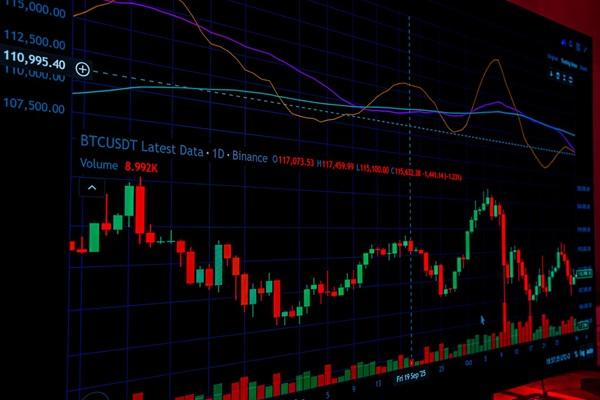
A major benefit of AI is that it can track multiple information sources simultaneously. Without the trader constantly switching from platform to platform, a system can possibly analyze price action, trading volume, company news, analyst’s remarks, and market sentiment.
Here NLP comes in handy. Rather than sifting through a 100-page corporate report from start to finish, a trader can use AI to find any shifts in revenue, margins, debt or management guidance and then dig deeper into those sections.
The U.S. Securities and Exchange Commission has recognized how AI is being adopted by market players, from retail traders to large institutions, to analyze financial data. It has also observed an increase in the download of structured regulatory data, which may be due to the use of automated analysis.
Trading Signals Are Becoming More Sophisticated
Technical signals have been around for years. You can calculate moving averages, RSI, MACD and support levels without using Artificial Intelligence. The difference with AI is how many variables can be considered simultaneously.
Modern AI trading signals can incorporate technical indicators, volatility, volume, historical correlations, and, in some cases, news sentiment. A model could compare the move to thousands of previous market conditions rather than just saying that it has crossed a moving average.
That can make signals more contextual. A price breakout in conjunction with unusually high volume and positive earnings sentiment could convey different information than the same breakout on a quiet day.
However, an AI signal is still only a signal. Unexpected news, changes in liquidity, and human behavior all affect markets, and no model can predict all movements.
Retail Traders Are Gaining Institutional-Style Tools
Once the province of hedge funds, investment banks and professional trading firms with big technology budgets, advanced quantitative analysis is now taking hold. Cloud computing and generative AI are helping to narrow that gap.
In 2026, Bank of America reported that over half of medium and large hedge funds already have at least one generative AI system in use. Meanwhile, digital brokers are increasingly rolling out AI-powered research, screening and portfolio tools that go straight to individual investors.
That said, this is not the same infrastructure as a big quant fund. It does, however, offer access to types of AI market analysis that would have taken a lot of computing power just a few years ago.
AI Is Changing How Traders React to News
Time is of the essence in the financial markets. A stock can move in a flash on earnings releases, inflation data, interest rate moves, and geopolitical events, which can impact several asset classes almost instantly.
For example, AI can process news and structured data at a rapid pace, detecting any unusual figures or changes in tone. A trader monitoring hundreds of companies could instead receive an alert when earnings materially beat expectations, rather than checking each announcement.
AI trading signals can also be more event-based. Systems can identify unusual combinations of news sentiment, volume, and volatility that indicate market conditions are shifting before they can otherwise be discerned from price charts.
Human Judgement Still Matters
As AI becomes more prevalent, it poses new risks and opportunities. AI systems can misunderstand information, rely on outdated data, or identify patterns with little predictive value.
Therefore, retail traders still have to check out crucial details. The Investing.com survey revealed that, although AI has gained traction in the investing world, 7.6% of respondents reported having no concerns about its use in investing.
Another potential pitfall is becoming complacent. A complex model may give a trader the impression that a forecast is more reliable than it really is, especially if the trader is not aware of how the model came to that conclusion.
Market Analysis Is Becoming a Partnership
AI is not likely to replace traders’ market knowledge. Rather, its greatest influence might be to reduce the need for repeated research to make a decision.
Moreover, AI market analysis can help a trader sift through thousands of potential opportunities, and AI trading signals can help them narrow down which areas are worth exploring, then make their own final decision. That combination might be more helpful than giving an algorithm full control.
Access is the key change for retail traders. Once the preserve of professional trading desks, technologies are quickly making the leap to mainstream investing platforms. While AI can’t eliminate volatility or guarantee profitable decisions, it can alter the speed at which traders process data and the size of the market they can realistically monitor at any given time.
****
Disclaimer: This article is for general informational and educational purposes only and should not be construed as investment, financial, trading, legal or tax advice, or as a recommendation to buy, sell or hold any security, derivative, currency or other financial instrument. References to AI trading tools, AI market analysis or trading signals are illustrative only and do not guarantee accuracy, performance or profitability. Artificial intelligence systems may rely on incomplete, inaccurate or outdated data, generate erroneous outputs, fail to account for market events and produce signals that may result in losses. Financial markets are volatile, and trading—particularly leveraged trading, forex and derivatives—carries a substantial risk of loss, including the loss of capital exceeding the initial investment in certain products. Readers should independently verify all information, assess their financial position, risk tolerance and investment objectives, and seek advice from a qualified financial adviser before making any trading or investment decision. Past performance is not indicative of future results. TaxGuru does not endorse or guarantee any product, platform, broker or service referred to in this article. The linked content may be promotional or commercial in nature, and readers should review the relevant terms, fees, risks and regulatory status before proceeding.