Advertisement
Advertisement
Skip to content
Follow Us on
Advertisement
TOP STORIES
Excise Duty

Confessional Statements Alone Insufficient for Excise Rule 26 Penalty: CESTAT Ahmedabad

Case Law Details

Case Name
Sharad Haribhai Naik Vs Commissioner of Central Excise (CESTAT Ahmedabad)
Date of Judgement/Order
Only available for paid members
Advertisement

Sharad Haribhai Naik Vs Commissioner of Central Excise (CESTAT Ahmedabad)

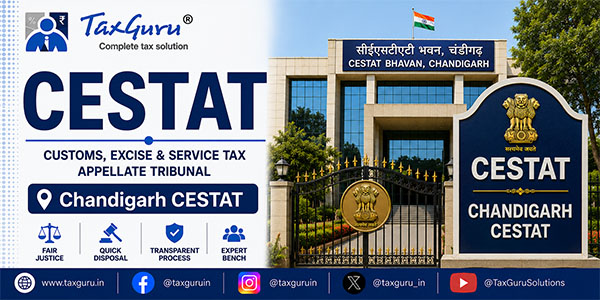
The Ahmedabad Bench of the Customs, Excise and Service Tax Appellate Tribunal (CESTAT) heard appeals challenging Order-in-Original dated 11.04.2017, whereby the Commissioner, Central Excise, Customs & Service Tax, Audit-III, Vapi imposed a penalty of ₹1 lakh on the authorised signatory and liaisoning officer of M/s. Rathi Re-rollers (India) Limited and a penalty of ₹50 lakh on the company’s director under Rule 26 of the Central Excise Rules, 2002.

The company was engaged in the manufacture of MS Bars and was registered under the Central Excise law while availing CENVAT credit. Based on intelligence alleging large-scale evasion of central excise duty through clandestine clearance of finished goods, the department conducted searches at various premises and carried out investigations. According to the department, the company had clandestinely manufactured and cleared MS Bars, scrap and mill scales without issuing Central Excise invoices or paying duty, resulting in alleged evasion of ₹4,24,42,283. The Commissioner concluded that the director and the authorised signatory had admitted their involvement in the activities and imposed penalties under Rule 26.

Before the Tribunal, the appellants contended that the adjudicating authority had relied solely upon statements recorded during investigation without granting an opportunity to cross-examine the witnesses, contrary to Section 9D of the Central Excise Act, 1944. They submitted that there was no other evidence supporting the allegations against them. It was further argued that the Commissioner had imposed penalties under Rule 26 without specifying the particular clause of the Rule allegedly violated, although Rule 26 contains different categories of offences.

The Revenue supported the impugned order and submitted that the penalties had been imposed on the basis of the statements recorded during the investigation.

After considering the rival submissions, the Tribunal examined Rule 26 of the Central Excise Rules, 2002 and observed that penalty under the Rule can be imposed only in situations specifically covered by its provisions, including cases involving dealing with excisable goods liable to confiscation or issuance of excise invoices without delivery of goods.

The Tribunal also examined Section 9D of the Central Excise Act, 1944, which provides for the relevancy of statements recorded during inquiry. Referring to the decisions relied upon by the appellants, the Tribunal noted that statements relied upon in adjudication are required to satisfy the requirements of Section 9D and that denial of cross-examination assumes significance where such statements constitute the principal evidence.

The Tribunal found that the Commissioner had relied upon the statements of the appellants to conclude that they had admitted receipt of raw materials without recording them in statutory records and had participated in clandestine manufacture and clearance of finished goods without payment of duty. However, apart from these statements, the impugned order did not discuss any corroborative evidence supporting the allegations against either appellant.

The Tribunal observed that there was no sufficient evidence on record for imposing penalties under Rule 26 apart from the statements recorded during investigation. It held that the conclusions reached by the Commissioner were based only on the statements of the appellants and witnesses and were unsupported by substantial corroborative evidence.

The Tribunal further observed that the Commissioner had not specified the particular sub-rule or clause of Rule 26 under which the penalties had been imposed. Referring to the decision of the Supreme Court in Amrit Foods, the Tribunal noted that it was necessary for the adjudicating authority to specify the exact clause of the penalty provision invoked.

In view of these findings, the Tribunal held that the penalties imposed on both appellants under Rule 26 of the Central Excise Rules, 2002 were not sustainable. Accordingly, it set aside the impugned order to the extent it imposed penalties on the authorised signatory and the director and allowed the appeals.

Cases Discussed

  • CCE, Vadodara-1 vs. Paresh Ramabhai Amin (Gujarat High Court), (2026) 39 Centax 379 (Guj.)
  • Western India Ceramics Pvt. Limited vs. Commissioner of C.E. & S.T., Vadodara-1 (CESTAT Ahmedabad), (2026) 38 Centax 212 (Tri. Ahmd.)
  • Amrit Foods (Supreme Court), 2005 (190) ELT 433 (SC)

FULL TEXT OF THE CESTAT AHMEDABAD ORDER

These appeals are directed against Order-in-Original No. SIL-EXCUS-000-COM-105-16-17 dated 11.04.2017 issued by Commissioner, Central Excise, Customs & Service Tax, Audit-III, Vapi through which the learned Commissioner imposed penalty of Rs. 1 Lakh on Shri Sharad Haribhai Naik, Authorised Signatory and Liaisoning Officer (Personnel and Administration), Rathi Re-rollers (India) Limited and a penalty of Rs. 50Lakhs on Shri Vinod Kumar Mittal, Director of the said Company under Rule 26 of Central Excise Rules, 2002.

2. The facts of the case in brief are that both the appellants Shri Sharad Haribhai Naik, and Shri Vinod Kumar Mittal, were working as Authorised Signatory and Liaisoning Officer (Personnel and Administration) and Director of M/s. Rathi Rerollers (India) Limited. M/s. Rathi Rerollers (India) Limited (hereinafter referred to as M/s. Rathi for short) was engaged in manufacturing of M S Bars falling under Chapter Heading 72 of the First Schedule of Central Excise Tariff Act, 1985. M/s. Rathi was having Central Excise registration for manufacturing of aforesaid products and availing Cenvat Credit facility under Cenvat Credit Rules, 2004.

2.1 Based on intelligence that M/s. Rathi was indulged in large scale evasion of Central Excise duty by way of clandestine clearance of their finished goods i.e. M.S. Bars, searches were conducted at factory premises of M/s. Rathi Rerollers (India) Limited at Silvassa, New Delhi and Vapi, investigation was carried out and Panchnamas were drawn. After investigation, it appeared that M/s. Rathi had manufactured and cleared 5306.408MT of MS Bars and scraps without preparation of Central Excise invoices and without payment of Central Excise duty from the factory premises. It also appeared that M/s. Rathi had cleared 1134.9 MT of Mill Scales during April 2008 to January 2009 without payment of Central Excise duty. M/s. Rathi has also cleared 7693.62 MT of MS Bars through M/s. Mahadev Roadlines, Vapi under the guise of invoices issued in the name of M/s. Sai Steel Suppliers and M/s. B K Steel during the period 2007-08, 2008-09 and 2009-10 (upto 03.12.2009) without payment of duty. Further, it also appeared that M/s. Rathi had cleared 56.44 MT of MS Bars/ MS Miss Roll through M/s. Jaipur Transport Corporation, Vapi under the guise of invoices issued in the name of M/s. Sai Steel Suppliers, Vapi during May 2009. Thus, it appeared that M/s. Rathi had manufactured and cleared finished goods clandestinely without preparing Central Excise invoices and without payment of Central Excise duty. The department was also of the opinion that Shri Sharad Haribhai Naik, Authorised Signatory and Liaisoning Officer of the Company and Shri Vinod Kumar Mittal, Director of the Company accepted commitment of offence by them. Therefore, it appeared to the Revenue that M/s. Rathi evaded Central Excise duty of Rs. 4,24,42,283/- as summarized in Annexure-G, in contravention of the provisions of Rules 4, 6,8,10,11 and 12 of the Central Excise Rules, 2002.

2.2 On the basis of evidence collected during investigation, learned Commissioner, Central Excise, Customs & Service Tax arrived at the conclusion that Shri Vinod Kumar Mittal, Director of the unit was present during the course of Panchanama proceedings on 03/04.12.2009 and he agreed to the shortages found in the stock during the course of Panchanama proceedings. He admitted that they had received raw materials but did not record the same in their statutory records with intent to utilize them in the manufacture of finished goods which were cleared without payment of Central Excise duty and without invoices. Except on one occasion, Shri Vinod Kumar Mittal, was issued several summons but he did not appear to comply with the summons as well as did not produce the relevant record for examination. In all he had knowingly concerned himself in clandestine manufacture and clearance of finished goods and scrap without payment of Central Excise duty without issuing invoices. He is therefore, liable for penal action under Rule 26 of Central Excise Rules, 2002.

2.3 The learned Commissioner also arrived at the conclusion that Shri Sharad Haribhai Naik, Authorised Signatory cum Liaisoning Officer (Personnel & Administration) of the unit has stated in his statements that he was working as per directions of Shri Vinod Kumar Mittal, Director of the unit. He was also proprietor of the trading firms of the unit viz. M/s. Sai Steel Suppliers, Silvassa and Maa Durga Steel Company, Vapi. He has accepted that the raw materials were not entered in the Central Excise records with an intention to use them for the production of finished goods and clearance thereof without preparation of Central Excise invoices and without payment of duty. He also accepted that all things were in his knowledge. He played a vital role in clandestine manufacture and clearance of finished goods as he was Authorised Signatory of the unit and he looked after all the works related to the unit. He had knowingly concerned himself in dealing with the excisable goods in a manner which is not permitted under Central Excise law. He is therefore liable for penalty under Rule 26 of Central Excise Rules, 2002.

3. On the basis of above observations and conclusion, learned Commissioner imposed penalty of Rs. One lakh on Shri Sharad Haribhai Naik, Authorised Signatory cum Liaisoning Officer (Personnel and Administration) of M/s. Rathi and penalty of Rs. 50 Lakhs on Shri Vinod Kumar Mittal, Director of M/s. Rathi under Rule 26 of Central Excise Rules, 2002 Feeling aggrieved with the impugned order imposing penalty, both the appellants have filed these appeals before this Tribunal.

4. Learned Counsel for appellants submitted that the Adjudicating Authority has simply placed reliance on the statements of witnesses recorded during the proceedings without providing opportunity of cross-examination of the witnesses to the appellants. The said act of the Adjudicating Authority is in violation of Section 9D of Central Excise Act, 1944. Learned Counsel for appellants has supported his arguments by the law laid down in CCE, Vadodara-1 vs. Paresh Ramabhai Amin – (2026) 39 Centax 379 (Guj.) and Western India Ceramics – (2026) 38 Centax 212 (Tri. Ahmd).

4.1 Learned Counsel for appellants also submitted that there is no other evidence against appellants therefore, the order imposing penalty on appellants is not sustainable.

4.2 He has also submitted that Rule 26 of the Central Excise Rules, 2002 contain various offences for which penalty can be imposed on a person but in the present case, no such clause has been specified. Learned Counsel submits that it is settled law that penalty provisions are to be construed strictly and if no specific clause is invoked then penalty cannot be imposed on the appellants. Order imposing penalty without specifying the clause of Rule 26 is not sustainable. Learned Counsel for appellants supported his arguments by the law laid down by Hon’ble Supreme Court in the case of Amrit Foods reported in 2005 (190) ELT 433 (SC). Learned Counsel for the appellants submitted that in view of the above legal position, the impugned order imposing penalty upon the appellants be set-aside and the appeals may be allowed.

5. Learned AR reiterated the impugned order passed by learned Commissioner and submitted that penalties have been imposed on the appellants on the basis of their statements recorded by the departmental authorities, therefore, the appeals should be dismissed and the impugned order imposing penalties on the appellants may be upheld.

6. I have heard the learned Counsel for the appellant and learned AR for the department and perused the record. The issue before this Tribunal is whether the impugned order imposing penalties upon the appellants is sustainable or not and whether the impugned order has been passed in accordance with law.

6.1 The learned Commissioner has imposed penalty of Rs. 50Lakhs on the appellant Shri Vinod Kumar Mittal, Director of M/s. Rathi and penalty of Rs. One lakh on the appellant Shri Sharad Haribhai Naik, Authorised Signatory and Liaisoning Officer (Personnel and Administration) of M/s. Rathi under Rule 26 of the Central Excise Rules, 2002. For ease of reference, the provisions of Rule 26 of the Central Excise Rules, 2002 are reproduced below:-

26. Penalty for certain offences.

[(1)]Any person who acquires possession of, or is in any way concerned in transporting, removing, depositing, keeping, concealing, selling or purchasing, or in any other manner deals with, any excisable goods which he knows or has reason to believe are liable to confiscation under the Act or these rules, shall be liable to a penalty not exceeding the duty on such goods or [two thousand rupees], whichever is greater.

[Provided that where any proceedings for the person liable to pay duty have been concluded under clause (a) or clause (d) of sub-section (1) of section 11AC of the Act in respect of duty, interest and penalty, all proceedings in respect of penalty against other persons, if any, in the said proceedings shall also be deemed to be concluded.]

[(2) Any person, who issues —

(i) an excise duty invoice without delivery of the goods specified therein or abets in making such invoice; or

(ii) any other document or abets in making such document, on the basis of which the user of said invoice or document is likely to take or has taken any ineligible benefit under the Act or the rules made thereunder like claiming of CENVAT credit under the CENVAT Credit Rules, 2004 or refund, shall be liable to a penalty not exceeding the amount of such benefit or five thousand rupees, whichever is greater.]

6.2 From the provisions of Rule 26, it is clear that penalty can be imposed by the Adjudicating Authority under Rule 26 only when he is of the opinion that the person concerned has acquired possession of excisable goods or was dealing with any excisable goods which he knows or has reason to believe that such goods are liable to confiscation under the Central Excise Act or these rules. Penalty can also be imposed on a person who has issued an excisable invoice without delivery of goods. The argument of the learned Counsel for the appellants is that there was no evidence before the learned Commissioner for arriving at the conclusion in para 57 and 59 of the impugned order except the statements recorded during proceedings without any corroborative evidence. Therefore, penalty under Rule 26 is not imposable.

6.3 The provisions of Section 9D(1)(b) of the Central Excise Act, 1944 provides that a person whose statement has been recorded is required to be examined as witness before his statement is relied upon. The provisions of Section 9D of the Central Excise Act, 1944 are reproduced below for ready reference:-

9D. Relevancy of statements under certain circumstances. –

(1) A statement made and signed by a person before any Central Excise Officer of a gazetted rank during the course of any inquiry or proceeding under this Act shall be relevant, for the purpose of proving, in any prosecution for an offence under this Act, the truth of the facts which it contains, –

(a) when the person who made the statement is dead or cannot be found, or is incapable of giving evidence, or is kept out of the way by the adverse party, or whose presence cannot be obtained without an amount of delay or expense which, under the circumstances of the case, the Court considers unreasonable; or

(b) when the person who made the statement is examined as a witness in the case before the Court and the Court is of opinion that, having regard to the circumstances of the case, the statement should be admitted in evidence in the interests of justice.

(2) The provisions of sub-section (1) shall, so far as may be, apply in relation to any proceeding under this Act, other than a proceeding before a Court, as they apply in relation to a proceeding before a Court.]

6.4 Hon’ble Gujarat High Court, in the case of Commissioner, CGST and Central Excise, Vadodara-1 vs. Pareshbhai Ramabhai Amin (2026) 39 Centax 379 (Guj.), has held as follows:-

“4. We are in complete agreement with the findings recorded by the Tribunal, as there was no tangible evidence or any corroborative evidence against the respondent to connect him with the manufacture of gutkha. No independent corroborative evidence has been produced and in wake of the fact that the vital witnesses whose statements are relied upon, more particularly, the pancha witnesses and the co-noticees were not offered an opportunity of cross-examination despite a specific request made by the petitioner. We do not find any illegality of infirmity in the order passed by the Tribunal. Moreover, reliance placed by the appellant in the case of N.S. Mahesh (supra) would not come to the rescue of the appellant in wake of the fact that the opportunity of being cross-examined was not afforded to the panchas and co-notices, more particularly when their statements have been relied upon while passing the Order in Original.

5. With the aforesaid observations, the appeal fails, the same stands rejected.”

6.5 In Western India Ceramics Pvt. Limited vs. Commissioner of C.E. & S.T., Vadodara-1 reported at (2026) 38 Centax 212 (Tri. Ahmd.), this Tribunal has held that for determination of sale price of goods, no reliance could be placed on statements of dealers and builders who were not otherwise examined under Section 9D of Central Excise Act, 1944.

6.6 In the present case there was no evidence before the learned Commissioner for imposing penalties upon the appellants under Rule 26 of Central Excise Rules, 2002 except their statements. There was no corroborative evidence in support of the statements made by the appellants and recorded by the Revenue authorities. In para 57 of the impugned order, learned Commissioner has observed that Shri Vinod Kumar Mittal, Director of M/s. Rathi has admitted shortage found in the stock during panchanama proceedings and admitted that they had received raw material but did not recorded the same in their statutory records with intent to utilize them in the manufacture of finished goods which were cleared without payment of Central Excise duty and without invoices. I am of the opinion that there is no sufficient evidence on record for imposing penalties upon Shri Vinod Kumar Mittal, Director of M/s. Rathi and Shri Sharad Haribhai Naik, Authorised Signatory of M/s. Rathi under Rule 26 of Central Excise Rules, 2002. Further, in para 59 of the impugned order, learned Commissioner has observed that Shri Sharad Haribhai Naik, Authorised Signatory and Liaisoning Officer (Personnel and Administration) of the unit has stated in his statement that he was working as per directions of Shri Vinod Kumar Mittal, Director of the unit. He was also proprietor of the trading firms of the unit M/s. Sai Steel Suppliers and M/s. Maa Durga Steel Company, Vapi. He has accepted that the raw materials were not entered in the Central Excise records with an intention to use them for production of finished goods and clearance thereof without preparation of Central Excise invoices and without payment of duty. He also accepted that all things were in his knowledge. He played a vital role in clandestine manufacture and clearance of finished goods as he was authorised signatory of the unit and looking after all the works related to the unit. He had knowingly concerned himself in dealing with the excisable goods in a manner which is not permitted under Central Excise law. However, except for this confessional statement, no corroborative evidence has been discussed by the learned Commissioner in his impugned order. Therefore, I am of the view that the conclusion arrived at by the learned Commissioner for imposing penalty on the appellants Shri Vinod Kumar Mittal, Director and Shri Sharad Haribhai Naik, Authorised Signatory and Liaisoning Officer (Personnel and Administration) of M/s. Rathi cannot be upheld as they are without substantial corroborative evidence and are based only on statements of the appellants and witnesses.

6.7 It is also pertinent to note here that in the impugned order, learned Commissioner has not specified under which sub-Section or clause of Rule 26 of the Central Excise Rules, 2002, penalties have been imposed whereas he was duty bound to have specifically recorded the relevant Section or clause of Rule 26 of the Central Excise Rules, 2002.

6.8 In Amrit Foods – 2005 (190) ELT 433 (SC), Hon’ble Supreme Court has held that neither Show Cause Notice nor order of Commissioner specified which particular clause of Rule 173Q of erstwhile Central Excise Rules, 1944 had been allegedly contravened by appellant-assessee to be put on notice as to exact nature of contravention for which assessee was liable under provisions of Rule 173Q. Therefore, in view of the law laid down by Hon’ble Supreme Court, in the above case, it was necessary for the Adjudicating Authority to have mentioned the exact clause or Section of the Rule 26.

7. In view of the above discussion, I am of the view that the impugned order dated 11.04.2017 passed by Commissioner, Central Excise, Customs & Service Tax, Audit-III, Vapi imposing penalty of Rs. One lakh on Shri Sharad Haribhai Naik, Authorised Signatory and Liaisoning Officer (Personnel and Administration) of M/s. Rathi Re-rollers (India) Limited and penalty of Rs. 50Lakhs on Shri Vinod Kumar Mittal, Director of M/s. Rathi Re-rollers (India) Limited under Rule 26 of Central Excise Rules, 2002 is not sustainable and is liable to be set-aside to that extent whereas the appeals deserve to be allowed.

8. Consequently, the appeals are allowed and the impugned order is set- aside to the extent of imposing penalties on the appellants Shri Sharad Haribhai Naik, Authorised Signatory and Liaisoning Officer (Personnel and Administration) and Shri Vinod Kumar Mittal, Director of M/s. Rathi Re-rollers (India) Limited.

(Order pronounced in the open court 06.07.2026)

Advertisement

Author Info

CA Sandeep Kanoi
Qualification: CA in Job / Business
Company: Taxguru Consultancy
Location: Mumbai, Maharashtra
Articles Published: 17,501

Join TaxGuru's Network for the latest updates on Income Tax, GST, Company Law, Corporate Laws and other related subjects.

Leave a Reply

Your email address will not be published. Required fields are marked *