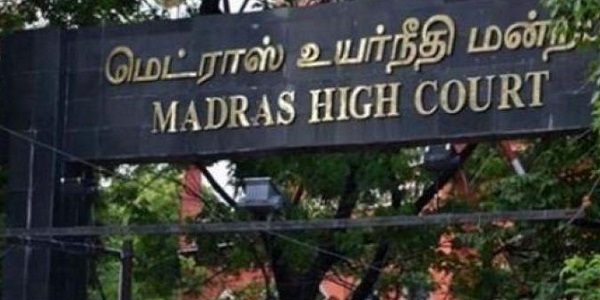
Jai Jwala Enterprises Vs Commissioner of Customs (Madras High Court)
Summary: The Madras High Court allowed a writ petition filed by Jai Jwala Enterprises challenging the order dated 02.06.2026 of the Commissioner of Customs (Appeals-II), which had dismissed its appeal as time-barred under Section 128 of the Customs Act, 1962. The dispute originated from an order dated 24.09.2025 demanding differential customs duty of Rs.1,75,726/- after the Customs authorities classified imported goods declared by the petitioner as “Art Set” under the description “Slime”. The original order was received by the petitioner on 17.10.2025, whereas the statutory appeal was filed on 29.01.2026.
The High Court observed that Section 128 provides sixty days for filing an appeal and permits the Commissioner (Appeals) to condone a further delay of thirty days upon sufficient cause being shown. The petitioner’s appeal was filed approximately twelve days beyond this maximum ninety-day period. The petitioner attributed the delay to the ill-health of the counsel handling the matter and produced medical records that were not disputed by the respondent. The Court acknowledged that the Commissioner (Appeals) lacked statutory authority to condone delay beyond the additional thirty days.
Nevertheless, considering the undisputed medical circumstances and the substantive dispute concerning classification of the imported goods, the Court considered it appropriate to exercise its jurisdiction under Article 226 of the Constitution. Accordingly, the High Court set aside the appellate order dated 02.06.2026 and restored the appeal for fresh consideration on merits after providing an opportunity of hearing. The petitioner was also granted liberty to seek cross-examination of the concerned officer, if permissible in law, with the respondent directed to decide any such application in accordance with law. The writ petition was allowed, the connected miscellaneous petition was closed, and no costs were awarded.
FULL TEXT OF THE JUDGMENT/ORDER OF MADRAS HIGH COURT
Mr. Santhanaraman, learned Senior Standing Counsel, accepts notice for the respondent.
2. The petitioner challenges the order dated 02.06.2026 passed by the respondent under Section 128 of the Customs Act, 1962 (hereinafter referred to as “the Act”), dismissing the appeal filed by the petitioner on the ground that it was barred by limitation.
3. The petitioner was issued an order dated 24.09.2025 under Section 28 of the Act, demanding differential duty of Rs.1,75,726/- in respect of the goods declared as “Slime”. The petitioner had declared the goods as an “Art Set”. However, upon verification, the Customs authorities classified the goods as “Slime” and raised the differential duty.
4. Aggrieved by the said order, the petitioner filed an appeal on 29.01.2026 under Section 128 of the Act. The Appellate Authority dismissed the appeal on the ground that it was filed beyond the period prescribed under Section 128, including the condonable period.
5. Heard the learned counsel appearing for the petitioner and the learned Senior Standing Counsel appearing for the respondent.
6. The order-in-original dated 24.09.2025 was communicated to the petitioner through Speed Post on 16.10.2025 and was received by the petitioner on 17.10.2025.
7. Section 128 of the Act provides that an appeal shall be filed before the Commissioner (Appeals) within sixty days from the date of communication of the decision or order. The proviso empowers the Commissioner (Appeals), if satisfied that the appellant was prevented by sufficient cause from presenting the appeal within the said period of sixty days, to allow the appeal to be presented within a further period of thirty days.
8. Thus, reckoned from 17.10.2025, the appeal filed on 29.01.2026 was beyond the initial period of sixty days and also beyond the further period of thirty days which could be condoned by the Commissioner (Appeals). On such computation, there was a delay of about twelve days beyond the maximum period of ninety days.
9. The petitioner explains the delay on the ground of the ill-health of the learned counsel who was handling the matter. In support of the said explanation, the learned counsel has produced medical records, which have not been disputed by the respondent.
10. It is also relevant that the dispute between the parties concerns the classification of the imported goods. The petitioner contends that the goods imported were “Art Sets” and not “Slime”. The question, therefore, requires consideration on merits by the Appellate Authority.
11. This Court is conscious that the Commissioner (Appeals) has no power under Section 128 to condone a delay beyond the further period of thirty days prescribed in the proviso. However, in the peculiar facts of the present case, particularly having regard to the medical circumstances relied upon by the petitioner, which have not been disputed, and since the petitioner has raised a substantive dispute regarding the classification of the imported goods, this Court considers it appropriate to exercise its jurisdiction under Article 226 of the Constitution.
12. Accordingly, the impugned order dated 02.06.2026 is set aside. The appeal filed by the petitioner on 29.01.2026 is restored to the file of the respondent. The respondent shall consider the appeal on its merits and pass appropriate orders in accordance with law, after affording the petitioner an opportunity of hearing.
13. The petitioner is at liberty to file an appropriate application seeking cross-examination of the concerned officer, if permissible in law. If such an application is filed, the respondent shall consider the same in accordance with law and, pass appropriate orders thereon.
14. The writ petition is allowed in the above terms. Consequently, the connected miscellaneous petition is closed. There shall be no order as to costs.