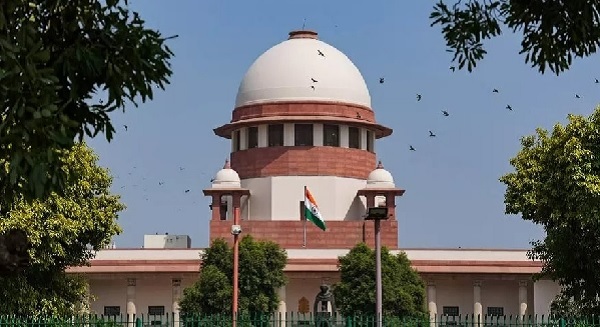
Union of India Vs Manoj Kumar (Supreme Court of India)
In this case Para 3.1.3 which dealt with the disparity between the Secretariat and field offices has canvassed a case for parity between similarly placed persons employed in field offices and the Secretariat; in view of the field offices being at the cutting edge of administration. However, it came to the conclusion that parity would need to be absolute till the grade of Assistant. It was clearly stipulated that beyond that “it may not be possible or even justified to grant complete parity because the hierarchy and career progression will need to be different taking in view the functional considerations and relativities across the board.” If this principle is observed, the benefit cannot accrue to the respondents and we cannot accept the plea that as a result of parity being given up to the level of Assistant (which would put them in the grade of Rs.4200 (later Rs.4600)), the respondents, being one post higher, would automatically have to get one higher grade.
We are fortified in the view we are seeking to adopt in interpreting the aforesaid paragraphs of the Pay Commission by the observations in Union of India v. Tarit Ranjan Das,7 where it was opined that the principle of equal pay for equal work cannot be applied merely on basis of designation. While dealing with the 5th Pay Commission recommendations with respect to functional requirements, it was held that there was no question of any equivalence on that basis. The said case dealt with Stenographers of the Geological Survey of India. While observing that as a general statement it was correct to state that the basic nature of work of a Stenographer remained by and large the same whether they were working for an officer in the Secretariat or for an officer in a subordinate office; it was held that Courts ought not to interfere if the Commission itself had considered all aspects and after due consideration opined that absolute equality ought not to be given.
In the end we would like to reiterate that the aspect of disparity between the Secretariat and the field offices was a matter taken note of by the Commission itself while making the recommendations. Yet to some extent, a separate recommendation was made qua Secretariat Organizations and non-Secretariat Organizations. Once these recommendations are separately made, to direct absolute parity would be to make the separate recommendations qua non-Secretariat Organizations otiose. If one may say, there would have been no requirement to make these separate recommendations if everyone was to be treated on parity on every aspect.
In view of the aforesaid reasons, we find the impugned judgment, which in turn relies upon other orders passed by different Tribunals and Courts unsustainable, and is accordingly set aside.
FULL TEXT OF THE SUPREME COURT JUDGMENT/ORDER
1. Indian Railways is the largest civilian employer in the country comprising of six production units and eighteen zones, with each zone having three to six divisions.1 The total number of employees as on 31.03.2005 was stated to be about 14 lakh with the following distribution of staff strength: