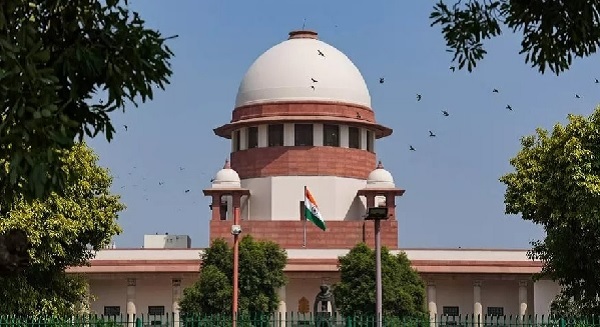
Dr. G. Srinivasan Vs Union of India & Ors. (Supreme Court of India)
Probationer’s Discharge Is Not Always Punitive: Supreme Court Explains Motive–Foundation Test
Introduction
The Supreme Court, in Dr. G. Srinivasan v. Union of India & Ors., 2026 INSC 1218, decided on 16 November 2026, upheld the discharge of an Associate Professor during probation at the Indian Institute of Science, Bangalore.
The judgment explains how courts should distinguish a genuine assessment of unsuitability from punishment disguised as a simple termination. It reinforces that the decisive consideration is the substance of the decision, assessed through the record, rather than merely the wording of the termination order.
Background of the Dispute
Dr. Srinivasan was appointed as an Associate Professor at the Institute’s Centre for Earth Sciences on a five-year contractual engagement, initially subject to one year of probation.
He joined on 15 April 2011. Following an assessment by a Committee of Professors, his probation was extended for another year. A subsequently constituted committee recommended discontinuation of his services in March 2013.
The Institute issued an office memorandum dated 10 April 2013, terminating his services after one month’s notice.
Both the Single Judge and the Division Bench of the Karnataka High Court rejected his challenge. He subsequently approached the Supreme Court.
Employee Alleged Disguised Punishment
The appellant argued that the termination appeared innocuous but was punitive in substance.
According to him, complaints and disagreements involving the Centre’s Chairman influenced the assessment. He alleged that findings against him had been reached without notice or a hearing and that the decision-making process was affected by bias.
He also challenged the extension of probation and Regulation 13.5, which permitted termination during probation without assigning reasons.
The Institute maintained that the discharge followed an overall assessment of suitability rather than any determination of misconduct.
Probation Permits Assessment of Suitability
The Supreme Court explained that probation provides an employer with an opportunity to evaluate an employee’s work, competence, efficiency and suitability before deciding whether to retain the employee.
A probationer does not acquire an unconditional right to continue merely through appointment.
Where discharge results from a bona fide assessment of general unsuitability, it ordinarily constitutes termination simpliciter. A formal disciplinary inquiry is not necessary merely because the assessment includes consideration of the employee’s conduct.
However, probation cannot be used to avoid procedural safeguards where the real action is punishment for established misconduct.
Distinguishing Motive from Foundation
The Court identified the motive–foundation distinction as central to the dispute.
Complaints or adverse circumstances may prompt an employer to examine whether a probationer should continue. If the employer assesses suitability without determining guilt, those circumstances may remain the motive for discharge.
Conversely, where an employer investigates a specific allegation, concludes that misconduct occurred, and terminates employment on that basis, misconduct becomes the foundation of the action.
An apparently neutral order cannot conceal such punishment. Courts must examine whether the allegation merely triggered assessment or became the actual ground of condemnation.
When Can Courts Examine the Underlying Record?
The judgment cautions against routinely reopening an employer’s assessment of suitability.
Nevertheless, where the circumstances warrant examination, courts may look beyond the termination order to determine whether unsuitability is genuine or merely a cloak for punitive action.
This examination has a limited purpose. It does not authorise courts to reassess suitability as if they were the appointing authority.
The record must be considered as a whole, and the motive–foundation distinction cannot be applied mechanically.
Unsatisfactory Performance Does Not Automatically Imply Stigma
The Court clarified that expressions such as “unsatisfactory” or “unsuitable” do not, by themselves, make a termination stigmatic.
Stigma requires something beyond the unsuitability ordinarily implicit in discharge during probation.
The inquiry includes whether the order contains an adverse imputation and, if it appears neutral, whether the underlying material establishes misconduct as its foundation with consequences affecting future employment.
The Court also explained that the test in Pavanendra Narayan Verma v. Sanjay Gandhi PGI of Medical Sciences remains relevant but is not exhaustive. The absence of a formal inquiry cannot alone settle every case.
Why the Institute’s Decision Was Upheld
On examining the record, the Supreme Court found no material showing that a specific misconduct allegation had been investigated, proved and made the foundation of discharge.
The order attributed neither misconduct nor moral turpitude to the appellant. The decision represented an assessment of suitability during probation.
The Court rejected the challenge to Regulation 13.5 because arbitrariness or disproportionate harshness had not been demonstrated.
It also declined relief regarding probation extension, noting his continued service, failure to seek timely judicial intervention concerning his pending appeal, and subsequent events.
The appeal was accordingly dismissed.
Practical Implications
The ruling requires employers and employees to distinguish assessment from condemnation. Neutral wording cannot validate punishment imposed without due process, while complaints alone do not convert an otherwise lawful suitability assessment into disciplinary action.
Where discharge is punitive, the applicable constitutional protection, service rules and principles of natural justice must be followed. Where it genuinely reflects unsuitability, termination may stand under the governing probation provisions.
Cases Discussed
- Ajit Singh Vs State of Punjab (Supreme Court); (1983) 2 SCC 217; AY: Not Applicable. Relied upon. Explained the object of probation and the employer’s opportunity to assess competence and suitability.
- Parshotam Lal Dhingra Vs Union of India (Supreme Court); AIR 1958 SC 36; AY: Not Applicable. Referred to. Distinguished ordinary termination of probationary service from removal by way of punishment.
- Samsher Singh Vs State of Punjab (Supreme Court, Seven-Judge Bench); AIR 1974 SC 2192; AY: Not Applicable. Relied upon. Established that substance rather than form determines whether termination is punitive.
- Anoop Jaiswal Vs Government of India (Supreme Court); (1984) 2 SCC 369; AY: Not Applicable. Distinguished. Considered discharge that concealed punishment for misconduct.
- Indra Pal Gupta Vs Managing Committee, Model Inter College Thora (Supreme Court); (1984) 3 SCC 384; AY: Not Applicable. Distinguished. Addressed termination founded upon adverse findings incorporated into the employer’s decision.
- Gujarat Steel Tubes Ltd. Vs Gujarat Steel Tubes Mazdoor Sabha (Supreme Court); (1980) 2 SCC 593; AY: Not Applicable. Relied upon. Explained when misconduct constitutes the foundation rather than the motive for termination.
- Radhey Shyam Gupta Vs U.P. State Agro Industries Corporation Ltd. (Supreme Court); (1999) 2 SCC 21; AY: Not Applicable. Discussed. Addressed the distinction between allegations prompting discharge and findings supporting punishment.
- Dipti Prakash Banerjee Vs Satyendra Nath Bose National Centre for Basic Sciences (Supreme Court); (1999) 3 SCC 60; AY: Not Applicable. Relied upon. Explained motive, foundation and stigma in termination orders.
- Chandra Prakash Shahi Vs State of U.P. (Supreme Court); (2000) 5 SCC 152; AY: Not Applicable. Relied upon. Distinguished a suitability inquiry from an inquiry proving misconduct.
- Pavanendra Narayan Verma Vs Sanjay Gandhi PGI of Medical Sciences (Supreme Court); (2002) 1 SCC 520; AY: Not Applicable. Relied upon. Developed tests for identifying punitive and stigmatic termination.
- State of West Bengal Vs Tapas Roy (Supreme Court); (2006) 6 SCC 453; AY: Not Applicable. Relied upon. Clarified that unsuitability without a finding of misconduct need not amount to stigma.
- Union of India Vs Mahaveer C. Singhvi (Supreme Court); AIR 2010 SC 3493; AY: Not Applicable. Distinguished. Considered termination where the underlying circumstances revealed punitive action.
- State Bank of India Vs Palak Modi (Supreme Court); (2013) 3 SCC 607; AY: Not Applicable. Distinguished. Considered termination founded on allegations of unfair means without an opportunity to defend.
- Vijayakumaran C.P.V. Vs Central University of Kerala (Supreme Court); (2020) 12 SCC 426; AY: Not Applicable. Discussed. Applied the three-factor test where termination was held punitive and stigmatic.
FULL TEXT OF THE JUDGMENT OF THE SUPREME COURT OF INDIA
1. The exposition of Hon’ble D.A. Desai, J. (as His Lordship then was) in Ajit Singh v. the State of Punjab1 remains the authoritative statement of the genesis and object of probation in service jurisprudence. It reads:
7. When the master-servant relation was governed by the archaic law of hire and fire, the concept of probation in service jurisprudence was practically absent. With the advent of security in public service when termination or removal became more and more difficult and order of termination or removal from service became a subject-matter of judicial review, the concept of probation came to acquire a certain connotation. If a servant could not be removed by way of punishment from service unless he is given an opportunity to meet the allegations if any against him which necessitates his removal from service, rules of natural justice postulate an enquiry into the allegations and proof thereof. This developing master-servant relationship put the master on guard. In order that an incompetent or inefficient servant is not foisted upon him because the charge of incompetence or inefficiency is easy to make but difficult to prove, concept of probation was devised. To guard against errors of human judgment in selecting suitable personnel for service, the new recruit was put on test for a period before he is absorbed in service or gets a right to the post. Period of probation gave a sort of locus pententiae to the employer to observe the work, ability, efficiency, sincerity and competence of the servant and if he is found not suitable for the post, the master reserved a right to dispense with his service without anything more during or at the end of the prescribed period which is styled as period of probation. Viewed from this aspect, the courts held that termination of service of a probationer during or at the end of a period of probation will not ordinarily and by itself be a punishment because the servant so appointed has no right to continue to hold such a post any more than a servant employed on probation by a private employer is entitled to [see Parshotam Lal Dhingra v. Union of India : AIR 1958 SC 36) : 1958 SCR 828 : 1958 SCJ 217 : (1958) 1 LLJ 544]. The period of probation therefore furnishes a valuable opportunity to the master to closely observe the work of the probationer and by the time the period of probation expires to make up his mind whether to retain the servant by absorbing him in regular service or dispense with his service. Period of probation may vary from post to post or master to master. And it is not obligatory on the master to prescribe a period of probation. It is always open to the employer to employ a person without putting him on probation. Power to put the employee on probation for watching his performance and the period during which the performance is to be observed is the prerogative of the employer.
(emphasis ours)
2. The instant appeal, by special leave granted on 16th January, 2018, involves a controversy whose origin is the termination of the appellant’s probationary service by the Institute2, the second respondent. The lis has to be decided bearing in mind the above instructive passage and the other precedents in the field; also, given the fact that a judgment of affirmation is under challenge, interference would not be called for unless perversity, in some measure, is demonstrated.
3. Appellant was employed as an Associate Professor in the Institute, which is funded by the Central Government. Vide office memorandum dated 10th April, 2013, he was informed as follows:
OFFICE MEMORANDUM
The services of Dr. G. Srinivasan, Associate Professor in the Centre for Earth Sciences at the Institute is terminated w.e.f. afternoon of 9th May 2013 being the date of expiry of the notice period of one month.
Accordingly, Dr, G. Srinivasan stands automatically relieved from the duties of the Institute w.e.f 9th May, 2013 and ceases to be on the rolls of the Institute. He is required to produce No Due Certificate before the expiry of the notice period.
This issues with approval of the Competent Authority.
Registrar
4. Challenging the said memorandum, the appellant had preferred a writ petition3 before the High Court of Karnataka4. A Single Judge dismissed it on 22nd October 2013. An appeal5 carried from the order of dismissal, too, met a similar fate. The writ appeal was dismissed by an order dated 23rd November, 2013. Appellant took exception to the said order as late as in 2016 by presenting the special leave petition, out of which this appeal has arisen, at a point of time when the contractual period of five years for which he was appointed had practically expired. Ostensibly, it is only honour and reputation that the appellant can salvage and not reinstatement in service should he succeed in this appeal.
5. The factual background of the appellant’s short tenure with the Institute is this. It was pursuant to an advertisement6 for the post of Associate Professor with the Centre for Earth Science, a project backed by the Ministry of Earth Sciences, Government of India, that the appellant received a confirmation dated 6th January, 2010, sealing his appointment.
6. The terms of appointment stipulated that the appellant would be engaged on a contractual basis, with an initial contract lasting five years. The nature of employment for the first year would be on probation, and the appellant’s continuation would be subject to an assessment of his performance by the competent authority. The appointment letter recorded that the Scheme, Regulations and Bye-Laws of the Institute would govern the appointment.
7. Appellant joined the Institute on 15th April, 2011. During the period of his probation, his performance and suitability for continuation in service came to be considered by the Committee7 constituted by the Institute for the Centre for Earth Science.
8. Upon consideration of the appellant’s performance, the Committee, in its meetings held on 25th May and 5th June, 2012, recommended extension of his probation for a further period of one year. The Institute accepted the said recommendation on 27th June, 2012.
9. Upon a subsequent consideration of the appellant’s performance by a newly constituted Committee on 26th March, 2013, it was recommended that his services be discontinued.
10. The Institute acted upon the Committee’s recommendation. Vide the office memorandum of 10th April, 2013, issued in exercise of powers under Regulation 13.5 of the Institute Regulations, the appellant was discharged from service. Incidentally, the said regulation permitted a termination simpliciter without assigning of any reasons during the probationary period. What weighed against the appellant was the lack of change in his behaviour, as well as the consensus between the Committee and the third respondent, which echoed concerns regarding the appellant’s unsuitability for the Institute due to his inability to fraternise with his co-workers.
11. Thoroughly discontented with such abrupt termination of his service, the appellant invoked the writ jurisdiction of the High Court seeking quashing of the office memorandum dated 10th April, 2013, along with Regulation 13.5 of the Institute Regulations. The Single Judge, while spurning the appellant’s challenge, reasoned that the appellant’s services were terminated due to his unsuitability to render service for the Institute, and that there was no stigma attached to the termination. The Division Bench seized of the writ appeal, for similar reasons, chose not to interfere.
12. Mr Jayant Bhushan, learned senior counsel appearing for the appellant, argued that:
(a) the order of termination, though innocuous in form, is punitive in substance;
(b) appellant’s termination from service was neatly camouflaged as a simpliciter termination, whereas the concluded findings recorded against him by the Committee, without notice and hearing, driven by the bias of the third respondent, constituted the foundation for such termination;
(c) the order of termination was a culmination of repeated complaints made against the appellant by the third respondent due to their pre-existing disagreements, and the presence of the third respondent in the meeting could not have culminated in an unbiased evaluation of the appellant’s tenure by the Committee;
(d) the veil, if lifted, would show that the termination was not the outcome of a bona fide assessment of suitability during probation but a condemnation for a specific act visited without inquiry; and
(e) the third respondent, being the Chairman of the Centre for Earth Science and a member of the Committee, had influenced its recommendation and ensured that the appellant is shown the door.
13. Mr. Bhushan further contended on behalf of the appellant that the extension of his probation was contrary to Regulation 13.3 of the Institute Regulations, which initially prescribed a period of one year. According to the appellant, any extension of probation was required to be supported by reasons and was not permissible in the manner adopted by the Institute. It was also his contention that the appellant’s pending appeal against the extension of probation was not duly considered before the impugned office memorandum came to be issued.
14. Mr. Bhushan also highlighted that the appellant had challenged Regulation 13.5, which allows the discharge of a probationary employee without assigning any reasons, as arbitrary.
15. In support of the appellant’s claim that the Institute gave him an extremely raw deal, Mr. Bhushan placed reliance on the decisions of this Court in Samsher Singh v. State of Punjab8, Anoop Jaiswal v. Government of India9, Indra Pal Gupta v. Managing Committee, Model Inter College Thora10, Union of India v. Mahaveer C. Singhvi11 and State Bank of India v. Palak Modi12. As per Mr. Bhushan, these decisions are all instances where no stigma was recorded in the termination order; yet, the termination was set aside as punitive as the reasons for the misconduct/termination were recorded behind the probationer’s back.
16. Mr. S. S. Ramdas, learned senior counsel appearing on behalf of the Institute, vehemently opposed the appellant’s contentions and contended that termination of the appellant’s employment was indeed a simpliciter termination. According to him, if an order of termination is a fallout of unsatisfactory service evaluated on the basis of overall performance, such an order need not assign any reason as there is no stigma attached to it, and will be classified as a simpliciter termination. The discharge of the appellant, as per Mr. Ramdas, was based on numerous factors deliberated by the Committee, including his conduct.
17. Mr. Ramdas further argued that it is entirely within the employer’s domain to assess the performance of a probationary officer during probation. An overall assessment of work would include the conduct of such an officer. Such assessment and consequent termination of service is not amenable to a challenge under Article 226 of the Constitution13.
18. Reliance has been placed by Mr. Ramdas on the decision of this Court in State of West Bengal v. Tapas Roy14 to support the contention that if no moral turpitude or misconduct is alleged in the order of termination, it cannot be deemed stigmatic. A reference was made to the decision in Deepti Prakash Banerjee v. Satyendranath Bose National Centre for Medical Sciences15 to demonstrate that where no enquiry is conducted against an employee and the employer wishes to discontinue the services of an employee against whom there exists a complaint, a simple order of termination would not be stigmatic, as such a complaint constitutes the motive and not the basis for termination. The recommendations of the Committee, in the present case, were only a motive and not the entire basis for the appellant’s termination, according to Mr. Ramdas. Since no enquiry was initiated against the appellant, the termination cannot be branded as stigmatic.
19. Mr. Shanthkumar Mahale, learned senior counsel appearing for the third respondent, supported the decision of the Institute and submitted that the appellant’s services were discontinued following an assessment of his suitability during the period of probation. He denied the allegations of bias attributed to the third respondent and submitted that the decision was an institutional assessment of the appellant’s suitability for continuation in service.
20. It was, accordingly, submitted on behalf of the third respondent that the decision to discontinue the appellant’s services was neither founded upon any charge of misconduct nor intended to impose any punishment, but was an exercise of the power available to the Institute under its Regulations governing probationary employment.
21. Having heard the arguments that were advanced, we now embark on analysing the appellant’s claim in light of the materials on record.
22. The questions to be answered are whether the appellant’s termination was simple or punitive, and whether the High Court rightly declined to interfere with the order of discharge.
23. The facts of this appeal present a classic motive-versus-foundation test. There is a plethora of authoritative pronouncements of this Court on the said topic, and we need to be guided by the essence thereof. An attempt to ascertain how the law has developed would seem to be apposite.
24. In Samsher Singh (supra), a 7-Judge Bench of this Court held that, in deciding whether, in a given case, a termination was by way of punishment or not, the Court should look to the substance of the matter and not the form. It was inter alia observed as follows:
64. Before a probationer is confirmed the authority concerned is under an obligation to consider whether the work of the probationer is satisfactory or whether he is suitable for the post. In the absence of any rules governing a probationer in this respect the authority may come to the conclusion that on account of inadequacy for the job or for any temperamental or other object not involving moral turpitude the probationer is unsuitable for the job and hence must be discharged. No punishment is involved in this. The authority may in some cases be of the view that the conduct of the probationer may result in dismissal or removal on an inquiry. But in those cases the authority may not hold an inquiry and may simply discharge the probationer with a view to giving him a chance to make good in other walks of life without a stigma at the time of termination of probation. If, on the other hand, the probationer is faced with an enquiry on charges of misconduct or inefficiency or corruption, and if his services are terminated without following the provisions of Article 311(2) he can claim protection. In Gopi Kishore Prasad v. Union of India [AIR 1960 SC 689 : (1960) 2 SCR 982 : (1960) 1 Lab LJ 262] it was said that if the Government proceeded against the probationer in the direct way without casting any aspersion on his honesty or competence, his discharge would not have the effect of removal by way of punishment. Instead of taking the easy course, the Government chose the more difficult one of starting proceedings against him and branding him as a dishonest and incompetent officer.
***
66. If the facts and circumstances of the case indicate that the substance of the order is that the termination is by way of punishment then a probationer is entitled to attract Article 311. The substance of the order, and not the form, would be decisive.
(emphasis ours)
25. The question of whether, in a given case, the termination was by way of punishment or not was once again extensively reviewed by this Court in Dipti Prakash Banerjee (supra). It is an authority in which almost all precedents on the point were considered, and the principles laid down in Radhey Shyam Gupta v. U.P. State Agro Industries Corporation Ltd.16 were reiterated.
26. One does find in Dipti Prakash Banerjee (supra) reference to the decision of Hon’ble V.R. Krishna Iyer, J. (as His Lordship then was) in Gujarat Steel Tubes Ltd. v. Gujarat Steel Tubes Mazdoor Sabha17.
As to “foundation”, it was said: (SCC p. 617, para 53)
“[A] termination effected because the master is satisfied of the misconduct and of the consequent desirability of terminating the service of the delinquent servant, is a dismissal, even if he had the right in law to terminate with an innocent order under the standing order or otherwise. Whether, in such a case, the grounds are recorded in different proceedings from the formal order, does not detract from its nature. Nor the fact that, after being satisfied of the guilt, the master abandons the enquiry and proceeds to terminate. Given an alleged misconduct and a live nexus between it and the termination of service, the conclusion is dismissal, even if full benefits as on simple termination, are given and non-injurious terminology is used.”
(emphasis supplied in original)
and as to motive: (SCC pp. 617-18, para 54)
“54. On the contrary, even if there is suspicion of misconduct, the master may say that he does not wish to bother about it and may not go into his guilt but may feel like not keeping a man he is not happy with. He may not like to investigate nor take the risk of continuing a dubious servant. Then it is not dismissal but termination simpliciter, if no injurious record of reasons or punitive cut-back on his full terminal benefits is found. For, in fact, misconduct is not then the moving factor in the discharge.”
(emphasis supplied in original)
27. Paragraph 21 of Dipti Prakash Banerjee (supra) summarises what would amount to ‘motive’ and what would constitute ‘foundation’ by ruling as follows:
21. If findings were arrived at in an enquiry as to misconduct, behind the back of the officer or without a regular departmental enquiry, the simple order of termination is to be treated as “founded” on the allegations and will be bad. But if the enquiry was not held, no findings were arrived at and the employer was not inclined to conduct an enquiry but, at the same time, he did not want to continue the employee against whom there were complaints, it would only be a case of motive and the order would not be bad. Similar is the position if the employer did not want to enquire into the truth of the allegations because of delay in regular departmental proceedings or he was doubtful about securing adequate evidence. In such a circumstance, the allegations would be a motive and not the foundation and the simple order of termination would be valid.
28. It was also pointed out in Dipti Prakash Banerjee (supra) that stigma might be inferred from the references quoted in the termination order although the order itself might not contain anything offensive.
29. A profitable reference may further be made to the decision of this Court in Chandra Prakash Shahi v. State of U.P.18, which followed close on the heels of Dipti Prakash Banerjee (supra). There, this Court delineated the concepts of ‘foundation’ and ‘motive’ while adjudicating whether the termination of a probationary employee is stigmatic in the following words:
28. The important principles which are deducible on the concept of “motive” and “foundation”, concerning a probationer, are that a probationer has no right to hold the post and his services can be terminated at any time during or at the end of the period of probation on account of general unsuitability for the post in question. If for the determination of suitability of the probationer for the post in question or for his further retention in service or for confirmation, an inquiry is held and it is on the basis of that inquiry that a decision is taken to terminate his service, the order will not be punitive in nature. But, if there are allegations of misconduct and an inquiry is held to find out the truth of that misconduct and an order terminating the service is passed based on that inquiry, the order would be punitive in nature as the inquiry was held not for assessing the general suitability of the employee for the post in question, but to find out the truth of allegations of misconduct against that employee. In this situation, the order would be founded on misconduct, and it will not be a mere matter of “motive”.
29. “Motive” is the moving power which impels action for a definite result, or to put it differently, “motive” is that which incites or stimulates a person to do an act. An order terminating the services of an employee is an act done by the employer. What is that factor which impelled the employer to take this action? If it was the factor of general unsuitability of the employee for the post held by him, the action would be upheld in law. If, however, there were allegations of serious misconduct against the employee and a preliminary inquiry is held behind his back to ascertain the truth of those allegations and a termination order is passed thereafter, the order, having regard to other circumstances, would be founded on the allegations of misconduct which were found to be true in the preliminary inquiry.
(emphasis ours)
30. In Pavanendra Narayan Verma v. Sanjay Gandhi PGI of Medical Sciences19, a coordinate Bench of this Court, speaking through Hon’ble Ruma Pal, J. (as Her Ladyship then was), indicated the judicial mechanism for determining whether the termination of a probationer’s service was punitive or not. It was held that the judicial review authority should first apply the form test to see whether the order is stigmatic; and, if the order survives such test, then the test of substance should be applied. One of the judicially developed tests for determining whether an order of termination is punitive or not was also referred to therein. We can do no better than quote the relevant passages hereunder:
21. One of the judicially evolved tests to determine whether in substance, an order of termination is punitive is to see whether prior to the termination there was (a) a full-scale formal enquiry (b) into allegations involving moral turpitude or misconduct which (c) culminated in a finding of guilt. If all three factors are present the termination has been held to be punitive irrespective of the form of the termination order. Conversely if any one of the three factors is missing, the termination has been upheld.
***
28. Therefore, whenever a probationer challenges his termination the court’s first task will be to apply the test of stigma or the “form” test. If the order survives this examination the “substance” of the termination will have to be found out.
29. Before considering the facts of the case before us one further, seemingly intractable, area relating to the first test needs to be cleared viz. what language in a termination order would amount to a stigma? Generally speaking when a probationer’s appointment is terminated it means that the probationer is unfit for the job, whether by reason of misconduct or ineptitude, whatever the language used in the termination order may be. Although strictly speaking, the stigma is implicit in the termination, a simple termination is not stigmatic. A termination order which explicitly states what is implicit in every order of termination of a probationer’s appointment, is also not stigmatic. The decisions cited by the parties and noted by us earlier, also do not hold so. In order to amount to a stigma, the order must be in a language which imputes something over and above mere unsuitability for the job.
(emphasis ours)
31. Pavanendra Narayan Verma (supra) was later considered by a 3-Judge Bench in Tapas Roy (supra). Applying the law laid down therein, this Court held:
7. The order of discharge has, as we have already indicated, set out several instances of the respondent absenting himself unauthorisedly from the training centre. These facts have been relied upon for the purpose of concluding that the respondent was not interested in the training and had no respect for discipline. This conclusion was a ground for holding that the respondent was unsuitable for the Police Department.
8. The High Court was of the view that Rule 10 of the Rules did not apply to orders which were stigmatic. As has already been held by this Court in Pavanendra Narayan Verma v. Sanjay Gandhi PGI of Medical Sciences that in order to constitute a stigmatic order necessitating a formal inquiry, it would have to be seen whether prior to the passing of the order, there was an inquiry into the allegations involving moral turpitude or misconduct so that the order of discharge was really a finding of guilt. If any of these three factors are absent, the order would not be punitive. We have also held that stigma in the wider sense of the word is implicit in every order of termination during probation. It is only when there is something more than imputing unsuitability for the post in question, that the order may be considered to be stigmatic. In our view, the language, quoted earlier in the discharge order, cannot be said to be stigmatic as it neither alleges any moral turpitude or misconduct on the part of the respondent nor was there an inquiry as such preceding the order of discharge. The order has been passed strictly in terms of Rule 10 of the Rules. We are, accordingly, of the view that the appeal must be allowed. It is, accordingly, allowed and the impugned order is set aside.
(emphasis ours)
32. The test evolved through precedents and, as crystallised in paragraph 21 of Pavanendra Narayan Verma (supra), extracted above, again arose for consideration of a 3-Judge Bench in Vijayakumaran C.P.V. v. Central University of Kerala20. After quoting paragraph 21 and drawing guidance from it, this is what the Bench held:
11. In the present case, all the three elements are attracted, as a result of which it must follow that the stated order is ex facie stigmatic and punitive. Such an order could be issued only after subjecting the incumbent to a regular inquiry as per the service rules. As a matter of fact, the Internal Complaints Committee had recommended to proceed against the appellant appropriately but the Executive Council proceeded under the mistaken belief that in terms of Clause 7 of the contract, it was open to the Executive Council to terminate the services of the appellant without a formal regular inquiry as per the service rules.
33. At this juncture, it would also be appropriate to consider the decisions cited by Mr. Bhushan.
34. A 3-Judge bench in Indra Pal Gupta (supra) interfered with the order of termination of probationary service observing that:
10. It is seen from the letter dated June 30, 1969 by which the services of the appellant were terminated that the resolution of the Managing Committee dated April 27, 1969 is made a part of it by treating it as an enclosure to that letter. The resolution actually begins with a reference to the report of the Manager, and states that the facts contained in the report were “serious” and “not in the interests of the institution”. It further refers to the fact that the appellant was asked to give his explanation to the allegations made in the said report. That report stated:
“It is also evident that the seriousness of the lapses is enough to justify dismissal but no educational institution should take that botheration.”
11. The above report was the real foundation on which the decision of the Managing Committee was based. This is a case where the order of termination issued is merely a camouflage for an order imposing the penalty of termination of service on the ground of misconduct.
35. In Anoop Jaiswal (supra), the allegation against the appellant/probationer was that he had instigated other probationers to reach late for physical training at the gymnasium in a Police Academy. Without holding any inquiry, the appellant/probationer was discharged from service. The termination order recorded that the Government was satisfied he was unsuitable for service. In the course of hearing before a coordinate Bench, the Government indicated that it was not averse to reinstating him in service. Even then, the Court examined the records in detail and, taking into account all the attendant circumstances, recorded its satisfaction that the Director of the Academy wished to make the case of the appellant/probationer an example for others, including those other probationers who were similarly situated, so that they may learn a lesson therefrom, and this provided the foundation for the order of discharge. The coordinate Bench held that where the form of the order is merely a camouflage for an order of dismissal for misconduct, it is always open to the court before which the order is challenged to go behind the form and ascertain the true character of the order. If the court holds that the order, though in the form, is merely a determination of employment, is in reality a cloak for an order of punishment, the court would not be debarred, merely because of the form of the order, in giving effect to the rights conferred by law upon the employee.
36. Mahaveer C. Singhvi (supra) also happens to be a 3-Judge Bench decision. The probationer, therein, was employed with the Ministry of External Affairs in its overseas divisions. The probationer had protested the non-allotment of his preferred choice of language, in deviation from the established procedure, and an inquiry had been initiated against him. Though the probationer found no adverse findings recorded against him in the inquiry, his service was terminated nevertheless, leading to the challenge. This Court attributed the basis for this termination to communications by a Joint Secretary against the probationer. The Court, thus, held the discharge to be punitive in character, which was motivated by considerations not reflected in the impugned order.
37. In Palak Modi (supra), a coordinate Bench reiterated that a probationer has no right to hold the post and his service can be terminated at any time during or at the end of the period of probation on account of general unsuitability for the post held by him. It was further held that if the competent authority holds an inquiry for judging the suitability of the probationer or for his further continuance in service or for confirmation and such inquiry is the basis for deciding to terminate his service, then the action of the competent authority cannot be castigated as punitive; however, if the allegation of misconduct constitutes the foundation of the action taken, the ultimate decision taken by the competent authority can be nullified on the ground of violation of the rules of natural justice. On facts, the Court found that the foundation of the action taken by the General Manager was the accusation that while appearing in the objective test, the private respondents had resorted to committee-eyeing. IBPS had relied on the computer’s analysis and sent a report to the Bank stating that 18 candidates were suspected of having used unfair means. The authority concerned then sent for the seating arrangement chart and treated it as evidence to conclude that the private respondents had indeed used unfair means in the examination. This exercise was not preceded by an inquiry involving the private respondents, and no opportunity was given to them to defend themselves against the charge of use of unfair means. In other words, they were condemned unheard, which, in the considered view of the Court, was legally impermissible.
38. Considering that this appeal raises a recurring question in service jurisprudence – whether an order discharging a probationer is punitive or simple – it is considered useful to delineate the framework within which such question should be decided.
39. Our understanding of the principles, exposited by this Court to identify whether a termination is punitive or simple, would guide us in answering the aforesaid question. After providing the answer, we propose to examine the challenge laid by the appellant to his discharge from service, to the extent it is considered appropriate, in view of what we have noted in the concluding part of paragraph 4 above.
40. While examining an order discharging a probationer, when challenged on the ground that it is punitive, the inquiry of the court ought to be structured around the following parameters:
a. Object and purpose of probation — At the beginning of our judgment, we referred to Ajit Singh (supra). The said decision clarifies the objective behind probationary employment and the purpose it seeks to serve. Probation is a period of trial to assess an employee’s suitability. Such a period is meant to give time and afford the employer an opportunity to assess the suitability of an employee vis-à-vis the post to which he is appointed. This enables the employer to decide on the retention of the employee assessed to be suitable by confirming him in service, while weeding out any undesirable employee by ordering his discharge without holding a formal inquiry, should his credentials and performance at the time of appointment prove to be deceptive.
b. The contours and limits of veil lifting — Since weeding out an undesirable employee for unsuitability ordinarily carries with it no stigma, lifting of the veil to look into the background file is neither necessary nor permissible. However, should the facts of a particular case so warrant, it would be permissible to lift the veil to examine the true nature of the order only within the circumscribed limits necessary to ascertain whether the alleged unsuitability is the real ground or merely a cloak for a punitive action founded on a specific misconduct, but not to re-appreciate suitability.
c. The motive-foundation test as a substantive, and not a mechanical, inquiry — The distinction between ‘motive’ and ‘foundation’, however, does not admit of a purely mechanical application. The motive-foundation distinction has to turn on the substance of the record as a whole, and not merely the form of the order; and, therefore, necessarily involves a measure of judicial assessment of whether ‘misconduct’ was the ‘motive’ or the ‘foundation’. This requires a reading of the entire record, and in that reading some element of a Judge’s individual perception as to what is ‘motive’ and what constitutes ‘foundation’ inevitably enters – what to one mind appears as the mere occasion for examining the probationer’s suitability may appear to another as the very foundation of the order. The Court must, therefore, not look merely at the words of the order or the language employed therein, but at whether any alleged misconduct was the trigger for it or the ground of condemnation itself.
d. Demarcating stigma from mere administrative assessment — It cannot be gainsaid that termination of a probationer’s service by ordering his discharge by an ostensibly innocuous/non-stigmatic order, whatever the language used, imports an element of unsuitability either on account of ineptitude or misconduct or moral turpitude or otherwise. However, the implicit unsuitability, even if explicit in the termination order, does not make it stigmatic, thereby converting a simple termination into a punitive order. Mere use of a word like ‘unsatisfactory’ or ‘unsuitable’ does not amount to stigma. The taint of stigma gains traction where the order imputes something over and above mere unsuitability for the job. To separate the grain from the chaff, three questions in sequence need to be answered. First, does the order on its face, carry any imputation against the probationer? Second, if the order is innocuous on its face, does the material placed disclose that the foundation thereof is a finding of misconduct and not a mere assessment of suitability? Third, does that foundation, in substance, visit the probationer with civil consequences likely to affect his prospects of future employment? Only if the answers to both the second and third questions are in the affirmative does the taint of stigma gain traction. A grievance, a complaint, or an adverse perception, without more, remains chaff.
e. The scope and bounds of the Pavanendra test — it is the aforesaid three-stage filter to discern stigma that Pavanendra Narayan Verma (supra) must be understood to embody. Notably, the test laid down in paragraph 21 thereof has neither been overruled nor doubted in any subsequent decision of this Court. It continues to be applied as one of the judicially evolved tests to determine whether, in substance, an order of termination is punitive. Since the test is stated to be “one” of the judicially evolved tests, it is not exhaustive and is to be read along with the stigma test in paragraph 29 of the same judgment and the object of inquiry test.
f. The final inquiry — The inquiry, therefore, is not whether the order is innocuous in form but whether, on a fair reading of the record as a whole, the termination was the outcome of a bona fide assessment of suitability, or a punishment for a specific act visited without the protection of an inquiry. If it is the former, the order must stand as termination simpliciter; if the latter, it cannot survive without compliance with due process – where Article 311(2) of the Constitution applies, by an inquiry thereunder, and in other cases, by an inquiry in accordance with the applicable service rules and the principles of natural justice.
41. Having delineated the parameters, at this juncture, we consider it appropriate to observe that since the issue in the present appeal is now essentially academic, a detailed reference to and/or discussion of the underlying factual allegations is neither necessary for determination nor warranted in the circumstances of the case. Any elaboration of such facts, particularly observations touching upon the appellant’s conduct, might affect his future prospects. We, therefore, propose to refer only to such facts as are strictly necessary to decide the controversy.
42. In light of the observations in Samsher Singh (supra), it is considered apt to refer to the rules governing the procedure for terminating probationary employment framed by the Institute. In its counter affidavit, the Institute has referred to Regulations 13.3 and 13.5, which are reproduced hereunder:
13.3 It shall be open to the Appointing Authorities to offer appointments under one of the following alternatives.
(a) On contract for a period up to five years in the first instance, which shall include a period of probation of one year in cases of both teaching and non-teaching staff; or
(b) xxxxxxx
It shall be open to the Appointing Authority to extend the period of probation of a member of the staff from time to time or permit waiver, if it considers it necessary.
13.5 All appointments shall be terminable on a notice in writing on either side without assigning any reasons. The duration of the period shall be:
(a) During the period of probation: one month
(b) After the period of probation:
for Teaching Staff: not less than six months
for those other than Teaching Staff: terminating on the last day of a term of six months.
43. A perusal of the extant regulations establishes that the Institute reserved unto itself the power to terminate the employment of a probationary employee without assigning reasons. In exercise of such power, the impugned office memorandum was issued without assigning any reasons. We, therefore, see no reason to hold that the extant regulations were breached in discharging the appellant.
44. Regulation 13.5 has, however, been subjected to challenge by the appellant. He has not shown how the relevant regulation is arbitrary or disproportionately harsh in its operation. A probationer, given the very object and purpose of probation as spelt out in Ajit Singh (supra), cannot urge that reason(s) should be assigned in every case of discharge. The challenge, in our opinion, is absolutely misconceived and stands rejected.
45. The distinction between ‘motive’ and ‘foundation’, as explained in Deepti Prakash Banerjee (supra) and Chandra Prakash Shahi (supra), is decisive in the present case. The mere existence of circumstances which may have occasioned an assessment of the appellant’s suitability would not, by itself, convert an otherwise innocuous order of termination into one founded upon misconduct. On an examination of the record, we find no material to establish that any specific allegation of misconduct was investigated and found proved against the appellant, or that such a finding constituted the foundation of the order of termination. The decision of the Institute not to retain the appellant in service followed an assessment of suitability during probation and was not an order imposing punishment disguised as a simple termination.
46. Appellant next contends that the order of termination, though innocuous in form, is stigmatic in substance. We are unable to accept this contention. Applying the test laid down in Pavanendra Narayan Verma (supra), we find that there was no full-scale formal enquiry into allegations of misconduct culminating in a finding of guilt against the appellant. The termination order does not attribute any misconduct or moral turpitude to him. The essential requirements for treating the order as punitive are, therefore, not satisfied.
47. Even otherwise, applying the three-stage filter test, no stigma can be said to have been cast on the appellant. Any decision to discharge a probationer, and not confirm him in service, cannot be at the whims and caprices of the appointing authority; deliberations must precede it. It is usual in such a case for the appointing authority to form an opinion based on available records. The material available in such records qua the probationer’s conduct, if found to be serious, could lead to two courses of action. It could trigger an inquiry into the probationer’s conduct; alternatively, the appointing authority may choose not to proceed with an inquiry and simply discharge the probationer. It is the second alternative that the Institute pursued without bearing on the appellant civil consequences. We see no error, much less glaring error, in such an action.
48. Appellant has also questioned the fairness of the decision-making process and alleged bias in the assessment undertaken by the Institute. We have examined the relevant records in this regard. However, nothing therein persuades us to conclude that the decision to discontinue the appellant’s services was founded upon any specific charge of misconduct or was intended to visit him with a punishment. The material on record, viewed as a whole, indicates that the Institute assessed the appellant’s suitability for continuation in service during the probationary period.
49. In view of the aforesaid discussion, we are satisfied that the Institute exercised its power under the applicable regulations to discontinue the services of the appellant during the period of probation. The material on record does not establish that the order, though expressed in innocuous terms, was in substance founded upon any charge of misconduct. The order of discharge, therefore, cannot be characterised as punitive.
50. Insofar as the contention that the appellant could not have been continued on probation beyond the period of one year is concerned, we find it to be equally unmeritorious. Although an appeal was stated to have been filed by the appellant challenging such extension and no decision was given thereon, the appellant accepted the extension of the probationary period and continued to discharge his duties. It does not appear that he approached any court alleging a failure/neglect by the appellate authority to consider the appeal and seeking an expedited decision on such appeal. In such circumstances, and particularly having regard to the subsequent event of discharge and the belated presentation of the special leave petition, the appellant is not entitled to any relief on this score.
51. The impugned decision of the Institute, being one of termination simpliciter during the probationary period, does not warrant interference. The concurrent findings of the Single Judge and the Division Bench of the High Court also suffer from no infirmity and deserve to be upheld.
52. Finally, reverting to the decisions on which Mr. Bhushan placed reliance, we say that the same were rendered on completely different set of facts and, thus, are distinguishable; hence, the same too cannot come to the aid of the appellant.
53. The appeal is devoid of merit; consequently, the same stands dismissed.
54. Pending application(s), if any, shall stand disposed of.
55. Parties shall, however, bear their own costs.
Notes:
1 (1983) 2 SCC 217
2 Indian Institute of Science, Bangalore
3 Writ Petition No. 20022/2013
4 High Court
5 Writ Appeal No. 6539/2013 (S-DIS)
6 Advt. No. 5/2009
7 Committee of Professors
8 AIR 1974 SC 2192
9 (1984) 2 SCC 369
10 (1984) 3 SCC 384
11 AIR 2010 SC 3493
12 (2013) 3 SCC 607
13 the Constitution of India, 1950
14 (2006) 6 SCC 453
15 (1999) 3 SCC 60
16 (1999) 2 SCC 21
17 (1980) 2 SCC 593
18 (2000) 5 SCC 152
19 (2002) 1 SCC 520
20 (2020) 12 SCC 426