PoSH in Focus: From Statutory Compliance to Institutional Accountability — The Growing Role of Government, Judiciary and the NCW
Summary: India’s workplace sexual harassment compliance framework is undergoing a significant shift from procedural compliance to effective implementation, institutional accountability and measurable workplace safety. The Sexual Harassment of Women at Workplace (Prevention, Prohibition and Redressal) Act, 2013 (PoSH Act), requires employers to establish appropriate complaint mechanisms, constitute Internal Committees, conduct awareness programmes and ensure fair and confidential inquiries. The Supreme Court’s directions in Aureliano Fernandes v. State of Goa have strengthened nationwide implementation by emphasising properly constituted Internal and Local Committees, appointment of District Officers and effective administrative monitoring. The Central Government’s revamped SHe-Box portal has improved digital accessibility, complaint registration and institutional reporting, with over 1.61 lakh workplaces onboarded as of March 2026. Further, the National Commission for Women’s advisory dated 19 June 2026 recommends annual PoSH audits, state-level monitoring mechanisms, specialised training, stronger district-level accountability and improved confidentiality safeguards. These developments highlight the need for organisations to move beyond merely adopting policies and forming committees towards ensuring their functional effectiveness. Employers should regularly review committee composition, employee awareness, complaint procedures, statutory timelines, annual reporting, protection against retaliation and implementation of recommendations. Although the NCW’s audit recommendations do not independently create a mandatory nationwide statutory audit requirement, they reinforce the growing emphasis on evidence-based compliance. Effective PoSH implementation is therefore essential not only for meeting legal obligations and avoiding penalties under Section 26 but also for strengthening employee confidence, organisational governance, workplace dignity and long-term risk management.
- Introduction: A Changing Approach to Workplace Safety
- 1. The Legal Foundation: Beyond the Constitution of an Internal Committee
- 2. The Supreme Court: Moving Implementation from Paper to Practice
- Aureliano Fernandes v. State of Goa and Others
- 3. Central Government: SHe-Box and Digital Accountability
- The scale of digital implementation
- 4. National Commission for Women: The Emerging Emphasiz on PoSH Audits
- 5. State Governments and District Administrations: Last-Mile Implementation
- Why district-level implementation matters
- 6. The Impact on Organizations: What Must Change?
- 1. From policy compliance to functional compliance
- 2. From annual training to continuous sensitisation
- 3. From reactive grievance handling to preventive governance
- 4. From documentation to measurable accountability
- 5. From fragmented compliance to integrated governance
- 7. The Business Case: Why Effective PoSH Compliance Matters
- 8. A Practical PoSH Readiness Checklist for Employers
- Conclusion: The Next Phase of PoSH Is About Accountability
Introduction: A Changing Approach to Workplace Safety
Workplace sexual harassment is not merely an issue of individual misconduct. It is closely connected with dignity, equality, organizational governance and the fundamental right to work in a safe environment.
India’s Sexual Harassment of Women at Workplace (Prevention, Prohibition and Redressal) Act, 2013 (PoSH Act) was enacted to establish a statutory framework for preventing sexual harassment and providing an effective mechanism for redressal. More than a decade later, the focus is increasingly shifting from the existence of policies and committees to their actual effectiveness.
Recent developments involving the Central Government, State Governments, the Supreme Court of India and the National Commission for Women (NCW) indicate a stronger emphasiz on implementation, institutional accountability, digital accessibility and monitoring.
1. The Legal Foundation: Beyond the Constitution of an Internal Committee
The PoSH Act is rooted in the principles of equality, dignity and the right to a safe working environment. It gives statutory recognition to the principles established by the Supreme Court in Vishaka v. State of Rajasthan (1997), when the Court laid down guidelines to address workplace sexual harassment in the absence of specific legislation.
The 2013 Act subsequently established a formal framework based on three pillars: prevention, prohibition and redressal.
Among its important requirements are:
- Constitution of an Internal Committee (IC) at workplaces employing ten or more employees, in accordance with Section 4.
- Establishment of Local Committees (LCs) at the district level for complaints covered by Section 6, including those from workplaces with fewer than ten workers and complaints against the employer.
- Formulation and communication of an appropriate workplace policy.
- Awareness and orientation programs for employees and training for committee members.
- Confidential and impartial handling of complaints, followed by action in accordance with the Act.
- Preparation of annual reports and compliance with applicable reporting and disclosure requirements.
Section 19 also places specific responsibilities on employers to provide a safe working environment, organize awareness programs and support the functioning of the Internal Committee.
Consequently, a formally constituted committee is only the starting point. A committee that lacks training, independence, procedural understanding or management support may satisfy a document-based checklist while failing to deliver the protection intended by the legislation.
2. The Supreme Court: Moving Implementation from Paper to Practice
One of the most significant developments in recent years has been the Supreme Court’s intervention to strengthen nationwide implementation of the PoSH Act.
Aureliano Fernandes v. State of Goa and Others
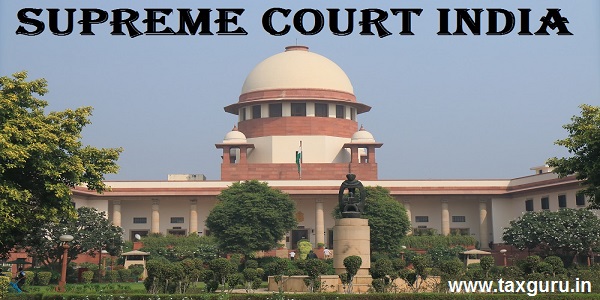
In Aureliano Fernandes v. State of Goa and Others, the Supreme Court, in its judgment dated 12 May 2023, emphasized the need for effective implementation of the PoSH framework and directed governments and relevant authorities to ensure that Internal Committees and Local Committees were properly constituted.
The Court’s subsequent directions of 3 December 2024, followed by further orders in 2025 and 2026, strengthened the implementation process.
These directions included identifying and notifying District Officers, constituting or reconstituting Local Committees, ensuring properly constituted Internal Committees in government establishments, and conducting surveys to identify workplaces where the required committees were missing. District-level implementation was also to be supported through labour administration and data uploaded to the SHe-Box portal.
The significance of this judicial intervention lies in the recognition that a statutory right is meaningful only when the institutions required to enforce it actually exist and function.
The Court’s approach also makes implementation a matter of administrative accountability rather than leaving it entirely to individual employers.
3. Central Government: SHe-Box and Digital Accountability
The Ministry of Women and Child Development (MWCD) has played a significant role in strengthening the implementation of the PoSH Act through the revamped Sexual Harassment Electronic Box, commonly known as SHe-Box.
The portal is designed to provide a centralised digital platform for accessing information about Internal and Local Committees and for submitting workplace sexual harassment complaints to the relevant committee.
It is not intended to replace the statutory inquiry mechanism. Rather, it seeks to make the existing redressal framework more accessible and improve visibility of the institutions responsible for handling complaints.
The scale of digital implementation
According to information provided by the Ministry in Parliament and published by the Press Information Bureau on 1 April 2026, as of 27 March 2026:
- More than 161,000 workplaces employing over ten persons had been onboarded on SHe-Box.
- Details of more than 68,460 Internal Committees had been updated.
- Details of 777 Local Committees were available on the portal.
These figures demonstrate the growing scale of the digital initiative. However, the difference between the number of onboarded workplaces and the number of Internal Committee records updated also highlights the continuing need for complete and accurate institutional data.
The Ministry has further reported that SHe-Box has been integrated with the Mission Shakti mobile application and offers multilingual support in 23 languages.
The initiative also involves coordination with departments and institutions such as the Ministry of Corporate Affairs, the Ministry of Labour and Employment, educational and professional bodies, and the National Legal Services Authority.
4. National Commission for Women: The Emerging Emphasiz on PoSH Audits
The National Commission for Women has an important role in promoting women’s rights, addressing grievances and advancing awareness of workplace safety.
An important development came on 19 June 2026, when the NCW issued an advisory to States and Union Territories recommending stronger measures for implementation of the PoSH Act.
The advisory called for measures including:
- Annual PoSH audits: Recommended for establishments employing ten or more persons, covering statutory compliance, committee functioning, complaints, confidentiality safeguards, awareness initiatives and use of SHe-Box.
- State-level monitoring mechanisms: Dedicated monitoring cells or digital dashboards to track implementation and facilitate periodic reviews.
- Properly constituted Internal Committees: Attention to statutory composition, including the Presiding Officer, members and external member, as well as the requirement for at least half of the committee members to be women.
- Effective Local Committees: Strengthening district-level mechanisms, particularly for women in smaller establishments and the unorganized sector.
- District-level accountability: Appointment of District Officers and facilitation of access through appropriate local-level nodal arrangements.
- Awareness and specialised training: Improving the capacity of committee members and employees to understand the law, conduct inquiries and access available remedies.
- Transparency and confidentiality: Improving awareness of complaint mechanisms while safeguarding the identities and information of persons involved in proceedings.
The broader implication is a shift from compliance by declaration to compliance supported by evidence.
5. State Governments and District Administrations: Last-Mile Implementation
While the Central Government provides national-level coordination and the Supreme Court has reinforced implementation, State Governments and district administrations play a critical role in making the PoSH framework accessible on the ground.
Sections 5 and 6 of the Act provide for the appointment of District Officers and the constitution of Local Committees. Section 6 also provides for nodal officers to facilitate the forwarding of complaints to the Local Committee.
These mechanisms are particularly important for women working in small establishments, domestic work, informal employment and workplaces where an Internal Committee is not required or where the complaint falls within the Local Committee’s jurisdiction.
Recent implementation efforts also demonstrate how state-level monitoring can become more operational.
Why district-level implementation matters
A law may be comprehensive on paper, but its practical effectiveness depends on whether a woman can identify the appropriate committee, access a complaint mechanism and obtain assistance without unnecessary delay.
District administrations can help close this gap by maintaining accurate public information, ensuring that Local Committees are constituted and functional, supporting awareness initiatives and coordinating with relevant departments.
For employers operating across multiple states, this also means that a central PoSH policy should be accompanied by a location-wise compliance review. Local reporting procedures, District Officer details, applicable directions and committee arrangements should be verified for each relevant establishment.
6. The Impact on Organizations: What Must Change?
The cumulative effect of judicial directions, government initiatives, digital monitoring and the NCW’s advisory is a more demanding standard of organizational accountability.
Five areas deserve particular attention.
1. From policy compliance to functional compliance
A policy document is necessary, but it cannot demonstrate that employees understand their rights or that the Internal Committee can discharge its responsibilities.
Employers should periodically assess whether their policy is communicated effectively, the committee is properly constituted, members understand the law and employees know how to raise a concern.
2. From annual training to continuous sensitisation
A single awareness session may satisfy an internal calendar without necessarily changing workplace behaviour.
Training should be designed for different audiences: employees, managers, HR teams, committee members, senior leadership and contractual or other workplace personnel, as relevant.
Committee members require specialised capacity building in procedural fairness, evidence assessment, natural justice, confidentiality and the statutory timelines governing inquiries.
3. From reactive grievance handling to preventive governance
An effective PoSH framework should not begin only after a complaint is received.
Organizations should assess workplace culture, supervisory conduct, power imbalances, reporting barriers and the risk of retaliation. Exit feedback, employee surveys and appropriately designed culture assessments may help identify concerns that formal complaint numbers alone cannot reveal.
A low number of complaints should not automatically be interpreted as proof of a safe workplace. It may reflect a healthy environment, but it may also indicate a lack of awareness or confidence in the reporting mechanism.
4. From documentation to measurable accountability
HR and compliance teams should maintain a reliable record of statutory obligations, training, committee appointments, annual reporting, complaint status and implementation of recommendations.
Senior management should receive appropriate, confidentiality-protected information about compliance gaps, training coverage and corrective actions. Individual complaint details should be shared only with those who have a legitimate need to know.
This enables the board and management to exercise oversight without compromising the privacy or dignity of the persons involved.
5. From fragmented compliance to integrated governance
PoSH should be integrated with HR governance, ethics, workplace conduct, employee grievance mechanisms and risk management—while preserving the distinct statutory process required under the Act.
The HR function, legal team, compliance department, Internal Committee and business leadership should understand their respective responsibilities. The committee must retain the independence and procedural integrity required for its work.
7. The Business Case: Why Effective PoSH Compliance Matters
The impact of a well-functioning PoSH framework extends beyond avoiding statutory penalties.
First, it helps employees feel safer in raising concerns and participating in workplace life. Second, it supports organizational trust and can reduce the risk of unresolved grievances escalating into prolonged disputes. Third, it strengthens governance by demonstrating that the organization takes its legal responsibilities seriously.
Conversely, ineffective implementation can expose an employer to legal proceedings, reputational damage, employee disengagement and the consequences of an inquiry or disciplinary process that does not meet applicable legal standards.
Section 26 of the PoSH Act provides for penalties for specified non-compliance, including failure to constitute an Internal Committee or comply with other provisions of the Act. A repeat conviction may attract enhanced consequences, including possible implications for the relevant licence or registration under the provision.
Employers must therefore understand that PoSH compliance is both a legal responsibility and a component of sound organizational risk management.
However, the objective should not be to minimise complaints or to create a perception of compliance. It should be to ensure that complaints can be raised safely, assessed fairly and addressed in accordance with the law.
8. A Practical PoSH Readiness Checklist for Employers
In light of these developments, every employer should consider the following review:
- Verify that an Internal Committee has been constituted at every establishment where required, with appointments and composition compliant with Section 4.
- Confirm the availability and jurisdiction of the relevant Local Committee and District Officer.
- Review the PoSH policy and ensure it is communicated to employees.
- Provide appropriate awareness programs and specialised training for committee members.
- Verify that committee contact details and complaint procedures are displayed and accessible.
- Ensure that inquiry procedures, statutory timelines and confidentiality requirements are followed.
- Review annual reporting obligations, applicable district-level directions and SHe-Box records.
- Track implementation of committee recommendations and any required disciplinary action.
- Assess protection against retaliation and the accessibility of complaint mechanisms.
- Conduct a periodic, evidence-based PoSH compliance review and document corrective action.
This checklist should be applied with reference to the organization’s actual structure, applicable statutory provisions and relevant government directions.
Conclusion: The Next Phase of PoSH Is About Accountability
The direction of PoSH implementation in India is becoming clearer. The Supreme Court is reinforcing institutional responsibility; the Central Government is using digital systems to improve access and monitoring; State Governments and district administrations are strengthening local implementation; and the NCW is advocating more systematic audits, oversight and capacity building.
These developments collectively encourage a shift from formal compliance towards demonstrable effectiveness.