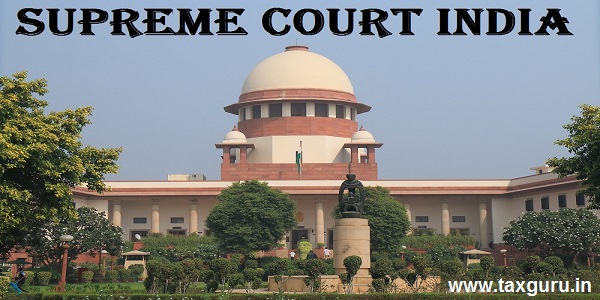
Union of India Through Its Secretary & Ors. Vs SGT Girish Kumar & Ors. (Supreme Court)
Judgments Are Not Statutes: Disability Pension Arrears Cannot Be Granted by Mechanical Reliance on a Precedent
Background: Clarification of an Earlier Disability Pension Judgment
The Union of India approached the Supreme Court seeking clarification of its common judgment dated 12 February 2026 in Civil Appeal Nos. 6820–6824 of 2018.
Under that judgment, the Court had dismissed the Union’s appeals and allowed the appeals preferred by ex-servicemen. The ex-servicemen were held entitled to disability pension, including the benefit of broad banding from 1 January 1996 or 1 January 2006, as applicable, together with interest at 6% per annum. The Union’s objections based on limitation, delay and laches had not been accepted.
The clarification application arose because the earlier judgment was being relied upon in other pension disputes, including cases which, according to the Union, differed materially from the appeals decided by the Supreme Court.
Union’s Contention: Re-Computation and Fresh Entitlement Are Different
The Union submitted that entitlement to the disability element of pension was never in dispute in the original batch of appeals. The ex-servicemen were already receiving disability pension and had sought re-computation through broad banding.
Accordingly, the earlier judgment had been delivered in a specific factual setting. It was not intended to unsettle the principles governing stale or belated pensionary claims generally.
The Union furnished particulars of 23 Air Force cases and 26 Army cases which had either been decided or were pending before the High Courts or the Armed Forces Tribunal after the common judgment.
It pointed out that, in several cases, earlier final orders restricting arrears had been complied with but were subsequently modified by relying on the February 2026 judgment. The Union argued that such mechanical application could disturb matters that had attained finality and produce administrative and financial consequences.
It therefore sought clarification that the earlier decision should not automatically extend to every pension claim, particularly where entitlement to pension itself had been disputed and was subsequently established before a court or tribunal.
Ex-Servicemen’s Response: Delay Must Be Examined in Context
Counsel for the respondents fairly accepted that the earlier judgment granted arrears from specified dates to ex-servicemen who were already receiving disability pension and sought only its re-computation.
However, he submitted that delay could not be examined independently of the Union’s own conduct.
An illustration was placed before the Court involving an ex-serviceman who retired on 31 October 2011 and lodged an appeal claiming disability pension on 30 November 2011. That appeal was decided only on 11 February 2017. The subsequent application before the Tribunal, filed on 30 April 2018, was therefore asserted to be within time.
The respondents also contended that the Union itself had approached courts belatedly and could not invariably invoke delay and laches as an equitable objection.
These submissions highlighted that an apparently delayed court proceeding may follow a prolonged departmental process. The dates and circumstances of the individual claim therefore remain relevant.
Supreme Court: Observations Must Be Read with Their Facts
The Supreme Court reiterated the settled principle that observations in a judgment must not be read as provisions of a statute. Nor can they be separated from the factual context in which they were made.
A difference in facts may materially alter the precedential value of a decision.
For this proposition, the Court referred to State of Orissa v. Sudhansu Sekhar Misra, AIR 1968 SC 647, and State of Uttar Pradesh v. Mohd. Arshad Khan, (2026) 6 SCC 383.
The Court’s approach required the earlier judgment to be applied by examining its factual foundation, rather than treating its grant of arrears as an automatic direction governing every disability pension dispute.
Clarification Granted: Each Claim Must Stand on Its Own Merits
The Supreme Court clarified that its judgment dated 12 February 2026 could not be construed as permitting disability pension with arrears to be claimed in every case merely on the strength of that decision.
It expressly stated that each claim must be decided on its own merits.
The miscellaneous application was disposed of with this clarification. The Court did not prescribe a uniform restriction on arrears, decide the individual cases listed by the Union, or withdraw the relief granted in the original appeals.
Author’s Comments
The order offers a useful reminder about the proper use of precedent. A favourable conclusion cannot be lifted from a judgment and applied without examining the issue decided, the material facts and the basis of the relief.
Here, a claim for re-computation of an existing disability pension was distinguished in the submissions from a claim in which pension entitlement itself required adjudication. That distinction may affect the relevance of the earlier ruling, but the present order does not automatically reject the latter category of claims.
Equally, the clarification does not establish that every delayed claim must fail. The respondents’ example demonstrates why the claimant’s promptness, departmental processing time and subsequent litigation history require examination.
For practitioners, the lesson extends beyond pension litigation: matching the legal proposition is only part of relying on a judgment; matching its material factual setting is equally necessary.
Cases Discussed
- State of Uttar Pradesh v. Mohd. Arshad Khan, (2026) 6 SCC 383 (Supreme Court) — Referred to in the supplied analysis concerning the principle that judicial observations must be understood in their factual context and cannot be applied mechanically to materially different disputes.
- Union of India Through Its Secretary & Ors. v. SGT Girish Kumar & Ors., 2026 SCC OnLine SC 194, Civil Appeal Nos. 6820–6824 of 2018, judgment dated 12 February 2026 (Supreme Court) — The earlier common judgment forming the subject of the present clarification application. It concerned ex-servicemen already receiving disability pension who sought re-computation through broad banding. The Supreme Court clarified that the relief granted in those appeals cannot automatically be extended to every disability pension claim involving different material facts.
- State of Orissa v. Sudhansu Sekhar Misra, AIR 1968 SC 647; (1968) 2 SCR 154 (Supreme Court) — Referred to concerning the established principle that observations in judgments must be understood in their factual setting and that the precedential value of a decision depends upon what it actually decides.
FULL TEXT OF THE SUPREME COURT JUDGMENT/ORDER
1. Delay condoned.
2. This Miscellaneous Application is filed by the Union of India, seeking clarification of the common judgment dated 12.02.2026 passed in C.A. Nos.6820- 6824 of 2018 (Union of India Through Its Secretary & Ors. v. SGT Girish Kumar & Ors.) (‘ the common judgment’) by which this Court dismissed the appeals preferred by Union of India and allowed the appeals preferred by the ex-servicemen. By the common judgment, ex-s ervicemen were held entitled to disability pension, including the benefit of broad banding w.e.f. 01.01.1996 or 01.0 1.2006, as the case may be, along with interest at the rate of 6 % per annum. The objections of the applicant founded on limitation, delay and laches were not accepted.
3. Mrs. Archana Pathak Dave, learned Additional Solicitor General 2026 INSC 1113 1 submitted that in the batch of appeals decided by this Court vide common judgment, the entitlement of Ex-Servicemen to the disability element of the pension was never in dispute. It was contended that the ex-servicemen in the aforesaid batch of appeals were already in receipt of disability pension and had merely sought its re-computation by way of broad banding. It was urged that the common judgment was rendered in the specific factual context of the appeals before this Court and was not intended to unsettle the principles governing stale or belated pensionary claims.
4. Learned Additional Solicitor General had furnished particulars of 23 cases pertaining to Air Force and 26 cases of Army which either have been decided or are pending before the High Court or the Armed Forces Tribunal (AFT) after the passing of the common judgment. It was pointed out that in several cases, the final orders passed earlier, which had restricted the benefit of arrears and were complied with by the applicant, have been modified by placing reliance on the common judgment. It was contended that the common judgment is being relied upon in cases involving pensionary claims of ex-servicemen which do not fall in the category of appeals decided by this Court. It was urged that a mechanical application of the common judgment would result in 2 administrative and financial implications and would unsettle the matters which have attained finality. It was, therefore, prayed that the common judgment be clarified and it be directed that the common judgment should not be mechanically extended to all pensionary claims where the entitlement of pension itself was in dispute and was later settled by Courts/Tribunals.
5. Mr. M.V.R. Mukunda, learned counsel for the respondents, on the other hand fairly submitted that in the common judgment, arrears from specified dates were granted to ex-servicemen who were already in receipt of disability pension and were seeking only its re-computation. It was contended that the question of delay cannot be examined in isolation from the conduct of Union of India. By way of an illustration, it was demonstrated that in a case decided by Allahabad High Court, the ex-serviceman retired on 31.10.2011 and preferred the appeal claiming disability pension on 30.11.2011. It was pointed out that the said appeal was decided on 11.02.2017 that is after six years, and thus, the original application filed before the Tribunal on 30.04.2018, was well within time. It was further pointed out that the applicant itself approached court belatedly and therefore cannot claim equity on the ground of delay and laches.
6. We have considered the rival submissions and have perused the 3 record.
7. It is well-settled in law that the observations made in a judgment are not to be read as provisions of a statute, nor are they to be read divorced from the context of the facts in which they were made. A difference in facts may make a material difference to the 1 precedential value of a decision.
8. In the light of aforesaid established legal principles, we only wish to state that the common judgment dated 12.02.2026 passed in Civil Appeal Nos. 6820-6824 of 2018 cannot be construed to mean that on the basis of said judgment grant of disability pension with arrears can be claimed in every case. Needless to state that each claim shall be decided on its own merits.
9. Accordingly, the Miscellaneous Application is disposed of.