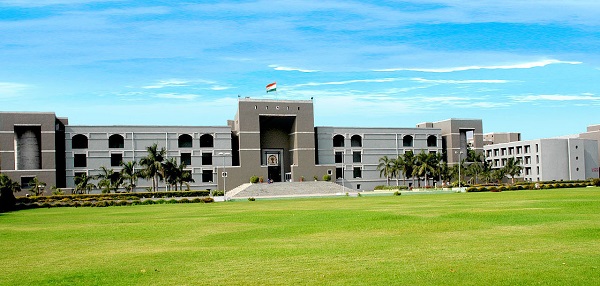
PCIT-3 Vs Gujarat State Road Developement Corporation Limited (Gujarat High Court)
Summary: The Gujarat High Court considered the Revenue’s Appeal under Section 260A of the Income Tax Act, 1961 against the order dated 31st October, 2023 passed by the Income Tax Appellate Tribunal, Ahmedabad ‘B’ Bench in ITA No.2798/Ahd/2014 and C.O.No.319/Ahd/2014 for Assessment Year 2011-12. The substantial question proposed by the Revenue concerned deletion of an addition of Rs.6,48,02,554/- representing expenses relating to projects for which, according to the Revenue, no income had been offered.
The assessee-company was engaged in building infrastructure projects, namely roads, and received grants from the Government for carrying out infrastructure road projects. For AY 2011-12, the assessee filed its return declaring total income of Rs.2,54,79,210/-. The assessment under Section 143(3), passed on 21st January, 2014, determined total income at Rs.78,41,21,174/- after making, among other additions, an addition of Rs.56,22,59,000/- on account of unutilised grant, Rs.1,08,22,957/- on account of unrecorded receipt, Rs.6,48,02,554/- towards project expenses for which no income was offered, and Rs.12,07,57,449/- towards interest on deposits with GSFS.
The CIT(A), by order dated 14th July, 2014, allowed the assessee’s appeal and deleted the additions. The Revenue appealed to the Tribunal, while the assessee filed a Cross-Objection. The Tribunal followed its earlier decision for AY 2010-11 and upheld deletion of the addition relating to unspent grant and the addition relating to unrecorded receipts. In respect of the Rs.6,48,02,554/- disallowance, the Tribunal followed its decision in ITA No.136/Ahd/2014 for AY 2010-11, where an identical disallowance had been considered.

In the earlier-year decision, the Tribunal examined whether expenditure relating to certain projects could be allowed when no income had allegedly been booked against those projects. It noted the requirement under Section 37(1) that expenditure should have been incurred wholly and exclusively for the purposes of the assessee’s business, satisfying the test of commercial expediency. The Tribunal found that the Revenue had not disputed that the expenditure was incurred wholly and exclusively for the assessee’s business. The expenses related to road and bridge construction, which constituted the main object for which the assessee-company had been incorporated, and the projects were undertaken by the assessee.
The Tribunal further reasoned that if the Revenue’s case was that no income had been booked against the expenditure, the appropriate course was to determine whether the assessee had failed to book income or had not treated a particular receipt as income. In the absence of such a finding, the Revenue could not disallow expenses that were otherwise incurred wholly and exclusively for the purposes of business. The Tribunal also recorded that, in relation to the Rajkot-Jamnagar project, income had in fact been booked by the assessee and that this fact had not been controverted by the Revenue. As regards railway over-bridge projects, the Tribunal noted the finding that the work was carried out for the benefit of the public at large without assistance from the Government by way of grants or remuneration, and held that absence of income against expenditure did not invalidate the claim where the expenditure was undisputedly incurred wholly and exclusively for business.
In the present proceedings, the Gujarat High Court found no infirmity in the Tribunal’s order. The Court specifically observed that the expenses related to projects undertaken by the assessee and were incurred wholly and exclusively for carrying out its business. Merely because no income had been booked against the expenditure, the expenses could not be disallowed when the Revenue had failed to establish that the assessee had booked income against the same or had not treated a particular receipt as income.
The High Court also noted that the assessee had booked income for the Rajkot-Jamnagar project, which had not been controverted by the Assessing Officer. Consequently, the very basis for disallowing expenses relating to that project did not survive. The Court further took note of the concurrent findings of fact recorded by the Tribunal in the earlier year, which had attained finality as the Revenue had not challenged that decision by way of an appeal.
In view of these findings, the High Court held that no legal infirmity existed in the impugned Tribunal order so as to give rise to the proposed substantial question of law. The Revenue’s Appeal under Section 260A was accordingly dismissed.
The decision is specifically concerned with the disallowance of business expenditure under the facts before the Court: the mere absence of corresponding income booking, without establishing that the expenditure was not incurred wholly and exclusively for business or that relevant receipts had escaped recognition as income, was not sufficient to sustain the disallowance.
For context on the earlier-year proceedings relied upon by the Tribunal, TaxGuru has published the ITAT decision involving the same assessee for AY 2010-11, where the Tribunal considered expenditure on road and bridge projects and the treatment of related receipts. ACIT Vs Gujarat State Road Development Corporation Ltd. (ITAT Ahmedabad) is relevant to the same assessee and earlier-year proceedings.
Cases Discussed
- ACIT Vs Gujarat State Road Development Corporation Ltd. — ITA No.136/Ahd/2014, AY 2010-11 — The Tribunal’s earlier-year decision was followed in the present case because the disallowance of project expenses was identical. The earlier decision held that expenditure incurred wholly and exclusively for the assessee’s business could not be disallowed merely because no corresponding income had been booked.
FULL TEXT OF THE JUDGMENT/ORDER OF GUJARAT HIGH COURT
1. Heard learned Senior Standing Counsel Ms.Maithili D. Mehta for the appellant-Revenue.
2. By this Appeal under Section 260A of the Income Tax Act, 1961 (for short ‘the Act’), the appellant-Revenue has proposed the following substantial question of law, arising out of the order dated 31st October, 2023 passed by the Income Tax Appellate Tribunal, Ahmedabad ‘B’ Bench (for short ‘the Tribunal’) in ITA No.2798/Ahd/2014 & C.O.No.319/Ahd/2014 for Assessment Year 2011-12:
“(i) Whether on the facts and circumstances of the case, learned Tribunal has erred in law and on facts confirming the decision of Ld. CIT(A) to delete the additions made by the A.O. of Rs.6,48,02,554/- on account expenses of projects for which no income is offered?”
3. The brief facts of the case are as under:
3.1. The assessee is a Company engaged in building infrastructure projects namely roads. The assessee-Company received grants from the Government for carrying out infrastructure road projects.
3.2. The assessee filed the Return of Income for the Assessment Year 2011-12 declaring total income of Rs.2,54,79,210/-and the case of the assessee was selected for scrutiny under CASS and Assessment Order under Section 143(3) of the Act was passed on 21st January, 2014 determining total income at Rs.78,41,21,174/- after making additions on account of unutilised grant treated as income amounting to Rs.56,22,59,000/-, unrecorded receipt of Rs.1,08,22,957/- and expenses of project, for which no income was offered, amounting to Rs.6,48,02,554/- and interest on deposits with GSFS of Rs.12,07,57,449/-.
3.3. Being aggrieved, the assessee preferred an Appeal before the CIT (Appeals), who vide order dated 14th July, 2014, allowed the Appeal of the assessee deleting the additions made by the Assessing Officer.
3.4. Being aggrieved by the order of the CIT (Appeals), an Appeal was preferred before the Tribunal by the Revenue being ITA No.2798 of 2014 and assessee also preferred Cross-Objection being C.O.No.319 of 2014. The Tribunal, following its earlier decision for Assessment Year 2010¬11, upheld the order passed by the CIT (Appeals) deleting the addition made on account of unspent grant of Rs.56,22,59,000/-. The Tribunal also dismissed the Appeal filed by the Revenue and upheld the order of the CIT (Appeals) for deletion of the addition of unrecorded receipts amounting to Rs.1,08,22,957/-, in absence of any infirmity in the order of the CIT (Appeals) brought to the attention of the Tribunal by the Departmental representative.
3.5. So far as ground No.3 of the Revenue for deletion of the addition on expenses claimed for which no income was offered amounting to Rs.6,48,02,554/-, is concerned, the Tribunal followed the decision in case of the assessee rendered in ITA No.136/Ahd/2014 for Assessment Year 2010-11, as the disallowance made by the Assessing Officer was identical with that of the earlier year, which reads as under:
“ …21. We have heard both the parties and have carefully gone through the authorities below. The issue before us relates to the allowance of claim of expenses with respect to certain projects against which no income was allegedly booked by the assessee. The amount concerned being Rs. 2,10,53,596- And the project wise details are reproduced above.
22. Firstly, we are in agreement with the ld.counsel of the assessee that for the allowance of claim of expenditure, the only requirement to be fulfilled as per the law is that it should have been incurred wholly and exclusively for the purpose of business of the assessee, i.e. it should satisfy the test of commercial expediency. Section 37(1) of the Act clearly stipulates the same as the only condition to be fulfilled for claiming expenses while computing the income from business. There is no dispute vis-a-vis the same nor did the ld.DR state anything to contradict this position of the law, when pointed out by the Id. counsel for the assessee before us.
23. In the facts and circumstances of the case, it is not the case of the Revenue that these expenses have not been incurred wholly and exclusively for the purpose of business of the assessee. In fact, admittedly these expenses relate to road and bridge construction which is the main object for which the assessee company has been incorporated and even as per the AO/CIT(A) these expenses relate to projects undertaken by the assessee. In the light of this fact alone, there is no case for disallowing the impugned expenses when admittedly they have been incurred wholly and exclusively for the purpose of carrying out the business of the assessee. The case of the Revenue being that no income has been booked against the same, then the logical course of action was to determine whether the assessee failed to book income against the same or has not treated a particular receipt as income The entire effort of the Revenue ought to have been to bring the concerned income to tax. In the absence of the same, the Revenue could not have been gone on to disallow the expenses incurred by the assessee, which otherwise admittedly were incurred wholly and exclusively for the purpose of business. For this reason alone, we agree with the ld.counsel for the assessee that the disallowance made by the 40 was rightly deleted by the ld. CIT (A).
24. Even otherwise on facts, we find that the Id. CIT(A) has noted, that with respect to the Rajkot-Jamnagar project, the assessee had booked income also. This fact has not been controverted by the Revenue before us. Therefore, the very basis with the A0 for disallowing the expenses incurred in relation to Rajkot-Jamnagar project does not survive, and the Id. CIT(A), therefore, we hold, has rightly deleted the disallowance of expenses relating to this project.
25. Vis-a-vis the railway over-bridge(ROB) projects, the ld.CIT(A), we hold, rightly appreciated the contentions of the assessee that this work was carried out by the assessee for the benefit of the public at large without any assistance from the Government by way of grants. The Revenue has not controverted this contention of the assessee that it carried out these projects without any assistance by way of grants from the Government or without any remuneration for the same. And as has been held by us above, the absence of any income against any expenditure incurred, would not invalidate the claim of expenditure, which otherwise has been undisputedly incurred wholly andexc lusively for the purpose of business of the assessee.
26. In view of the same, we see no reason to interfere in the order of the ld. CIT(A) deleting the disallowance of expenses incurred on projects amounting to Rs.2,10,53,596/-.”
4. Thus, the Tribunal has followed its earlier year’s decision, upholding the deletion of the disallowance of Rs.6,48,02,554/- on expenses for which no income was offered and we do not find any infirmity in the order of the Tribunal, confirming the decision of disallowance made by the Assessing Officer, as it is not in dispute that the expenses related to the projects undertaken by the assessee, were incurred wholly and exclusively for the purpose of carrying out the business of the assessee and merely because no income has been booked against the same, it would not result into disallowance of such expenses, when the Revenue has failed to prove that the assessee booked income against the same or assessee has not treated a particular receipt as income.
5. Moreover, in the facts of the case, the assessee has booked the income for Rajkot-Jamnagr project, which has not been controverted by the Assessing Officer and hence, the very basis with Assessing Officer for disallowance of expenses incurred in relation to the project, would not survive as the project work was carried out by the assessee for the benefit of the public at large, without any assistance from the Government by way of grant.
6. In view of such concurrent findings of fact recorded by the Tribunal in the earlier year, which has achieved finality, as the same is not challenged by the Revenue by way of an Appeal, we do not find any legal infirmity in the impugned order of the Tribunal, so as to give rise to the substantial question of law.
7. The Appeal is accordingly dismissed.