Income Tax : Tax authorities initiated scrutiny and proposed addition solely because share acquisition details were not properly disclosed in t...
Income Tax : Tax authorities may examine large or unusual digital transactions that don’t match declared income. Proper documentation and acc...
Income Tax : Understand the meaning of a 143(2) notice, why your return may be selected for scrutiny, and the steps required for a faceless ass...
Income Tax : As Income Tax Department initiates scrutiny for Assessment Year (AY) 2024–25, many taxpayers are receiving notices under Section...
Income Tax : Indian tax authorities are scrutinizing high-value financial transactions, including large deposits, property deals, and credit ca...
Income Tax : Association requested CBDT to rationalize CASS 2026 case selection considering the administrative burden caused by implementation ...
Income Tax : Revised Instruction for constitution and functioning of Local Committees to deal with taxpayers’ grievances due to high-pitched ...
Income Tax : Ministry of Finance Income Tax Returns( ITR) scrutiny reduced to 0.25% in AY 2018-19 IT Dept is changing -from just enforcement ...
Income Tax : Start-ups and their investors filing requisite declarations not to be subjected to any scrutiny regarding valuations of share prem...
Income Tax : Income Tax Department has accepted 99.65 per cent of tax returns as it is and has picked only 0.35 per cent cases for detailed scr...
Income Tax : The case examined whether scrutiny selection without meeting CBDT conditions was valid. The ITAT held that failure to satisfy mand...
Income Tax : Chennai ITAT set aside the assessment for exceeding the limited scrutiny scope and disallowing 80P without a spea...
Income Tax : Tribunal held that once a scrutiny assessment under Section 143(3) allows a claim, any earlier disallowance by CPC under Section 1...
Income Tax : Kolkata ITAT rules assessment void after a 143(2) notice failed to specify the type of scrutiny, violating mandatory CBDT instruct...
Income Tax : ITAT Kolkata cancels a Section 144 assessment, ruling that the foundational Section 143(2) notice was invalid for failing to compl...
Income Tax : CBDT outlines parameters for compulsory income tax scrutiny for FY 2025-26, including survey, search & seizure cases, registration...
Income Tax : Understand the guidelines set by the Indian Ministry of Finance for the compulsory selection of returns for complete scrutiny duri...
Income Tax : Government of India issues guidelines for compulsory selection of returns for Complete Scrutiny during FY 2023-24. Find the proced...
Income Tax : Central Board of Direct Taxes (CBDT) released guidelines outlining the parameters and procedures for the compulsory selection of i...
Income Tax : Amendment in Guidelines for compulsory selection of returns for Complete Scrutiny during the Financial Year 2022-23 — procedure ...
CBDT has issued an Instruction by which it has laid down the procedure and criteria for compulsory manual selection of returns/cases requiring scrutiny during the financial-year 2019-20.
Get answers to frequently asked questions about Section 143(3) of the Income Tax Act, governing scrutiny assessments. Learn about the selection process, time limits for issuing notices, and the difference between Limited and Complete Scrutiny. Understand the consequences of non-cooperation during assessment proceedings and the option to appoint a professional or tax consultant for assistance.
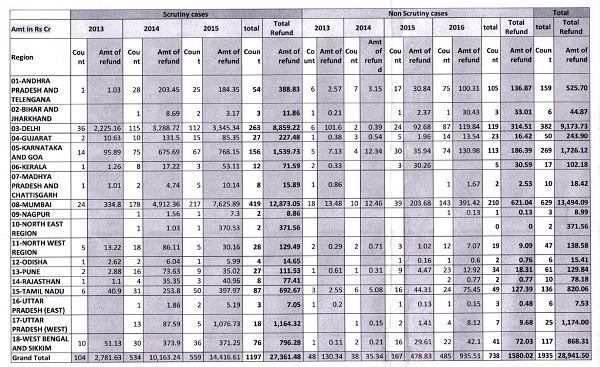
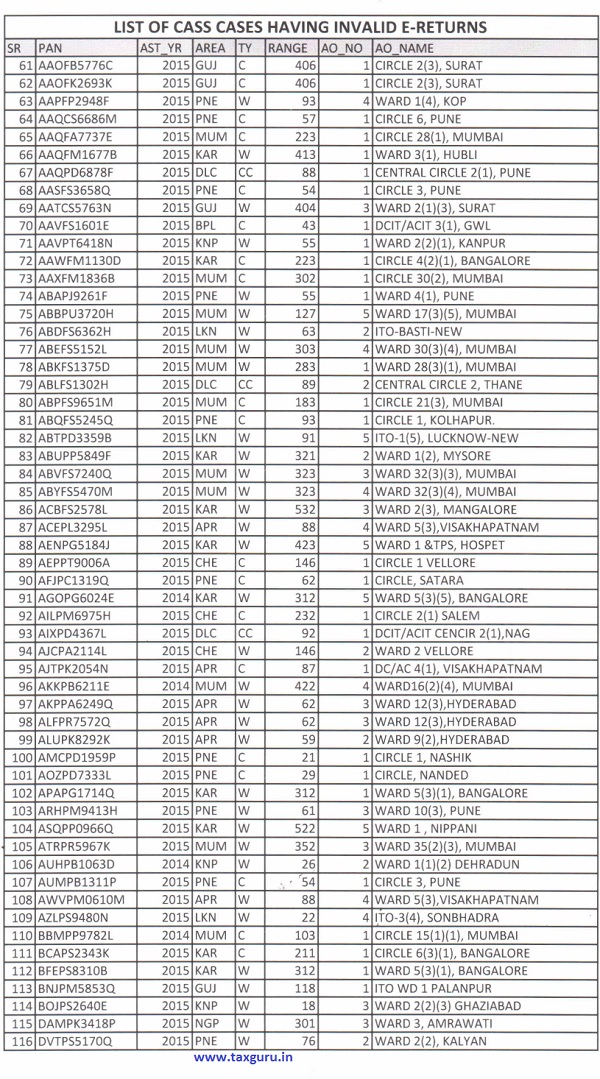
Income Tax scrutiny is essential for detecting discrepancies and maximizing revenue. Learn why scrutiny selection is necessary, manual case-picking criteria (e.g., high TDS volume), and methods like Computer Aided Scrutiny Selection (CASS). Discover the steps taken by Assessing Officers post-selection, such as checking cash transactions, verifying expenses, assessing TDS applicability, and ensuring compliance with various tax provisions.
Krishna, on 26th January, India celebrates its Republic Day. Over the past few months GST and Income Tax departments have been sending notices to the taxpayers to increase the collection of Revenue. Please tell what are the weapons that department is using to take the Taxpayer’s parade?
In order to encourage more people to file income tax returns, necessary provisions may be introduced, such as: Individuals having taxable income upto Rs. 10 lakhs may not be subjected to scrutiny for 3 Assessment Years unless there is specific information available with the Department regarding his high value transaction.
In scrutiny assessments, adherence to CBDT instructions is crucial. A recent ITAT decision (Ganadhiraj Mazoor Sahakari Sanstha Ltd vs ITO) emphasizes the importance of following proper procedures, especially when making additions on grounds not communicated to the assessee initially. Taxpayers should be vigilant about their assessments, ensuring compliance with procedural norms.
n the era of technology and data analytics, Income Tax Department too empowered itself with one of the most enabling report which allowed itself to peep itself into the assessee’s deeper secrets by laying down the responsibility on Financial Institution like Banks, Mutual Funds, to submit AIR (Annual Information Report). In this article, what we will try to analyse in the forthcoming discussion that how this crucial guard of information available with the department against evasion slowly becoming an indiscriminate weapon in the hands of the officials for harassing the assesses and how the proceedings emanating from AIR should be dealt with.
The CASS Committee has been re-constituted under Chairmanship of Director General of Income Tax (Risk Assessment) {DGIT (RA)} as under:
Electronic assessment, also known as e-assessment, online assessment, computer assisted/mediated assessment and computer-based assessment, is the use of information technology in various forms of assessment. Finance Minister, Arun Jaitley, also announced of such scheme in his budget speech on February 1, 2018; which would almost eliminate person-to-person contact in the Tax Department for greater transparency in assessment procedures.
Discover the 7 common reasons why you receive income tax notices, from TDS mismatches to high-value transactions.