
The Income Tax Department, under the Central Board of Direct Taxes, has introduced simplified tax forms under the Income-tax Act, 2025, effective April 1, 2026, using simpler language, standardized pre-filled formats and technology-driven processes. The brochure under the “Taxpayer Information Series” discusses Forms 138 and 140, corresponding to erstwhile Forms 24Q and 26Q, for quarterly TDS reporting on salaries and specified payments to Indian residents. It states that Form 138 is filed by employers under Section 392 and Section 393(1)(Table: S.No. 8(iii)) and Rule 219 of the Income-tax Rules, 2026, while Form 140 is filed by non-salary deductors under Rule 219. The supplied material also provides filing details for Form No. 143, including transaction, collectee, PAN and challan/BIN details, with quarterly due dates of July 31, October 31, January 31 and May 31. Forms applicable up to FY 2025–26 (AY 2026–27) remain governed by the Income-tax Rules, 1962, and the fourth-quarter TCS return for FY 2025–26 is to be filed in erstwhile Form 27EQ. A “Samvaad” session QR code is provided for further discussion on Form 143.
Income Tax Department
Central Board of Direct Taxes
Form No. 143 (Erstwhile Form No. 27EQ)
BACKGROUND:
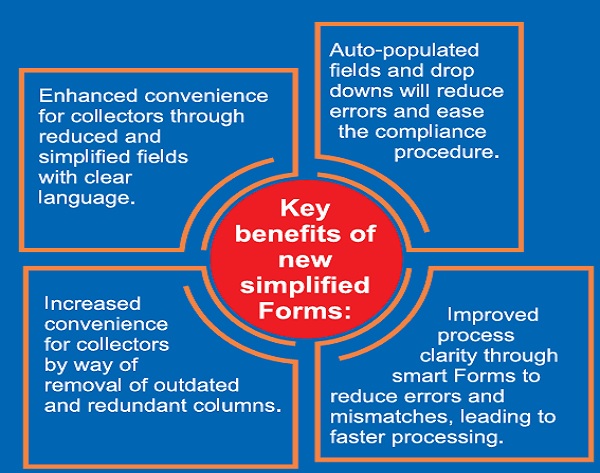
The Income Tax Department has introduced simplified tax forms under the Income-tax Act, 2025, effective April 1, 2026, to improve ease of compliance for all stakeholders. The new Forms use simpler language, standardized pre-filled formats, and technology-driven processes to reduce errors and disputes.
As part of the “Taxpayer Information Series”, we have selected frequently used Forms or those Forms that have undergone significant business process re-engineering. This brochure focuses on Form Nos. 138 and 140 (Erstwhile Forms Nos. 24Q and 26Q), quarterly TDS statement for payments of salary and other salary. With 22.5 lakh Form No. 24Q and over 50-55 lakh original Form No. 26Q filed annually over the last five years, simplifying these Forms aim to ease compliance for deductors, ensure accurate TDS reporting, and benefit taxpayers and the department alike.
1. Purpose of Form Nos. 138 and 140:
Form No. 138 is a quarterly statement filed by employers to report Tax Deducted at Source (TDS) from salaries paid to employees under Section 392 and income of specified senior citizen under section 393(1)(Table: S.No. 8(iii)) of the Income Tax Act, 2025. Form No. 138 is filed under Rule 219 of the Income Tax Rules, 2026.
Form No. 140 is a quarterly statement filed by deductors (other than salary deductors) to report Tax Deducted at Source (TDS) on payments made to Indian residents other than salaries — such as interest (other than interest on securities), commission, brokerage, professional fees, rent, and other specified payments under provisions of the Income-tax Act, 2025. Form No. 140 is filed under Rule 219 of the Income-tax Rules, 2026.
2. Who should file:
Every person responsible for making payments to a resident on which TDS is deductible.
3. Structure of Form Nos. 138 and 140 as per Income Tax Rules, 2026:
Part A
Captures details of the collector and the person responsible for collection, including identification, contact, tax year, and filing particulars.
Part B
records details of tax collected and paid to the Central Government, including challan or book adjustment information.
Annexure
A single annexure, applicable to all four quarters, captures collectee-wise TCS details such as PAN, residential status, transaction details, tax collected and deposited, applicable rates, and reasons for lower collection, certificate number of certificate issued u/s 395(3) by the Assessing Officer for lower collection of tax etc.
4. What are the details required to file the Form No. 143?
Following details are required for filing Form No. 143:
1. Details of the transactions
2. Details of the collectees including PAN
3. Details of the challans / BINs
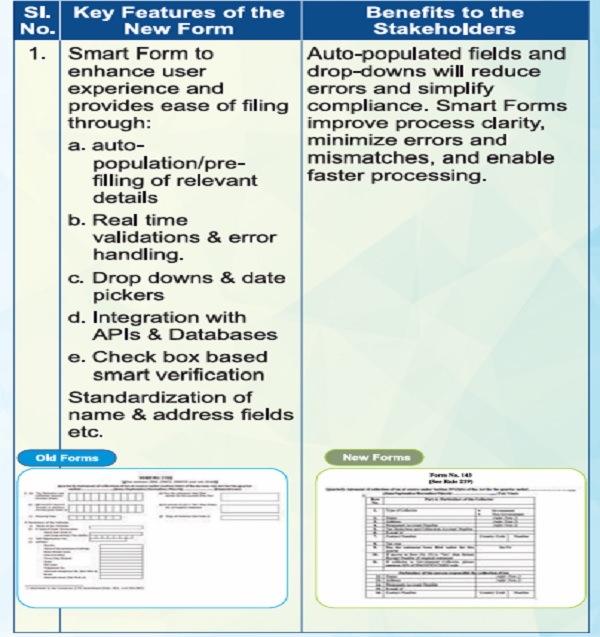
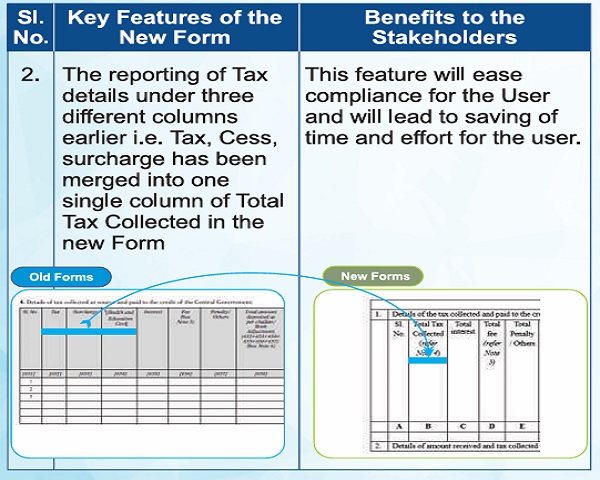
5. Key features of the new Forms and the benefits to the stakeholders:
–
6. Periodicity of Filing This Form is:
| Quarter | Period Covered | Due Date for Filing |
|---|---|---|
| Q1 | April–June | 31st July of the Tax Year |
| Q2 | July–September | 31st October of the Tax Year |
| Q3 | October–December | 31st January of the Tax Year |
| Q4 | January–March | 31st May of the Tax Year immediately following the Tax Year in which collection is required to be made |
7. ATTENTION:
Forms applicable upto FY 2025–26 (AY 2026–27) shall continue to be governed by the Income-tax Rules, 1962; accordingly, the quarterly TCS return for the 4th quarter of FY 2025–26 shall be filed in the erstwhile Form No. 27EQ.
8. QR Code of “Samvaad” session:
For the benefit of the Taxpayers and Collectors, the QR code of the link to the “Samvaad” session with the officer involved in drafting of the new Form, is given at the bottom of the brochure. This may be referred to for detailed discussion on the Form No. 143 (Erstwhile Form No. 27EQ).




