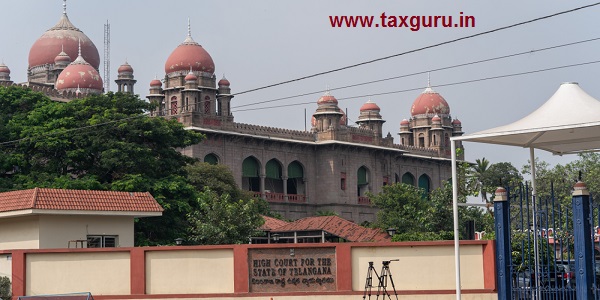
Bl Agro Oils Ltd. Vs State of U.P. (Allahabad High Court)
Introduction: On September 7, 2023, the Allahabad High Court delivered a significant judgment in the case of “BL Agro Oils Ltd. Vs. State of U.P.” The case centered around tax and penalty imposition due to the alleged reuse of an E-Way bill. This article provides an in-depth analysis of the case, including the background, legal arguments, and the court’s decisive ruling.
Detailed Analysis:
1. Background of the Case: The petitioner, BL Agro Oils Ltd., contested an order dated October 31, 2017, issued by the Assistant Commissioner, Commercial Tax, Mobile Squad, Unit-1, Lucknow. This order imposed tax and penalties on the petitioner. Additionally, an appeal filed by the petitioner against this order was also rejected by the Additional Commissioner Grade-2 (Appeal-I), Commercial Tax, Lucknow, on August 23, 2019.
2. Seizure and Allegations: On October 28, 2017, a transport vehicle carrying goods belonging to the petitioner was intercepted. Subsequently, on October 31, 2017, a seizure order was issued, alleging that the invoice and E-Way bill dated October 23, 2017, bore a packing date of October 26, 2017. This discrepancy raised concerns that the documents did not correspond to the intercepted goods. Furthermore, it was noted that the E-Way bill’s validity, as per Circular No.102/1718024 issued by the Commissioner, expired after 4 days, while the goods were being transported beyond this period.
3. Petitioner’s Defense: The petitioner contended that the goods had been previously transported but were damaged in transit. As a result, the oil contained in the damaged packaging was brought back, and the goods were subsequently repackaged and transported using the same invoice and E-Way bill. On October 31, 2017, a tax liability and penalty, amounting to Rs. 62,500/- under Section 129(3) of the U.P. Goods and Services Tax Act, 2017, were imposed on the petitioner. The petitioner deposited this amount under protest.
4. Legal Argument: The crux of the legal argument presented by the petitioner was that it is the duty of the taxing authority to provide positive evidence to establish the reuse of the E-Way bill. Citing the judgment in the case of ‘M/S Anandeshwar Traders Vs. State of U.P. and Others,’ the petitioner argued that the onus is on the taxing authority to prove E-Way bill reuse.
5. Court’s Observations: The Allahabad High Court, in line with the cited judgment, emphasized that it is the seizing authority’s responsibility to present evidence demonstrating E-Way bill reuse. In this case, the court noted the absence of such evidence from the seizing authority, and therefore, the tax and penalty imposed on the petitioner lacked a proper foundation.
Conclusion: In conclusion, the Allahabad High Court ruled in favor of BL Agro Oils Ltd., setting aside the orders dated October 31, 2017, and August 23, 2019. The court’s decision underscored the importance of the taxing authority’s responsibility to provide evidence of E-Way bill reuse before imposing tax and penalties. This judgment reaffirms the principle that the burden of proof lies with the tax authority in cases of alleged E-Way bill misuse.
FULL TEXT OF THE JUDGMENT/ORDER OF ALLAHABAD HIGH COURT
1. Heard learned counsel for the petitioner and learned Standing Counsel for the State.
2. Petitioner has approached this Court challenging the order dated 31.10.2017 passed by Assistant Commissioner, Commercial Tax, Mobile Squad, Unit-1, Lucknow whereby tax and penalty has been imposed upon the petitioner and order dated 23.08.2019 passed by Additional Commissioner Grade-2 (Appeal-I), Commercial Tax, Lucknow, whereby his appeal is also rejected by the said order.
3. The facts of the case are that on 28.10.2017, a transport vehicle carrying goods of the petitioner was intercepted. On 31.10.2017 a seizure order was passed against the petitioner on the ground that invoice and e-way bill dated 23.10.2017 were bearing packing date of 26.10.2017 and, hence, the documents do not relate to the goods intercepted. Even, as per the Circular No.102/1718024 issued by the Commissioner, validity of the e-way bill was up to 4 days and goods were being transported after 4 days. Petitioner submitted his reply and stated that while under transportation earlier, the goods were damaged on the way and oil contained therein spilled over other packaging and, thus, same were brought back and thereafter properly packed goods were supplied through the same invoice and e-way bill. On 31.10.2017, a tax liability and penalty at the rate of 5% totalling Rs. 62,500/- under Section 129(3) of the U.P. Goods and Services Tax Act, 2017 was imposed on the petitioner. After getting the goods released, petitioner had again transported the same to the purchasers. The amount was deposited by the petitioner under protest. The appeal filed by the petitioner against the penalty order is also rejected by the appellate authority by its order dated 23.08.2019 disbelieving the case set up by the petitioner.
4. Learned counsel for the petitioner submits that it is the duty of the taxing authority to prove by positive evidence that e-way bill was being reused. Since the said part is never proved, the tax and penalty could not be imposed upon the petitioner. For the said purposes, he has placed relince upon the judgment passed in case of ‘M/S Anandeshwar Traders Vs. State of U.P. and Others’ reported in 2021 U.P.T.C. [Vol. 107]-421. Paragraph-10 and 11 of the said judgment reads:-
“10. Even if the dealer does not cancel the e-way bill within 24 hours of its generation, it would remain a matter of inquiry to determine on evidence whether an actual transaction had taken place or not. That would be subject to evidence received by the authority. As such it was open to the seizing authority to make all fact inquiries and ascertain on that basis whether the goods had or had not been transported pursuant to the e-way bills generated on 24.11.2019. Since the petitioner-assessee had pleaded a negative fact, the initial onus was on the assessing authority to lead positive evidence to establish that the goods had been transported on an earlier occasion. Neither any inquiry appears to have been made at that stage from the purchasing dealer or any toll plaza or other source, nor the petitioner was confronted with any adverse material as may have shifted the onus on the assessee to establish non-transportation of goods on an earlier occasion.
11. The presumption could not be drawn on the basis of the existence of the e-way bills though there did not exist evidence of actual transaction performed and though there is no statutory presumption available. Also, there is no finding of the assessing authority to that effect only. Mere assertion made at the end of the seizure order that it was clearly established that the assessee had made double use of the e-way bills is merely a conclusion drawn bereft of material on record. It is the reason based on facts and evidence found by the assessing authority that has to be examined to test the correctness of the order and not the conclusions, recorded without any material on record.”
5. I find the case of the petitioner squarely covered by the aforesaid judgment. This Court has categorically held that it is for the seizing authority to establish by evidence that e-way bill was being reused. In the present case, there is no evidence produced by the seizing authority that there is a reuse of the e-way bill by the petitioner.
6. Hence, the impugned order dated 31.10.2017 and 23.08.2019 cannot stand and the same are set aside.
7. The writ petition stands allowed.