Introduction
In today’s hyper-competitive and compliance-driven business environment, companies are constantly looking for ways to maximize profitability while staying tax-compliant. One of the most underutilized yet powerful tools available to businesses under India’s Goods and Services Tax (GST) regime is theInput Tax Credit (ITC).
At its core, ITC is not just a tax mechanism, it is a strategic financial advantage that can transform how businesses manage costs, working capital, and profitability. By allowing businesses to offset the GST they pay on inputs against the GST they collect on outputs, ITC prevents the cascading effect of taxation, which was a major drawback of the pre-GST era when businesses often ended up paying tax on tax.
To put it simply:
- Without ITC, businesses bear the full burden of GST on every purchase, which inflates costs.
- With ITC, businesses can neutralize much of this burden, paying tax only on the “value addition” they create.
For Indian businesses—especially small and medium enterprises (SMEs) that often struggle with liquidity—ITC acts as a game-changer, freeing up cash that would otherwise be locked in taxes. This cash can then be reinvested into operations, expansion, or innovation.
Globally, mechanisms like ITC (or VAT credit in Europe) are considered vital in ensuring a transparent and fair taxation system. In India, however, ITC also carries an additional weight: it has become a compliance-linked lifeline, since businesses can only claim credit if their suppliers have filed accurate returns and paid their taxes. This dual role of ITC—as both a cost-saving tool and a compliance enforcer—makes it uniquely significant in shaping how businesses operate in 2025.
In this blog, we will explore how ITC works, who can claim it, where it is restricted, and most importantly, how it can be harnessed as a secret weapon to boost your business’s bottom line
Historical Evolution of ITC in India
Before GST, India had a fragmented system of indirect taxes. Central excise, service tax, VAT, and a range of cesses applied at different stages. While mechanisms like CENVAT credit and VAT input credit existed, they were limited and uncoordinated. Businesses often faced a cascading “tax on tax” problem—for example, service tax paid on advertising could not be set off against VAT on sales.
The introduction of GST in July 2017 revolutionized this landscape. For the first time, India moved to a unified credit system that integrated goods and services taxation across states. ITC became the backbone of GST, ensuring seamless credit flows across supply chains and across borders within India.
This shift not only reduced inefficiencies but also nudged businesses toward greater formalization and compliance. ITC, in effect, became the invisible force driving India’s tax reform.
ITC- SUMMARY
Input Tax Credit (ITC) is a mechanism under the Goods and Services Tax (GST) regime that allows businesses to reduce their tax liability by claiming credit for the GST already paid on their purchases of goods and services. In simple terms, it ensures that tax is paid only on the value addition at each stage of the supply chain, thereby avoiding the cascading effect of “tax on tax.”
For example, if a manufacturer pays GST on raw materials purchased, they can claim that tax as ITC while paying GST on the sale of finished goods. This promotes transparency, lowers the cost of doing business, and improves cash flow.
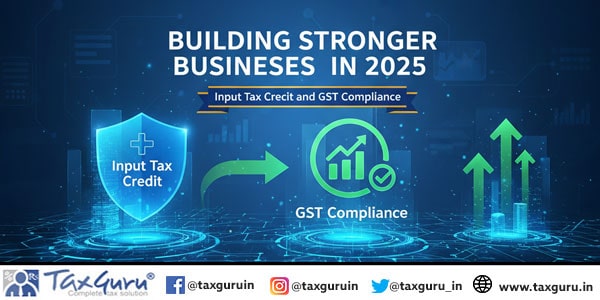
However, ITC can be claimed only if certain conditions are met—such as possession of a valid tax invoice, actual receipt of goods or services, and the supplier having paid the tax to the government.
In essence, ITC is the backbone of GST, fostering compliance and ensuring a fair, efficient, and seamless tax system.
For example:
- You buy raw materials worth ₹1,00,000 + 18% GST = ₹1,18,000.
- You sell finished goods worth ₹2,00,000 + 18% GST = ₹2,36,000.
- GST payable on sales = ₹36,000.
- GST paid on inputs = ₹18,000.
- Net GST liability after ITC = ₹18,000 (instead of ₹36,000).
That’s ₹18,000 saved directly—money that stays in your business.
Sectoral Impact of ITC
The significance of ITC varies across industries.
For manufacturers, ITC reduces the burden of taxes on raw materials, spare parts, and machinery, directly lowering production costs. In services, ITC applies to advertising, IT systems, consultancy fees, and more—expenses that otherwise inflate overheads.
For exporters, ITC is crucial as exports are zero-rated. Businesses can claim refunds of unutilized ITC, making them more competitive globally. However, delays in refund disbursement remain a pain point.
In the e-commerce sector, ITC plays a dual role. Marketplaces and sellers must navigate TCS (Tax Collected at Source) provisions, while ensuring seamless ITC claims on logistics, warehousing, and marketing spends.
This sectoral diversity underlines the breadth of ITC’s impact, cutting across industries and influencing competitiveness at multiple levels.
Requirements for Claiming Input Tax Credit (ITC)
The right to claim Input Tax Credit under GST does not operate automatically; it comes with a set of statutory conditions that businesses must comply with. These conditions are designed to ensure that ITC benefits only genuine transactions and that every participant in the supply chain fulfills their tax obligations.
- Valid Supporting Document: A business must hold a proper tax invoice, debit note, or another GST-prescribed document issued by a registered supplier. This serves as the legal basis for availing ITC.
- Receipt of Supply: The goods or services must actually be received. In cases where items are delivered in installments, credit can only be claimed after the final lot is received.
- Tax Payment by Supplier: The supplier should have filed their returns and remitted the tax collected to the government. If the supplier defaults, the buyer cannot claim ITC, which makes it essential to transact with compliant suppliers.
- Timely Filing of Returns: The taxpayer intending to avail ITC must have filed their GST returns (GSTR-3B). Without filing, the credit cannot be legally utilized.
- Appearance in GSTR-2B: The invoice uploaded by the supplier must appear in the recipient’s GSTR-2B statement. Only then can it be claimed in the monthly return.
- Adherence to Time Limits: ITC cannot be carried forward indefinitely. The claim must be made within the due date for filing the September return of the following financial year or before filing the annual return, whichever comes first.
- Business Use of Goods/Services: Credits can only be availed for goods or services used in the course of business. Personal consumption or goods/services used to make exempt supplies are excluded.
- Exclusions on Blocked Credits: Certain categories are restricted by law. These include motor vehicles (except when used for specific purposes like transport), personal expenses, or goods lost, stolen, or destroyed. Businesses must be careful to avoid such ineligible claims.
Permissible (recognized under ITC)
- Raw materials for manufacturing.
- Advertising and marketing services.
- Office equipment purchases.
- Professional services (legal, accounting, IT).
Non permissible
- Gym memberships.
- Cars for personal use.
- Goods destroyed in accidents.
- Staff entertainment expenses.
ITC in a Global Perspective
Internationally, ITC (or VAT credit) is a well-established concept. The European Union operates a sophisticated VAT system where credits can be claimed across borders, enhancing trade efficiency. Singapore and Australia focus on speed—refunds are processed quickly, ensuring exporters remain competitive.
India’s ITC model, while comprehensive, is compliance-heavy. By linking ITC to supplier compliance, it promotes supply chain discipline but also penalizes businesses when counterparties default. This makes India’s model stricter compared to global peers
ECONOMIC IMPACT OF ITC
1. Improves Cash Flow: Instead of blocking funds in taxes at multiple stages, ITC ensures only the value addition is taxed. This frees up working capital for operations, expansion, or investment.
2. Boosts Profit Margins: Lower tax liability translates to higher retained earnings. Companies that maximize ITC can reduce costs without raising prices—giving them a competitive edge.
3. Encourages Compliance: To claim ITC, businesses must ensure vendors file returns and pay taxes. This creates a chain of accountability, building trust across supply chains.
4. Supports Growth: Small and medium businesses (SMEs) often face liquidity crunches. Efficient ITC management can act as a hidden funding source, supporting expansion without external borrowing.
KEY CONDITIONS TO NOTE:
While ITC is powerful, it comes with strict conditions under GST law:
- Purchases must be from GST-registered suppliers.
- Goods/services must be used for business purposes.
- Supplier must have filed GSTR-1 and paid taxes.
- Recipient must have a valid tax invoice and must file returns (GSTR-3B).
- ITC is not available on personal expenses, exempt supplies, or blocked credits (e.g., motor vehicles for personal use, employee perks like club memberships).
Impact of ITC on Business Finances
Without
- Pay full GST on sales
- No credit adjustment
- Lower margins
With
- Deduct GST paid on inputs
- Reduced tax outflow
- Higher profitability
Future of ITC: Toward GST 2.0
The future of ITC in India is likely to be shaped by both policy reforms and technological advances. Proposals such as real-time invoice matching, AI-driven fraud detection, and faster refund mechanisms are expected to ease compliance.
Moreover, as India integrates further with global value chains, the demand for a smoother ITC system—particularly for exporters—will grow stronger. By 2030, India may see a GST 2.0 framework where ITC flows are near-instant, compliance is largely automated, and businesses can focus less on paperwork and more on innovation.
References
1. Goods and Services Tax Act, 2017 (India).
2. Central Board of Indirect Taxes and Customs (CBIC) – Official GST Portal.
3. PwC India, GST Handbook 2024.
4. KPMG Global Indirect Tax Reports – Comparative ITC frameworks.
5. ICAI Guidance Notes on GST Compliance.
Conclusion
The Input Tax Credit (ITC) mechanism is more than a compliance requirement—it is a powerful business tool that directly impacts profitability, liquidity, and competitiveness. By preventing the cascading effect of taxation, ITC ensures that businesses are taxed only on the value they add, not on every transaction in the supply chain.
For India, ITC serves a dual purpose:
1. It makes businesses tax-efficient, reducing their costs and freeing up cash for reinvestment.
2. It enforces supply chain discipline, ensuring that every link in the chain complies with GST obligations.
However, ITC is not without challenges. Supplier non-compliance, refund delays, and blocked credits often frustrate businesses, particularly SMEs and exporters. Yet, with robust compliance strategies—such as regular reconciliation, timely return filing, and choosing reliable suppliers—businesses can unlock the full potential of ITC.
Globally, credit mechanisms under VAT/GST systems have been proven to drive transparency and fairness in taxation. India’s ITC framework, despite its compliance-heavy structure, has already begun fostering a culture of accountability, digitalization, and formalization of trade.