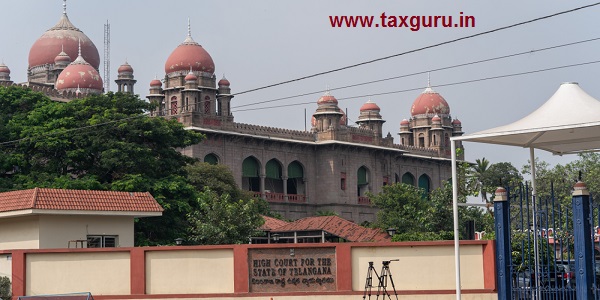
Non-Consideration of Assessee’s Reply on Delay in Filing Appeal is an Error Apparent on the Face of Record: Orissa High Court
The Orissa High Court in M/s Mahesh Value Products Pvt. Ltd. v. Chief Commissioner of CT & GST and others set aside an appellate order rejecting an assessee’s GST appeal as time-barred after finding that the Appellate Authority incorrectly computed the delay and ignored the assessee’s electronically filed reply explaining the actual delay. The adjudication order was communicated on October 15, 2025, and the appeal filed on February 13, 2026 was delayed by only 29 days, which fell within the one-month condonable period under Section 107(4) of the GST Act. However, the authority erroneously treated the delay as 31 days and proceeded as though no reply had been filed, despite an acknowledged electronic submission. The High Court held that a “month” must be computed according to the British calendar under the General Clauses Act and that failure to consider a reply already on record constituted an error apparent on the face of the record. Accordingly, the impugned order was quashed and the matter remanded for fresh consideration on merits.
Facts:
M/s Mahesh Value Products Pvt. Ltd. (“the Petitioner”) was aggrieved by an adjudication order dated October 15, 2025 passed under Section 73 of the Odisha Goods and Services Tax Act, 2017/Central Goods and Services Tax Act, 2017 (“the GST Act”) by the Assistant Commissioner of State Tax, Cuttack-I City Circle, Cuttack, pertaining to the tax periods April, 2022 to March, 2023. The said adjudication order was uploaded on the GST common portal on October 15, 2025.
As per Section 107(1) of the GST Act, the appeal was required to be presented within three months from the date of communication of the order, i.e., by January 15, 2026. Further, sub-section (4) of Section 107 of the GST Act allows the Appellate Authority to condone delay of an additional one month, subject to sufficient cause, taking the outer limit to February 15, 2026.
The Petitioner filed the appeal on February 13, 2026 in Form GST APL-01 under Section 107 of the GST Act read with Rule 108 of the GST Rules, which resulted in a delay of 29 days beyond the initial three-month period (well within the condonable period of one month).
Thereafter, a Show Cause Notice dated March 10, 2026 was issued by the Additional Commissioner of State Tax (Appeal), Central Zone-I, Cuttack (“the Appellate Authority”) alleging a delay of 31 days in filing the appeal and calling for an explanation. The Petitioner filed a reply dated March 14, 2026 on March 17, 2026 electronically through the common portal, duly acknowledged by the authority concerned, explaining that the delay was only 29 days (within the condonable period) and not 31 days.
Despite the said reply being on record, the Appellate Authority, vide impugned order dated March 23, 2026, proceeded on the premise that the Petitioner had failed to comply with the Show Cause Notice and rejected the appeal as being beyond the upper cap of statutory time, holding that condonation of further delay of 31 days was beyond its power under Section 107(4) of the GST Act.
Aggrieved by the said rejection, the Petitioner approached the Hon’ble Orissa High Court invoking Articles 226 and 227 of the Constitution of India.
Issue:
Whether the Appellate Authority was justified in rejecting the appeal as time-barred by computing the delay as 31 days and by ignoring the Assessee’s electronically filed reply explaining the actual delay of 29 days, which was on record at the time of passing the impugned order?
Held:
The Hon’ble Orissa High Court in WP(C) No. 17373 of 2026 held as under:
- Observed that, the word “month” as defined under Section 3(35) of the General Clauses Act, 1897 means a month reckoned according to the British calendar and does not refer to a period of 30 days. Further, Section 9 of the General Clauses Act, 1897 mandates that the first day in a series of days is to be excluded while computing the period of limitation when the word “from” is used.
- Noted that, the adjudication order having been communicated on October 15, 2025, the period of three months under Section 107(1) of the GST Act commenced from October 16, 2025 and expired on January 15, 2026. The further condonable period of one month under Section 107(4) extended the outer limit up to February 15, 2026. Since the appeal was presented on February 13, 2026, the delay was only 29 days (within the condonable period) and not 31 days as computed by the Appellate Authority.
- Noted that, the document titled “Acknowledgment for Reply” placed on record demonstrated, without any ambiguity, that the Petitioner’s reply dated March 14, 2026 was filed on March 17, 2026 in electronic mode and was duly acknowledged by the authority concerned. The same was therefore available for consideration by the Appellate Authority on the date of passing the impugned order dated March 23, 2026.
- Held that, the Petitioner was deprived of fair and reasonable opportunity of consideration of its explanation. Non-consideration of the explanation in the reply on the ground of limitation, treating it as if not on record on the date of passing of the impugned order, is an error apparent on the face of the record.
- Held that, the Appellate Authority proceeded erroneously in computing the period of limitation envisaged under sub-section (1) read with sub-section (4) of Section 107 of the GST Act and the order dated March 23, 2026 is untenable in law. In the face of glaring error on the face of the record, relegating the Petitioner to the alternative remedy under Section 112 of the GST Act would not serve any useful purpose.
- Directed that, the order dated March 23, 2026 passed by the Additional Commissioner of State Tax (Appeal), Central Zone-I, Cuttack is set aside and the matter is remitted back to the said Authority to consider the reply of the Petitioner filed on March 17, 2026, since the actual period of delay in preferring the appeal under sub-section (1) read with sub-section (4) of Section 107 of the GST Act is held to be 29 days.
Hence, remanded back to the Appellate Authority to consider the explanation proffered by the Petitioner with respect to the delay in filing the appeal, and upon being satisfied, to decide the appeal on merits in accordance with law.
Our Comments:
This judgment of the Hon’ble Orissa High Court reiterates two crucial settled principles of indirect tax jurisprudence — first, the correct method of computing the period of limitation prescribed in terms of “months” under fiscal statutes; and second, the obligation of quasi-judicial authorities to consider all material on record before passing an adverse order.
Section 107 of the CGST Act – Appeals to Appellate Authority
Section 107(1) of the CGST Act, 2017 provides that any person aggrieved by any decision or order passed under the CGST Act/SGST Act/UTGST Act by an adjudicating authority may appeal to the prescribed Appellate Authority within three months from the date on which the said decision or order is communicated to such person. Sub-section (4) of Section 107 confers discretion upon the Appellate Authority to allow the appeal to be presented within a further period of one month if it is satisfied that the appellant was prevented by sufficient cause from presenting the appeal within the aforesaid period of three months. The outer limit of four months is mandatory and cannot be extended by the Appellate Authority.
Computation of “Month” – Section 3(35) and Section 9 of the General Clauses Act, 1897
As per Section 3(35) of the General Clauses Act, 1897, “month” means a month reckoned according to the British (Gregorian) calendar and is not synonymous with 30 days. Depending upon the calendar month, the period may extend to 28, 29, 30 or 31 days. Section 9 of the General Clauses Act statutorily mandates that where the word “from” is used to indicate the commencement of the period, the first day is to be excluded; and where the word “to” is used to denote the terminal point, the last day is to be included. The combined application of these provisions to Section 107 of the GST Act means that the limitation period commences on the day immediately following the date of communication of the order and expires on the corresponding date in the relevant subsequent month.
Doctrine of Error Apparent on Face of the Record
An “error apparent on the face of the record” is an error which is self-evident and does not require any elaborate process of reasoning to detect. Non-consideration of a duly filed reply, ignoring crucial documents on record, or proceeding on an incorrect factual premise that is contradicted by record, all squarely fall within this doctrine and justify interference by Constitutional Courts under Articles 226 and 227, even where alternative statutory remedies are available.
Alternative Remedy under Section 112 – Not an Absolute Bar
Though the GST Act provides for an alternative statutory appellate remedy before the GST Appellate Tribunal under Section 112, the existence of such alternative remedy is not an absolute bar to the maintainability of a writ petition under Article 226 of the Constitution. Constitutional Courts have consistently exercised writ jurisdiction in cases involving violation of principles of natural justice, breach of fundamental rights, lack of jurisdiction, or where the order suffers from an error apparent on the face of the record — as exemplified in the present case.
Relevant Judicial Precedents
The Hon’ble Court placed reliance on a series of authoritative pronouncements that have crystallised the law on computation of limitation in fiscal statutes:
- Skoda Auto Volkswagen India Pvt. Ltd. v. Commissioner (Appeals) [2021 SCC OnLine Bom 349] — the Hon’ble Bombay High Court held that under provisions which prescribe limitation in “months” (as opposed to “days”), the period is to be reckoned with reference to the British calendar, and the first day of receipt of the order has to be excluded.
- State of H.P. v. Himachal Techno Engineers [(2010) 12 SCC 210] — the Hon’ble Supreme Court categorically held that a “month” under Section 34(3) of the Arbitration and Conciliation Act, 1996 does not mean 30 days but refers to the actual period of a calendar month.
- Bibi Salma Khatoon v. State of Bihar [(2001) 7 SCC 197] — the Hon’ble Supreme Court held that when the period prescribed is a calendar month running from any arbitrary date, the period of one month would expire on the day in the succeeding month corresponding to the date upon which the period starts.
- Rameshchandra Ambalal Joshi v. State of Gujarat [(2014) 11 SCC 759] — the Hon’ble Supreme Court held that the word “month” under Section 3(35) of the General Clauses Act cannot be equated with 30 days; the British calendar must guide the computation.
- State of W.B. v. Rajpath Contractors & Engineers Ltd. [(2024) 7 SCC 257] — the Hon’ble Supreme Court reiterated that Section 12(1) of the Limitation Act, 1963 mandates exclusion of the day from which the limitation period is to be reckoned.
- Bharat Chandra Bhuyan v. Commissioner (Appeals), GST, CX and Customs, Bhubaneswar [WP(C) No. 7612 of 2025 dated May 13, 2025]— the Hon’ble Orissa High Court applied the very same principle to set aside an appellate order that had misconstrued the period of limitation.
- M/s Brand Protection Services Private Limited Company v. State of Bihar [2025 SCC OnLine Pat 772] — the Hon’ble Patna High Court reiterated that the legislature deliberately uses “months” and “days” differently and one cannot be substituted for the other while computing limitation.
- Tarun Prasad Chatterjee v. Dinanath Sharma [(2000) 8 SCC 649] — the Hon’ble Supreme Court explained that when the period is marked by terminus a quo and terminus ad quem and the word “from” is used, the first day must be excluded as per Section 9 of the General Clauses Act, 1897.
Key Takeaways for Taxpayers:
This judgment is a welcome reaffirmation of the principle that substantive justice must prevail over hyper-technicalities. Some important takeaways for taxpayers and tax practitioners are as follows:
- Always verify the computation of limitation independently with reference to the calendar month rule under Section 3(35) and Section 9 of the General Clauses Act, 1897, rather than mechanically counting 30/31 days.
- Ensure that responses to Show Cause Notices issued by appellate authorities (especially on limitation grounds) are filed electronically through the GST common portal and the “Acknowledgment for Reply” / ARN is preserved to prove timely filing.
- Where an order suffers from a glaring error apparent on record — such as non-consideration of a reply duly on record — a writ petition under Article 226 of the Constitution is maintainable notwithstanding the availability of an alternative statutory remedy under Section 112 of the CGST Act before the GST Appellate Tribunal.
- Authorities under the GST regime are obligated to act as quasi-judicial bodies and a pragmatic, rather than pedantic, approach must be adopted while dealing with questions of condonation of delay, particularly where the delay is well within the statutory outer limit.
This decision will serve as an important precedent for similarly-placed assessees whose appeals have been rejected on misconceived computation of limitation under Section 107(4) of the CGST Act and reinforces the supervisory jurisdiction of Constitutional Courts in correcting jurisdictional and apparent errors committed by tax authorities.
*****
(Author can be reached at [email protected])