Neelachal Ispat Nigam Ltd. Vs Commissioner of GST & Central Excise (CESTAT Kolkata)
The appeal arose against an Order-in-Original confirming a central excise duty demand of Rs. 7,06,34,526/-, together with interest and an equivalent penalty, on the allegation that the appellant had clandestinely removed pig iron, mixed coke and crude tar without payment of duty. The demand was based primarily on an alleged shortage of 20,327/20,328 MT of pig iron noticed during stock verification conducted by an external agency.
The appellant, a joint venture of Central Public Sector Enterprises and Odisha Government PSUs, explained that during the relevant period pig iron production was not measured through an actual weighment system after the hot metal stage. Production figures recorded in the Daily Stock Account (DSA) were derived using historical conversion ratios from hot metal to pig iron, whereas dispatches were recorded on actual weighment. According to the appellant, this accounting methodology inherently resulted in variations between book stock and physical stock. After the discrepancies were identified during stock verification, the appellant constituted internal committees, examined the causes, recorded the reasons for variation, and recommended installation of improved weighing facilities and revised accounting procedures. The stock adjustment was also reflected in the financial statements.
The Directorate General of Central Excise Intelligence initiated investigation, conducted searches, recorded statements of employees and other persons, and eventually issued a Show Cause Notice proposing recovery of duty under Section 11A(4) of the Central Excise Act along with interest under Section 11AA and penalty under Section 11AC, alleging clandestine clearance of pig iron and other products. The adjudicating authority confirmed the demand primarily relying upon the external agency’s stock verification report, statements recorded during investigation, alleged shortages reflected in statutory records, and references to unauthorized loading and pilferage.
Before the Tribunal, the appellant contended that the statements relied upon by the Department could not be treated as evidence because the procedure prescribed under Section 9D of the Central Excise Act had not been followed. It was also argued that the external agency’s report was merely a volumetric estimation without actual weighment, contained no methodology or working papers, and therefore could not conclusively establish shortages. The appellant further submitted that the discrepancies were purely notional because production figures in the DSA were based on varying conversion ratios rather than actual weighment. According to the appellant, the Department had ignored internal documents explaining the accounting methodology and failed to produce any corroborative evidence such as evidence of excess production, transportation, buyers, sale proceeds, excess raw material consumption or electricity consumption. The appellant also challenged invocation of the extended period of limitation, submitting that the alleged shortages had already been disclosed in the accounts and that no suppression or mala fide intention existed.
The Revenue supported the impugned order, contending that the discrepancy between physical stock and statutory records established clandestine removal and relying upon judicial precedent to submit that failure to satisfactorily explain shortages justified such an inference.
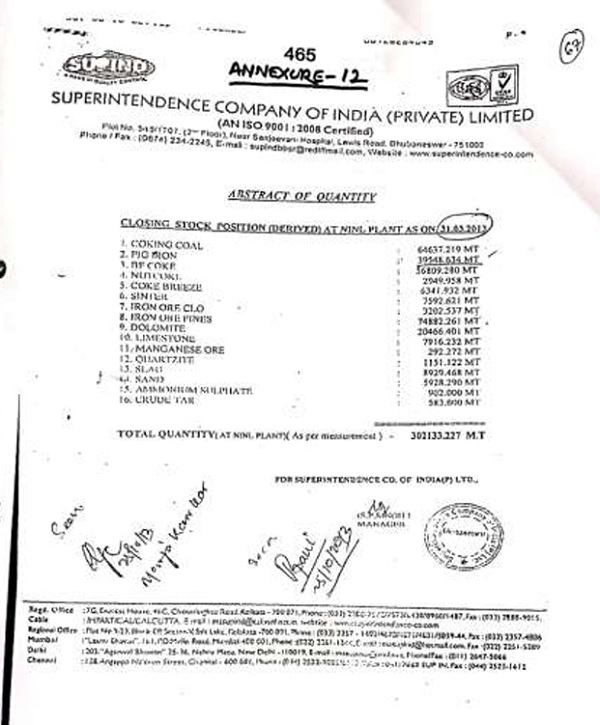
The Tribunal noted that the stock verification was conducted by internal auditors and that while shortages of certain products were reported, excess quantities of other finished goods and raw materials were also found. It observed that the appellant had consistently explained the discrepancies by pointing out the absence of a proper weighing system for pig iron and that production figures were derived on the basis of yield calculations. The Tribunal found that discrepancies could naturally arise because stock assessment was based on estimation rather than actual physical weighment. It further observed that the Revenue had not produced any weighment report establishing actual shortages corresponding to statutory records.
The Tribunal distinguished the decision relied upon by the Revenue in Commissioner of Central Excise Delhi-III v. Martin and Harris Laboratories Ltd., observing that in the present case the appellant had explained the discrepancies by demonstrating that production accounting was based on yield due to the absence of an appropriate weighment system. It also observed that the appellant was a public sector undertaking and that no mala fide intention to clandestinely remove goods could be attributed on the material available. Relying upon the decision in Rashtriya Ispat Nigam Ltd., the Tribunal observed that where different methods are adopted for estimating production, clearance and stock, discrepancies arising from estimation should not automatically lead to the conclusion of clandestine removal in the absence of evidence of actual clandestine clearance.
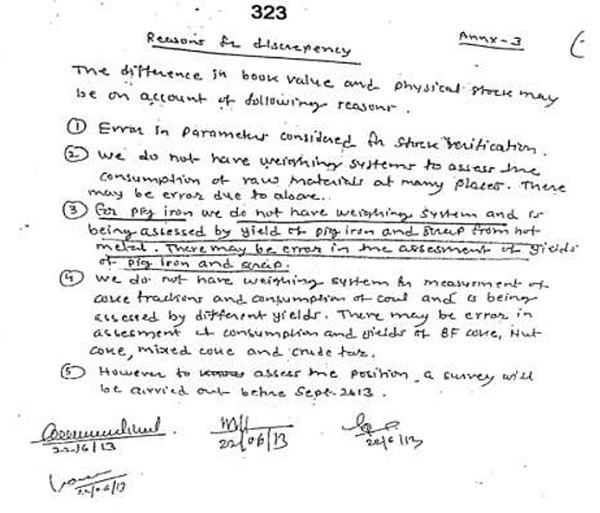
The Tribunal further held that clandestine removal is a serious allegation requiring tangible and positive evidence. Referring to the principles laid down in Arya Fibers Pvt. Ltd., it reiterated that such allegations require evidence including excess raw materials, actual removal of goods, discovery of goods outside the factory, identified buyers, sale proceeds, abnormal electricity consumption, transportation records and other corroborative material. In the present case, no such evidence had been produced. The Revenue relied only upon shortages determined on eye estimation or yield basis and therefore the allegation rested merely on assumptions and presumptions.
The Tribunal also relied upon its earlier decision in Micky Metal Ltd., where it had held that mere differences between audit reports and statutory returns, without investigation establishing clandestine manufacture and removal, cannot sustain a demand. It also referred to Continental Cement Company v. Union of India, where the requirement of corroborative investigation before confirming clandestine removal had been emphasized.
On limitation, the Tribunal observed that the Show Cause Notice dated 28.01.2016 covered the period 2012-13 to 2014-15 by invoking the extended period. Since the appellant was a public sector undertaking and the Revenue had not established any mala fide conduct, the Tribunal held that the demand for the extended period was also unsustainable.
Accordingly, the Tribunal held that the Revenue had failed to prove clandestine manufacture or removal through tangible evidence. The confirmed duty demand, interest and penalty were set aside, the allegation of clandestine removal was held to be unproved, and the appeal was allowed with consequential relief.
Recent Cases Discussed
- M/s Surya Wires Pvt. Ltd. and Shri Harsh Agrawal Versus Principal Commissioner, CGST, Raipur (CESTAT Delhi), 2025-TIOL-736-CESTAT-DEL
- M/s. Super Forgings & Steel Limited v. Commr. of Central Excise, Kolkata-IV (CESTAT Kolkata), 2024-VIL-54-CESTAT-KOL-CE
- M/s. Micky Metals Limited v. CCE, Bolpur (CESTAT Kolkata), 2023-VIL-1624-CESTAT-KOL-CE
- Commissioner of Service Tax-I, Kolkata v. Surya Vistacom Pvt. Ltd. (Calcutta High Court), 2022 (66) G.S.T.L. 290 (Cal.)
- Electronics Technology Parks v. Commissioner of Cus. C. Ex. & S.T., Trivandrum (CESTAT Bangalore), 2022 (56) G.S.T.L. 182 (Tri.-Bang.)
FULL TEXT OF THE CESTAT KOLKATA ORDER
The appellant is in appeal against the impugned order wherein demand of central excise duty amounting to Rs.7,06,34,526/- has been confirmed against them, along with interest, and an equivalent amount of penalty has been imposed, on the allegation that the appellant was engaged in clandestine removal of their final product, namely, pig iron, mixed coke and crude tar.
2. The brief facts of the case are as under: –
i. “Neelachal Ispat Nigam Limited (hereinafter referred to as “Appellant”) is engaged in manufacture of Pig Iron and Billets falling under Chapter 72 of the Central Excise Tariff Act, 1985, in its factory located at Kalinga Nagar Industrial Complex, Jajpur. The end product manufactured by the Appellant is sold domestically in the Indian market and is also sold to merchant exporter for the purpose of export.
ii. During the underlying period, the Appellant was a Joint Venture of 4 Central Public Sector Enterprises, namely MMTC (shareholding of 49.78%), NMDC (10.10%), BHEL (0.68%), MECON (0.68%) and 2 Odisha Government PSUs, namely OMC (20.47%) and IPICOL (12.00%). Accordingly, the Appellant was functioning in manner similar to Central Public Sector Enterprises.
iii. The Appellant was registered under Central Excise, having Registration No. AAACN9433BXM00 for payment of appropriate Central Excise duty on the products manufactured by it.
iv. During the relevant period several semifinished and finished products including Pig iron, were produced at the Appellant’s plant. The process of manufacturing pig iron starts at Blast Furnace where hot metal is produced. The Hot metal is then tapped from Blast Furnace to ladles. This hot metal is then weighed and sent to Pig Casting Machine (PCM) for production of pig iron.
v. In this regard, it is pertinent to note that the Appellant’s factory did not have the weighment facility in the production line post the hot metal stage. Therefore, the production figures for pig iron were derived on the basis of conversion ratio based on the Appellant’s own past records over a period of time. The conversion ratio was periodically corrected looking at the physical stock of pig iron, scrap, some sample tests depending on operating process parameters at that time. The weight of the pig iron arrived on the basis of such conversion ratio was recorded as production figures in the daily stock account (hereinafter referred to as “DSA”) and the accounting records. The hot metal to pig iron conversion ratio varied from 78.57 % to 91.71 % on yearly basis from FY 2001-02 up to 2012-13 and was not completely accurate.
vi. Since the production is recorded in DSA on the basis of conversion ratios and the dispatches are on actual weighment, therefore, there are bound to be variations in the physical stocks and the stock reflected in DSA. Accordingly, in FY 2012-13, the Appellant engaged an external agency M/s Superintendence Company India Pvt Ltd (hereinafter referred to as “external agency”) to conduct a physical verification and ascertain the stock of pig iron at the factory premises as well as at the Paradeep Port stockyard as on 31.03.2013. Apart from pig iron, shortage in the quantity of Mixed Coke, B.F. Coke and Crude Tar was also noted.
vii. As per the report drawn by the external agency the closing balance of pig Iron as on 31.03.2013 was 39548.634 MT whereas as per the ‘Daily Stock Accounts’ (DSA), the closing balance was 59876.300 M. T. Therefore, a shortage of 20,327 MT of pig iron was observed as on 31.03.2013. The physical stock taking carried out by the external agency was on volumetric basis and not on actual weighment. The shortage found was adjusted in the books, which was reflected vide Note 29.3.5 of the Balance Sheet for the relevant year.
viii. In view of the substantial variation between the book stock and the physical stock, the Appellant constituted an internal committee and initiated steps to ascertain the reasons for the discrepancy identified by the external agency. Vide note sheet dated 20.06.2013, the Appellant recorded that a discrepancy existed between the figures reflected in the DSA and the physical stock of raw materials and finished goods as on 31.03.2013 and directed the concerned department to furnish suitable justification for the same. The justification for the shortage was duly communicated on 22.06.2013, wherein the following reasons were pointed out:
-
-
- Errors in parameters of stock verification, viz. volumetric basis;
- No weighing system in place to record pig iron production accurately. Accordingly, the quantity of pig iron produced was derived on the basis of the yield of pig iron and scrap from hot metal, which could result in errors in assessment of such yield.
- • No weighing system even for coke fractions and for consumption of coal. These are also done on yield basis.
-
ix. Thereafter, by internal communication dated 24.07.2013, it was noted that even daily hot metal production had initially been declared on theoretical norms. A Hot Metal Weigh Bridge was installed in January 2011, pursuant to which accurate weighment of hot metal was achieved. However, pig iron production, scrap arising and losses continued to be declared on percentage basis of weighed hot metal based on norms/ assumptions. Consequently, it was recommended that a weighing facility be installed near the production unit so that production and transfer of products for stacking is weighed to derive correct stock.
x. The Appellant promptly undertook corrective action. Vide office order dated 13.08.2013, the Appellant noted that the variation in stock could be due to improper accounting and accordingly, constituted a committee to study the system of accounting for finished goods inter alia including pig iron. The committee constituted was also tasked to come up with measures to avoid wide variation in book stock and physical stock in future.
xi. The committee thereafter prepared a Standard Operating Procedure for accounting of finished products. The committee, inter alia, recorded that any discrepancy between physical stock and book stock would be discussed in the first week of every month and recommended that the possibility of installing a weigh scale for weighing Pig Iron during loading be explored. Therefore, the Appellant had taken requisite steps to identify the reason for discrepancy and took corrective steps.
xii. The stock adjustment of Pig Iron in the Balance Sheet for the year 2012-13 formed the basis of the intelligence gathered by the Directorate General of Central Excise Intelligence (hereinafter referred to as “DGCEI”). Consequently, a search operation was conducted in the factory cum office premises of the Appellant on 25.10.2013.
xiii. During the course of search, several documents were seized under panchanama dated 25.10.2013. Further, statements of several employees of the Appellant were recorded in pursuance to spot summon dated 25.10.2013. Pursuant thereto, the investigation continued for a period of almost two years during which several clarifications were sought from the Appellant and statement of several persons including but not limited to the Manager of the external agency and Assistant General Manager (Security) of the Appellant was recorded.
xiv. During the course of investigation, the department vide letter dated 11.11.2013 communicated that huge variation in the stock of finished goods i.e. Pig Iron for the FY 2012-13, was noticed from the report drawn by the external agency. However, the concerned officials of the Appellant could neither produce the supporting duty payment records nor offer proper justification for the shortage in the stock of finished goods. In view of such alleged shortage, the Appellant was called upon to self-assess their Duty liability and make payment of appropriate duty.
xv. The Appellant vide their letter dated 27.11.2013, promptly clarified that they had not cleared any goods, over and above the quantities reflected in the statutory records to defraud the Government. The Appellant clarified that the Production Department records the production particulars (shift wise) on theoretical estimation/ calculation. Whereas the statutory records maintained for taxation and other commercial purposes duly reflect the actual sales figures on the basis of actual weighment. Hence, there is discrepancy in the position of stock.
xvi. The investigation culminated in the DGCEI issuing a Show Cause Notice dated 28.01.2016 (hereinafter referred to as “underlying SCN”) proposing to recover Rs. 7,06,34,526/- (Rs. 6,85,77,210/-, towards Central Excise duty, Rs. 13,71,544/- towards Education Cess and Rs. 6,85,772/- towards Secondary & Higher Education Cess) for the period 2012-13 & 2014-15 under Section 11A(4) of the Central Excise Act, 1944 along with interest under Section 11AA and penalty under Section 11AC of the Central Excise Act. The key allegation was that the Appellant had clandestinely cleared 20,327 MT of Pig iron without payment of duty.
xvii. The Appellant furnished a detailed reply dated 05.02.2018 in response to the inter alia clarifying that there was no shortage of pig iron, and the mis- match between the book stock and the physical stock is only notional figure, due to various technical reasons. The Appellant further contended that a mere mismatch between books and physical stock cannot be a ground to allege clandestine removal.
xviii. However, Commissioner, GST, Central Excise & Customs, Bhubaneswar without appreciating the submission made by the Appellant proceeded to pass the Order-in-Original No. COMMR/BBSR/CE/36/2018 dated 30.04.2018 (hereinafter referred to as “impugned order”) confirming the demand proposed in the Show Cause Notice based on the following findings:
i. The Appellant had suppressed huge shortage of their final product i.e. Pig Iron, Mixed Coke, Crude Tar and clandestinely removed the same without payment of duty during the underlying period, since the impugned goods as reflected in the statutory DSA/ER-1 were not physically available in the factory premises.
ii. The shortage of 20,328 MT of pig iron was revealed by the survey report prepared by the external agency who had also undertaken physical stocktaking exercises for the Appellant in earlier years, and those reports were accepted by the Appellant. There appears to be no dispute regarding the genuineness or authenticity of the survey report, particularly since it was prepared by a reputed agency which possessed NABH accreditation.
iii. Physical stock taking of Pig Iron had been made in all the years and the difference in the physical stock and the stock in the statutory documents had been accepted and reported. During FY 2012-13 physical stock of Pig Iron was short by 20,328 MT. As per survey report, no shortage of pig iron was noticed during the year 2014–15 rather, an excess quantity of 216.760 MT was reported. The shortage found in 2012–13 could not be generalized. Had the shortage of finished goods been due to some generalized reason, then such shortage of huge quantity would have occurred regularly each year.
iv. The difference in quantities appears to have occurred due to clandestine removal. The Chief Security Officer/ AGM (Security) of the Appellant categorically admitted that the modus of operation was unauthorized loading of the material (Pig Iron) over and above the invoice quantity. The FIR lodged by the Appellant suggests pilferage, which appeared to have contributed to such abnormal shortage.
xix. The Appellant being aggrieved by the impugned order is filing this present appeal.
3. The Ld. Counsel appearing on behalf of the appellant has made various arguments in support of his contentions, which are inter alia, as under: –
A. STATEMENTS RECORDED RELIED UPON BY THE DEPARTMENT WERE RECORDED IN VIOLATION TO SECTION 9D(1)(B) OF THE CENTRAL EXCISE ACT, 1944
A.1 The underlying SCN and the impugned order have relied upon the statements given by several employees as well as the Manager of the external agency. In this regard, it is submitted that the statements relied upon in the underlying SCN and impugned order could not have been considered as valid evidence under Section 9D of the Central Excise Act, 1944.
A.2 Section 9D(1)(a) of the Excise Act sets out the limited circumstances in which a statement, made and signed by a person before a Gazetted Central Excise Officer, shall be relevant for the purpose of proving the truth of the facts contained therein without examining the person. These circumstances are
a. when the person who made the statement is dead,
b. when the person who made the statement cannot be found,
c. when the person who made the statement is incapable of giving evidence,
d. when the person who made the statement is kept out of the way by the adverse party, and when the presence of the person who made the statement cannot be obtained without unreasonable delay or expense
A.3 In all other cases, viz. where the person making the statement is available, then Section 9D(1)(b) of the Excise Act comes into play and the statement, made by such person during investigation, cannot be treated as relevant for the purpose of proving the facts contained therein, unless the procedure prescribed in Section 9D(1)(b) of the Excise Act is followed.
A.4 In terms of the procedure prescribed under Section 9D(1)(b), if the Adjudicating Authority wants to rely on the statement of a person, he has to first admit the statement in evidence. For this purpose, the Adjudicating Authority has to summon the person who had made the statement, examine him as witness in the adjudication proceeding, and arrive at an opinion that the statement should be admitted in the interests of justice. If the Adjudicating Authority chooses not to examine any witnesses in adjudication, their statements cannot be considered as evidence. Sub-Section (2) of Section 9D, specifically states that provisions of sub-section (1) apply to any proceedings under the Central Excise Act, which includes adjudication of SCN proceedings.
A.5 In the present case, procedure prescribed under Section 9D(1)(b) has not been followed hence, the statement recorded during the investigation procedure cannot be relied upon to sustain the charges of clandestine removal
A.6 Reliance in this regard is placed on:
i. M/s Surya Wires Pvt. Ltd. and Shri Harsh Agrawal Versus Principal Commissoner, CGST, Raipur- 2025-TIOL-736-CESTAT-DEL
ii. Hi Tech Abrasives Ltd. Vs. CCE, Raipur, 2018-TIOL-3124-HC-CHHATTISGARH-CX
iii. G-Tech Industries vs. Union of India, 2016 (339) ELT 209 (P&H)
iv. Jindal Drugs Pvt. Ltd. vs. Union Of India 2016 (340) E.L.T. 67 (P & H)
A.7 In view of above, it is submitted that the procedure elaborated above under section 9D(1)(b) of the Excise Act has not been followed by the Adjudicating Authority during adjudication proceedings as well as while issuing the SCN. Thus, the statements do not qualify as valid evidence and cannot be relied upon. Thus, the demand confirmed in the Original Order based on the statements of employees and the manager of the external agency, should be set aside.
B. THE VERIFICATION REPORT DRAWN BY THE EXTERNAL AGENCY HAS NO BASIS
B.1 The underlying SCN has placed reliance on the report prepared by the external agency to allege that, as per the said report, the closing stock of Pig Iron as on 31.03.2013 was 39,548.634 M.T., whereas as per the DSA the closing stock was 59,876.300 M.T. On this basis the Department has alleged a shortage of 20,328 M.T. of pig iron. [Pg 39 of the Appeal]. Similar demand has been raised for other finished goods, viz. mixed coke and crude tar.
B.2 On perusal of the report prepared by the external agency, it is clear that the report is only a one-page document and does not disclose the basis, methodology, working sheets, assumptions, sampling method, on the basis of which the alleged physical stock was arrived at. [Pg 465 of the Appeal Paperbook]. Further, on perusal of the work order, it is evident that the stock verification was admittedly carried out on a volumetric basis and not by actual weighment. Therefore, the report is, at best, an estimate of stock and cannot be treated as conclusive proof of shortage.
B.3 A volumetric stock-taking exercise necessarily involves estimation of the volume of stock piles and conversion of such volume into weight by applying assumed density or conversion factors. In the case of pig iron stored in heaps or stacks, such estimation is inherently approximate, as the final quantity may vary depending on the shape of the heap, uneven stacking, void spaces, compaction, segregation of material, and the assumptions applied by the surveyor. Unless the entire stock is actually weighed, a volumetric survey cannot provide an exact figure of the physical stock available. Similarly, there is no basis as to how the stock of other materials, viz. mixed coke and crude tar has been worked out.
B.4 Therefore, the report prepared by the external agency is not a reliable or sufficient piece of evidence for sustaining the allegation of clandestine removal. At the highest, it could have prompted the Department to conduct further investigation and collect independent corroborative evidence. However, in the absence of such corroboration, the alleged shortage remains presumptive and notional, and the demand confirmed on that basis is liable to be set aside.
C. THE ALLEGED SHORTAGE IS ONLY NOTIONAL SINCE THE FIGURES RECORDED IN THE DAILY STOCK ACCOUNT WAS ON THE BASIS OF CONVERSION RATIO.
C.1 The Appellant humbly submits that the present investigation emanates from the difference between the quantity of pig iron reflected in the DSA and the physical stock ascertained by the external agency. The department has presumed that such difference/ shortage indicates that the finished goods were removed clandestinely without payment of duty.
C.2 In this regard, it is pertinent to appreciate the method adopted by the Appellant for measuring pig iron for the purpose of recording the same in the DSA. The manufacturing process begins in the Blast Furnace, where hot metal is produced and tapped into ladles. Post 2011, the hot metal production was recorded basis actual weighment due to the installation of weighment bridge. This hot metal was thereafter sent to the Pig Casting Machine (PCM) for conversion into pig iron. As evident from the facts above, after this stage, there is no weighment facility available to determine the exact quantity of pig iron produced. Accordingly, the production quantity of pig iron is derived on the basis of a conversion ratio, determined from the Appellant’s own historical records over a period of time and in line with the practice followed by other steel plants. This conversion ratio is periodically revised with reference to the physical stock of pig iron and scrap, sample tests, and the prevailing operating process parameters. The quantity of pig iron so derived is recorded in the DSA.
C.3 The hot metal-to-pig iron conversion ratio varied from 78.57% to 91.71% on a yearly basis from 2001-02 up to 2012–13. [Pg 318 of the Appeal Paper book]. Therefore, even where the quantity of hot metal is known, the derived quantity of converted products, namely pig iron and scrap, together with process losses, may not exactly correspond with the actual quantity generated or produced. This fact is also forthcoming from internal note sheet of Appellant prepared pursuant to physical verification, wherein it was noted that for pig iron there was no weighing system, hence there may be an error in assessment of yields of pig iron.
C.4 This can be understood by way of illustrative example, if 1,000 MT of hot metal is produced and a conversion ratio of 90% is adopted, the DSA would reflect production of 900 MT of pig iron. However, if the actual yield achieved during the manufacturing process is only 85%, the actual quantity of pig iron produced would be 850 MT. In such a situation, the DSA would show 50 MT more pig iron than what is physically available. Conversely, if a conversion ratio of 85% is adopted in the records but the actual yield achieved is 90%, the physical stock would exceed the book stock by 50 MT. Further, the physical verification report was drawn on the basis of volumetric measurement which also has inherent limitations.
C.5 It is therefore evident that the alleged shortage was only notional, attributable to the accounting methodology adopted for recording Pig Iron production in the DSA. Since Pig Iron production was derived on the basis of conversion ratios and assumptions, while sales and clearances were recorded on the basis of actual weighment, a variation between DSA and physical stock was inherent in the system. Similar is the reason for the shortages and excesses of other finished goods (viz. mixed coke and crude tar) during the relevant period.
C.6 It is pertinent to note that the Department was also aware of such fact. During the course of investigation, the department had seized several documents from the premises of the Appellant, including note sheets, internal documents, recording of hot metal-to-pig iron conversion ratio for FY 2001-02 up to 2012–13 etc. On perusal of such documents, it is clear that the Department knew that the Appellant had immediately initiated steps to identify the reasons for such discrepancy between physical stock and DSA. Further, the method adopted by the Appellant for measuring pig iron for the purpose of recording the same in the DSA was also highlighted in several of the seized documents. Following documents are relevant in this regard:
-
-
- Internal communication dated 22.06.2013 – giving reasons for differences [Pg 323 of the Appeal Paper book];
- Internal communication dated 24.07.2013 – giving details of method of recording production and recommendations [Pg 333 of the Appeal Paper book],
- Reply dated 27.11.2013 of the Appellant to the investigating team detailing the reasons for shortages.
-
C.7 The Department despite being in possession of these letters, note sheets and office order did not step to seek clarity on the method adopted by the Appellant for measuring pig iron for the purpose of recording the same in the DSA. The Department presumed that such shortage indicated clandestine removal of finished products.
C.8 It is, therefore, evident that the alleged shortages were merely notional, arising from the year-on-year variation in the conversion ratio adopted for recording production. At best, such notional discrepancy can lead to a suspicion of shortage but cannot be a substitute for the proof of shortage/ clandestine removal. In the present case, the department has not provided any proof to substantiate that the alleged shortage was not notional, despite being in possession of the documents clearly outlining the manner of production recording adopted by the Appellant.
C.9 In this regard, reliance is placed on the decision in Rashtriya Ispat Nigam Ltd v. Commr. of Cus. & C. Ex., Visakhapatnam – 2009 (235) E.L.T. 248 (Tri. – Bang.) wherein the Hon’ble Tribunal duly recognized the practical difficulties in the accounting in large iron and steel plants and held that since different basis are adopted for estimating the production, consumption, clearance, stock taking etc. the discrepancy between the stock taking figures and the production figures which are accounted should not immediately lead to the conclusion that the difference has been removed clandestinely.
C.10 The Hon’ble CESTAT Kolkata in M/s. Micky Metals Limited v. CCE, Bolpur – 2023-VIL-1624-CESTAT-KOL-CE had to decide on an issue concerning allegation of clandestine removal based on the difference in the figures of audit report and the ER-1 returns filed by the assessee. In this case, it was held by the Hon’ble Tribunal that as per the judicial pronouncements, the charge of clandestine removal is not sustainable merely on the basis of difference in the figures of audit report and ER-1 without establishing other parameters of clandestine manufacture and removal of goods.
C.11 In M/s. Micro Forge (I) Pvt. Ltd. v. CCE, Rajkot reported in 2004 (169) E.L.T. 251 the Hon’ble Tribunal held that when the stock position is arrived at on the basis of estimation, the allegation of shortage of stock and consequent illicit removal of finished goods cannot be sustained. Unless the department is in a position to clearly demonstrate the fact of shortage through actual physical weighment of the entire stock, the allegation of shortage of stock and consequent illicit removal of finished goods cannot be sustained. The method of stock taking adopted by the authorities at best can lead to a suspicion of shortage but cannot be a substitute for the proof of shortage.
C.12 In view of the aforesaid discussion, it is clear that there was no shortage or clandestine removal of pig iron during the relevant period, hence the impugned demand is liable to be set aside.
D. CHARGE OF CLANDESTINE REMOVAL HAS TO BE ESTABLISHED ON THE BASIS OF CONCRETE AND POSITIVE EVIDENCE.
D.1 The impugned order has alleged clandestine removal of finished products viz. pig iron, mixed coke and crude tar on the basis of the following:
i. The reported discrepancy between the stock reflected in the DSA/ER-1 returns and the physical stock of pig iron, mixed coke and crude tar;
ii. the survey reports prepared by the external agency;
iii. the statements of the employees of the Appellant and other persons during investigation;
iv. The FIRs pertaining to instances of theft/ pilferage; and
v. internal note sheet communicating the discrepancy between the stock reflected in the DSA/ ER-1 returns and the physical stock of pig iron.
D.2 At the outset, it is pertinent to note that clandestine removal is a serious charge which cannot be raised only on the basis of assumptions and presumptions. In order to sustain the allegation of clandestine removal, the onus is on the Department to prove the same by sufficient and tangible evidence.
D.3 It is humbly submitted that none of the evidence/statements relied on the Department brings out the any tangible proof/ evidence which indicates actual manufacture and clandestine clearance of pig iron, mixed coke and crude tar by the Appellant. In the present case, the Department has assumed that the difference in the figures reflected in the DSA/ER-1 returns and the physical stock has been clandestinely removed. The Department’s case is based on circumstantial evidence viz. note sheet recovered from the premises of the factory, statements of the employees of the Appellant who have not admitted that there was any clandestine removal, instances of theft against which the Appellant themselves had lodged FIRs.
D.4 It is a trite law that the onus of proof regarding clandestine removal is on the Department and the same cannot be shifted to the Appellant without disclosing any evidence to support the Department’s case. In this regard, it is pertinent to appreciate that the Hon’ble CESTAT Ahmedabad in Arya Fibres Pvt. Ltd. v. Commissioner of C. Ex., Ahmedabad-II, 2014 (311) E.L.T. 529 (Tri-Ahmd.), after analyzing various decisions of different judicial and quasi-judicial forums, laid down the fundamental criteria that the revenue needs to establish in cases of clandestine manufacture and removal. The criteria inter alia includes excess used of raw material recorded in the statutory books, instances of actual removal of unaccounted finished goods (not inferential or assumed) from factory, discovery of such finished goods outside the factory, sale of such goods to identified parties, receipt of sale proceeds, use of excess electricity, proof of actual transportation of goods cleared without payment of duty etc.
D.5 In Flevel International v. Commissioner of Central Excise, 2016 (332) E.L.T. 416 (Del.), Hon’ble Delhi High Court agreed with the reasoning of the Hon’ble Tribunal in the case of Arya Fibres (supra) and emphasized the importance of the initial burden on the Department to prove the allegations of the clandestine receipt of raw material or manufacture and removal of the final products, using tenable evidence and corroboration from other reliable concrete documentary evidence.
D.6 Reliance is also placed on the recent decision of this Hon’ble Tribunal in the case of M/s. Super Forgings & Steel Limited v. Commr. of Central Excise, Kolkata – IV –2024-VIL-54-CESTAT-KOL-CE wherein the Hon’ble CESTAT after referring to a plethora of judgements held that the allegation of clandestine manufacturing/clearance is a serious allegation and the department cannot merely allege the same based on quantifications done on assumptions and presumptions without proper corroborative evidence in the form of evidence towards purchases, sales, movement of goods, electricity consumption, recorded statements of alleged purchasers and sellers etc.
D.7 On perusal of the impugned order, it is clear that the department has failed to bring on record any evidence to show actual clandestine removal of Pig iron, crude tar or mixed coke by the Appellant. No evidence has been produced by the Department as to where these goods have been cleared to, or how and what mode of transportation has been used to clear these items, excess use of nay raw material, discovery of such finished goods outside the factory or receipt of any sale proceed. Further, no buyer has been identified by the Department to whom these items have been allegedly cleared.
D.8 Therefore, the Department has not discharged the burden of proof in the instant case. In the absence of any corroborative evidence to support the allegation of that pig iron, crude tar, mixed coke had been manufactured and removed clandestinely, the impugned demand cannot sustain
E. EXTENDED PERIOD OF LIMITATION IS NOT INVOKABLE AND THE ENTIRE DEMAND IS TIME BARRED.
E.1 Without prejudice to the submissions in the foregoing paragraphs, it is further submitted that the demand of Rs. 6,93,64,343 for the FY 2012-13 is barred by limitation. The demand proposed vide the underlying SCN relates the period 2012-13 and 2014-15 and the underlying SCN has been issued on 28.01.2026. As per Section 11A (1) of the Act during the relevant period, SCN is required to be issued within 1 year from the relevant date. However, the proceedings were initiated against the Appellant by invoking the extended period of limitation of 5 years as per the proviso to Section 11(A) of the Act.
E.2 In this regard, it is submitted that the Department has failed to show any positive act of suppression, fraud, or willful misstatement on the part of the Appellant. In fact, the shortage of pig iron was suo moto detected by the querist and was adjusted inm the books, which was reflected vide Note 29.3.5 of the Balance Sheet for the relevant year. In fact, the entire investigation of the DGCEI emanates from such disclosure. [Para 2 of underlying SCN at Pg 37 of Appeal Paperbook]. Further, the Appellant had furnished all the requisite details of production during the course of investigation. It is a settled law that extended period of limitation cannot be invoked without showing a mala fide intent or positive act of suppression on the part of the Appellant.
i. Commissioner of Service Tax – I, Kolkata v. Surya Vistacom Pvt. Ltd. – 2022 (66) G.S.T.L. 290 (Cal.)
ii. Tata Steel Ltd. v. Commissioner of C. Ex. & ST., Jamshedpur – 2020 (38) G.S.T.L. 62 (Tri. – Kolkata)
The Appellant being a Joint venture of Central Public Sector Enterprise, during the underlying period, possibility of suppression does not arise.
E.3 During the relevant period, the Appellant was a Joint Venture of 4 Central Public Sector Enterprises, namely MMTC (shareholding of 49.78%), NMDC (10.10%), BHEL (0.68%), MECON (0.68%) and 2 Odisha Government PSUs, namely OMC (20.47%) and IPICOL (12.00%). Copy of the press release dated 04.07.2022 issued by Press Information Bureau is enclosed as Annexure – A
E.4 Reliance in this regard is placed on the decision of the Hon’ble Punjab and Haryana High Court in the case of Commissioner v. Markfed Refined Oil & Allied Indus. – 2009 (243) E.L.T. A91 (P&H) wherein it was observed that it is not easy to infer any evasion of duty or intention to evade duty when the assessee is a government organization.
E.5 Further reliance is also placed on the following judgements wherein similar propositions have been upheld –
i. Electronics Technology Parks v. Commissioner of Cus. C. Ex. & S.T., Trivandrum – 2022 (56) G.S.T.L. 182 (Tri. – Bang.)
ii. Hindustan Petroleum Corporation Ltd v. Commr. of C. Ex., Mumbai – 2015 (328) E.L.T. 684 (Tri. – Mumbai)
iii. Hindustan Petroleum Corporation Ltd. v. Commr. of C. Ex., Calcutta – I – 2001 (136) E.L.T. 943 (Tri. – Kolkata) Inordinate delay to issue Show Cause Notice.
E.6 It is submitted that while the DGCEI had visited the plant of the Appellant on 25.10.2013 and was aware of the shortage/ excess in finished goods on that very date, as evident from the letter dated 11.11.2023 [Pg 475 of the Appeal Paper book]. However, still the underlying SCN has been issued only on 28.01.2016 after an inordinate delay of more than 2 years from the date of facts coming to the notice of the Department. It is a trite law that if there is an inordinate delay in issuance of show cause notice, extended period of limitation is not invokable.
E.7 Reliance in this regard is placed on the decision of the Hon’ble CESTAT, Kolkata in M/s. Super Forgings & Steel Limited (supra) wherein it was observed that though the department officials visited the unit on 1st September 2001, and despite having all documents, the SCN was issued only on 27.07.2004, thereby the SCN same being time barred. The Hon’ble CESTAT, Kolkata arrived at this decision by holding that Tribunals and High Courts have consistently held that Show Cause Notice has to be issued within 6/12 months from the date of visit of officials since that is taken as the date of availability of knowledge to the Department.
E.8 Reliance is this regard, is also placed on
i. Gammon India Ltd v. CCE, Goa [2002 (146) ELT 173 (Tri-Mum) affirmed Hon’ble Supreme Court in Commissioner v. Gammon India Ltd. [2002 (146) E.L.T. A313]
ii. M/s Berger Paints India Limited v. Commissioner of Central Excise, Kolkata-II in Excise Appeal No. 637 of 2010 vide an order dated 16.04.2024
F. INTEREST AND PENALTY ARE NOT IMPOSABLE.
F.1 Where the principal demand itself is not payable, the demand for interest and penalty ought to be set aside. Reliance is placed on the decision of the Hon’ble Supreme Court in the matter of Pratibha Processors v. UOI – 1986 (88) E.L.T. 12 (S.C.) wherein it was held that interest is compensatory for lost revenue. In the instant case, since demand is not sustainable, there is no lost revenue, and hence, interest cannot be charged.
F.2 In the matter of Collector of Central Excise v. H.M.M. Limited – 1995 (76) E.L.T. 497 (S.C.), it was held that the question of penalty would arise only if the Department is able to sustain the demand. Hence, no penalty is imposable since the demand cannot be sustained.
4. On the other hand, the Ld. Authorized Representative of the Revenue supported the impugned order. He argues that it is a fact on record that there was a difference in the actual stock taken and the stock recorded in the books of accounts; that in such circumstances the charge of clandestine removal has been proved and the said goods have been cleared without payment of duty. He also submitted that in a similar case, in the case of Commissioner of Central Excise Delhi-III v. Martin and Harris Laboratories Ltd. [2010 (260) E. L. T. 31 (Punjab and Haryana), the Hon’ble High Court held that as the respondent therein had failed to give satisfactory explanation, it could be inferred that there was clandestine removal of goods.
5. Heard the parties and considered their submissions.
6. In this case, we find that it is a fact on record that the appellant have engaged internal auditors to do the stock taking. During the said stock taking, quantities were taken on record, which are extracted hereinbelow: –
7. Now, on the basis of the stock taking done by the internal auditors, shortage of certain quantities were found during the impugned period. However, it was also found that some quantities of other finished goods or raw materials were found in excess.
8. We find that the reasons or discrepancy in stock taking have been explained, which is reproduced hereunder: –
9. As per the report filed, for the Pig Iron, the appellants were not having the weighing system and was being assessed on the basis of yield of pig iron and scrap. There may be errors in the assessment of yield of pig iron and scrap as the weighing system for measurement of the goods in question is not correct and absolute. We are therefore of the opinion that discrepancies can remain as the same was only done on eye estimation, and not on physical verification of the stock in detail. In fact, we observe that no weighment report has been produced by the Revenue to substantiate the allegation that there is a shortage of actual weighment as compared to their statutory records.
10. In this context, we observe the decision relied upon by the Ld. Authorized Representative of the Revenue in the case of Commissioner of Central Excise Delhi-III v. Martin and Harris Laboratories Ltd. [2010 (260) E. L. T. 31 (Punjab and Haryana), Supra is not applicable to the facts of this case as, in this case, the appellant has been able to show that the discrepancies are due to the reason that no weighment system exists and since the same has been done on the basis of yield recovered from the raw material.
11. Moreover, the method of weighment being not convincing. Further, the and appellant being a public sector undertaking, we are of the opinion that the appellant cannot be alleged to be having mala fide intentions to clear the goods clandestinely. A similar view was taken by this tribunal in the case of Rashtriya Spath Nigam Limited v. Commissioner of Customs & Central Excise Visakhapatnam [2009 (235) E. L. T. 248 (Tribunal Bangalore). Wherein it was observed as under: –
“The appellants are the manufacturers of Iron and Steel products, which are excisable. They are regularly removing the goods on payment of duty. They conducted stock takings for the financial years 2000-01, 2001-02, 2002-03 and 2003-04 without intimation to the Central Excise Officers to enable them to associate themselves with such stock takings. It was revealed that as a result of the stock takings in respect of certain finished products, there was excess and in respect of pig iron for all the four years, there was shortage. The duty payable on the shortage of pig iron had been worked out for the three years. In view of this, the Revenue proceeded against the appellant by way of issue of show cause notice demanding duty amount of Rs. 76,21,639/-. The Adjudication proceedings were conducted. The learned Commissioner after considering all the points raised by the appellants, confirmed the duty under Proviso to Section 11A of the Central Excise Act. Interest was demanded. Equal penalty under Section 11AC was also imposed. As regards the excess stock in respect of the various products, it was ordered that they would be taken into the RG 1 account and would be cleared on payment of duty. The appellants are highly aggrieved over the impugned order. They have made several submissions and they have also relied on the various case-laws. It was contended that the appellants are following different methods for accounting the production, accounting the clearance to the parties, accounting the clearance for capital consumption and also stock takings. In fact, before the learned Adjudicating Authority they have stated that as far as the accounting of pig iron is concerned, it is based on estimate. As far as the accounting of clearance for the capital consumption is done on the basis of standard grab weight. During the stock verification, the method followed is volumetric calculation method. Based on the volume and density the weight is calculated. Thus, we find that different criteria are adopted for estimating the pig iron for different purposes. Therefore, in the very nature of the accounting, there is bound to be difference. Unless it is shown that the appellants had cleared the goods without payment of duty in a clandestine manner, or in other words, unless there is evidence to show that there is clandestine clearance, this type of demand of duty is not sustainable. The Commissioner referred to the C.B.E.C. Circular No. 4/73/70-CX.6, dated 12-4-1971 has been reproduced.
“C.E.-S.R.P.-Problems of Iron & Steel Industry-Regarding Since extension of S.R.P. to Iron & Steel products, the major Iron & Steel Plants have been representing about several difficulties in implementing Chapter VII-A of Central Excise Rules. The difficulties pointed out by Iron & Ste ron & Steel Industry have been carefully examined by the Board and it has been decided to allow the following relaxation in case of major Steel Plants:
(i) Daily adjustment of duty in the PLA:
Under Rule 173Q, every assessee is required to pay duty determined by him for each consignment by debit to ant account current maintained with the Collector before removal of the val of the goods, Steel Plants have represented that this requirement is not possible to be observed as a considerable time lag exists between the actual clearance and the processing of basis documents for purposes of calculating Central Excise duty before the PLA can be debited. The Steel Plants therefore, have requested that they be permitted to raise the debit in the PLA on weekly/periodical basis.
It has been agreed that Steel Plants should be permitted to post the debit entries in their PLA within a period of one week from the date of actual clearance but the debit should be raised against on the day when the actual clearance takes place. It should, therefore, be ensured that sufficient balance is maintained in the PLA to cover the duty due on the goods cleared.
ii) Machine numbering on dispatch-cum-invoices used in lieu of gate passes:
Since invoice-cum-despatch advices in the case of steel plants have been accepted as valid excise documents in lieu of gate pass, they are required to be serially numbered under the rules. Steel Plants have represented their difficulties in serially numbering the invoices, as these are computerized. It has however, been explained by Steel Plants that the dispatch advices from their mill shops to the central point bear serial numbers.
In view of this, it has been decided that machine serial numbers need not be insisted upon on invoice-cum-despatch advices.
(iii) Production account and maintenance of RG-1:
It has been observed that different practices are being followed in the Steel Plants in the matter of accounting their daily production. After carefully considering the matter, it has been decided that at the the account acc of production maintained by the steel plants for their own purpose would be accepted for Central Excise purposes also. In case, however, they maintain separately Central Excise records, the figures of production to be entered therein would be the same as are maintained by that since the production in many instances has to be determined on the basis of sectional weight, which is a calculated weight the vari between the quantity finally cleared, and the initial production account should be viewed by Central Excise officers in their proper perspective. variations
(iv) Annual stock-taking:
Different methods are being followed in the matter of stock taking. After careful consideration, it has been decided that the steel plants would follow their respective procedures of stock taking but should intimate the Central Excise Officers in advance about their programme of stock taking to enable the officers to associate themselves with such stock taking wherever possible. The plants would also furnish to the Central Excise officers of the results of stock taking conducted by them and their own investigations about the variations found during the stock taking. The Collectors of Central Excise, while deciding cases of deficiencies found during stock taking, should give due consideration to the report of investigations as to the reasons for variations as determined by the plants themselves.
(v) Submissions of R. T. 12 and R. T. 5 returns:
It has been decided that Collectors will consider the request of the plants for extension of the date of submission of R.T. 12-14 days. It has also been agreed that since R.T. 5 return is not likely to afford a ready means of check to the central excise officers, so far as steel plants are concerned, this may not be insisted upon from the steel plants.
Weight of raw materials transferred within the factory for production of finished goods:
Steel plants wanted that transfer of such material might be followed on the basis of sectional weights and actual weighment need not be insisted upon. In view of the established practice showing sectional weights and the difficulties in taking the actual weight in many cases, this has been agreed to.”
4.1 It has also been decided that since the production in many instances has to be determined on the basis of sectional weight which is calculated weight, the variations between the quantities finally cleared and the initial account should be viewed by Central Excise Officers in their proper perspective. However, the Commissioner has not accepted the explanation of the party on the ground that they had not intimated the Central Excise Officers in terms of the Board’s in Section the appellants are required to inform the Central Excise officers so that they could also participate in the stock taking exercise, this has not been done. This is a lapse, but for this purpose in our view demanding duty and imposition of heavy penalty is not at all warranted. In any case, the invocation of the longer period is not justified. We cannot say that one of the largest public sector undertakings Rashtriya Ispat Nigam is doing all these things with an intention to evade payment of duty. Further, this Bench had occasion to deal with similar issues in the following cases:
(a) Steel Authority of India Ltd. v. CCE, Mysore – 2006 (200) E.LT. 229 (Tri.- Bang.) where a similar situation was examined and it was decided that the shortage is inflated due to errors in taking opening balance and a physical stock. It is also held that considering the practical difficulties in estimating the actual stock and in view of the submissions made by the appellants, the demand of duty made by the Adjudicating Authority cannot be sustained. The ratio of that case would be applicable for this case also. In the case decided by us also the steel products are involved. We are reproducing the findings given in that order:
“We have gone through the records of the case carefully. The demand has been issued under Rule 223A covering a period of 13 years from 31-3-1998 to 31-3-2001. The Revenue has issued the show cause notice on the belief that Section 11A is not applicable for demands made under Rule 223A. The Department’s view is not correct in terms of the judicial pronouncements cited by the appellants. There is no allegation that the appellants have removed goods in clandestine manner. Moreover, the stock taking was done by the associated with the same. Hence, the stock taking cannot be said to have been conducted in terms of Rule 223A of the the appellants themselves. The departmental officers only Central Excise Rules. In any case, the shortage arrived at is based on estimates. The estimate cannot be said to be very accurate, as it has got its own limitations. It should also be appreciated that there are practical problems in steel plants in the matter of accounting of their production. The C.B.E.C. Circular No. 52/79 Cx.6, dated 26-10-1979 has also laid down certain guidelines with regard to condonation of losses observed during annual stock taking. The appellants’ submission that the excess/shortage noticed was only marginal should have been given its due consideration. The Tribunal in the case of M/s. Micro Forge (1) Pvt. Ltd. v. CCE, Rajkot reported in 2004 (169) ELT. 251 (T) has held that when the stock position is arrived at on the basis of estimation, the finished goods cannot be sustained. A plethora of case laws hold that provisions of Section 11A would apply in making the allegation of shortage of stock and consequent illicit removal of demands of duty on deficiencies found during stock taking. The appellants based many reasons for discrepancies between the RG-1 and the physical stock. For example, RG-1 is only based on estimated production and not based on actual weighment. Physical stock is also based on estimation of weight on the basis of volumetric estimate and conversion to theoretic weight based on sectional weight. A comparison between two Losses like cutting, grinding and milling, scale loss after heat treatment and straightening, reprocessing after inspection at various stage of manufacture are not recorded in RG-1. Rejections are not recorded while accounting for quantity produced or issued in the form of sections and ingots. Shortage is inflated due to errors in taking opening balance as on 1-4-1998 and physical stock on 31-3-2001. Considering the practical difficulties, in estimating the actual stock and in view of the submissions made by the appellants, we find that the demand of duty made by the adjudicating authority cannot be sustained. Therefore, we allow the appeal with consequential relief.” two estimation is inherently inaccurate.
(b) Similarly in the case of Widia India Ltd. v. CCE, Bangalore -2007 (207) E.L.T. 562 (Tri.-Bang.) similar decision was taken. In the case of Steel Authority of India Ltd. v. CCE, Bhubaneswar-2001 (47) RLT 343 (CEGAT- Kol.) it was held that allegation of clandestine removal based on difference in figures of production and clearance given in the annual financial accounts and RG-1 cannot be sustained and annual financial accounts are made public within two months from the date of close of the year.
5. The learned Departmental Representative also relied on the following case laws:
(a) CCE, Ludhiana v. Arora Iron & Steel Rolling Mills – 2004 (175) E.L.T. 293 (Tri.-Del.)
(b) CCE, Chandigarh v. Balu Ram Hamam Dass Steel Rolling Mills – 2004 (170) E.L.T. 111 (Tri.-Del.)
(c) CCE, Indore v. Agya Auto Ltd. – 2004 (166) E.L.T. 177 (Tri.-Del.)
(d) CCE, Surat v. Silver Prints – 2004 (169) E.L.T. 245 (Tri.-Mumbai)
(e) CCE, Kanpur v. Ess Kay Polymers – 2004 (165) E.L.T. 566 (Tri.-Del.)
(f) Kirloskar Brothers Ltd. v. Union of India and Others -1988 (34) E.L.T. 30 (Bom.).
6. On a very careful consideration of the issue, we find that the case-laws relied on by the Revenue are the cases decided by a Single Member Bench, whereas the Division Bench’s decisions are in favour of the department. In any case, the longer period is clearly not invocable and since different basis are adopted for estimate the production, consumption, clearance, stock taking etc. the discrepancy between the stock taking figures and the production figures which are accounted should not immediately lead us to the conclusion that the difference has been removed clandestinely. All the case-laws decided earlier by this Bench are clearly applicable. The longer period also is not invocable. Therefore, the duty demand cannot be sustained. The penalty imposed is also not justified. Hence, we allow the appeal with consequential relief.”
12. It is also well settled that to allege clandestine removal, there should be some positive evidence on record. Mere shortage in stock on the basis of eye estimation cannot be a basis to allege that there has been clandestine removal of goods. The parameters to allege clandestine removal has been laid down by this tribunal in the case of Arya Fibers Pvt. Ltd. v. Commissioner of Central Excise, Ahmedabad-II, [2014 (311 ) E. L. T. 529 (Tribunal Ahmedabad), wherein this Tribunal has laid down the fundamental criteria for raising the allegation of clandestine manufacture and clearance of goods, as under: –
(i) There should be tangible evidence of clandestine manufacture and clearance and not merely inferences or unwarranted assumptions;
(ii) Evidence in support thereof should be of :
(a) Raw materials, in excess of that contained as per the statutory records;
(b) Instances of actual removal of unaccounted finished goods (not inferential of assumed) from the factory without payment of duty;
(c)Discovery of such finished goods outside the factory;
(d) Instances of sale of such goods to identified parties;
(e) Receipt of sale proceeds, whether by cheque or by cash, of such goods by the manufacturers or persons authorized by him;
(f) use of electricity far in excess of what is necessary for manufacture of goods otherwise manufactured and validly cleared on payment of duty;
(g) statements of buyers with some details of ilicit manufacture and clearance;
(h) proof of actual transportation of goods, cleared without payment of duty;
(i) links between the documents recovered during the search and activities being carried on in the factory of production; etc.
13. Admittedly, in this case, no tangible evidence has been brought on record by the Revenue; merely from shortages recorded by the auditors on eye estimation basis / yield basis, it has been inferred that there is clandestine removal of goods on the part of the appellant. Such inferences are drawn merely on the basis of assumptions and presumptions and the same cannot be a basis to sustain the allegation of clandestine removal of goods against the appellant.
14. We take note of the facts of the case and the decision arrived at by the Tribunal in the case of Micky Metal Ltd. v. Commissioner of Central Excise, Bolpur reported in [2023 VIL-1624 – (CESTAT, Kolkata, Central Excise)], wherein it was alleged that the appellant therein had suppressed the facts from the Central Excise Department by not mentioning the production and clearance in Central Excise Returns in form ER-1 and therefore had evaded payment of duty; thus Show Cause Notice were issued.
15. In the said case, this Tribunal has observed as under:
“7. Considered the facts that in this case the demand of duty sought from the appellant on the basis of difference in figures of audit report and ER-1 return for the year 2006-07. The appellant being a public limited company the financial records are available on net all the times. But, the show cause notice has been issued on 01.03.2011 by invoking extended period of limitation.
8. We further take note of the fact that apart from difference in figures of financial records and ER-1 return, no investigation was conducted to establish clandestine removal of goods which is serious allegation. No statement of has been recorded. In that circumstances the charge of clandestine removal of goods not sustainable as similar issue came up before this Tribunal in the case of Chanduka Hi-Tech Steel Pvt.Ltd. v. CESTAT, Kolkata, wherein by Final Order NO.FO/7766/2017 this Tribunal has observed as under:-
“3. After going through the impugned order and after appreciating the submissions made by both sides, I note that admittedly, the findings of the lower authorities are solely based upon the Sales Tax Returns’ figures. The Tribunal’s decision in the case of Vigirom Chem Pvt.Ltd. referred (supra) laying down that the clandestine allegation cannot be made exclusively on the basis of record of sale of goods in the Sales Tax Returns. Otherwise also, I find that the allegation of clandestine activites are serious allegation and are required to be based upon the evidences, which reflected upon the same. In the present case, the Revenue has not made any investigation as regards the clandestine manufacture and clearance of the appellant’s final product. In such a scenario, the said finding is neither warranted nor justified. The Revenue’s reliance on the Tribunal’s decision in the case of Victor Component Systems Pvt.Ltd. referred (supra) is not appropriate inasmuch as it is seen that in that case, the Revenue relied upon the entries made in private records seized and recovered from the appellant’s premises and the matter was remanded for quantification, by taking into account the sales figures as reflected in the Sales Tax Returns. This was so done at the request of the appellant. I find no justification to follow the same in contrast to the Tribunal’s decision in the case of Vigirom Chem Pvt.Ltd. referred (supra). As such, I set aside the impugned order and allow the appeal with consequential relief to the appellant.”
9. Further in the case of Continental Cement Company v. Union of India [2014 (309) ELT 411 (All.)], the Hon’ble Allahabad High Court held that to allege clandestine removal of the goods, the following requirements are to be considered.
“12. Further, unless there is clinching evidence of the nature of purchase of raw materials, use of electricity, sale of final products, clandestine removals, the mode and flow back of funds, demands cannot be confirmed solely on the basis of presumptions and assumptions. Clandestine removal is a serious charge against the manufacturer, which is required to be discharged by the Revenue by production of sufficient and tangible evidence. On careful examination, it is found that with regard to alleged removals, the department has not investigated the following aspects :
(i) To find out the excess production details.
(ii) To find out whether the excess raw materials have been purchased.
(iii) To find out the dispatch particulars from the regular transporters.
(iv) To find out the realization of sale proceeds.
(v) To find out finished product receipt details from regular dealers/buyers.
(vi) To find out the excess power consumptions.
13. Thus, to prove the allegation of clandestine sale, further corroborative evidence is also required. For this purpose no investigation was conducted by the Department.”
Further in the case of Tally Solutions Pvt.Ltd. v. CCE, Bangalore [2020 (41) GSTL 520 (Tri.-Bang.)] – 2020-VIL-331-CESTAT-BLR-CE, the Tribunal observed as under:-
“8. The appellants have vehemently fought on the issue of limitation. They pleaded that SCN was issued on 5-9-2011 whereas the normal period expired on 10-9-2010; the SCN was issued on the basis of the Audit of records maintained by the appellants; therefore, extended period cannot be invoked by alleging suppression and that they were also submitting/filing the Returns regularly. He relies upon the decisions in CCE v. ZYG Pharma Pvt. Ltd. – 2017 (358) E.L.T. 101 (M.P.); CCE v. Sanmar Speciality Chemicals Ltd., 2016 (43) S.T.R. 347 (Kar.); GAC Shipping (India) Pvt. Ltd. v. CCE, 2017 (49) S.T.R. 242 (Tri. – Bang.) and others. While disposing the Stay Petition vide Final Order No. 26467/2013, dated 8-7-2013 [2016 (46) S.T.R. 233 (Tri. – Bang.)] observed that prima facie there was no suppression of facts or mis-declaration on the part of the appellants. We also find that in view of the above, timely scrutiny of Returns by the Department would have shown that there is huge accumulated credit; Department was free to further investigate the matter and issue timely SCN. In view of the same, we find that the appellants have a strong case on limitation too and the SCN is barred by limitation. In the result, we are of the considered opinion that the impugned order does not survive on merits as well as limitation.”
11. As revenue has raised the demand only on the basis of difference in the figures of audit report and ER-1 return which were available with them in time, in that circumstances as held by this Tribunal in the case Tally Solutions Pvt. Ltd. (supra) the extended period of limitation is not invocable as show cause notice for the period 2006-07 has been issued on 01.03.2011 by invoking extended period of limitation.
12. We further find that time and again it is held by the judicial pronouncements as discussed hereinabove that merely on the basis of difference in the figures of audit report and ER-1 return without establishing the parameters of clandestine manufacture and removal of goods, the charge of clandestine removal is not sustainable. Therefore, on merits also, we hold that in the absence of any statement or investigation against the appellant with corroborative evidence, the impugned order is not sustainable. Accordingly, the same is set aside.”
16. In view of the above, we hold that the Revenue has failed to prove the charge of clandestine manufacture and removal of goods by way of tangible evidence in this case. Merely on the basis of difference between stock recorded by the auditors and the statutory records, the impugned demand cannot be raised, by alleging clandestine removal of goods on the part of the appellant.
17. It is also seen from the records that the impugned Show Cause Notice has been issued to the appellants on 28.01.2016 by invoking the extended period limitation, for the period from 2012-13 to 2014-15. As the appellant is a public sector undertaking and no mala fides have been brought on record by the Revenue. In view thereof, the demand pertaining to extended period limitation is also not sustainable.
18. Furthermore, in the facts and circumstances of the case as above, no penalty can be imposed on the appellants.
19. In view of the above discussions, we hold that the charge of clandestine removal is unproved. Therefore, the demand confirmed in the impugned order is set aside. Accordingly, the penalty imposed also stands set aside.
20. In the result, we allow the appeal with consequential relief if any.
(Order Pronounced in Open court on 28.07.2026)