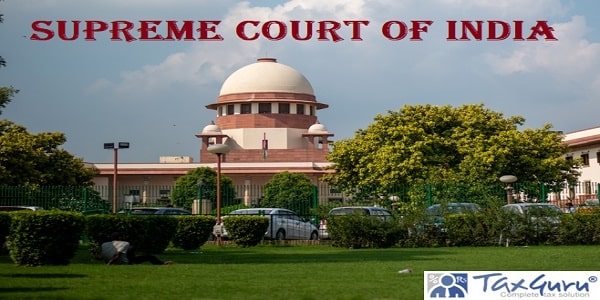
Manish Kumar Vs. Union of India & Anr. (Supreme Court of India)
Summary: The Supreme Court of India, in Manish Kumar Vs Union of India & Anr., decided on 19 January 2021, examined the constitutional validity of Sections 3, 4 and 10 of the Insolvency and Bankruptcy Code (Amendment) Act, 2020. These amendments introduced three provisos to Section 7(1), inserted Explanation II into Section 11 and introduced Section 32A of the Insolvency and Bankruptcy Code, 2016 (IBC). The petitions were filed primarily by homebuyers and other financial creditors who challenged the restrictions imposed upon their ability to initiate the Corporate Insolvency Resolution Process (CIRP). The petitioners contended that the amendments violated constitutional guarantees, particularly Article 14, and imposed arbitrary and discriminatory conditions upon creditors who were otherwise entitled to initiate insolvency proceedings following a default. The Supreme Court considered the legislative objectives, constitutional principles and practical implications of these provisions before determining their validity.
The principal challenge concerned the first and second provisos to Section 7(1), which prescribed a minimum numerical threshold for initiating insolvency proceedings by specified classes of financial creditors. Under the amended provision, real-estate allottees were required to file an application jointly through at least 100 allottees belonging to the same real-estate project or 10% of the total number of allottees in that project, whichever was less. A corresponding requirement applied to financial creditors falling within Section 21(6A)(a) and (b). The petitioners argued that this restriction effectively deprived individual homebuyers of the right previously available under the IBC. They maintained that collecting information about other allottees, securing their cooperation and establishing a common basis for initiating insolvency proceedings would be difficult, particularly where contractual obligations and dates of default differed among purchasers.
The petitioners further submitted that homebuyers had already been recognised as financial creditors and that their statutory rights could not be substantially restricted through procedural requirements. Reliance was placed upon Pioneer Urban Land and Infrastructure Ltd. Vs Union of India, in which the Supreme Court had considered the position of real-estate allottees under the IBC. It was argued that the new threshold created an unreasonable distinction between homebuyers and other financial creditors, despite their common statutory status. The petitioners also challenged the third proviso to Section 7(1), which required certain pending applications that had not been admitted to comply with the new threshold within 30 days, failing which they would be deemed withdrawn. According to the petitioners, applying the new requirement to previously instituted proceedings was retrospective, unfair and destructive of accrued rights.
The Union of India defended the amendments on the ground that insolvency proceedings under the IBC were collective proceedings intended to resolve corporate financial distress rather than mechanisms for recovering individual debts. It submitted that permitting a single allottee or a small number of creditors to initiate CIRP could adversely affect other creditors and stakeholders who might not favour insolvency proceedings. Reference was made to the recommendations of the Insolvency Law Committee, which had considered the need to prevent unnecessary litigation and protect the timely resolution of distressed companies. The Government maintained that the classification of homebuyers and other specified financial creditors was based upon intelligible differences and had a rational connection with the objectives of the IBC. It also pointed out that affected homebuyers could pursue appropriate remedies under the Real Estate (Regulation and Development) Act, 2016 and consumer-protection legislation.
The Supreme Court examined the objectives of the IBC, the nature of financial creditors and the constitutional principles governing economic legislation. It observed that the initiation of CIRP has consequences extending beyond the individual applicant because the proceedings affect the corporate debtor, its creditors and other stakeholders. The Court accepted that Parliament could prescribe different procedural conditions for distinct classes of financial creditors where the classification was supported by a legitimate legislative purpose. It held that the numerical thresholds under Section 7(1) were designed to ensure a sufficient degree of collective support before insolvency proceedings were initiated by creditors belonging to large and potentially heterogeneous classes. The Court consequently rejected the argument that the filing thresholds were unconstitutional merely because they restricted the ability of individual creditors to initiate CIRP independently.
While examining the position of real-estate allottees, the Supreme Court considered the practical objections raised regarding access to information, different contractual arrangements, varying dates of default and difficulties in obtaining the support of other homebuyers. It nevertheless concluded that these concerns did not establish the constitutional invalidity of the amended provision. The Court recognised the legislative distinction between individual remedies for contractual grievances and the collective consequences of insolvency resolution. It upheld the requirement that the prescribed number of allottees must belong to the same real-estate project and accepted the legislative objective of ensuring that insolvency proceedings reflected a meaningful collective interest. The Court also sustained the transitional requirement applicable to certain pending applications, while considering the consequences for applicants who had instituted proceedings before the amendments came into force.
The Supreme Court separately examined the constitutional challenge to Explanation II inserted into Section 11 of the IBC. The explanation clarified that the restrictions imposed upon specified corporate debtors from initiating CIRP would not prevent such corporate debtors from initiating insolvency proceedings against another corporate debtor. The Court considered the distinction between a corporate debtor seeking insolvency resolution for itself and a corporate debtor acting as a creditor against another defaulting corporate entity. It upheld the clarification, recognising that the statutory disqualifications applicable to a corporate debtor’s own insolvency proceedings did not necessarily prevent it from enforcing its rights as a creditor against another corporate debtor. The Court found no constitutional infirmity in the legislative clarification.
Another significant challenge concerned Section 32A, which provides conditional protection to a corporate debtor against liability for offences committed before commencement of CIRP where an approved resolution plan results in the prescribed change of management or control. The provision also protects qualifying corporate property from specified actions relating to earlier offences, subject to statutory conditions. The petitioners questioned whether such immunity could prejudice creditors and interfere with proceedings concerning assets connected with unlawful activities. The Supreme Court upheld Section 32A, recognising that successful insolvency resolution required eligible new management and resolution applicants to receive protection from certain liabilities arising from the conduct of previous management. The Court emphasised that the immunity did not extend to persons responsible for committing offences and that statutory obligations to assist and cooperate with investigating authorities continued to apply.
Ultimately, the Supreme Court upheld the constitutional validity of the challenged provisions of the Insolvency and Bankruptcy Code (Amendment) Act, 2020 and dismissed the writ petitions and connected proceedings, subject to its directions. It sustained the minimum filing thresholds prescribed under Section 7(1), the clarification introduced into Section 11 and the protection provided under Section 32A. In relation to pending applications affected by the amended filing threshold, the Court granted limited consequential relief concerning court fees and condonation of delay, exercising its powers under Article 142 of the Constitution. The judgment reaffirmed that Parliament possesses considerable legislative discretion in structuring economic and insolvency legislation, provided the statutory classification and restrictions satisfy constitutional requirements. It also established that the collective character of CIRP justifies appropriate filing thresholds and that conditional immunity for an eligible corporate debtor can facilitate effective insolvency resolution without extinguishing the personal liability of those responsible for earlier offences.
Cases Discussed
- Pioneer Urban Land and Infrastructure Ltd. Vs Union of India — (2019) 8 SCC 416
- Chitra Sharma Vs Union of India — (2018) 18 SCC 575
- B.K. Educational Services (P.) Ltd. Vs Parag Gupta & Associates — (2019) 11 SCC 633
- Swiss Ribbons Pvt. Ltd. Vs Union of India — (2019) 4 SCC 17
- Motilal Padampat Sugar Mills Co. Ltd. Vs State of U.P. — (1979) 2 SCC 409
- Garikapati Veeraya Vs N. Subbiah Choudhry — AIR 1957 SC 540
- Thirumalai Chemicals Ltd. Vs Union of India — (2011) 6 SCC 739
- Delhi Metro Rail Corporation Ltd. Vs Tarun Pal Singh — (2018) 14 SCC 161
- State of Karnataka Vs Karnataka Pawn Brokers Association — (2018) 6 SCC 363