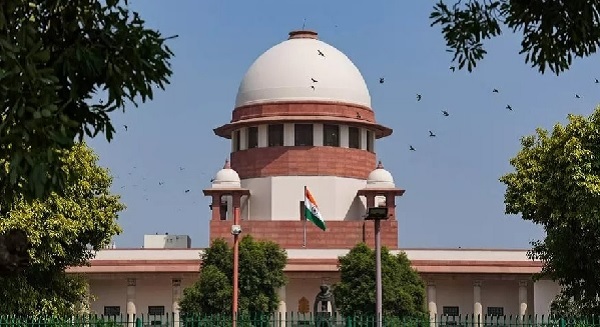
Sanu Varghese Vs Shoukkathali (Supreme Court of India)
Affidavit Evidence by Cheque Accused: Supreme Court Rejects Retrial Without Any Plea of Prejudice
Can an accused in a cheque dishonour case obtain a fresh trial by pointing, for the first time in revision, to an error in the manner in which defence evidence was recorded? The Supreme Court considered that question in Sanu Varghese v. Shoukkathali. It set aside a High Court order directing a retrial from the stage of defence evidence because the accused had never claimed that the procedure caused him prejudice before the Trial Court or the First Appellate Court.
The case arose under Section 138 of the Negotiable Instruments Act, 1881. The complainant relied on a cheque for ₹30 lakh. The accused admitted his signature but contended that he had given a signed blank cheque as security for a loan of only ₹10 lakh, which had been transferred to his account. He disputed the complainant’s account of an additional ₹20 lakh payment. He also claimed that the complainant was in Bengaluru on the relevant dates and therefore could not have handed over the alleged amount as stated.
The Trial Court considered that defence. It noted that the accused had produced no substantive evidence to establish the complainant’s absence on the dates in question. For instance, he could have sought call data records to support his claim about the complainant’s location. With the signature on the cheque admitted, the Court found that the applicable statutory presumption had not been rebutted.
The procedural objection emerged later. In revision, the High Court relied on the Supreme Court’s earlier decision in M/s Mandvi Cooperative Bank Ltd. v. Nimesh B. Thakore and remanded the matter for a fresh trial from the stage of defence evidence. The complainant challenged that remand before the Supreme Court.
The point concerning Section 145 of the NI Act is important. The provision permits the complainant’s evidence to be given by affidavit. In Mandvi Cooperative Bank, the Supreme Court had explained that this permission could not simply be extended to allow an accused to give his own examination by affidavit. The complainant’s affidavit evidence can also be tested through examination in person in accordance with Section 145(2).
The Supreme Court did not discard that earlier ruling. Its focus was on the consequence of the procedural error in a trial that had already been completed. The accused had not told the Trial Court or the First Appellate Court that the manner of recording his evidence had impaired his defence. Nor had he identified any actual prejudice when seeking the remand. The Court held that a late procedural objection, without such a plea, did not justify reopening the trial in the circumstances of this case.
The Court also rejected the suggestion that the retrial should stand merely because, following the High Court’s direction, proceedings had reportedly resumed and been completed again. Once the remand order was found unsustainable, those later proceedings could not supply a reason to preserve it. The Supreme Court directed that only the evidence from the original trial be considered; if the accused had subsequently been examined in person pursuant to the remand, that later evidence was to be excluded.
The appeal was accordingly allowed, the High Court’s remand order was set aside, and Criminal Revision Petition No. 715 of 2023 was restored to the High Court for consideration on its own merits. The Supreme Court expressly left the accused’s other contentions available in that revision. It did not finally dispose of every challenge to the underlying Section 138 case.
Author’s comment: The judgment preserves the distinction drawn in Mandvi Cooperative Bank between complainant and accused affidavit evidence. At the same time, it asks whether an error raised after a completed trial actually warrants a retrial. Where the accused participated without asserting prejudice and raised the point only in revision, the Supreme Court declined to send the case back for fresh defence evidence. The remaining grounds must now be examined by the High Court on the original trial record.
FULL TEXT OF THE SUPREME COURT JUDGMENT/ORDER
Want to Read the Complete Judgment?
You have read the free case summary. Unlock the full judgment, the detailed judicial reasoning and the downloadable PDF, along with every other premium judgment on TaxGuru.
Already subscribed? Log in
One subscription covers the entire premium judgment library, not just this case.