Rudraksha Allied Chemicals Pvt. Ltd. Vs Ordance Factory (Madhya Pradesh High Court)
Summary: The High Court examined a dispute concerning the applicability of the Micro and Small Enterprises (MSE) Public Procurement Policy to a turnkey contract for the design, manufacture, supply, erection, testing and commissioning of a De-Nitration plant for Nitrocellulose Waste Acid (NCWA) and Nitroglycerine Waste Acid (NGWA) at Ordnance Factory Itarsi. The petitioner participated in the tender floated by Ordnance Factory Itarsi and Unitions India Limited and emerged as the lowest (L1) bidder. However, the tendering authorities permitted M/s. Chemsept Engineering Private Limited, a registered MSE and L2 bidder whose quoted price fell within the L1+15% purchase preference band, to match the final negotiated price of the petitioner. The petitioner challenged the communications dated 8 July 2025, 11 July 2025 and 22 July 2025, contending that the MSE purchase preference provisions were inapplicable because the tender involved a composite, indivisible works contract rather than a contract for the procurement of goods or services.
The petitioner submitted that the tender required extensive engineering, civil construction, RCC foundations, structural fabrication, mechanical erection, installation of pipelines, electrical infrastructure, automation systems, testing and commissioning. Relying upon the Constitution Bench judgment in Kone Elevator India Private Limited Vs State of Tamil Nadu, (2014) 7 SCC 1, the petitioner argued that the dominant nature test could not be applied to classify an indivisible composite contract merely by comparing the relative values of goods and services. The respondents maintained that the principal purpose of the tender was the supply of an industrial De-Nitration plant and that civil works and installation activities were incidental or consequential to such supply. They relied upon Rules 130 and 143 of the General Financial Rules and submitted that civil works represented approximately 6% to 20% of the contract value. Accordingly, they justified extending the MSE purchase preference to the L2 bidder.
The High Court examined the tender conditions, affidavits, technical drawings, photographs, videos and presentations made by technical experts of the parties. It observed that the project was not a case of machinery being supplied in a completely knocked-down condition and merely assembled at the site. Instead, the contract involved substantial on-site construction, fabrication, erection, integration and commissioning of specialised industrial equipment and supporting infrastructure. Following the principles laid down in Kone Elevator India Private Limited, the Court held that the dominant nature test, overwhelming component test and relative proportion of labour and services were not determinative of the character of a qualifying composite works contract. The fact that civil works accounted for only 6% to 20% of the total contract value did not alter the indivisible nature of the transaction. The Court therefore concluded that the tender constituted a composite, multidisciplinary turnkey works contract and not merely a contract for the supply of goods with incidental installation services.
Accordingly, the High Court held that the MSE Public Procurement Policy did not permit an L2 MSE bidder to claim the L1 price-matching preference in the subject works contract. The tendering authorities had acted illegally in allowing respondent No. 4 to match the petitioner’s negotiated price and awarding the contract on that basis. The Court also distinguished Cherian Varkey Construction Company (Pvt.) Ltd. Vs State of Kerala, 2024 SCC OnLine Ker 2031, observing that the earlier decision concerned judicial review of an economic policy, whereas the present dispute related to whether a bidder was entitled to claim benefits under that policy. Consequently, the Court quashed the award of the contract in favour of M/s. Chemsept Engineering Private Limited and directed the tendering authority to proceed with awarding the contract to the petitioner, being the L1 bidder, subject to fulfilment of the remaining conditions of the Notice Inviting Tender (NIT). The writ petition was allowed without any order as to costs.
Cases Discussed
- Kone Elevator India Private Limited Vs State of Tamil Nadu — (2014) 7 SCC 1 — relied upon.
- Builders’ Association of India Vs Union of India — (1989) 2 SCC 645 — quoted precedent.
- Gannon Dunkerley and Co. Vs State of Rajasthan — (1993) 1 SCC 364 — quoted precedent.
- Larsen and Toubro Ltd. Vs State of Karnataka — (2014) 1 SCC 708 — quoted precedent.
- State of Andhra Pradesh Vs Kone Elevators (India) Ltd. — (2005) 3 SCC 389 — earlier overruled ruling.
- Hindustan Shipyard Ltd. Vs State of Andhra Pradesh — (2000) 6 SCC 579 — quoted precedent.
- Otis Elevator Co. (India) Ltd. Vs State of Maharashtra — (1969) 24 STC 525 (Bom) — quoted precedent.
- Cherian Varkey Construction Company (Pvt.) Ltd. Vs State of Kerala — 2024 SCC OnLine Ker 2031 — distinguished.
FULL TEXT OF THE JUDGMENT/ORDER OF MADHYA PRADESH HIGH COURT
Original text preserved as supplied; source does not identify the case title, coram or date.
1. Petitioner impugns communication dated 08.07.2025, whereby the respondent/tender inviting authority has informed the petitioner that though the petitioner is the L1 bidder, but as the price quoted by L2 bidder, who is a MSE Firm, is falling within the L1+15% of margin purchase price band, therefore, as per MSE Public Procurement Policy, L2 F irm shall be given opportunity to match the final negotiated price of L1. Petitioner also impugns communications dated 11.07.2025 and 22.07.2025, whereby petitioner was informed to att end the price negotiation meeting. Petitioner seeks a direction to the respondent nos. 1 and 2 to issue letter of award in favour of the petitioner being L1 bidder.
2. With the consent of parties, arguments were heard for the purpose of final disposal of the case.
3. Respondent no.1/ Ordnance Factory Itarsi and respondent no.2/Unitions India Limited had floated an open T ender dated 27.01.2025 through Central Public Procurement Portal (CPP for short) E-Procurement System inviting bids for design, manufacturing, supply, erection, testing and commissioning of De- Nitration plant for Nitrocellulose Waste Acid (NCWA) and Nitroglycerine Waste Acid (NGWA) on turnkey basis including associated plant and machineries, civil work, services and utilities.
4. Earlier also Respondent No.1 had floated a tender on 04.01.2024 for the same work, petitioner/company. On 21.04.2025 petitioner was invited for pr ice negotiation, but thereafter the tender was cancelled and new tender has been floated on 27.01.2025.
5. Petitioner/ company submitted its bid in the tender process. There were total 4 bidders and after technical evaluation, 3 bidders were techno-commercially qualified for opening of their financial bids including the petitioner and respondent no.4.
6. Financial bids were opened and published on the CPP Portal and petitioner-company was declared L1. However, petitioner received the impugned communication dated 08.07.2025 from R espondent nos.1 and 2 informing that respondent no. 4 M/s. Chemsept Engineering Private Limited was a registered Micro and Small Enterprise (MSE) and its quoted price fell within the price band of L1+15% and thus as per the MSE Public Procurement Policy, respondent no. 4 had been granted purchase preference price and allowed to matc h petitioner’s final negotiated price and petitioner was invited to attend a meeting scheduled on 09.07.2025. Said decision of respondent no.1, communicated on 08.07.2025, is impugned in this petition.
7. Petitioner objected to the said communication raising objections as to the application of MSE PP Policy by ascertaining inter alia that the scope of works under the subject tender constituted a works contract and as such the provisions of MSE PP Policy were not applicable to the subject tender. Respondent nos.1 and 2 by their 11.07.2025 rejected petitioner’s objection and communicated to the petitioner that subject tender fell within the ambit of the term “goods” and, therefore, the provisions of MSE PP Policy were applicable to the said tender. Petitioner was once again invited to attend the meeting scheduled for price negotiations on 15.07.2025 by communication dated 11.07.2025 (Annexure P- 8), which is also impugned in the present petition.
8. Once again petitioner objected by submitting a detailed representation on 12.07.2025 referring to various pronouncements of the Supreme Court in support of its contention that the subject tender fell within the definition of “Works Contract”. By communication dated 22.07.2025 respondent nos. 1 and 2 reiterated their stand and invited petitioner to participate in the meeting dated 23.07.2025 for the purpose of price negotiations. Communication dated 22.0 7.2025 (Annexure P-10) is also assailed by the petitioner in this petition.
9. This Court by order dated 11. 08.2025 permitted the respondent no.1 to proceed with the price negotiation subject to further orders and petitioner was also granted liberty to participate in the price negotiation process without prejudice to its right and contentions in the petition. It was informed by respondent no.1 on 17.10.2025 that price negotiation with L2 bidder had taken place and L2 bidder had agreed to match the price of L1 bidder.
10. Respondents in their separate replies denied the contentions of the petitioner and reiterated their stand that the subject tender had been issued for procurement of De- Nitration plant for Nitrocellulose Waste Acid (NCWA) and Nitroglycerine Waste Acid (NGWA) on turnkey basis and, therefore, falls under the category of supply of goods and the provisions of MSE PP Portal were applicable to the subject tender.
11. As per the respondents, it was obligatory for the tender inviting authority to provide an opportunity to the L2 bidder to match the price of L1 bidder in light of the provisions of MSE PP Policy as the L2 bidder was a registered MSE Firm and price quoted by L2 bidder was within the price band of L1+15%. Respondents further contend that as the L2 bidder had matched the final negotiation price quoted by L1, therefore, the bid of L2 bidder was accepted in light of the MSE PP Policy.
12. Mr. Shridhar Purohit, learned Advocate appearing on behalf of petitioner relied on the judgment of the Constitution Bench of the Supreme Court of India in Kone Elevator India Private Limited Vs. State of Tamil Nadu, (2014) 7 SCC 1 to contend that the dominant nature of the contract was a works contract and entailed extensive design, construction and civil structure.
13. On 17.11.2025, respondent no.1 was directed to file an affidavit indicating that the dominant nature of the work that was covered under the subject contract.
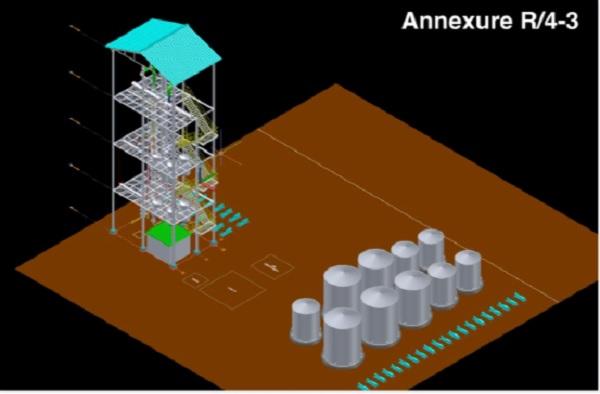
14. Pursuant thereto, an affidavit of Mr. Mithilesh Chandra, Deputy General Manager of Ordnance Factory Itarsi dated 24.11.2025 has been filed by respondent no.1, wherein reference is made to Rules 130 and 143 of GFR. It is contended that the term “goods” as defined in Rule 143 of GFR also includes works and services, which are incidental or consequential to the supply of such goods, like, transportation, insurance, installation, commissioning, training and maintenance and thus it is contended that the tender work is primarily for supply of D -Nitra tion plant, which also includes civil works and other services. It is contended in the affidavit that supply of De-Nitration plant is the principal and dominant component of the tender and comparative price schedule of 3 techno-commercially qualified bidders establishes that civil works component ranges between 6% to 20% of the total value. Respondent no. 4 quoted 6.47% price for civil works, whereas petitioner quoted 20.99% and, therefore, major cost and scope of work related to supply of De-Nitration plant and civil works formed a relatively very small proportion of the contract value. It is stated in the affidavit that the dominant nature of tender is supply of goods (industrial plants) and not a works contract.
15. Petitioner disputed the contents of the affidavit submitted by respondent no.1 as well as by respondent no.4 in the simil ar line and, therefore, petiti oner was also directed to file an affidavit in response to the affidavits directed to produce the drawings of the proposed plan or a plan of a similar plant that they had executed in the past.
16. In compliance of order dated 26.11.2025, petitioner submitted counter- affidavit of Mr. Ritvick Parikh, authorised signatory of the petitioner company, who stated that the attempt of respondents to classify the tender as a goods contract is incorrect and misleading. He contends that once a contract involves elements of both supply of goods and execution of work, the contract becomes a works contract by constitutional definition, irrespective of what the dominant intention of the parties might have been. It i s further stated in the affidavit that the present tender being unequivocally indivisible and involving extensive design, construction, erection, and commissioning obligations, falls squarely within the ambit of a composite, indivisible, multidisciplinary and turnkey works contract and thus not covered under the MSE PP Policy.
17. It is further contended in the affidavit that the contractor was required to manufacture, procure, supply and transport a wide array of specialised industrial equipment, including Borosilicate Glass De -Nitration Towers, SS-316L storage tanks for NGWA and NCWA, high -purity aluminium SNA tanks as per IS standards, FRP- lined Sulphuric Acid tanks, pumps, motors, compressors, blowers, refrigeration systems, cooling towers, PLC-SCADA automation systems, electrical control panels, instrumentation, cabling and structural supports.
18. It is further contended that the contract mandates comprehensive on-site fabrication, erection, installation, alignment and integration of the entire plant, which includes mechanical erection, inter connection of pipelines including PTFE- lined systems, installation of valves and flanges, laying of overhead and underground electrical cables, provision of platforms, brackets, supports, and all structural arrangements, mechanical and electrical integration of the plant with existing utilities of the Ordnance Factory. Petitioner has contended that the scope of the tender was not only the supply of goods, but it is a composite contract and thus not covered under the MSE PP Policy.
19. Considering the averments of the affidavits submitted and the respective drawings produced by the parties, this Court directed the parties to produce their videos to demonstrate the functioning of the subject plant and also directed to keep available their respective technical persons before the Court on 06.01.2026 for the purpose of explaining the scope of the tender. On 06.01.2026 the technical experts of the parties appeared before the Court along with videos of the existing other similar plants and mad e their respective submissions and explained the procedure of erection, testing and commissioning of De -Nitration plant. Thereafter, arguments were heard on 18.02.2026. 20. Learned counsel appearing on behalf of petitioner submits that earlier a tender was floated by the tender i nviting authority on 27.01.2024, wherein petitioner was declared as the L1 bidder and there was no such bidder within the quoted by the petitioner, however, said tender was malafidely cancelled by the authority and a new tender was floated on 14.06.2025, wherein once again the petitioner stood as L1, however, this time the financial bid of respondent no. 4 was within the L1+15% price band. He submits that the earlier tender was cancelled only for the purpose of bringing respondent no. 4 in the zone of consideration. He pointed out that the contract mandates detailed engineering including P&ID, drawings and structural designs, civil constructions such as RCC foundations and acid- resistant flooring, mechanical erection and integration of pipelines and plant systems, electrical infrastructure including panel rooms and underground cabling, automation through PLC- SCADA integration, testing, commissioning and performance guarantee obligations. He drew attention to several clauses of the tender document including scope of work, essential accessories, supporting structure, utilities and services, civil construction work and contended that upon a holistic reading of the complete tender documents, the scope of work is a composite indivisible contract.
21. Reliance is placed on the judgment of the Supreme Court in Kone Elevator India Private Limited (supra), to contend that the dominant nature test is no longer applicable while determining whether a contract constitutes a work or not? The Supreme Court has held that once a contract involves elements of both supply of goods and execution of work, the contract becomes a works contract by constitutional definition given in Article 366 (29A) (b) of the Constitution of India.
22. Learned counsel for petitioner submits that as the dominant nature test is not applicable and the present tender being u nequivocally indivisible and involves extensive design, construction, erection and commissioning obligations, therefore, it falls squarely within the ambit of a composite works contract and respondent no. 1 committed illegality in acting arbitrarily to treat the contract as a pure supply of goods contract and granted opportunity to the respondent no. 4 to match with the price quoted by L1 bidder.
23. Counsel for petitioner further submits that section 2(f) of the Micro, Small and Medium Enterprises Development Act, 2006 is not applicable to the case in hand as the subject tender document, no where specifies or enumerates any list of identifiable items to be supplied so as to qualify the subject tender as a contract of sale of goods and the tender does not con template separate contract for installation or commissioning. Thus the contract is a composite and an indivisible contract being works contract. With the help of photographs and drawings of the similar plant, counsel for petitioner submits that the supply of goods is not sufficient as the erection and installation of the plant, as per the drawing, is a major component and having great importance. He further submits that the video produced by the petitioner and the explanation submitted by the technical expe rt of petitioner had shown and explained that the nature of the terms of contract is a composite works contract and not a contract of supply of goods and services.
24. Learned counsel further submits that turnkey contract is a works contract as the component of works is always included in the installation and commission. He submits that MSE PP Policy applies only to the procurement of goods and services and as the subject tender was not in respect of procurement of goods and services, therefore, the provisions of MSE PP Policy are not applicable to the subject tender and, therefore, the respondent no. 1 had committed illegality in not awarding the contract to the petitioner despite petitioner No. 1 being L1 and in granting an opportunity to respondent no. 4 to match the price quoted by the petitioner.
25. Learned counsel further submits that the action of respondent no. 1 is contrary to the terms of the NIT and is liable to be quashed. He prays for quashing of the impugned communications dated 08.07.2005, 11.07.2025 and 22.07.2025 and for issuance of a direction to respondent no. 1 to award the contract to the petitioner. 26. Per contra, Mr. Arav Tiwari, learned counsel appearing on behalf of respondent no. 1 i.e. the tender inviting authority submits that the tender inviting authority had acted in an independent and impartial manner and as the tender prominently concerns supply of an Industrial De-Nitration plant and all other civil and ancillary activities were incidental and consequential to the supply, provisions of MSE PP Policy were squarely applicable to the subject tender, which provided that if the L2 bidder was within the MSE, an opportunity should be granted to the MSE to match the final negotiation price of L1 bidder in order to give preference to MSE. 27. He submits that after the declaration of petitioner as L1 bidder and respondent no. 4 as L2, who was within the L1+15% price band, in terms of Clause 6.0 of Part V of GTC (General Terms and Conditions) read with MSE PP Policy, respondent no. 1 extended counter offer to respondent no. 4 being a registered MSE to match the final negotiation L1 price quoted by the petitioner and the said counter offer was duly accepted by respondent no. 4 by matching the price quoted by L1 and, therefore, no illegality or irregularity was committed by the tender inviting authority to extend the preference to the MSE and in permitting respondent no. 4 to match the price quoted by L1 bidder. He further submits that the supply of goods covers original minor and repair works including transportation, insurance, installation, commissioning, training and maintenance and thus the subject contract was a suppl y of goods contract and could not be treated as a composite works contract. He prayed for dismissal of petition.
28. Mr. Siddharath Gulatee, Senior Advocate, appearing for Respondent no. 4 submits that as per the drawings and videos explained by the technical experts of respondent no. 4, it is crystal clear that the subject tender was issued for supply of an industrial plant with component of design, manufacturing, erection, testing and commissioning and thus the same was covered goods as the work required for supply of industrial plant, came under the scope of incidental or consequential work.
29. He submits that the drawings submitted by respondent no. 4 vividly depicted that the plant consists of a pre- fabricated structural steel framework housing various columns, vessels, and heat exchangers. With the help of drawings and videos, he tried to demonstrate that the project is not a civil construction, but a vertical assembly of distinct industrial component, inter alia, De-N itration Towers, Condensers, Scrubbers connected via piping on a bolted steel structure. He further submits that the items liste d in the tender document are moveable properties like pumps, columns, tanks and are required to brought on site for the purpose of erection of plant. The civil work component is minor portion and majority of the scope involved supply of mechanical components.
30. The learned Senior counsel has drawn the attention of this Court towards the bid value of Rs. 36,46,20,000/- out of which only 6.47% i.e. Rs. 2,00,00,000/- is the value of civil works component, which as per him confirms that the civil component is purely incidental and consequential to the supply and installation of the plant. He further submits that as the tender was for the supply of industrial plant, the tender inviting authority had not committed any error in granting an opportunity to the respondent no. 4, who is registered MSE Firm as the price quoted by it was within the L1+15% price band, to match with the price quoted by L1.
31. Reliance is placed on the judgment of a Division Bench of Kerela High Court in Cherian Varkey Construction Company (Pvt.) Ltd. Vs. State of Kerala, 2024 SCC OnLine Ker 2031, to contend that “t he Court is not the master of governance but rather the State is responsible for shaping its policy in line with constitutional objectives. If the distribution of assets and wealth is intended to benefit a cooperative society, any monopoly created thereon cannot be said to be a disadvantage to the group left out, as th e group was left out based on a fair dealing on the anvil of economic policy of the State. The revenue gain or revenue loss is not the criteria upon which a policy should be tested. The court cannot interfere with the policy except in cases where it result s in manifest arbitrariness. If the State has adhered to economic policies consistent with constitutional objectives, it cannot be questioned through judicial review.”
32. It is submitted that the tender inviting authority has acted in a proper manner and there is no scope to interfere with the tender process. He prays for dismissal of petition.
33. The core questions involved in this petition are as to whether subject contract is pure and simple contract for supply of goods with some incidental work or a works contract? and; whether the provisions of the MSE PP Policy are applicable to the subject NIT?
34. The contention of the petitioner is that the contract in question is a single, composite contract for design, manufacturing, supply, erection, testing and commissioning of De- Nitration plant on turnkey and utilities and it cannot be treated as divisible contract. In other words, the submission is that being a single indivisible contract, it is a composite contract.
35. If it is a composite contract, it is no longer permissible to weigh what proportion the component of supply of goods bears to the component of supply of service in the composite contract, whether in terms of the consideration payable or otherwise, and then depending on whether the proportion of supply of goods component is high, label it as a ‘contract for sale of goods’ and after the said proportion is low then label it as a ‘works contract’. If it is a composite contract for supply of goods and service, t hen it must be held to be a works contract as per Article 366(29A)(b) of the Constitution.
36. The Supreme Court in Kone Elevator India Private Limited (supra) summarised the legal position in the following manner: “68. The aforesaid analysis has to be understood on the anvil of Article 366(29- A) of the Constitution. In this regard, we may fruitfully reproduce a passage from Builders’ Assn. case [Builders’ Assn. of India v. Union of India, (1989) 2 SCC 645: 1989 SCC (Tax) 317]: (SCC pp. 672-73, para 36)
“36. … After the Forty- sixth Amendment the works contract which was an indivisible one is by a legal fiction altered into a contract which is divisible into one for sale of goods and the other for supply of labour and services. After the Forty-sixth Amendm ent, it has value of goods involved in a works contract in the same way in which the sales tax was leviable on the price of the goods and materials supplied in a building contract which had been entered into in two distinct and separate parts as stated above.”
Explaining the said passage, the Constitution Bench in Gannon Dunkerley (2) [Gannon Dunkerley and Co. v. State of Rajasthan, (1993) 1 SCC 364] has opined thus: (SCC p. 388, para 35)
“35. This would mean that as a result of the Forty- sixth Amendment, the contract which was single and indivisible has been altered by a legal fiction into a contract which is divisible into one for sale of goods and other for supply of labour and services and as a result such a contract which was single and indivisible has been brought on a par with a contract containing two separate agreements.”
It has been further observed therein as follows: [Gannon Dunkerley (2) case [Gannon Dunkerley and Co. v. State of Rajasthan, (1993) 1 SCC 364], SCC p. 389, para 36] “36. If the legal fiction introduced by Article 366(29 – A)(b) is carried to its logical end it follows that even in a single and indivisible works contract there is a deemed sale of the goods which are involved in the execution of a works contract. Such a d eemed sale has all the incidents of a sale of goods involved in the execution of a works contract where the contract is divisible into one for sale of goods and the other for supply of labour and services.”
69. Considered on the touchstone of the aforesaid two Constitution Bench decisions in Builders’ Assn. [Builders’ Assn. of India v. Union of India, (1989) 2 SCC 645: 1989 SCC (Tax) 317] and Gannon Dunkerley (2) [Gannon Dunkerley and Co. v. State of Rajasthan, (1993) 1 SCC 364], we are of the convinced opinion that the principles stated in Larsen and Toubro [Larsen and Toubro Ltd. v. State of Karnataka, (2014) 1 SCC 708] as reproduced by us hereinabove, do correctly enunciate the legal position. Therefore, “the dominant nature test” or “overwhelming component test” or “the degree of labour and service test” are really not applicable. If the contract is a composite one which falls under the definition of works contracts as engrafted under clause (29- A)(b) of Article 366 of the Constitution, the incidental part as regards labour and service pales into total insignificance for the purpose of determining the nature of the contract.
70. Coming back to Kone Elevators [State of A.P. v. Kone Elevators (India) Ltd., (2005) 3 SCC 389], it is perceivable that the three- Judge Bench has referred to the statutory provisions of the 1957 Act and thereafter referred to the decision in Hindustan Ship yard Ltd. [Hindustan Shipyard Ltd. v. State of A.P., (2000) 6 SCC 579], and has further taken note of the customers’ obligation to do the civil construction and the time schedule for delivery and thereafter proceeded to state about the major component facet and how the skill and labour employed for converting the main components into the end product was only incidental and arrived at the conclusion that it was a contract for sale. The principal logic applied i.e. the incidental facet of labour and service, in all the cases that have been brought before us, there is a composite contract for the purchase and installation of the lift. The price quoted is a composite one for both. As has been held by the High Court of Bombay in Otis Elevator [Otis Elevator Co. (India) Ltd. v. State of Maharashtra, (1969) 24 STC 525 (Bom)], various technical aspects go into the installation of the lift. There has to be a safety device. In certain States, it is controlled by the legislative enactment and the rules. In certain Stat es, it is not, but the fact remains that a lift is installed on certain norms and parameters keeping in view numerous factors. The installation requires considerable skill and experience. The labour and service element is obvious. What has been taken note of in Kone Elevators [State of A.P. v. Kone Elevators (India) Ltd., (2005) 3 SCC 389] is that the company had brochures for various types of lifts and one is required to place order, regard being had to the building, and also make certain preparatory work. But it is not in dispute that the preparatory work has to be done taking into consideration as to how the lift is going to be attached to the building. The nature of the contracts clearly exposits that they are contracts for supply and installation of the lift where labour and service element is involved. Individually manufactured goods such as lift car, motors, ropes, rails, etc. are the components of the lift which are eventually installed at the site for the lift to operate in the building. In constitut ional terms, it is transfer either in goods or some other form. In fact, after the goods are assembled and installed with skill and labour at the site, it becomes a permanent fixture of the building. Involvement of the skill has been elaborately dealt with by the High Court of Bombay in Otis Elevator Ltd. v. State of Maharashtra, (1969) 24 STC 525 (Bom)] and the factual position is undisputable and irrespective of whether installation is regulated by statutory law or not, the result would be the same. We may hasten to add that this position is stated i n respect of a composite contract which requires the contractor to install a lift in a building. It is necessary to state here that if there are two contracts, namely, purchase of the components of the lift from a dealer, it would be a contract for sale an d similarly, if a separate contract is entered into for installation, that would be a contract for labour and service. But, a pregnant one, once there is a composite contract for supply and installation, it has to be treated as a works contract, for it is not a sale of goods/chattel simpliciter. It is not chattel sold as chattel or, for that matter, a chattel being attache d to another chattel. Therefore, it would not be appropriate to term it as a contract for sale on the bedrock that the components are brought to the site i.e. building, and prepared for delivery. The conclusion, as has been reached in Kone Elevators [State of A.P. v. Kone Elevators (India) Ltd., (2005) 3 SCC 389], is based on the bedrock of incidental service for delivery. It would not be legally correct to make such a distinction in respect of lift, for the contract itself profoundly speaks of obligation to supply goods and materials as well as installation of the lift which obviously conveys performance of labour and service. Hence, the fundamental characteristics of works contract are satisfied . Thus analysed, we conclude and hold that the decision rendered in Kone Elevators [State of A.P. v. Kone Elevators (India) Ltd., (2005) 3 SCC 389] does not correctly lay down the law and it is, accordingly, overruled.” (underlining supplied)
37. In the present case, subject tender has been issued for procurement of De- Nitration plant for Nitrocellulose Waste Acid (NCWA) and Nitroglycerine Waste Acid (NGWA) on turnkey basis. The presentations given by the experts of the parties clearly show that subject scope of work of the present tender is unequivocally indivisible and involving extensive design, construction, erection, and commissioning obligations. It is not a case of a product being bought in a Completely Knocked Down (CKD) state and then simply assembled at the site. The contract involves erection and constru ction of major key components of the De-Nitration Plant at the site, thus it squarely falls within the ambit of a composite, indivisible, multidisciplinary and turnkey composite works contract. The provisions of MSE PP Policy apply only to contracts of supply of goods. MSE PP Policy does not provide any clause to permit the MSE to match the price bid with the L1 bidder in works contract and thus the policy is clearly not applicable to the case in hand.
38. Respondent No. 4 has filed the drawings of a De-Nitration plant. Some of the drawings are as under:
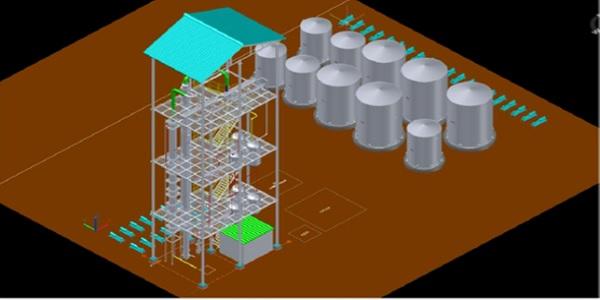
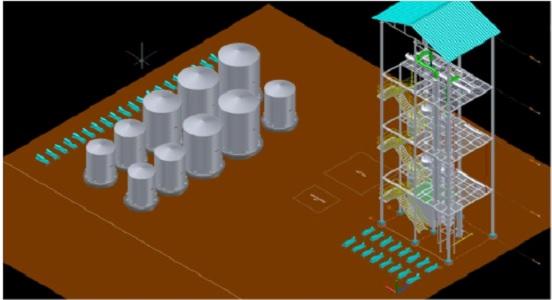
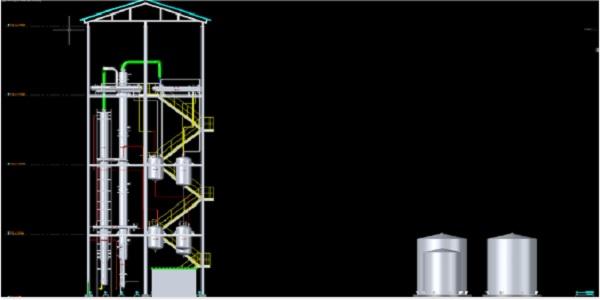
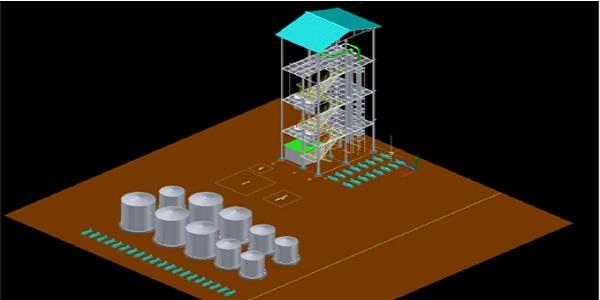
39. Petitioner has filed photographs of the work required for setting up of the plant as under:
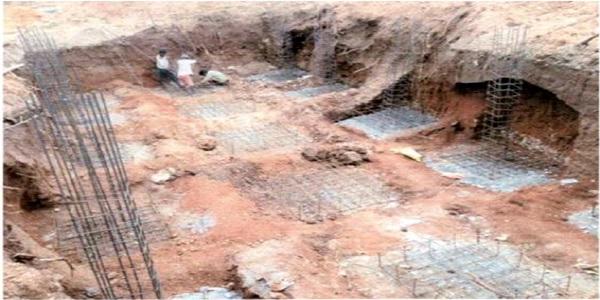
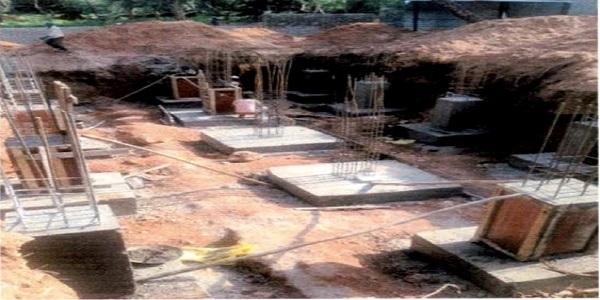
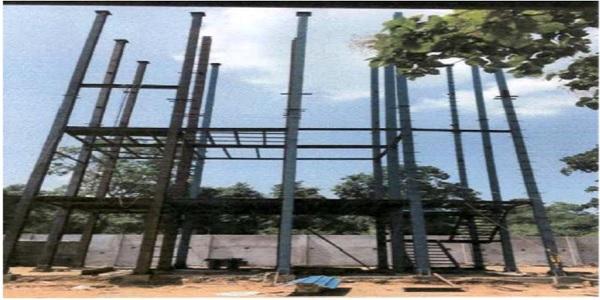
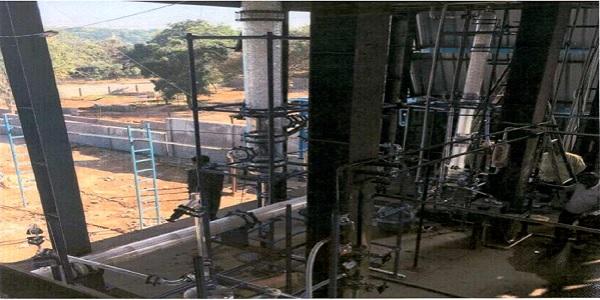
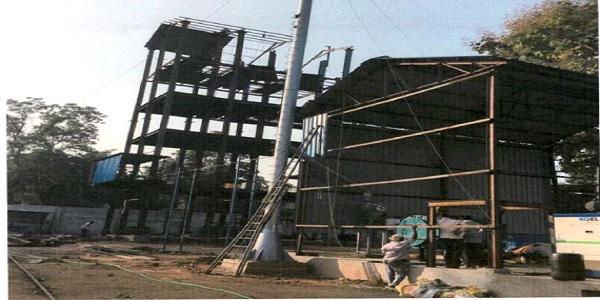
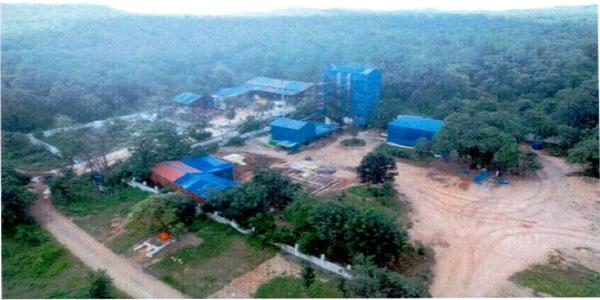
40. Besides filing photographs, the experts of the parties had made detailed video and 3D presentations of the Plant.
41. On examining the presentations made by the experts and perusal of the drawings and video of the plant, we are of the opinion that the subject work of erection and construction of the De- Nitration plant cannot be considered as only incidental to the contract of supply of plant. The fact that the civil works component ranges from 6% to 20% of the total value of contract is immaterial. S ubject contract is a composite indivisible works contract, the decision of the respondent no. 4 to invite the respondent no. 4 to match the price bid of the L1 bidder is incorrect, illegal and unjust.
42. In view of the above conspectus, we are of the view that the subject contract cannot be categorised as a pure and simple contract for supply of goods with some incidental work or a works contract. Subject Contract is clearly a composite contract and thus liable to be categorised as a works contract. Since it is a composite works contract the provisions of the MSE PP Policy which are applicable only to supply of Goods or Services is not ̉ applicable to the subject NIT.
43. The Judgment in the case of Cherian Varkey Construction Company (Pvt.) Ltd.(supra) relied upon by learned counsel for Respondent No. 4 is not applicable to the facts of the present case. It cooperative Society. The Policy was under challenge in that case. In the present case there is no challenge to the policy but the contention is that Respondent No. 4 is not entitled to claim the benefit of the Policy. As noticed above the case of Responde nt No. 4 is not covered under the Policy. Thus the reliance placed on the said judgment is misplaced.
44. In view of the above, since the contract is a works contract and the provisions of the MSE PP Policy are not applicable to the subject NIT, the Tender Inviting Authority could not have called upon Respondent No. 4 to match the L1 price. Thus the award of contract to the respondent no. 4 cannot be given the seal of approval and is hereby quashed. Respondent No. 1 shall proceed further the tender and award the same to the petitioner being the L1 bidder, if other conditions of the NIT are satisfied.
45. The petition is allowed in the above terms with n o order as to costs.