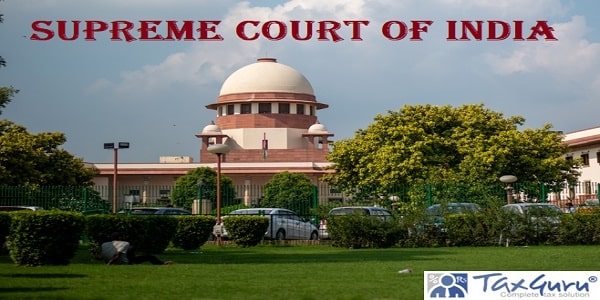
Directorate of Enforcement Vs Bhupesh Arora (Supreme Court of India)
Summary: The Supreme Court of India, in Directorate of Enforcement Vs Bhupesh Arora and the connected appeal of Rohit Vij, examined whether bail should continue in an investigation under the Prevention of Money Laundering Act, 2002 (PMLA). The Directorate of Enforcement challenged the Delhi High Court order dated 23 February 2026 granting bail to Bhupesh Arora in ECIR/HYZO/46/2022 dated 14 October 2022, while Rohit Vij challenged the refusal of bail in the same investigation. The connected proceedings arose from allegations of an online investment fraud using an application named LOXAM, allegedly presented to investors as associated with a French multinational. The Supreme Court was deciding bail applications and did not adjudicate the accused persons’ criminal guilt.
According to the prosecution, investments collected through the LOXAM application were channelled into virtual accounts associated with Xindai Technologies and other entities, then through physical and mule bank accounts into money-changing businesses. The Directorate alleged that Rohit Vij facilitated conversion of RTGS credits into dollars and dirhams, that commissions of approximately 0.3% to 0.7% were retained, and that about ₹75 crore was withdrawn in cash. The prosecution alleged that funds were moved overseas through hawala and cryptocurrency channels, including to Dubai and China, and suggested that the overall proceeds of crime under investigation might exceed ₹2,000 crore. These amounts and the alleged roles of Bhupesh Arora and Rohit Vij were prosecution assertions rather than judicial findings of guilt.
The earlier Delhi High Court proceedings arose from Bhupesh Arora’s arrest on 11 July 2025 and his application for regular bail. His counsel disputed the evidence connecting him with the companies, virtual accounts and foreign-exchange transactions, questioned the reliability of witness statements and electronic records, and relied on the alleged absence of direct receipt of tainted funds. The defence also raised objections concerning Section 19 PMLA arrest safeguards, the recording of statements under Section 50 of the PMLA, and the quashing of a predicate-offence FIR following compromise. The Directorate opposed bail, alleging control over shell entities, involvement in layering transactions, potential interference with the investigation and a significant flight risk. The parties’ competing positions must be distinguished from the Delhi High Court’s findings.
In its order dated 23 February 2026, the Delhi High Court allowed Bhupesh Arora’s bail application subject to conditions, including a personal bond of ₹50,000 with one surety, restrictions on leaving India, disclosure of contact details and address, attendance before the trial court and non-interference with witnesses or evidence. The High Court assessed the evidence and the effect of the compromise and related proceedings at the bail stage, while making clear that its observations would not determine the merits of the criminal trial. The Delhi High Court also considered submissions about the filing of the prosecution complaint, custodial detention and the right to a speedy trial, in the context of the twin conditions for bail under Section 45 of the PMLA and judicial decisions on prolonged pre-trial incarceration.
The Supreme Court disagreed with the approach adopted in granting bail. It held that the quashing of one predicate-offence FIR on compromise did not, by itself, eliminate the possible existence of proceeds of crime, particularly when numerous other FIRs were stated to have been registered. The Court considered the alleged scale of the transactions, international movement of funds, continuing investigation and conduct relevant to flight risk. Its reasoning centred on the relationship between scheduled offences and money-laundering proceedings, the existence of alleged proceeds of crime and the necessity of applying Section 45 at the bail stage. The Court did not hold that every compromised FIR necessarily sustains a PMLA prosecution; its conclusion was expressly grounded in the additional FIRs and the circumstances of these connected appeals.
The Supreme Court accordingly set aside the Delhi High Court’s order granting bail to Bhupesh Arora and declined to grant bail to Rohit Vij. It found that the seriousness of the allegations and the incomplete investigation did not justify their release at that stage. The Directorate of Enforcement was expected to complete its investigation within five months from receipt of the Supreme Court’s order. Both accused were permitted thereafter to apply afresh for regular bail before the concerned Special Court, without the earlier orders obstructing independent consideration. Bhupesh Arora was granted two weeks from receipt of the order to surrender, was required to disclose his current location to the Directorate, was prohibited from leaving India during that period and was protected against arrest before expiry of the surrender period.
Read together, the two judgments illustrate the different bail-stage assessments made by the Delhi High Court and the Supreme Court on the same PMLA investigation. The Delhi High Court granted conditional bail after considering the material and defence submissions before it; the Supreme Court subsequently reversed that order and upheld refusal of bail to the connected accused, stressing that compromise of one FIR was not conclusive where other scheduled-offence allegations and suspected proceeds of crime remained under investigation. The operative position is therefore the Supreme Court’s later order, not the Delhi High Court’s earlier grant of bail. The decision is relevant to PMLA enforcement, the treatment of predicate offences, the Section 45 bail threshold and renewed bail applications after investigation progresses; it must not be represented as a conviction or a final ruling on the underlying allegations.
Cases Discussed:
- Directorate of Enforcement Vs Bhupesh Arora (Supreme Court of India); arising out of SLP(Crl.) No. 13532/2026 and connected SLP(Crl.) No. 16623/2026 — Later appellate order reversing the Delhi High Court’s grant of bail; principal case not self-linked.
- Bhupesh Arora Vs Directorate of Enforcement (Delhi High Court); order dated 23/02/2026 — Earlier bail order subsequently set aside by the Supreme Court; principal case not self-linked.
FULL TEXT OF THE ORDER OF SUPREME COURT OF INDIA
1. Leave granted.
2. We have heard the learned Additional Solicitor General appearing for the Directorate of Enforcement and the learned senior counsel appearing for the respective accused persons.
3. SLP(CRL.) No. 13532/2026 has been filed by the appellant – Directorate of Enforcement against the bail granted by the High Court to the respondent – Bhupesh Arora vide order dated 23.02.2026 and SLP(CRL.) No. 16623/2026 has been filed by the appellant/accused – Rohit Vij seeking grant of bail in connection with ECIR/HYZO/46/2022 dated 14.10.2022 under the provisions of the Prevention of Money Laundering Act, 2002 (for short, the ‘PMLA’).
4. The sum and substance of the prosecution’s case qua the respondent – Bhupesh Arora in SLP(CRL.) No. 13532/2026 and the appellant – Rohit Vij in SLP(CRL.) No.16623/2026 is as under:-
“First, The public invested in the ‘LOXAM’ app in the belief that it belonged to a French multinational. Their money reached a virtual account held by M/s Xindai Technologies Pvt. Ltd.
Second, Xindai spread the money across its 29 virtual accounts. Three parallel shells, namely Betench, Xitamin and Skhalita, did the same with their collections. From there the money passed into 38 physical accounts (which also included the IndusInd Bank operated directly by Sh. Bhupesh Arora) and then into about 35 mule accounts.
Third, the mule accounts remitted the money by RTGS to M/s Ranjan Moneycorp Pvt. Ltd. and M/s KDS Forex Pvt. Ltd. These two are the only RBI-licensed entities in the chain, and the licence is what let the tainted money enter a regulated channel [Note: this was the stage at which Rohit Vij had facilitated the layering of the POC]. The funds were further layered through the other shell entities which were controlled by Sh. Bhupesh Arora.
Fourth, Sh. Rohit Vij turned the RTGS credits into Dollars and Dirhams by buying currency from other money changers. He kept 0.3 to 0.7 per cent as commission, and his two companies withdrew about Rs. 75 crore in cash. Once the money became foreign currency in cash, the trail ended.
Fifth, the petitioner handed the currency to Sahil Bajaj, Pankaj Wadhwa and Anurag Aggarwal against a token, namely the serial number of a currency note. They carried it to Dubai and China through hawala operators and cryptocurrency.
In short, the victim’s money entered the chain as a bank credit and left the country as cash dollars.”
5. Placing reliance upon the aforesaid, the learned Additional Solicitor General appearing for the Directorate of Enforcement firstly submits that both the accused persons are a flight risk. The accused – Bhupesh Arora is the mastermind and in control of the said entities, with the same IP being used for all the companies. The role of the accused – Rohit Vij comes thereafter. Apart from the huge sum of transactions involved, as indicated in the scheme of layering, it is a case of money being transferred out of the country to various other countries.
6. It is further submitted that the High Court has committed an error in placing reliance on the quashing of a single FIR, that too on a compromise, and, thereafter, holding that the accused – Bhupesh Arora cannot be proceeded with in the predicate offence. It is also submitted that the High Court was right in declining the bail insofar as the accused – Rohit Vij is concerned, particularly, when the investigation is not completed, and the proceeds of crime involved might be much more than the amount indicated in the prosecution complaint totaling to more than Rs.2000 crores. It is reiterated that the conduct of both the accused persons does not facilitate granting them bail, as they are a flight risk and, in fact, have made attempts to flee the country.
7. Learned Senior counsel appearing for the accused – Bhupesh Arora and the accused – Rohit Vij would submit that there is no specific material to implicate them. The Red Corner Notice issued against accused – Bhupesh Arora has been quashed. In the predicate offence also, accused – Bhupesh Arora was not made an accused. Inasmuch as the prosecution complaint has already been filed, there is no need for any interference with the impugned order granting bail to accused – Bhupesh Arora in SLP(Crl.) No.13532/2026.
8. Insofar as accused – Rohit Vij is concerned, it is submitted that he has been under incarceration for about 15 months. And, in view of the more serious role allegedly played by accused – Bhupesh Arora, who has already been granted bail by the High Court, SLP(Crl.) No.16623/2026 filed by accused – Rohit Vij seeking bail ought to be allowed by setting aside the impugned judgment.
9. Having heard the learned ASG and the learned Senior Counsel appearing for the respective parties, the following are our findings.
10. The predicate offence has been quashed on a compromise, which factum is not in dispute. There are numerous other FIRs that have been filed. What is relevant is the existence of proceeds of crime. In our considered view, the High Court in SLP(Crl.) No.13532/2026 was not correct in dealing with the factual issues, apart from taking note of the FIR(s) quashed by compromise. Mere quashing of an FIR, by a compromise per se, will not obliterate the existence of the proceeds of crime. In other words, the Court must be concerned only with the crime that creates proceeds for the subsequent action of money laundering that is punishable under the mandate of the PMLA.
11. Having gone through the allegations made, which are quite serious, we are of the considered view that further investigation is certainly required, as the extent of money laundering is likely to span across the country. The amount stated to be involved is also very huge. Suffice it to state that the High Court ought not to have granted bail to accused – Bhupesh Arora, taking note of the facts governing, especially when the said accused has entered the country during the currency of a Red Corner Notice which is stated to have been quashed on a technical plea. Hence, we are inclined to set aside the bail granted to accused – Bhupesh Arora.
12. We are also not inclined to grant bail to the appellant – Rohit Vij in SLP(Crl.) No.16623/2026, especially when the investigation has not yet been completed, and the nature of allegations do not warrant the grant of bail. Certainly, the rigour of Section 45 of the PMLA has to be pressed into service for both the accused persons.
13. Thus, taking into consideration the facts governing, we set aside the impugned order in SLP(Crl.) No.13532/2026 and uphold the impugned order in SLP(Crl.) No.16623/2026. However, by taking note of the submissions made, on instructions, by the learned ASG, we expect the investigation to be completed by the Directorate of Enforcement within a period of five months from the date of receipt of a copy of this order. Thereafter, liberty is given to the respondent/accused – Bhupesh Arora in SLP(Crl.) No.13532/2026 and appellant/accused – Rohit Vij in SLP(Crl.) No.16623/2026 to file a fresh bail application before the concerned Special Court seeking regular bail, in which case, the impugned order and the order passed by this Court will not stand in their way.
14. The respondent/accused – Bhupesh Arora in SLP(Crl.) No.13532/2026 is granted two weeks time to surrender from the date of receipt of a copy of this order.
15. The accused – Bhupesh Arora shall show his current location at all times to the Directorate of Enforcement, and we make it clear that he is not to be arrested till the expiry of the time granted for his surrender. Additionally, a condition is imposed on him to the effect that he shall not leave the country till the expiry of the time granted for his surrender.
16. In such view of the matter, the appeal arising out of SLP(Crl.) No.13532/2026 stands allowed and the appeal arising out of SLP(Crl.) No.16623/2026 stands dismissed.
17. Pending application(s), if any, shall stand disposed of.
Leave granted.
The appeal arising out of SLP(Crl.) No.13532/2026 stands allowed and the appeal arising out of SLP(Crl.) No.16623/2026 stands dismissed in terms of the signed order.
Pending application(s), if any, shall stand disposed of.