Case Law Details
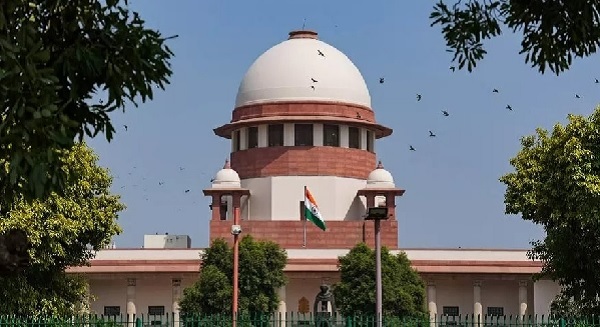
KOZYFLEX Mattresses Private Limited Vs SBI General Insurance Company Limited And Anr (Supreme Court of India)
A Company Can File Complaint of Deficiency In Services Under Consumer Protection Act, 1986
Summary: In the case of M/S Kozyflex Mattresses Private Limited v. SBI General Insurance Company, the Supreme Court of India ruled that a company is a “person” and can file a complaint for deficiency of services under the Consumer Protection Act, 1986. The dispute arose after Kozyflex’s fire insurance claim was repudiated by SBI Insurance. When Kozyflex filed a complaint with the National Consumer Disputes Redressal Commission, the insurance company argued that a company was not covered by the 1986 Act’s definition of “person.” The Supreme Court rejected this argument, stating that the definition of a “person” in the 1986 Act is inclusive rather than exhaustive. The court’s decision adopted a liberal and purposive interpretation of the law, noting that the legislative intent was to be beneficial to a wide range of complainants. The court also pointed to the updated Consumer Protection Act, 2019, which explicitly includes a “body corporate” in its definition of a “person,” indicating that the exclusion was not the original legislative intent. As a result of this ruling, the Supreme Court remanded the case back to the National Commission, directing them to reconsider the complaint on its merits and to allow Kozyflex the opportunity to rebut the findings of the investigator reports.

BRIEF FACTS:
1.Kozyflex Mattresses Private Limited (“Kozyflex”) purchased a ‘Standard Fire and Special Perils’ insurance policy from SBI General Insurance Company (“SBI Insurance”).
2. Two weeks after the purchase of the policy, a massive fire incident took place at Kozyflex’s factory. The next day Kozyflex intimated SBI Insurance of the incident, and eventually submitted an insurance claim of INR 3,40,00,000 (Indian Rupees three crore forty lakh) (“Claim”).
3. SBI Insurance appointed investigators to independently assess and verify the claim.
4. Basis the results of these assessments and verification, the investigators prepared a preliminary report and a final report (collectively, “the Reports”).
5. Relying on the Reports, the Claim was repudiated on the ground that it was fraudulent and exaggerated.
6. The Reports were not provided to Kozyflex.
7. Aggrieved by the repudiation of the Claim, Kozyflex filed a complaint before the National Consumer Disputes Redressal Commission (“National Commission”) under the 1986 Act, claiming deficiency in service by SBI Insurance (“Complaint”).
8. On dismissal of the Complaint by the National Commission, Kozyflex approached the Supreme Court in appeal seeking remand of the Complaint to the National Commission for reconsideration on merits after giving Kozyflex an opportunity to rebut the findings in the Reports (“Appeal”).
SUBMISSIONS BEFORE THE SUPREME COURT
9. Before the Supreme Court, Kozyflex contended inter alia that despite clarifying all the queries by the SBI Insurance appointed investigators, Kozyflex was never provided with the Reports, which were produced directly before the National Commission. Hence, Kozyflex was never given a chance to rebut the findings in the Reports.
10. On the other hand, SBI Insurance raised preliminary objections to the Appeal inter alia on the ground that the word ‘company’ is not covered by the definition of ‘person’ under the 1986 Act. Therefore, Kozyflex being a company is not entitled to file a complaint under the 1986 Act.
OBSERVATIONS & DECISION:
11. The Supreme Court, after considering the submissions made by the parties, rejected the preliminary objections raised by SBI Insurance, that a Company is not eligible to file a complaint under provisions of the Consumer Protection Act, 1986.
12. The Supreme Court held that the definition of ‘person’ provided in the 1986 Act is an inclusive and not an exhaustive definition. The 1986 Act being a beneficial legislation, a liberal interpretation must be given to its provisions to ensure that the legislative intent is not watered down.
13. Further, the Supreme Court stated that the very fact that the definition of ‘person’ under the 2019 Act was amended to include a body corporate, is by itself indicative of the legislature realising the incongruity of the definition of ‘person’ under the 1986 Act with the purpose sought to be achieved by the statute.
14. Ultimately, the Supreme Court remanded the matter back to the National Commission for reconsideration on merits after Kozyflex is given an opportunity to rebut the findings of the Reports.
| DEFINITION OF PERSON UNDER PROVISIONS OF THE CONSUMER PROTECTION ACT, 1986
The 1986 Act defines a ‘consumer’ to be any ‘person’ who buys, hires, or avails of any goods or services for a consideration provided that such goods or services are not bought, hired, or availed for any commercial purpose. The definition of a ‘person’ as provided under the 1986 Act is as follows: ” ‘person’ includes, – a. a firm whether registered or not. b. a Hindu undivided family. c. a co-operative society. d. every other association of persons whether registered under the Societies Registration Act, 1860 (21 of 1860) or not;” The 1986 Act evidently makes no explicit mention of ‘company’ or ‘body corporate’ in its definition of ‘person’ – an exclusion that is remedied under the 2019 Act. This difference between the 1986 Act and the 2019 Act has led to a series of decisions by the National Commission, disallowing actions brought by companies before it. CONSUMER UNDER CONSUMER PROTECTION ACT, 2029 SECTION 2(7) “Consumer” Means Any Person Who— (i) buys any goods for a consideration which has been paid or promised or partly paid and partly promised, or under any system of deferred payment and includes any user of such goods other than the person who buys such goods for consideration paid or promised or partly paid or partly promised, or under any system of deferred payment, when such use is made with the approval of such person, but does not include a person who obtains such goods for resale or for any commercial purpose; or (ii) hires or avails of any service for a consideration which has been paid or promised or partly paid and partly promised, or under any system of deferred payment and includes any beneficiary of such service other than the person who hires or avails of the services for consideration paid or promised, or partly paid and partly promised, or under any system of deferred payment, when such services are availed of with the approval of the first mentioned person, but does not include a person who avails of such service for any commercial purpose. Explanation. —For the purposes of this clause, — (a) the expression “commercial purpose” does not include use by a person of goods bought and used by him exclusively for the purpose of earning his livelihood, by means of self-employment. (b) the expressions “buys any goods” and “hires or avails any services” includes offline or online transactions through electronic means or by teleshopping or direct selling or multi-level marketing. SECTION (31) “PERSON” INCLUDES— (i) an individual. (ii) a firm whether registered or not. (iii) a Hindu undivided family. (iv) a co-operative society. (v) an association of persons whether registered under the Societies Registration Act, 1860 or not. (vi) any corporation, company or a body of individuals whether incorporated or not. (vii) any artificial juridical person, not falling within any of the preceding sub-clauses. |
CONCLUSION: As a result, companies were forced to approach civil courts for redressal of their grievances, despite such grievances being inherently in the nature of consumer disputes arising out of deficiency in services. Companies were thus precluded from enjoying the benefits of the fast-tracked summary procedure provided for the adjudication of such disputes. Parallelly, the civil courts, already under strain from immense pendency, were further burdened with the adjudication of disputes which should be adjudicated by the consumer dispute redressal forums.
While admittedly a company or a body corporate does not find mention in the definition of person under the 1986 Act, it is a settled law that a company is to be considered a legal person, with an identity separate and distinct from its participants or decisionmakers. Therefore, dismissing actions merely on the basis that companies are not included in the definition of person under the 1986 Act, was a pedantic approach completely at odds with the legislative intent behind the statute.
The Supreme Court’s decision in Kozyflex (supra) has put a decisive quietus to this issue. In Kozyflex (supra), the Supreme Court appears to have adopted a purposive approach in analysing this issue, and correctly identified that the definition of ‘person’ is inclusive and not exhaustive in nature. While doing so, it has delivered a progressive decision which is in sync with the objects sought to be achieved by the 1986 Act. This decision will ensure that a complainant being a ‘company’ will in and of itself, not be a reason to prevent it from initiating an action under the 1986 Act.
This decision is cognizant of the changing nature of business transactions in India and in our opinion, will benefit both companies (who can bring actions both under the 1986 Act and the 2019 Act), as well as civil courts (who can devote their attention to cases of inherently commercial nature which are battling for attention).
FULL TEXT OF THE SUPREME COURT JUDGMENT/ORDER
1.This appeal under Section 67 of the Consumer Protection Act, 2019 (hereinafter being referred to as ‘Act of 2019’) has been preferred by the appellant herein for assailing final order dated 24th August, 2022 rendered by National Consumer Disputes Redressal Commission (hereinafter being referred to as ‘National Commission’), rejecting the Consumer Case No. 754 of 2015 filed by M/s. Kozyflex Mattresses Private Limited(hereinafter being referred to as the ‘insured-appellant’) praying for a direction to the SBI General Insurance Company(hereinafter being referred to as the ‘insurer-respondent’) to indemnify it for the loss caused by fire in the insured premises being the manufacturing unit of the insured-appellant company situated at Sy. No.-41-25, village Poosapatirega, Mandal and District Vizianagaram.
2. Brief facts essential for adjudication of the present civil appeal are noted hereinbelow.
3. The insured-appellant herein being a Private Limited Company registered under the Companies Act, 1956 is engaged in the business of manufacture and sale of coir foam mattresses, pillows, cushions and other coir by-products. The manufacturing unit of the insured-appellant is situated at Sy. No.-41-25, village Poosapatirega, Mandal and District Vizianagaram and was registered as a small scale industry with the District Industries Centre, Vizianagaram. The insured-appellant obtained a ‘Standard Fire and Special Perils Policy(Material Damage)’ No.0000000000807725 (in short ‘Policy’) for the period commencing from 28thMarch, 2013 to 27th March, 2014 for a sum of Rs. 1.25 crores on the plant and machinery and a sum of Rs.30,00,000/- on stock from the insurer-respondent. By an endorsement dated 29th March, 2013, the sum insured for stock was further enhanced to Rs.1.55 crores and for building the sum insured was enhanced to Rs.20,00,000/-.
4. It is claimed that a massive fire incident took place in the manufacturing unit of the insured-appellant in the intervening night of 13th/14thApril, 2013. Immediate action by way of informing the police and the fire service station was taken and fire tenders were sent to the spot. The insured-appellant informed the insurer-respondent about the fire accident and the losses suffered in the manufacturing unit in the fire incident on 15thApril, 2013. The insurer-respondent appointed Professional Surveyor & Loss Adjustor Pvt. Ltd., Secunderabad as the surveyor on 15th April, 2013. The surveyor inspected the factory premises on 16th April, 2013 and 17th April, 2013 and took photographs, videography and prepared inventory. The surveyor asked the insured-appellant to remove the collapsed roof from the manufacturing unit premises in order to conduct inspection of the machinery and stock and for carrying out the measurement and quantification. The collapsed roof was not found removed till the subsequent inspection conducted by the surveyor on 15th and 16th May, 2013. The third inspection was conducted between 15th and 17th July, 2014 and it is stated that by that time, the machineries in the manufacturing unit had been repaired. The insured-appellant submitted an insurance claim for a sum of Rs. 3.31 crores i.e. Rs.40,11,152/-for building, Rs.1,08,47,435/- for plant and machinery and Rs.1,87,72,489/- for stock.
5. The insurer-respondent appointed Mr. Kalahasti Satyanarayana, Dy.S.P. (Retd.), Insurance Claim Investigator, Guntur and Mr. K. Jagannadha Sastry, Advocate, Independent Investigator and Fact Finder, Vizianagaram to verify the documents submitted by the insured-appellant in support of his claim and to submit their independent reports. Mr. Kalahasti Satyanarayana submitted his inspection report dated 12thOctober, 2013 and Mr. K. Jagannadha Sastry submitted his inspection report dated 25thJanuary, 2014 noting inter-alia that the purchase of machinery from M/s. Maheshwari Ribbons, Gudivada to the tune of Rs. 1,39,64,475/- and stock from Jageswari Enterprises to the tune of Rs. 64,39,810/- were mere paper and money transactions which have been done with the intention to siphon money from the State Bank of Hyderabad and the National Small Scale Industries Corporation Ltd. and that there had been no actual sale/purchase of such machinery and stock.
6. After examining all the documents submitted by the insured-appellant as well as the reports of the two investigators, the surveyor submitted a final survey report dated 11thFebruary, 2014 observing that the claim was fraudulent and was based on fabricated documents and accordingly recommended for the repudiation of the claim. The Competent Authority of the insurer-respondent examined the entire material and repudiated the claim of the appellant by invoking Clause 8 of the General Terms and Conditions of Policy vide letter dated 3rd March, 2014.
7. The insured-appellant made a representation dated 11thJanuary, 2015 to the Grievance Redressal Manager against the repudiation of its claim. However, such representation did not meet the desired result, upon which the insured-appellant filed Complaint No.329 of 2015 before the National Commission which was dismissed as withdrawn on 30th June, 2015 with the liberty to file a fresh complaint. Thereafter, the subject complaint came to be filed on 4th August, 2015 alleging deficiency in service on the part of the insurer-respondent. The insured-appellant contested the complaint by filing a detailed reply. The factum of obtaining the policy and the endorsement dated 29th March, 2013 made therein was not disputed. However, the insurer-respondent alleged that the loss had occurred within 16 days of obtaining the insurance policy and the claim was for a very heavy amount and thus, two independent investigators referred to supra were appointed to verify the veracity of the documents submitted by the insured-appellant in support of his claim and submit their independent reports. Both the investigators submitted their respective investigation reports wherein, the very factum of purchase of machinery and stock by the insured-appellant were found to be fabricated and mere paper transactions carried out with the intention to siphon money from the State Bank of Hyderabad and the National Small Scale Industries Corporation. The surveyor examined the reports of the investigators and submitted a final report dated 11th February, 2014 stating therein that the claim was fraudulent and based on fabricated documents and recommended repudiation of the claim. The Competent Authority of the insurer-respondent after examining the report of the surveyor repudiated the claim by letter dated 3rd March, 2014. It was further stated that the claim was repudiated as the same was fraudulent and exaggerated. The delay was attributable to the insured-appellant who did not cooperate with the surveyor and investigators who were not promptly provided with the requisite documents and clarifications. A preliminary objection was raised that the complaint involved complicated issues of fact which required examination of voluminous documentary evidence and cross-examination of witnesses and hence, it was prayed that the insured-appellant should be relegated to Civil Court for redressal of its grievances.
8. The insured-appellant filed its documentary evidence and the affidavit of evidence. The insurer-respondent also filed reports of the investigators, final survey report of the surveyor and affidavits of evidence of its authorized representatives. The National Commission, in its order referred to Clause-8 of General Terms and Conditions of Policy which reads as under: –
“8. If the claim be in any respect fraudulent, or in any false declaration be made or used in support thereof or any fraudulent means or devices are used by the Insured or any one acting on his behalf to obtain any benefit under the policy or if the loss or damage be occasioned by the wilful act, or with the connivance of the insured, all benefits under this policy shall be forfeited.”
9. After referring to the said clause and relying upon the reply of the insurer-respondent and the reports of the investigators and the surveyor, the National Commission proceeded to accept the same and upheld the repudiation letter dated 3rd March, 2014, rejecting the complaint vide order dated 24th August, 2022 which is assailed in the present appeal.
10. Learned counsel for the insured-appellant submitted that the queries raised by the investigators and surveyor were duly replied by the insured-appellant and the same forms part of the record before the National Commission. Neither the preliminary report nor the final report was provided to the insured-appellant and were directly produced along with the reply affidavit filed by the insurer-respondent before the National Commission and hence, there was no opportunity for the insured-appellant to rebut the same.
11. It was further submitted that the stock as well as the machinery destroyed in the fire were purchased through properly accounted transactions which are clearly reflected in the account books of the insured-appellant. All these accounts were produced by the insured-appellant before the surveyor and investigators and thus, the reports of the surveyor and investigators are partisan and unacceptable. The veracity of the surveyor’s report is questioned on the ground that the same is contradicted by the investigators’ reports. Learned counsel thus prayed that it is a fit matter warranting remand of the complaint to the National Commission for reconsideration after giving an opportunity to the insured-appellant to rebut the investigation reports and the surveyor report filed on behalf of the insurer-respondent.
12. Per contra, learned counsel representing the insurer-respondent vehemently and fervently contended that the insured-appellant being a body corporate is not a consumer within the meaning of Section 2(1)(m) of the Consumer Protection Act, 1986 (hereinafter referred to as ‘Act of 1986’) as it would not be covered by the definition of consumer provided under the Act of 1986. He contended that the definition of ‘person’ has been amended vide Consumer Protection Act, 2019 wherein, the word ‘company’ has been included and hence, it has to be presumed that company or body corporate was not covered under the definition of a ‘person’ under the Act of 1986. In this regard, he placed reliance on the judgments rendered by this Court in the cases of Shrikant G. Mantri v. Punjab National Bank1and National Insurance Company v. Harsolia Motors and Ors.2and urged that the insured-appellant having taken the insurance policy for commercial purposes is not entitled to invoke the jurisdiction of forums established under the Consumer Protection Act. On these grounds, learned counsel implored the Court to dismiss the appeal.
13. We have given our thoughtful consideration to the submissions advanced at bar and have gone through the material placed on record.
14. We proceed to deal with the preliminary objections raised by the learned counsel for the respondent regarding maintainability of the complaint before the National Commission. The objections are twofold:
(1) That the word ‘company’ is not covered within the definition of ‘person’ under Section 2(1)(m) of the Consumer Protection Act, 1986.
(2) That the insured-appellant having taken the policy for commercial purposes cannot invoke the jurisdiction of the National Commission because the transactions leading to filing of the complaint cannot be termed to be lack of service/deficiency in service.
15. We may at the outset record that the definition of ‘person’ as provided in the Act of 1986 is inclusive and not exhaustive. Consumer Protection Act being a beneficial legislation, a liberal interpretation has to be given to the statute. The very fact that in the Act of 2019, a body corporate has been brought within the definition of ‘person’, by itself indicates that the legislature realized the incongruity in the unamended provision and has rectified the anomaly by including the word ‘company’ in the definition of ‘person’. Hence, the first preliminary objection raised by learned counsel for the respondent regarding ‘company’ not being covered by the definition of ‘person’ under Act of 1986 has no legs to stand and deserves to be rejected.
16. The second preliminary objection raised by the respondent was regarding claim being filed for a commercial purpose. We have given our thoughtful consideration to the said submission and find that the judgments relied upon by learned counsel for the respondent in the cases of Shrikant G. Mantri(supra) and Harsolia Motors(supra) are totally distinguishable as the same deal with the situation wherein, the insurance policy was taken for a commercial purpose plain and simple. The situation in the case at hand is entirely different. The insurance policy in the present case was taken under the title ‘Standard Fire and Special Perils Policy(Material Damage)’ and was covering the risk of these elements only and nothing else. The claim was also filed for indemnifying the insured-appellant for the damage caused in a fire accident at the insured premises. Hence, this Court has no hesitation in holding that both the preliminary objections raised by the learned counsel for the respondent are unsustainable. Having held so, we now come to the merits of the matter.
17. The insured-appellant has taken a pertinent plea in the instant civil appeal that the copies of the surveyor’s report and the investigators’ report were not provided timely and thus, the insured-appellant did not get proper opportunity to rebut the same. This pertinent plea taken by the insured-appellant in the memo of appeal has not been specifically refuted and only a formal denial was offered in the counter-affidavit filed by the insurer-respondent.
18. In this background, we feel that ends of justice require that the insured-appellant should have been provided proper opportunity to file its rebuttal/objections to the affidavit/reports submitted by the insurer-respondent before the National Commission and consequently, the complaint should be reconsidered on merits after providing such opportunity to the appellant.
19. As a result of the above discussion, it is hereby directed that the appellant shall be permitted to file its rebuttal/rejoinder affidavit before the National Commission limited to the contents of the reports referred to supra. Thereafter, the matter shall be reheard and decided on merits afresh.
20. Resultantly, the impugned order dated 24thAugust, 2022 is set aside. The matter is remitted to the National Commission for considering and deciding the complaint afresh in light of the above directions. However, we make it clear that none of the observations made hereinabove shall prejudice the decision of the consumer case on remand.
21. The appeal is disposed of accordingly.
22. Pending application(s), if any, shall stand disposed of.
Notes:
1 (2022) 5 SCC 42
2 (2023) 8 SCC 362.
*****
DISCLAIMER: the case law presented here is only for sharing information with readers. The views expressed here are of personal nature. In case of necessity do consult with professionals.