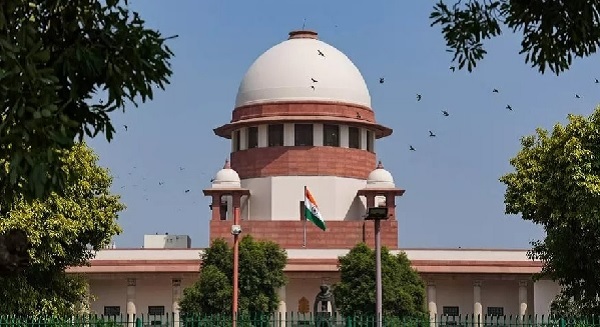
S.P. Mani And Mohan Dairy Vs Dr. Snehalatha Elangovan (Supreme Court of India)
Conclusion: Vicarious liability can be fastened on those who were in-charge of and responsible to the company or firm for the conduct of its business. Supreme Court observed that a High Court can quash a cheque case only if it comes across some unimpeachable and incontrovertible evidence to indicate that the Director/partner of a firm could not have been concerned with the issuance of cheques.
Held: Appellant herein (original complainant) was engaged in the business of milk and milk products. The respondent was one of the partners of a Partnership Firm running in the name of Sira Marketing Services. The firm used to purchase milk and milk products from the appellant/complainant on credit basis. Despite service of notice to the firm as well as the two partners (accused persons) the amount was not paid to the appellant and therefore, the appellant was left with no other option but to file the complaint in the Judicial Magistrate Fast Track Court No. II, Erode for the offence punishable under Section 138 r/w 141 of the NI Act which came to registered. Respondent herein (original accused No. 03/partner) preferred an application under 482 of the Code in the High Court and prayed that the criminal proceedings instituted against her may be quashed as she had no liability under the law. High Court quashed the proceedings against the respondent herein mainly on the ground that there was nothing to indicate as to how and in what manner the respondent at the relevant point of time was incharge and responsible for the conduct of the business of the firm. The High Court took the view that the complaint could be prosecuted as against the respondent herein only if the allegations made in the complaint fulfilled the requirements of Section 141 of the NI Act. The High Court took the view that merely by reciting the words used under Section 141 of the NI Act in the complaint no vicarious liability can be fastened on the partner of the firm. In such circumstances above, the High Court allowed the application filed by respondent herein and terminated the proceedings as far as the respondent was concerned. It was held that Criminal liability iwas attracted only on those, who at the time of commission of the offence, were in charge of and were responsible for the conduct of the business of the firm. But vicarious criminal liability could be inferred against the partners of a firm when it was specifically averred in the complaint about the status of the partners ‘qua’ the firm. This would make them liable to face the prosecution but it did not lead to automatic conviction. Hence, they were not adversely prejudiced if they were eventually found to be not guilty, as a necessary consequence thereof would be acquittal. If any Director wants the process to be quashed by filing a petition under Section 482 of the Code on the ground that only a bald averment was made in the complaint and that he/she was really not concerned with the issuance of the cheque, he/she must in order to persuade the High Court to quash the process either furnish some sterling incontrovertible material or acceptable circumstances to substantiate his/her contention. He/she must make out a case that making him/her stand the trial would be an abuse of process of Court.
FULL TEXT OF THE SUPREME COURT JUDGMENT/ORDER
1. Leave granted.
2. This appeal is at the instance of the original complainant of a complaint filed under Section 138 of the Negotiable Instruments Act, 1881 (for short, “the NI Act”) and is directed against the order passed by the High Court of Madras dated 16.02.2021 in the Criminal Original Petition No. 1063 of 2021 filed by the respondent herein (accused no.03) under Section 482 of the Code of Criminal Procedure (for short, “the Code”), whereby the High Court allowed the application and quashed the criminal proceedings initiated against the respondent herein in the court of the Judicial Magistrate Fast Track Court No.II, Erode.
3. There are some legal issues with a never-ending debate. The debate on such legal issues goes on and on despite there being plethora of case law on the subject. The NI Act by now is almost three decades old. Section 141 of the NI Act is on the statute past more than three decades. There are various decisions of this Court and High Courts explaining the true purport of Section 141 of the NI Act. However, the debate on Section 141 of the NI Act is never ending. The present litigation is also one in which we have been called upon to look into Section 141 of the NI Act.
FACTUAL MATRIX
4. The facts of this case are plain and simple. The appellant herein (original complainant) is engaged in the business of milk and milk products. The respondent herein is one of the partners of a Partnership Firm running in the name of Sira Marketing Services. The firm used to purchase milk and milk products from the appellant/complainant on credit basis. The appellant has to recover an amount of Rs. 10,71,434.60/ (Rs. Ten Lakh Seventy One Thousand Four Hundred Thirty Four and Sixty paise) from the partnership firm. The firm issued a cheque duly signed by the original accused No. 02 (partner/authorised signatory) in favour of the appellant for the amount of Rs. 10,00,000/ (Rs. Ten Lakh only) dated 05.05.2017. The cheque came to be dishonoured as there was no sufficient balance in the account maintained by the firm. No sooner, the bank intimated the appellant herein that the cheque could not be cleared due to insufficient funds than the appellant herein issued a statutory notice dated 14082017 to the firm and the two partners of the firm. Despite service of notice to the firm as well as the two partners (accused persons) the amount was not paid to the appellant and therefore, the appellant was left with no other option but to file the complaint in the Judicial Magistrate Fast Track Court No. II, Erode for the offence punishable under Section 138 r/w 141 of the NI Act which came to registered as the STC No. 583 of 2017.
5. The respondent herein (original accused No. 03/partner) preferred an application under 482 of the Code in the High Court and prayed that the criminal proceedings instituted against her may be quashed as she has no liability under the law. The principal argument of the respondent herein before the High Court was that much before the cheque came to be issued, the firm had been dissolved. The accounts of the firm were also settled on 13022017 following the dissolution. The High Court quashed the proceedings against the respondent herein mainly on the ground that there was nothing to indicate as to how and in what manner the respondent at the relevant point of time was incharge and responsible for the conduct of the business of the firm. The High Court took the view that the complaint can be prosecuted as against the respondent herein only if the allegations made in the complaint fulfils the requirements of Section 141 of the NI Act. The High Court took the view that merely by reciting the words used under Section 141 of the NI Act in the complaint no vicarious liability can be fastened on the partner of the firm.
6. In such circumstances above, the High Court allowed the application filed by respondent herein and terminated the proceedings as far as the respondent is concerned.
7. In view of the aforesaid, the appellant (original complainant) is here before this Court with the present appeal.
Submissions on behalf of the Appellant
8. The learned counsel, Mr. E.R. Kumar appearing for the appellant vehemently submitted that the High Court committed a serious error in passing the impugned Order quashing the proceedings against the respondent herein. He would submit that the entire premise on which the High Court proceeded could be termed as erroneous in law. The learned counsel would submit that in the statutory notice issued to the respondent as well as in the body of the complaint, there are specific averments that the accused Nos. 02 and 03 respectively, being the partners of the partnership firms, are incharge and responsible for the daytoday affairs of the firm. He pointed out there are specific averments made in the complaint that the partners which include the respondent herein are regularly looking after and actively taking part in the daytoday business of the firm. He further pointed out that there is a specific averment that in order to discharge the liability, the original accused No. 02 had issued the cheque within the knowledge and consent of the respondent herein. It is argued that if the substance of the allegation made in the complaint fulfil the requirements of Section 141 of the NI Act, the complaint is to proceed and is required to be tried with. The learned counsel vociferously argued that while construing a complaint the Court should not adopt a hypertechnical approach and quash the same.
9. The learned counsel further pointed out that three individual notices were issued under Section 138 of the NI Act before the filing of the complaint. He would submit that the statutory notice was duly served upon the respondent herein. However, the respondent thought fit not to give any reply to the notice. It is argued that if the respondent had anything to say as regards her role in the firm, she could have given an appropriate reply that she is a sleeping partner and not involved into the daytoday affairs of the firm. It is argued that respondent herein could also have clarified in her reply that the firm had already been dissolved much before the cheque was issued and in such circumstances, no liability could be fastened on her. In the absence of any reply to the statutory notice, the respondent could not have argued before the High Court for the first time about her involvement in the affairs of the firm. The learned counsel would submit that the High Court committed a serious error in accepting such submission canvassed on behalf of the respondent at the preliminary stage.
10. The learned counsel further submitted that once the necessary averments are made in the complaint, the onus thereafter would shift on the accused to establish by producing some unimpeachable and incontrovertible evidence which may clearly indicate that the respondent herein as one of the partners of the firm, could not have been concerned with the issuance of the cheque in question.
11. In such circumstances referred above, the learned counsel appearing for the appellant prays that there being merit in his appeal, the same may be allowed and the impugned order passed by the High Court may be quashed.
Submissions on behalf of the Respondent:
12. Hari Priya Padmanabhan, the learned counsel appearing for the respondent (accused) on the other hand has vehemently opposed the present appeal submitting that no error, not to speak of any error of law, could be said to have been committed by the High Court in passing the impugned order. She would submit that mere bald averments in the complaint are not sufficient to fasten the vicarious lability on the partner of the firm as envisaged under Section 141 of the NI Act. The learned counsel would submit that the case on hand is squarely covered by the decision of this Court in the case of SMS Pharmaceuticals Ltd. v. Neeta Bhalla, (2005) 8 SCC 89. Relying on the said decision of this Court, the learned counsel would submit that the deeming fiction creating criminal lability and vicarious lability are a departure from the usual principles of criminal law and that a clear case should be spelt out and the accused person should be made aware of the case alleged against him or her. The learned counsel would submit that this would therefore necessarily require averments in addition to the statement that the accused is incharge of and responsible for the affairs of the company/firm.
13. The learned counsel appearing for the respondent in support of her aforesaid submissions has placed strong reliance on the following decisions:
(i) Gunmala Sales Pvt. Ltd. v. Anu Mehta & Ors, reported in (2015) 1 SCC 103;
(ii) National Small Industries Corporation v. Harmeet Singh Paintal & Anr., reported in (2010) 3 SCC 330;
(iii) Sunita Palita & Others v. M/s Panchami Stone Quarry, reported in (2022) SC Online SC 945.
14. In such circumstances referred above, the learned counsel appearing for the respondent prays that there being no merit in this appeal, the same may be dismissed.
Analysis
15. Having heard the learned counsel appearing for the parties and having gone through the materials on record the only question that falls for our consideration is whether the High Court committed any error in passing the impugned order?
16. Since the arguments of both the sides have proceeded mainly on the averments made in the complaint and to analyze the case before us in proper perspective, it is necessary to scrutinize the statutory notice as well as the complaint. The statutory notice dated 14.08.2017 reads thus:
“To,
1. Sira Marketing Service,
Represented by it’s Partner/ Authorized Signatory,
Rajesh, Old No.60, New No.30,
28th Cross St, Indhira Nagar,
Adyar, Chennai20.
2. Rajesh,
Partner/ Authorized Signatory,
Sira Marketing Service,
Old No.60, New No. 30,
28th Cross St, Indhira Nagar,
Adyar, Chennai20.
3. Mrs. Snehalatha Elangovan,
W/o. Elangovan,
Partner / Authorized Signatory,
Sira Marketing Service,
Old No.60, New No.30,
28th Cross St, Indhira Nagar,
Adyar, Chennai20.
Sir,
Please take notice that we are instructed by our client S.P. Mani and Mohan Dairy, Represented by its Managing Partner: R.Mohanasundaram, No.34 & 84, Jeevanantham Street, Kollampalayam, Erode638 002 to issue this notice to you.
You No.1 is a Partnership Firm, You No.2 and 3 are Partners and incharge and responsible for the daytoday affairs of You No. 1, you No.2 and 3 are regularly looking after and actively taking part in the daytoday business of You No.1.
Our client is doing business in Milk and Milk Products: You used to purchase Milk and Milk Products from our client on credit basis. Our client is maintaining true and correct accounts. As per accounts maintained by our client you have to pay a balance of Rs. 10,71,434.60 to our client. In order to discharge the part of the said balance amount and liability you No.2 on behalf of you No.1 and with the knowledge and consent of you No.3 issued the following cheque which is drawn on TamilNad Mercantile Bank Ltd., Thiruvanmiyur Branch, Chennai41.
Want to Read the Complete Judgment?
You have read the free case summary. Unlock the full judgment, the detailed judicial reasoning and the downloadable PDF, along with every other premium judgment on TaxGuru.
Already subscribed? Log in
One subscription covers the entire premium judgment library, not just this case.