Summary: This article examines important GST rulings that taxpayers and practitioners may rely upon while also identifying the limitations, contrary authorities and subsequent developments affecting those decisions. It covers input tax credit disputes involving supplier defaults, including Shanti Kiran India, Suncraft Energy, Bhandari Scrap Traders and Shaurya Alloys; correction of clerical errors in GST returns; restrictions on negative blocking of electronic credit ledgers under Rule 86A; and the Supreme Court’s ruling in Goodluck India on pending proceedings under omitted Rule 96(10). It further examines defective and unsigned GST orders, clubbing of multiple tax periods, mechanical invocation of Section 74, mandatory personal hearings, provisional attachment under Section 83, e-way bill disputes, arrest and bail safeguards, parallel investigations and GST liability on leasehold rights and ocean freight. The article also cautions against blindly relying on decisions whose effect has subsequently been limited, stayed, legislatively neutralised or reversed, including developments concerning Safari Retreats, Gameskraft, belated appeals and limitation-extension notifications. The central message is that a favourable precedent is useful only when the taxpayer’s facts match the ruling, contrary decisions are fairly disclosed and the current status of the judgment has been independently verified.
When the Law Leans Towards the Taxpayer: GST Rulings Every Assessee Should Keep Ready
- The trouble with forwarded citations
- Input tax credit and the honest purchaser
- Human error in returns is not tax evasion
- Rule 86A cannot create a debt out of thin air
- Exporters and the ghost of Rule 96(10)
- When the notice itself is defective
- The unsigned order
- Clubbing of years
- Careless use of Section 74
- Right to be heard
- A frozen bank account is not a recovery tool
- Goods on the road and the expired e way bill
- Arrest, bail and parallel investigations
- Where the levy itself does not reach
- Rulings that must not be cited blindly
- The last word
- Table of principal cases
The trouble with forwarded citations
Every tax practitioner knows the message. A list titled “landmark judgments in favour of the taxpayer” lands in a professional group, travels from phone to phone, and by the following week it is sitting inside a reply filed before the proper officer. Nobody has opened the judgment. Nobody has checked whether it was reversed, stayed, or wiped out by a retrospective amendment. The department checks. And the reply loses its credibility on the very first page.
A citation is a representation to the authority that the law stands exactly as you say it stands. If that representation fails, everything else in the reply is read with suspicion, including the parts that are right.
This article attempts something modest but necessary. It collects the rulings that an assessee can rely on with confidence across the main provisions of the GST law, says plainly what each one decided, and says with the same plainness where each one is weak. The position is stated as on 5 October 2026. Before any of these decisions goes into a pleading, the certified copy must be downloaded from the court website and read in full. There is no substitute for that discipline.
Input tax credit and the honest purchaser
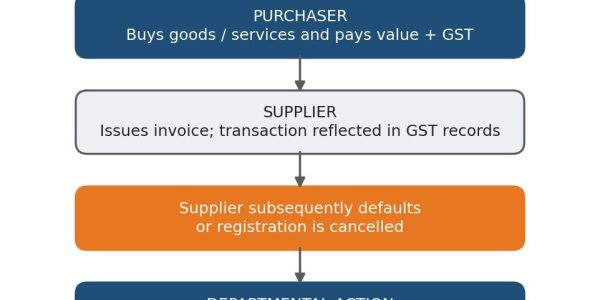
No dispute wounds a genuine dealer more than the denial of credit for a fault that is not his own. He bought the goods, paid the tax to his supplier, holds the invoice and the e way bill, and is then told to pay the same tax a second time because the supplier never deposited it.
The strongest answer available today comes from the Supreme Court in The Commissioner Trade and Tax, Delhi v. M/s Shanti Kiran India (P) Ltd., decided on 09.10.2025 by Justices Manoj Misra and N. Kotiswar Singh in Civil Appeal Nos. 2042 to 2047 of 2015 with Civil Appeal No. 9902 of 2017, and reported as 2025 LiveLaw (SC) 1008. The Court held that a purchasing dealer who bought on valid tax invoices from a seller who stood registered on the date of the transaction cannot be denied credit merely because the seller did not deposit the tax. The remedy of the department lies against the seller. The Court relied on the Delhi High Court judgment dated 26.10.2017 in On Quest Merchandising India Pvt. Ltd. v. Government of NCT of Delhi, 2018 (10) G.S.T.L. 182 (Del), against which the Supreme Court had declined to interfere on 10.01.2018 in Commissioner of Trade and Taxes, Delhi v. Arise India Limited, SLP (C) No. 36750 of 2017.
Under the GST law itself, the Calcutta High Court in Suncraft Energy Pvt. Ltd. v. The Assistant Commissioner, State Tax, Ballygunge Charge, MAT 1218 of 2023, decided on 02.08.2023 and reported as [2023] 153 taxmann.com 81 (Calcutta), held that credit cannot be reversed in the hands of the purchaser unless the department has first proceeded against the defaulting supplier. Reversal against the buyer is reserved for exceptional situations such as collusion or a supplier who has vanished. The Special Leave Petitions of the department, SLP (C) Nos. 27827 to 27828 of 2023, were dismissed on 14.12.2023, reported as [2023] 157 taxmann.com 352 (SC).
Now the honest part. Shanti Kiran arose under the Delhi VAT law. It is powerful persuasion, but it is not a ruling on Section 16(2)(c) of the CGST Act. The dismissal in Suncraft turned on the facts and the small size of the demand, so it cannot be paraded as a declaration of law. In The State of Karnataka v. M/s Ecom Gill Coffee Trading Private Limited, Civil Appeal No. 230 of 2023, decided on 13.03.2023 and reported as 2023 LiveLaw (SC) 187, the Supreme Court placed the burden of proving a genuine transaction and the actual movement of goods squarely on the dealer who claims the credit.
Then came the decision that every practitioner must now disclose. On 24.07.2026, in Bhandari Scrap Traders v. Union of India, SLP (C) No. 23931 of 2026, reported as 2026 LiveLaw (SC) 725, the Supreme Court dismissed the challenge to Section 16(2)(c) and agreed with the Gujarat High Court judgment dated 01.05.2026 in Maruti Enterprise v. Union of India, R/Special Civil Application No. 18080 of 2023. The Court found no ground to hold the provision unconstitutional and observed that the VAT and GST schemes cannot be equated. The Tripura High Court judgment in Sahil Enterprises, which had read the provision down, is under challenge before the Supreme Court and is reported to have been stayed. It should not be cited as settled law.
The door has not closed on the genuine buyer, however. On 01.10.2026 the Punjab and Haryana High Court decided Shaurya Alloys Pvt. Ltd. v. State of Punjab, CWP No. 34296 of 2024, along with more than four hundred connected petitions. The court accepted that Section 16(2)(c) is valid, but held that it cannot be applied mechanically. Default by the supplier, a nil return or a retrospective cancellation of his registration is only a signal for inquiry and is not proof against the buyer. The matters were sent back to the officers with guidelines for a fair inquiry and with protection against coercive recovery in the meantime.
The lesson is clear. Do not go to the officer with a constitutional argument. Go with facts. Place the invoice, the e way bill, the lorry receipt, the weighment slip and the bank trail on record, show that the supplier was registered and filing on the date of supply, and then insist that recovery must begin with the person who collected the tax and kept it.
One more relief deserves mention. Sub sections (5) and (6) of Section 16 were inserted by Section 118 of the Finance (No. 2) Act, 2024 with effect from 01.07.2017. Sub section (5) rescues credit for the financial years 2017 to 2018 up to 2020 to 2021 where the return was filed by 30.11.2021, and sub section (6) deals with credit of a period during which the registration stood cancelled and was later revoked. The Board explained the procedure in Circular No. 237/31/2024 GST dated 15.10.2024. Demands raised purely on Section 16(4) for those years no longer have a leg to stand on, and the Madras High Court in Sri Ganapathi Pandi Industries v. The Assistant Commissioner (State Tax), W.P. No. 25081 of 2024 and batch, reported as 2024 (10) TMI 1631, set aside such orders with liberty to decide afresh under the new provision.
Human error in returns is not tax evasion
A wrong GSTIN typed in GSTR 1. An invoice reported in the wrong month. A B2B supply entered as B2C. These are the daily accidents of compliance, and for years the portal treated them as permanent.
The Bombay High Court refused to accept that in Aberdare Technologies Pvt. Ltd. v. Central Board of Indirect Taxes and Customs, Writ Petition No. 7912 of 2024, decided on 29.07.2024 with neutral citation 2024:BHC-AS:29755-DB. The Supreme Court dismissed the petition of the Board on 21.03.2025 in Central Board of Indirect Taxes and Customs v. M/s Aberdare Technologies Private Limited, SLP (C) Diary No. 6332/2025, reported as 2025 LiveLaw (SC) 361 and [2025] 172 taxmann.com 724 (SC). The principle is of lasting value. The right to correct a mistake in the nature of a clerical or arithmetical error flows from the right to do business, and the limitations of software cannot be an excuse to deny it where the revenue loses nothing. The Court also asked the Board to look again at its timelines for correction.
The Madras High Court applied the same reasoning on 01.04.2025 in The Principal Chief Commissioner of GST and Central Excise v. Deepa Traders, W.A. No. 1091 of 2025, and permitted correction of GSTR 1 beyond the time limit in Section 37(3). The petition of the department against that judgment was dismissed by the Supreme Court in September 2025, reported as [2025] 178 taxmann.com 51 (SC).
The boundary must also be understood. In Union of India v. Bharti Airtel Ltd., decided on 28.10.2021 and reported as (2022) 4 SCC 328, the Supreme Court held that GSTR 3B cannot be reopened for the period of the error and that corrections go into the return of the period in which the mistake is noticed. Aberdare does not overrule that decision. It protects the honest clerical slip where no tax is lost. It does not hand the taxpayer a general right to revise returns.
Rule 86A cannot create a debt out of thin air
Rule 86A allows an officer to block credit lying in the electronic credit ledger when he has reason to believe that it was wrongly availed. In practice the power was stretched far beyond its words. Ledgers with a nil balance were shown as blocked for lakhs of rupees, so that every rupee of future credit was swallowed the moment it arrived. The trade calls this negative blocking.
The Delhi High Court put an end to it in Best Crop Science Pvt. Ltd. v. Principal Commissioner, CGST Commissionerate, Meerut, W.P.(C) 10980/2024 and batch, decided on 24.09.2024 with neutral citation 2024:DHC:7531-DB. The court held that the rule operates only on credit actually available in the ledger on the date of the order and that it is not a machinery for recovery. The department carried the point to the Supreme Court and failed. In Deputy Director, Directorate General of GST Intelligence v. Kings Security Guard Services Private Limited, SLP (Civil) Diary No. 17900 of 2025, the petition was dismissed on 16.05.2025, reported as [2025] 174 taxmann.com 982 (SC). In June 2026 the Supreme Court again declined to interfere in Union of India v. M/s K.K. Alloys, reported as 2026 TAXSCAN (SC) 214, where the Punjab and Haryana High Court had held that only the existing balance can be blocked and never the credit of the future. In both orders the Court left the department free to pursue its other lawful remedies for recovery.
A taxpayer whose ledger shows a negative block today should not wait. A representation citing these orders, followed by a writ petition if it is ignored, is the settled course.
Exporters and the ghost of Rule 96(10)
Few provisions caused as much needless litigation for exporters as Rule 96(10). It denied refund of IGST paid on exports to anyone who had also used certain import or procurement exemptions, and notices under it ran into crores. The rule was omitted with effect from 08.10.2024, yet field formations continued to press old notices on the footing that the omission was only prospective.
The Supreme Court has now closed the chapter. In M/s Goodluck India Limited v. Union of India, SLP (C) No. 24550 of 2025 and connected matters, decided on 06.08.2026 by Justices J.B. Pardiwala and K. Vinod Chandran and reported as 2026 INSC 821 and 2026 LiveLaw (SC) 781, the Court held that when a rule is omitted without a saving clause, the omission governs every proceeding pending on that date. It followed Kolhapur Canesugar Works Ltd. v. Union of India, (2000) 2 SCC 536, and added that the recommendation of the GST Council for a prospective omission was advisory and did not bind the rule making authority.
What makes this ruling dependable is the response of the Board. By an Office Memorandum dated 24.08.2026 the CBIC is reported to have accepted the judgment and instructed its officers not to initiate or pursue proceedings founded on the omitted rule. An exporter who still carries a live notice or an undecided appeal under Rule 96(10) should place the judgment and the memorandum before the authority and seek that the proceedings be dropped. Matters that attained finality before the omission stand on a different footing and need separate advice.
On the inverted duty structure, candour is required. In Union of India v. VKC Footsteps India Pvt. Ltd., Civil Appeal No. 4810 of 2021, decided on 13.09.2021 and reported as (2022) 2 SCC 603, the Supreme Court upheld Section 54(3) and Rule 89(5), and refund of credit on input services remains unavailable. That door is shut and no forwarded message can open it.
When the notice itself is defective
Many demands collapse before the merits are reached, because the notice or the order was never lawfully made. Four lines of authority are worth keeping at hand.
The unsigned order
The first concerns the unsigned order. In A.V. Bhanoji Row v. Assistant Commissioner (ST), W.P. No. 2830 of 2023, decided on 14.02.2023 and reported as 2023 (2) TMI 1224, the Andhra Pradesh High Court held that the signature of the officer cannot be dispensed with, and that neither Section 160 nor Section 169 can rescue an order that nobody signed. The court followed this view in M/s SRK Enterprises v. Assistant Commissioner (ST), Bheemili Circle, W.P. No. 29397 of 2023, decided on 10.11.2023 and reported as 2023 (12) TMI 156, where it said that an unsigned order is no order in the eyes of law, and again in M/s SRS Traders v. The Assistant Commissioner ST, W.P. No. 5238 of 2024, decided on 19.03.2024. A caution is needed here. In Sahiti Agencies v. The Assistant Commissioner of Central Tax and Central Excise, W.P. No. 14874 of 2025, decided on 26.09.2025, the same court observed that a reference number generated by the portal is evidence of digital authentication and that an assessee who answered the notice cannot turn around and attack it for want of signature. The argument is therefore at its best against an unsigned final order, and where the assessee never participated.
Clubbing of years
The second concerns the clubbing of years. In S J Constructions v. The Assistant Commissioner, W.P. No. 11028 of 2025 and batch, decided on 17.09.2025 by Justices R. Raghunandan Rao and T.C.D. Sekhar and reported as 2025 (9) TMI 1215, the Andhra Pradesh High Court held that a single show cause notice or a composite order cannot cover more than one tax period, since limitation, appeal and penalty all run period by period. The court has continued to apply this view through 2026. The Kerala High Court has ruled the same way in Joint Commissioner (Intelligence and Enforcement) v. Lakshmi Mobile Accessories, W.A. No. 258 of 2025, decided on 05.02.2025, and in Tharayil Medicals, W.A. No. 627 of 2025.
It is a formidable ground, but it would be dishonest to call it settled. The Delhi High Court in Ambika Traders v. Additional Commissioner, W.P.(C) 4853/2025, decided on 29.07.2025 and reported as 2025 (8) TMI 315, and a Division Bench of the Karnataka High Court in Commissioner of Central Tax v. Chimney Hills Education Society, W.A. No. 1751 of 2024, reported as 2026 (5) TMI 125, have held the opposite. The Bombay High Court, which had supported the taxpayer in Milroc Good Earth Developers, W.P. No. 2203 of 2025, has since referred the question to a Larger Bench. The Supreme Court has issued notice on the petitions of the revenue, including SLP (Civil) Diary No. 60097 of 2025 against the Kerala view and SLP (Civil) Diary No. 1429/2026 against Sahiti Agencies, and no final judgment was available on the date of this article. Anyone who raises this ground must also plead the merits in full and must disclose that the question is pending before the Supreme Court.
Careless use of Section 74
The third concerns the careless use of Section 74. That provision carries a longer limitation and a heavier penalty, and it is available only where there is fraud, wilful misstatement or suppression of facts. In M/s Tata Steel Limited v. Union of India, decided on 25.08.2026 and reported as 2026 INSC 920, the Supreme Court set aside a notice and the order that followed because suppression had been alleged by mechanical recital. A few days earlier, on 19.08.2026, in M/s G.R. Infra Projects Limited v. State of Madhya Pradesh, Civil Appeal No. 11277 of 2026, the Court had said that the facts supporting fraud or suppression must be found in the notice itself. A notice that merely repeats the words of the section, without saying what was hidden and how, is open to challenge at the threshold. In Tata Steel the department was left free to begin again within a time fixed by the Court, so the victory is on procedure and the merits must still be kept ready.
Right to be heard
The fourth concerns the right to be heard. Section 75(4) commands a personal hearing wherever an adverse decision is contemplated. In Bharat Mint and Allied Chemicals v. Commissioner Commercial Tax, Writ Tax No. 1029 of 2021, decided on 04.03.2022, a Division Bench of the Allahabad High Court held that the hearing is mandatory even when the assessee has not asked for it in writing. In M/s JPS Buildtech Private Limited v. State of U.P., Writ Tax No. 1278 of 2023, decided on 07.11.2023 with neutral citation 2023:AHC:213332-DB, the court went further and held that marking “No” against personal hearing on the portal carries no legal consequence. An order passed without a hearing is an order waiting to be set aside.
One recurring grievance fits here as well. Where a notice was uploaded only under the “Additional Notices” tab of the portal and the taxpayer had no real knowledge of it, the Delhi High Court in M/s Keshav Metals v. Commissioner of Delhi Goods and Services Tax, reported as 2025 taxguru.in 3575, set aside the order and sent the matter back for a reply and a fresh hearing.
A frozen bank account is not a recovery tool
Nothing cripples a business faster than a provisional attachment. Salaries stop, suppliers stop, and the pressure to pay a disputed demand becomes unbearable. That is exactly why the Supreme Court has ringed Section 83 with strict limits.
In M/s Radha Krishan Industries v. State of Himachal Pradesh, Civil Appeal No. 1155 of 2021, decided on 20.04.2021 and reported as (2021) 6 SCC 771, the Court described the power as draconian in nature and held that the conditions prescribed by the statute must be strictly fulfilled. The Commissioner must form an opinion on tangible material that attachment is necessary to protect the revenue. Convenience is not necessity. The same judgment confirms that a writ petition lies, despite the alternative remedy, where the authority has acted beyond jurisdiction or in breach of natural justice.
In Kesari Nandan Mobile v. Office of Assistant Commissioner of State Tax (2), Enforcement Division 5, Civil Appeal No. 9543 of 2025, decided on 14.08.2025 by Justices Dipankar Datta and Augustine George Masih and reported as 2025 INSC 983, the Court dealt with the practice of issuing a fresh attachment the moment the old one expired. It held that under Section 83(2) the attachment lapses on completion of one year and that the statute gives no power to renew it or to issue a fresh order on substantially the same grounds. The bank accounts were ordered to be released.
The practical step is simple. Ask for the date of the first attachment order. If a year has passed, every later order built on the same grounds is without authority of law.
Goods on the road and the expired e way bill
Section 129 was written to catch evasion in transit. On the highway it is too often used to punish a typing error, a vehicle breakdown or an e way bill that ran out a few hours before the lorry reached its destination.
The corrective came from the Supreme Court in Assistant Commissioner (ST) v. M/s Satyam Shivam Papers Pvt. Ltd., SLP (C) No. 21132 of 2021, decided on 12.01.2022 by Justices Dinesh Maheshwari and Hrishikesh Roy and reported as 2022 LiveLaw (SC) 87 and (2022) 14 SCC 157. The goods could not be delivered in time because of a traffic blockage, the e way bill lapsed, and the officer detained the consignment and collected tax and penalty. The Telangana High Court had quashed the action in W.P. No. 9688 of 2020 on 02.06.2021 with costs of Rs. 10,000. The Supreme Court not only refused to interfere but added Rs. 59,000 to the costs. The principle is that an intention to evade tax cannot be presumed from the mere expiry of an e way bill.
The Allahabad High Court has carried the same reasoning to clerical slips. In M/s Deco Plywood Industries v. State of U.P., Writ Tax No. 1136 of 2022, decided on 05.03.2024 with neutral citation 2024:AHC:39912, a wrong invoice number had been typed in the e way bill, and the court held that a typographical error without any material showing intent to evade cannot sustain a penalty under Section 129. A second safeguard came from the Supreme Court on 24.07.2025 in M/s ASP Traders v. State of U.P., 2025 LiveLaw (SC) 739. Payment made to secure release of the goods does not waive the right to challenge the levy, and the officer must still pass a reasoned order under Section 129(3).
On Section 130, the Allahabad High Court held in M/s Vijay Trading Company, Writ Tax No. 1278 of 2024, decided on 20.08.2024, that excess stock found during a survey of business premises is to be dealt with under Sections 73 and 74 and not by confiscation. The Supreme Court declined to interfere on 04.04.2025 in Additional Commissioner Grade 2 v. M/s Vijay Trading Company, SLP (Civil) Diary No. 5881/2025, reported as (2025) 30 Centax 214 (S.C.).
The limit of Satyam Shivam must be respected. It protects the taxpayer whose documents are genuine and whose lapse is explained. The GST Appellate Tribunal has begun to speak on these facts. On 25.08.2026 the Lucknow Bench set aside the penalty in Neptune Sales Corporation v. Additional Commissioner and in Jai Enterprises v. Pankaj Gandhi, holding that reuse of an e way bill cannot be presumed without proof of an earlier journey. In September 2026 the Agra Bench was divided in Amit Tyagi v. Tata Play Limited, where the vehicle number in the e way bill was entirely different, and the matter stands referred to another Member. The explanation for the lapse, supported by toll receipts, GPS records or a breakdown certificate, has to be on file from the first reply.
Arrest, bail and parallel investigations
On coercive powers the decisions cut both ways, and they are the ones most often misquoted.
Radhika Agarwal v. Union of India, W.P. (Crl.) No. 336 of 2018, decided by three Judges on 27.02.2025 and reported as 2025 INSC 272, upheld the power of arrest under Sections 69 and 70 and held that arrest need not wait for adjudication. It is not a taxpayer victory in the sense in which it is circulated. Its real worth lies in the safeguards it lays down. The reasons to believe must rest on material and must be recorded. The grounds of arrest must be furnished. Tax cannot be extracted under the threat of arrest, and a person who paid under coercion may seek the money back. The Court also recognised that anticipatory bail can be sought in these matters.
That last point now comes with a rider. In Union of India v. Sunil Biyani, decided in August 2026 and reported as 2026 INSC 849, the Supreme Court held that the order under Section 69 recording the reasons to believe must be communicated to the person before he is arrested, which is a real protection. The same judgment says that a summons under Section 70 by itself does not make a plea for anticipatory bail maintainable. Advice to a client who has received only a summons must be given with that in mind.
On regular bail, Vineet Jain v. Union of India, Criminal Appeal No. 2269 of 2025, decided on 28.04.2025 by Justices Abhay S. Oka and Ujjal Bhuyan and reported as 2025 LiveLaw (SC) 513, is the authority to carry. For offences under Section 132 that are triable by a Magistrate, carry a maximum sentence of five years and rest on documentary evidence, the Court said that the accused should get bail in the normal course unless there are extraordinary circumstances.
On two authorities pursuing the same taxpayer, M/s Armour Security (India) Ltd. v. Commissioner, CGST, Delhi East Commissionerate, SLP (C) No. 6092 of 2025, decided on 14.08.2025 by Justices J.B. Pardiwala and R. Mahadevan and reported as 2025 INSC 982, has to be read with care. The Court held that proceedings under Section 6(2)(b) begin with a show cause notice. Once one authority has issued a notice on a subject matter, the other cannot adjudicate the same subject matter. But summons, search and inquiry are not proceedings, so a parallel investigation is not barred. To cite this ruling for the proposition that the State and the Centre cannot both investigate is to misstate it.
Where the levy itself does not reach
Some demands fail because the transaction was never a taxable supply at all.
Industrial units that transferred their leasehold plots faced heavy demands on the theory that the assignment was a supply of service. The Gujarat High Court rejected the theory on 03.01.2025 in Gujarat Chamber of Commerce and Industry v. Union of India, R/Special Civil Application No. 11345 of 2023, holding that the assignment of leasehold rights in an industrial plot is a transfer of the interest of the lessee in immovable property and falls outside the levy. The Bombay High Court at Nagpur took the same view, and the Supreme Court dismissed the petition of the revenue against that judgment on 22.05.2026 in Assistant Commissioner (Anti Evasion) v. Aerocom Cushions Private Limited, SLP (C) No. 18772 of 2026. On 21.07.2026 the Supreme Court dismissed the petitions against the Gujarat judgment as well, in Union of India v. Gujarat Chamber of Commerce and Industry, SLP (C) Diary No. 33270 of 2025. Both are dismissals at the threshold without a detailed judgment, so the correct way to put it is that the High Court view stands undisturbed. Units holding allotted industrial land now have firm ground under their feet.
On imports, Union of India v. Mohit Minerals Pvt. Ltd., Civil Appeal No. 1390 of 2022, decided by three Judges on 19.05.2022 and reported as (2022) 10 SCC 700, struck at the levy of IGST on ocean freight under reverse charge in CIF contracts. The importer already pays IGST on the composite value that includes freight, and a second levy on the freight alone offends the scheme of composite supply. The same judgment declared that the recommendations of the GST Council are not binding on the legislatures, a statement whose importance travels far beyond freight.
On royalty paid for mining leases, restraint is advised. The nine Judge Bench in Mineral Area Development Authority v. Steel Authority of India, 2024 INSC 554, decided on 25.07.2024, held that royalty is not a tax. That ruling concerns the taxing power of the States. It does not decide whether GST is payable on royalty under reverse charge. That question is pending before the Supreme Court in the batch led by Udaipur Chambers of Commerce and Industry v. Union of India, SLP (C) No. 37326 of 2017, and the interim stay granted on 04.10.2021 in Lakhwinder Singh v. Union of India, W.P. (C) No. 1076 of 2021, shows that the Court considers the question arguable. Those who tell clients the issue is concluded in their favour are running ahead of the Court.
Rulings that must not be cited blindly
A list of favourable decisions is only half the work. The other half is knowing which popular citations have lost their force.
Chief Commissioner of Central Goods and Service Tax v. M/s Safari Retreats Pvt. Ltd., Civil Appeal No. 2948 of 2023, decided on 03.10.2024 and reported as 2024 INSC 756, gave the trade the functionality test for treating a building as a plant under Section 17(5)(d), and the review petition of the revenue was dismissed on 20.05.2025. Parliament answered through Section 124 of the Finance Act, 2025, which substituted the words “plant and machinery” for “plant or machinery” with effect from 01.07.2017 and was brought into force from 01.10.2025. The judgment survives on paper and is largely neutralised in practice. It should never be cited without the amendment beside it. The same judgment, it may be noted, upheld the validity of Section 16(4). One related relief does survive. The Delhi High Court view that telecom towers are movable and therefore outside the blocked credit has held the field, and the Supreme Court dismissed the review petition of the department in the Bharti Airtel matter on 19.08.2026.
The Karnataka High Court decision in Gameskraft, which the online gaming industry relied on for three years, is no longer good law. The Supreme Court set it aside on 27.05.2026 in Directorate General of Goods and Services Tax Intelligence v. Gameskraft Technologies Private Limited, Civil Appeal Nos. 8241 to 8244 of 2026, reported as 2026 INSC 595. Review petitions are reported to have been filed, but the judgment holds the field today.
On belated appeals, hope should not be confused with law. Division Benches of the Calcutta High Court, in Ram Kumar Sinhal v. State of West Bengal, M.A.T. No. 53 of 2025, and in Ashok Ghosh v. State of West Bengal decided on 04.11.2025, have treated the limit in Section 107(4) as directory. Both rest on S.K. Chakraborty and Sons, and that judgment was stayed by the Supreme Court on 30.08.2024 in SLP (C) Diary No. 20272 of 2024. Other High Courts treat the limit as a hard stop. The Uttarakhand High Court said so on 17.07.2026 in M/s Radhika Furniture v. Commissioner, State GST, reported as 2026 (7) TMI 1342, and the Orissa High Court on 12.03.2026 in Sri Balaji Metallics Pvt. Ltd., W.P.(C) No. 7208 of 2025. The safe rule is to file within three months. Where that has failed, the realistic remedy is a writ petition showing genuine cause. That is what succeeded before the Rajasthan High Court in M/s M R Traders v. Union of India, D.B. Civil Writ Petition No. 4558/2025, decided on 07.01.2026, where the court accepted that the appellate authority has no power beyond the statute and still condoned a delay of 160 days in its writ jurisdiction.
On the extension of limitation through Notifications 9/2023 and 56/2023, the High Courts are divided. The Gauhati High Court struck down the later notification on 19.09.2024 in Barkataki Print and Media Services v. Union of India, WP(C) 3585/2024, reported as [2024] 166 taxmann.com 586. The Allahabad High Court in M/s Graziano Trasmissioni, Writ Tax No. 1256 of 2023, the Patna High Court in Barhonia Engicon Pvt. Ltd., CWJC No. 4180 of 2024, and the Telangana High Court in Brunda Infra Pvt. Ltd., W.P. No. 1154 of 2024, have sustained the extensions. The Madras High Court in Tata Play Ltd. v. Union of India, decided on 12.06.2025 and reported as [2025] 176 taxmann.com 357 (Madras), held the notifications invalid and still declined to treat the orders as time barred, because the exclusion of the pandemic period ordered by the Supreme Court applies on its own. The Supreme Court has issued notice in M/s HCC-SEW-MEIL-AAG JV v. Assistant Commissioner of State Tax, SLP (C) No. 4240 of 2025, and no final judgment was available on the date of this article. The ground should be raised and preserved. It should not be presented as settled.
The last word
The courts have not been unkind to the honest taxpayer. They have protected the purchaser who paid his tax, the exporter chased under a dead rule, the trader whose lorry was stuck in traffic and the businessman whose bank account was frozen year after year. What they have refused to protect is carelessness, whether in the conduct of business or in the drafting of a reply.
A good precedent wins a case only when three things travel with it. The facts of the client must match the facts of the ruling. The contrary decisions must be disclosed and answered. And the judgment must have been read by the person who cites it. A reply built that way commands respect even when the officer disagrees, and it stands up when the matter reaches the appellate authority, the Tribunal or the High Court.
The law does lean towards the taxpayer on many questions. It leans only towards the taxpayer who has done his homework.
Table of principal cases
The particulars below are given so that every decision can be traced. Where only one citation is shown, it is the one that could be confirmed from published sources.
| Case | Court and date | Case number | Citation |
|---|---|---|---|
| Commissioner Trade and Tax, Delhi v. Shanti Kiran India (P) Ltd. | Supreme Court, 09.10.2025 | Civil Appeal Nos. 2042 to 2047 of 2015 | 2025 LiveLaw (SC) 1008 |
| Suncraft Energy Pvt. Ltd. v. Assistant Commissioner, State Tax | Calcutta High Court, 02.08.2023 | MAT 1218 of 2023 | [2023] 153 taxmann.com 81 (Calcutta) |
| State of Karnataka v. Ecom Gill Coffee Trading Pvt. Ltd. | Supreme Court, 13.03.2023 | Civil Appeal No. 230 of 2023 | 2023 LiveLaw (SC) 187 |
| Bhandari Scrap Traders v. Union of India | Supreme Court, 24.07.2026 | SLP (C) No. 23931 of 2026 | 2026 LiveLaw (SC) 725 |
| Shaurya Alloys Pvt. Ltd. v. State of Punjab | Punjab and Haryana High Court, 01.10.2026 | CWP No. 34296 of 2024 | 2026 TAXSCAN (HC) 1637 |
| CBIC v. Aberdare Technologies Pvt. Ltd. | Supreme Court, 21.03.2025 | SLP (C) Diary No. 6332/2025 | 2025 LiveLaw (SC) 361 |
| Union of India v. Bharti Airtel Ltd. | Supreme Court, 28.10.2021 | Arising out of SLP (C) No. 8654 of 2020 | (2022) 4 SCC 328 |
| Best Crop Science Pvt. Ltd. v. Principal Commissioner, CGST | Delhi High Court, 24.09.2024 | W.P.(C) 10980/2024 | 2024:DHC:7531-DB |
| Deputy Director, DGGI v. Kings Security Guard Services Pvt. Ltd. | Supreme Court, 16.05.2025 | SLP (Civil) Diary No. 17900 of 2025 | [2025] 174 taxmann.com 982 (SC) |
| Goodluck India Limited v. Union of India | Supreme Court, 06.08.2026 | SLP (C) No. 24550 of 2025 | 2026 INSC 821 |
| Union of India v. VKC Footsteps India Pvt. Ltd. | Supreme Court, 13.09.2021 | Civil Appeal No. 4810 of 2021 | (2022) 2 SCC 603 |
| A.V. Bhanoji Row v. Assistant Commissioner (ST) | Andhra Pradesh High Court, 14.02.2023 | W.P. No. 2830 of 2023 | 2023 (2) TMI 1224 |
| S J Constructions v. The Assistant Commissioner | Andhra Pradesh High Court, 17.09.2025 | W.P. No. 11028 of 2025 | 2025 (9) TMI 1215 |
| Ambika Traders v. Additional Commissioner | Delhi High Court, 29.07.2025 | W.P.(C) 4853/2025 | 2025 (8) TMI 315 |
| Tata Steel Limited v. Union of India | Supreme Court, 25.08.2026 | Arising out of SLP (C) No. 16859 of 2026 | 2026 INSC 920 |
| Bharat Mint and Allied Chemicals v. Commissioner Commercial Tax | Allahabad High Court, 04.03.2022 | Writ Tax No. 1029 of 2021 | Available on the High Court website |
| JPS Buildtech Private Limited v. State of U.P. | Allahabad High Court, 07.11.2023 | Writ Tax No. 1278 of 2023 | 2023:AHC:213332-DB |
| Radha Krishan Industries v. State of Himachal Pradesh | Supreme Court, 20.04.2021 | Civil Appeal No. 1155 of 2021 | (2021) 6 SCC 771 |
| Kesari Nandan Mobile v. Assistant Commissioner of State Tax | Supreme Court, 14.08.2025 | Civil Appeal No. 9543 of 2025 | 2025 INSC 983 |
| Assistant Commissioner (ST) v. Satyam Shivam Papers Pvt. Ltd. | Supreme Court, 12.01.2022 | SLP (C) No. 21132 of 2021 | 2022 LiveLaw (SC) 87 |
| Deco Plywood Industries v. State of U.P. | Allahabad High Court, 05.03.2024 | Writ Tax No. 1136 of 2022 | 2024:AHC:39912 |
| Additional Commissioner Grade 2 v. Vijay Trading Company | Supreme Court, 04.04.2025 | SLP (Civil) Diary No. 5881/2025 | (2025) 30 Centax 214 (S.C.) |
| Radhika Agarwal v. Union of India | Supreme Court, 27.02.2025 | W.P. (Crl.) No. 336 of 2018 | 2025 INSC 272 |
| Vineet Jain v. Union of India | Supreme Court, 28.04.2025 | Criminal Appeal No. 2269 of 2025 | 2025 LiveLaw (SC) 513 |
| Armour Security (India) Ltd. v. Commissioner, CGST, Delhi East | Supreme Court, 14.08.2025 | SLP (C) No. 6092 of 2025 | 2025 INSC 982 |
| Union of India v. Gujarat Chamber of Commerce and Industry | Supreme Court, 21.07.2026 | SLP (C) Diary No. 33270 of 2025 | 2026 Taxo.online 2002 |
| Union of India v. Mohit Minerals Pvt. Ltd. | Supreme Court, 19.05.2022 | Civil Appeal No. 1390 of 2022 | (2022) 10 SCC 700 |
| Chief Commissioner of CGST v. Safari Retreats Pvt. Ltd. | Supreme Court, 03.10.2024 | Civil Appeal No. 2948 of 2023 | 2024 INSC 756 |
| DGGI v. Gameskraft Technologies Private Limited | Supreme Court, 27.05.2026 | Civil Appeal Nos. 8241 to 8244 of 2026 | 2026 INSC 595 |
The author is an Advocate practising in GST and indirect taxes at Kota Associates, Gudur. The views expressed are personal. The article is for academic discussion and is not legal advice. Readers are requested to verify every decision from the certified copy and to check its current status before relying on it.