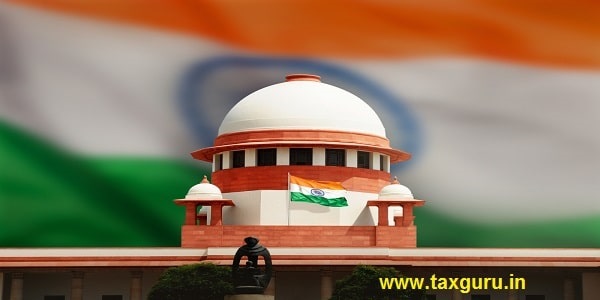
Beghar Foundation Vs K.S. Puttaswamy (Retd.) and Ors. (Supreme Court of India)
Summary: The Supreme Court, by majority, dismissed a batch of review petitions challenging its Constitution Bench judgment dated 26 September 2018 in the Aadhaar case, holding that no case for review had been made out. The Court specifically clarified that a change in law or a subsequent decision or judgment of a coordinate or larger Bench cannot, by itself, constitute a ground for review.
The review petitions questioned, among other matters, the conclusion in K.S. Puttaswamy (Aadhaar-5J.) v. Union of India, (2019) 1 SCC 1, that the Aadhaar Act had been validly enacted as a Money Bill under Article 110(1) of the Constitution. The controversy assumed significance because a coordinate Constitution Bench in Rojer Mathew v. South Indian Bank Ltd. subsequently expressed doubts concerning the interpretation of Article 110 and referred the Money Bill issue for consideration by a larger Bench. Justice D.Y. Chandrachud delivered a dissenting opinion, reasoning that dismissal of the review petitions before resolution of the larger-Bench reference could produce serious consequences for judicial discipline and the ends of justice.
He considered it appropriate to keep the review petitions pending until the larger Bench determined the questions referred in Rojer Mathew. The majority, however, found no ground to review the 2018 judgment and dismissed the petitions, also rejecting the prayer to urge additional grounds in Review Petition (Civil) No. 22 of 2019.
Cases Discussed
- Justice K.S. Puttaswamy (Retd.) & Another v. Union of India & Others, (2019) 1 SCC 1 (Supreme Court) — Constitution Bench decision under review. The majority had upheld the Aadhaar Act’s certification as a Money Bill under Article 110(1), while holding that judicial review of the Speaker’s certification could be available in appropriate circumstances. Justice D.Y. Chandrachud had dissented on the validity of the Money Bill certification.
- Rojer Mathew v. South Indian Bank Ltd. & Ors. (Supreme Court) — The Constitution Bench considered the scope of Article 110 and judicial review of the Speaker’s Money Bill certification and expressed doubts concerning the reasoning in Puttaswamy (Aadhaar-5J.). The Money Bill issue was referred for consideration by a larger Bench.
- Kantaru Rajeevaru (Right to Religion, In re-9 J.) (2) v. Indian Young Lawyers Association, (2020) 9 SCC 121 — Nine-Judge Bench held that questions of law could be referred to a larger Bench in pending review proceedings and that admission of the review petitions was not a prerequisite for making such a reference.
- S. Nagaraj v. State of Karnataka, 1993 Supp (4) SCC 595 — Referred to for the inherent power of the Supreme Court to recall or review its orders where necessary to prevent abuse of process or miscarriage of justice.
- Mohd. Saeed Siddiqui v. State of U.P., (2014) 11 SCC 415 — Discussed in the context of judicial review of the Speaker’s certification of a Money Bill under Article 110(3). Rojer Mathew stated that, insofar as the decision placed the Speaker’s determination beyond judicial review, it could not be relied upon.
- Yogendra Kumar Jaiswal v. State of Bihar, (2016) 3 SCC 183 : (2016) 2 SCC (Cri) 1 — Discussed together with Mohd. Saeed Siddiqui concerning the amenability of the Speaker’s Money Bill certification to judicial review.
FULL TEXT OF THE SUPREME COURT JUDGMENT/ORDER
Want to Read the Complete Judgment?
You have read the free case summary. Unlock the full judgment, the detailed judicial reasoning and the downloadable PDF, along with every other premium judgment on TaxGuru.
Already subscribed? Log in
One subscription covers the entire premium judgment library, not just this case.