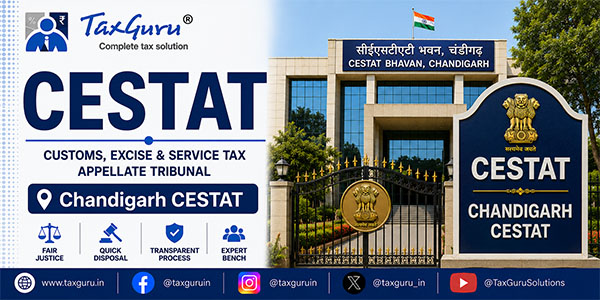
F M I Automotive Components Ltd. Vs Commissioner of Central Excise (CESTAT Chandigarh)
The appeal challenged the Order-in-Original dated 06.08.2014 by which the Commissioner of Central Excise denied CENVAT credit of ₹1,89,67,111, along with interest and an equal penalty under Rule 14 and Rule 15(2) of the CENVAT Credit Rules, 2004 read with Rule 25 of the Central Excise Rules, 2002, on canteen services, construction work services, hospitality charges and real estate agent services.
The appellant, engaged in the manufacture of automotive components, had availed CENVAT credit on various input services. Following an audit, the Department issued a show cause notice dated 08.08.2013 proposing recovery of ₹2,37,57,636. The Commissioner dropped a demand of ₹47,90,525 but confirmed the remaining demand of ₹1,89,67,111 relating to canteen expenses, hospitality charges for leased accommodation of expatriate/employees, commission paid to real estate agents for procuring such accommodation, construction services received for design and installation at the factory premises, and certain input services alleged not to have been used in the manufacturing premises or manufacturing process.
The appellant contended that the impugned services qualified as “input services” under Rule 2(l) of the CENVAT Credit Rules, 2004 as it stood prior to 01.04.2011, when the definition was inclusive and covered services used directly or indirectly in relation to manufacture. It was argued that canteen services were provided to employees working in shifts and were a statutory obligation under Section 46 of the Factories Act, 1948. The appellant also stated that it had voluntarily reversed the credit attributable to the amount recovered from employees and submitted that services received prior to 01.04.2011 could not be denied on the basis of Circular No. 943/04/2011-CX dated 29.04.2011.
Regarding hospitality charges and commission paid to real estate agents, the appellant submitted that the services were procured to facilitate residential accommodation for expatriate employees who managed production, quality and the setting up of the manufacturing unit. It argued that these services were received for business purposes and were indirectly used in relation to manufacture. The appellant further contended that the circular relied upon by the Commissioner applied only to the amended definition of input service effective from 01.04.2011 and not to the period in dispute.
On construction services, the appellant submitted that the services related to civil, electrical, mechanical, fire-fighting, plumbing and other works necessary for establishing the factory. It contended that the manufacturing activity could not have commenced without constructing the production facility and that services used for setting up the factory were specifically covered under the pre-01.04.2011 definition of input service.
As regards the credit of ₹20,579, the appellant submitted that the consultant services were used for preparation of certificates and processing of duty drawback claims relating to exports made by Maruti Udyog, while part of the credit related to services used for leased accommodation occupied by employees. It also contended that denial of credit of ₹10,197 on the ground that the services were not inputs was beyond the scope of the show cause notice. The appellant further argued that Rule 3 of the CENVAT Credit Rules did not require input services to be received within the registered premises and that such services were procured in furtherance of business activities.
On limitation, the appellant argued that the dispute involved interpretation of law and that it had acted under a bona fide belief regarding admissibility of credit. It submitted that the Department had failed to establish fraud, collusion, wilful misstatement, suppression of facts or contravention of statutory provisions with intent to evade tax, all of which were necessary for invoking the extended period of limitation. It also contended that interest and penalty could not survive if the demand itself failed.
The Revenue supported the findings recorded in the impugned order.
The Tribunal observed that the definition of “input service” applicable up to 01.04.2011 expressly included services used directly or indirectly in the manufacturing process and had been widely interpreted by courts to include services used in relation to manufacture. It further observed that the various judicial precedents relied upon by the appellant had recognised outdoor catering/canteen services, hospitality charges, commission paid to real estate agents and construction services for factory design and installation as eligible input services. Accordingly, it held that CENVAT credit could not be denied on those services.
On limitation, the Tribunal held that the dispute was interpretational and that the appellant had entertained a bona fide belief regarding eligibility of credit. It found that the Department had failed to establish fraud, collusion, wilful misstatement, suppression of facts or intent to evade payment of tax. It also noted that the availment of credit came to light only during audit, indicating absence of any intention to evade tax. Consequently, the Tribunal held that the entire demand was barred by limitation.
The Tribunal further held that once the demand itself was unsustainable, interest and penalty could not survive. Accordingly, it set aside the impugned order and allowed the appeal both on merits and on limitation.
Cases Discussed
- Good Year India Ltd vs. Commissioner of Central Goods & Service Tax (CESTAT Chandigarh), 2024 (10) TMI 287 – CESTAT Chandigarh
- Kansal Nerolac Paints Ltd vs. Commissioner of Central Excise, Delhi-III (CESTAT Chandigarh), 2024 (3) TMI 1038 – CESTAT Chandigarh
- Mitsui Kinzoku Components India Pvt. Ltd. vs. Commissioner of Central Excise, Delhi-III (CESTAT Chandigarh), 2023 (11) TMI 1164 – CESTAT CHANDIGARH
- NGK Spark Plugs India Pvt. Ltd. vs. CCE, Delhi-III (CESTAT Chandigarh), 2023 (9) TMI 642 – CESTAT CHANDIGARH
- Commissioner Central GST, Gurgaon Commissionerate vs. M/s. DLF (Punjab & Haryana High Court), 2023 (70) G.S.T.L. 237 (P&H)
- Axis Bank Ltd. vs. Commissioner of Service Tax Mumbai and vice versa (Tri. Mumbai), 2017 (3) G.S.T.L. 427 (Tri. Mumbai) [affirmed by Bombay High Court in 2019 (369) E.L.T. 583 (Bom.)]
- Titan Industries Ltd. vs. Commissioner of Service Tax, Chennai (CESTAT Chennai), 2018-TIOL-2052-CESTAT-MAD.
- Yazaki India Pvt. Ltd. vs. C.C.E. Ahmedabad (CESTAT Ahmedabad), 2018 (3) TMI 1052 – CESTAT Ahmedabad
- Honda Motorcycle & Scooter (I) Pvt. Ltd. vs. Commr. of C. Ex., Delhi-III (CESTAT Chandigarh), 2016 (45) S.T.R. 397 (Tri. – Chan.)
- Commissioner of Central Excise Commissionerate, Delhi-III vs. Bellsonica Auto Components India P. Ltd. (Punjab & Haryana High Court), 2015 (40) S.T.R. 41 (P & H)
- CCE, Nagpur vs. Ultratech Cement Ltd. (Bombay High Court), 2010 (10) TMI 13 – BOMBAY HIGH COURT
FULL TEXT OF THE CESTAT CHANDIGARH ORDER
The present appeal is directed against impugned order dated 06.08.2014 passed by the Commissioner of Central Excise, whereby the learned Commissioner has denied the Cenvat Credit of service tax amounting to Rs.1,89,67,111/- under Rule 14 of the Cenvat Credit Rules, 2004 paid on canteen services, constructions work services, hospitality and real estate agent services alongwith equal penalty under Rule 15(2) of the Cenvat Credit Rules, 2004 read with Rule 25 of the Central Excise Rules, 2002.
2. Briefly stated facts of the present case are that the appellant is engaged in business of manufacturing of ‘automotive components’ falling under Heading 87082900 of the first schedule to the Central Excise Tariff Act, 1985. The Appellant has availed Cenvat Credit on various input services received by it. Audit of the appellant was conducted and as per the department, the appellant had wrongly availed the Cenvat Credit on various input services. Consequently, a SCN dated 08.08.2013 was issued to the appellant, wherein the demand of Cenvat Credit of Rs.2,37,57,636/- was proposed on various input services received by the appellant. After following the due process, the learned Commissioner vide the impugned order dropped the demand to the extent of Rs.47,90,525/- and confirmed the demand of Cenvat Credit of Rs.1,89,67,111/- alongwith interest and penalty. Details of the demands confirmed in respect of impugned services are as under:
| Input Services | Period | Amount (Rs) |
|---|---|---|
| Canteen expenses incurred for providing canteen services to the employees in the factory. | 2008-09 | 17,975 |
| 2009-10 | 1,08,492 | |
| 2010-11 | 1,39,666 | |
| 2011-12 | 13,155 | |
| Total | 2,79,288 | |
| Hospitality Charges incurred to provide leased accommodation to Expats/ employees. | 2008-09 | 9,06,645 |
| 2009-10 | 1,51,862 | |
| 2010-11 | 20,967 | |
| Total | 10,79,474 | |
| Commission charged by real estate agent for assistance in procuring leased | 2008-09 | 10,259 |
| 2010-11 | 9,888 | |
| accommodation for its expats/employees. | Total | 20,147 |
| Construction services received by the Appellant for design, installation etc. at factory premises. |
2008-09 | 1,75,07,301 |
| 2010-11 | 60,323 | |
| Total | 1,75,67,624 | |
| Input services not used in the manufacturing premises and not used in the manufacturing process. | 2010-11 | 20,579/- |
| Total | 1,89,67,111/- | |
Aggrieved by the said order, the appellant preferred the present appeal before us.
3. Heard both the parties and perused the material on record.
4.1 The learned Counsel for the appellant submits that the impugned order is not sustainable in law and is liable to be set aside as the same has been passed without properly appreciating the facts and the law and binding judicial precedents on identical issue.
4.2 The learned Counsel further submits that the appellant is eligible to the Cenvat Credit on the input services used by it directly or indirectly in the manufacturing process. He further submits that definition of ‘input services’ prior to 01.04.2011 as provided under Rule 2(1) of the Cenvat Credit Rules, 2004 provides that the input services include services used by the manufacturer, directly or indirectly, in the manufacturing process. The definition of input services is an inclusive definition having a wide scope to include all services used in relation to the manufacture of final products.
4.3 As regards the denial of Cenvat Credit on Outdoor Catering/Canteen Services, the learned Counsel submits that the Cenvat Credit has been denied on the ground that canteen services are not related to the business activity of the appellant and merely a welfare activity. He further submits that the appellant uses the catering services for the employees working day and night for manufacture of final products for better and efficient production. Food is provided at the premises only so that the employees do not go out of the factory for having food. Also, the appellant is under statutory obligation to provide the canteen services under Section 46 of the Factories Act, 1948. He further submits that outdoor catering services are to be treated as ‘input services’ as these are connected with manufacturing activity and used indirectly in manufacture of final products by way of enhancing productivity. He also submits that the appellant has voluntarily and duly reversed the credit availed on outdoor catering to the extent the amount was recovered from the employees. He also submits that the services involving credit of Rs.13,155/- during 2011-12 was received by the appellant prior to 01.04.2011 and therefore, credit cannot be denied in view of the Circular No. 943/04/2011-CX dated 29.04.2011.
4.4 As regards the denial of Cenvat Credit on Hospitality Charges & Commission (in relation to leased accommodation of the employees), the learned Counsel submits that the learned Commissioner has wrongly relied on the Circular No. 943/04/2011-CX dated 29.04.2011 to deny the credit on hospitality charges and real estate agent services on the basis that it has been used for personal use or consumption of employees and has no relation with the manufacturing of final products and clearance thereof. He further submits that the said circular was issued for clarifying the amendments made in the definition of ‘input services’ with effect from 01.04.2011 and not prior to 01.04.2011. He further submits that in the instant case, the Cenvat Credit on real estate agent service is in dispute for the period from April 2008 to March 2011 and therefore, the said Circular is not applicable in the present case. He also submits that these services have been received by the appellant to facilitate the procurement of residential accommodation for its employees for business purposes of the appellant who has substantial contribution to the company by managing production and quality for line setup and were key personnel for setting up the manufacturing unit of the appellant and carrying forward the business of manufacture. Hence, any service tax paid on the said activity shall be considered as being used indirectly in relation to manufacture or as part of business activity for promoting the business. He further submits that the appellant has also produced the invoices of the vendors who procured the services for the appellant.
4.5 As regards the denial of Cenvat Credit on Construction service used for setting up the factory, the learned Counsel submits that the appellant is engaged in the manufacture and sale of the products consisting of exhaust system components used in motor vehicles by Maruti Udyog and has entered into a contract with SMCC Construction India and the scope of work included Civil, Electrical, Mechanical, Fire Fighting, Plumbing & External Works etc as reflected in the invoiced produced on record. He also submits that the manufacturing of the final product could not have been done without first constructing the production facility. The said input services were received by the appellant for the setting up of the factory. He further submits that the definition of ‘input services’ prior 01.04.2011 specifically included the services used in relation to the setting up of a factory or an office relating to such factory. Therefore, Cenvat Credit on construction services cannot be denied.
4.6 As regards the denial of Cenvat Credit of Rs.20,579/-, the learned Counsel submits that the Cenvat Credit of Rs. 927/- and Rs.9270/- was denied by the learned Commissioner on the ground that such services were not input services. The learned Counsel submits that the same are ‘input services’ as the services of the consultants are utilized for preparation of certificates and processing of the duty drawback claims on exports made by Maruti Udyog and the appellant being a vendor to Maruti Udyog is required to procure such services for allowing Maruti Udyog to claim duty drawback claims. Such services used by the appellant are essential to the business activity. Similarly, the Cenvat Credit of Rs.10,382/- was also paid for the services used by the appellant for business purposes for leased accommodations occupied by the employees of the appellant.
4.7 As regards the denial of Cenvat Credit of Rs.10,197/-, the learned Counsel further submits that the Cenvat Credit of Rs.10,197/- was denied on the ground that such services were inputs for the appellant. The learned Counsel submits that this finding of the learned Commissioner is beyond the scope of SCN as there was no such allegation.
4.8 The learned Counsel further submits that it is irrelevant that whether such services are used in the manufacturing premises of the appellant or not because as per Rule 3 of the Cenvat Credit Rules, there is no condition as far as input services are concerned that the same have to be received within the registered premises of the output service provider, unlike capital goods and inputs, which are received at the factory. He also submits that these services were procured in the furtherance of business activity undertaken by the appellant. Therefore, credit cannot be denied to the appellant.
4.9 In support of his above submissions, the learned Counsel relies on the following judgements of various Courts/Tribunal wherein impugned services have been held to be ‘input services’:
| Input Service | Judgments |
|---|---|
| Canteen expenses incurred for providing canteen services to the employees in the factory. | (1) NGK Spark Plugs India Pvt. Ltd. vs. CCE, Delhi-III 2023 (9) TMI 642 – CESTAT CHANDIGARH.
(2) Kansal Nerolac Paints Ltd vs. Commissioner of Central Excise, Delhi-1112024 (3) TMI 1038 – CESTAT CHANDIGARH (3) CCE, Nagpur vs. Ultratech Cement Ltd. 2010 (10) TMI 13 – BOMBAY HIGH COURT. |
| Hospitality Charges incurred to provide leased accommodation to Expats/employees. & Commission charged by real estate agent for assistance in procuring leased accommodation for its expats/employees. | (1) Good Year India Ltd vs. Commissioner of Central Goods & Service Tax, 2024 (10) TMI 287 – CESTAT Chandigarh
(2) Axis Bank Ltd. vs. Commissioner of Service Tax Mumbai and vice versa, 2017 (3) G.S.T.L. 427 (Tri. Mumbai) [affirmed by Bombay High Court in 2019 (369) E.L.T. 583 (Bom.)] (3) Titan Industries Ltd. vs. Commissioner of Service Tax, Chennai, 2018-TIOL-2052-CESTAT-MAD. (4) Honda Motorcycle & Scooter (I) Pvt. Ltd. vs. Commr. of C. Ex., Delhi-III, 2016 (45) S.T.R. 397 (Tri. – Chan.). (5) Yazaki India Pvt. Ltd. vs. C.C.E. Ahmedabad, 2018 (3) TMI 1052 – CESTAT Ahmedabad. |
| Construction services received by the Appellant for design, installation etc. at factory premises. | (1) NGK Spark Plugs India Pvt. Ltd. vs. CCE, Delhi-III, 2023 (9) TMI 642 – CESTAT CHANDIGARH.
(2) Commissioner of Central Excise Commissionerate, Delhi-III vs. Bellsonica Auto Components India P. Ltd., 2015 (40) S.T.R. 41 (P & H). (3) Commissioner Central GST, Gurgaon Commissionerate vs. M/s. DLF, 2023 (70) G.S.T.L. 237 (P&H). (4) Mitsui Kinzoku Components India Pvt. Ltd. vs. Commissioner of Central Excise, Delhi-III, 2023 (11) TMI 1164 – CESTAT CHANDIGARH. |
| Input services not used in the manufacturing premises and not used in manufacturing process. | (1) CCE, Nagpur v. Ultratech Cement Ltd., 2010 (10) TMI 13 Bombay High Court. |
4.10 As regard the invocation of extended period of limitation, the learned Counsel submits that in the impugned order, the demand has been confirmed by invoking the extended period of limitation which is not sustainable and the entire demand is time barred. He also submits that the issue involved relates to interpretation of law and legal provisions; hence, extended period of limitation cannot be invoked. He further submits that the appellant was under a bona fide belief that the Cenvat Credit was admissible to them. Further, the admissibility of Cenvat Credit was subject matter of dispute before various forums which established that there was confusion in the trade. He also submits that for the purpose of invocation of extended period, the department needs to establish fraud, collusion, wilful misstatement or suppression of facts or contravention of any of the provisions of the Act or Rules with intent to evade the payment of tax; whereas, the learned Commissioner has clearly failed to establish any of these ingredients on the part of the appellant.
4.11 As regards the interest and penalty, the learned Counsel submits that when the demand itself is not sustainable; then the question of interest and penalty does not arise.
5. On the other hand, the learned Authorized Representative for the Revenue reiterates the findings of the impugned order.
6. After considering the submissions made by both the parties and perusal of the material on record, we find that definition of `input services’ for the period until 01.04.2011 as provided under Rule 2(1) of the Cenvat Credit Rules, 2004 clearly provides that the input services include services used by the manufacturer, directly or indirectly, in the manufacturing process. The said definition has been widely interpreted by various courts to include all services used in relation to the manufacture of final products.
7. Further, we find that each of the input services involved in the present case has been held to be ‘input service’ by various decisions cited above, wherein it has been held that the services such as Outdoor Catering/Canteen Services, Hospitality Charges & Commission Charges by Real Estate Agent, Construction Services used by the appellant for design & installation of the factory premises are held as ‘input services’ and the Cenvat Credit cannot be denied with regard to these services.
8. As regards the invocation of extended period of limitation, we find that it was an interpretational issue and the appellant had a bona fide belief that they were entitled to Cenvat Credit on the input services which were used for the purpose of carrying the business for manufacturing. Further, the department has not established any of the ingredients such as fraud, collusion, wilful misstatement or suppression of facts or contravention of any of the provisions of the Act or Rules with intent to evade the payment of tax, which are required for the purpose of invocation of extended period. Further, we find that only during the audit of the appellant, it was discovered the appellant has taken the Cenvat Credit on these impugned services, which also shows that there is no intention to evade payment of tax; therefore, we hold that the entire demand is also barred by time.
9. As regards interest and penalty, we hold that the question of interest and penalty does not arise when the demand itself is not sustainable.
10. In view of our discussion above, we set aside the impugned order and allow the appeal on merit as well as on limitation.
(Order pronounced in the open court on 04.02.2025)