
Type: News
Read latest TaxGuru news on taxation, GST, Income Tax, finance, business, corporate laws, regulatory developments and professional updates.
Empanelment with Punjab & Sind Bank for Concurrent Audit: Last Date 15/06/2025

Pension Reforms in the Era of Digitalisation: Balancing Flexibility and Assurance

Govt Announces Measures to Deepen G-Sec Market & Boost FPI in Equities

Haryana Tops GST Growth Rankings Due to Strong Compliance & Enforcement Drive
CCPA Imposes Penalties as Dark Patterns Manipulated Consumer Consent

Income Tax Superintendent Caught by CBI in Bribery Case Linked to PAN Deletion
ITAT Prioritizes Old Appeals as Rising Pendency Requires Urgent Disposal Measures

Empanelment of Resource Persons/Faculty/Experts for Board of Studies, ICAI
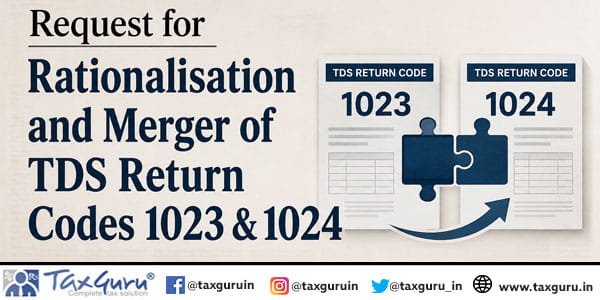
Request for Rationalisation and Merger of TDS Return Codes 1023 & 1024

ICSI First BI-Annual Western Region Convocation of FY 2026-2027 (First Half)

Issue GSTAT FAQ as Filing Procedures Continue to Cause Confusion: MGATBA
India Secures Duty-Free Access for 99.38% Exports Through India–Oman CEPA
Portfolio Investment Positions by Counterpart Economy (formerly CPIS) – India: FAQs

SEBI Proposes Review of Framework for Calculation of Net Distributable Cash Flows for InvITs
News brings together important developments affecting taxpayers, businesses, professionals and the financial and regulatory ecosystem. TaxGuru covers news relating to Income Tax, GST, Company Law, Corporate Law, Customs, DGFT, FEMA/RBI, SEBI, finance, business, professional bodies and other tax and regulatory subjects. The category includes developments arising from government decisions, regulators, departments, courts, professional institutions and other relevant sources. Readers can use this page to stay informed about recent changes, announcements and developments having implications for taxation, compliance, finance, business and professional practice.

