The Companies Act 2013 is a crucial legislation in India governing the incorporation, functioning, and management of companies. Learn about the key provisions, compliance requirements, and legal framework under the Companies Act 2013.
CA, CS, CMA : A comprehensive guide covering 175 legal compliances for July 2026 under FEMA, Income Tax, GST, SEBI, Companies Act, Labour Laws, ...
Company Law : The Companies Act, 2013 requires most companies to hold four Board Meetings annually, while OPCs, Small Companies, and Dormant Com...
Company Law : This guide provides a complete AGM compliance tracker covering pre-AGM, AGM-day, post-AGM, and IEPF obligations under the Companie...
Company Law : MCA has revised the Director KYC framework, requiring DIR-3 KYC (Web) only once every three financial years. The changes reduce co...
Company Law : Learn how the Companies Act, 2013 regulates managerial remuneration through profit-linked limits, approval requirements, and gover...
Company Law : MCA has cautioned stakeholders against phishing calls, WhatsApp messages, emails, fake websites, and ZIP attachments impersonating...
Company Law : ICSI has urged the Government to amend the law to allow Company Secretaries in Practice to appear before DRTs and DRATs. It argues...
Company Law : ICSI has urged the MCA to ensure eligible companies comply with Section 203 by appointing Whole-time Company Secretaries. The repr...
Corporate Law : NSO has launched the Annual Survey of Incorporated Services Sector Enterprises (ASISSE) to collect comprehensive economic and oper...
Company Law : ICSI has requested the MCA to grant compliance relaxations following technical disruptions caused by the Data Centre fire. The pro...
Company Law : Madhya Pradesh HC dismissed a winding up petition, holding that a bona fide dispute over liability required adjudication before th...
Company Law : NCLT retained the freeze on assets citing serious SFIO findings but ordered defreezing of the salary account and family members' a...
Corporate Law : The Court ruled that, without a transfer application and parallel insolvency proceedings, shifting a winding-up case to NCLT was u...
Company Law : NCLT permitted stakeholder meetings after accepting clarifications on forfeited warrants, disclosures, and scheme compliance under...
Company Law : The NCLAT held that CFO nominees must satisfy the eligibility requirements under Section 203 of the Companies Act. It set aside th...
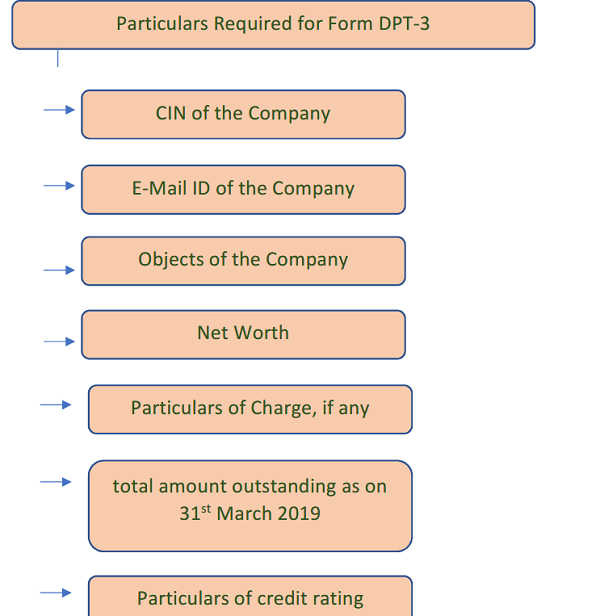
Company Law : MCA has allowed companies to file Form DPT-3 for FY 2025-26 without additional fees until 31 July 2026 due to disruptions caused b...
Company Law : MCA notifies the New Development Bank under Section 2(11)(ii) of the Companies Act, 2013, specifying it as a body corporate for th...
Company Law : ROC Mumbai penalized a director after Form AOC-4 contained an incorrect AGM due date. The order emphasizes that directors are resp...
Company Law : ROC Mumbai imposed a penalty after finding that an individual held two Director Identification Numbers in violation of Section 155...
Company Law : ROC Mumbai penalized a Whole Time Director for filing Form DIR-12 with an incorrect CFO appointment date. The order reiterates tha...
[Ref: In Notification No. G.S.R. 794(E) dated 24.12.2020] Recently, the Ministry of Corporate Affairs (MCA) has amended eForm SH-7 (Notice to Registrar of any alteration of share capital) vide Notification No. G.S.R. 794(E) dated 24.12.2020. In exercise of the powers conferred by sub-sections (1) and (2) of Section 469 of the Companies Act, 2013 (“Act, 2013”) , […]
The law relating to criminal procedure applicable to all criminal proceedings in India is contained in the Code of Criminal Procedure, 1972 (Code). The Code is an Act to consolidate and amend the law relating to Criminal Procedure. The ‘Cognizable and Non-cognizable Offences’ have been categorised under the Code as cognizable and non-cognizable offence. It […]
The definition of Court under Section 2(29) the Companies Act, 2013, (the Act, 2013) also includes a ‘Special Court’ constituted under Section 435 of the Act, 2013. Chapter XXVIII constituting Sections 435 to 446B deals with the Special Courts under the CA, 2013. The definition of Court under Section 2(29) the Act, 2013 may be […]
Section 441 of the Companies Act, 2013 (CA, 2013) deals with Compounding of offence. Compounding of offences is not new under the Company Law; similar provisions were also present in Section 621A of the Companies Act 1956 (erstwhile Act). According to Section 441(1) of the CA, 2013, as amended by the Companies (Amendment) Act, 2017 w.e.f. 09.02.2018 […]
All India Joint Representation Committee for GST have filed representation by way of join petition of 24 GST and Trade Associations and 5226 signatories to the signature campaign considering short extension granted in connection with GSTR 9 & 9C for FY 1819 & FY 1920 , Income Tax Returns, Tax Audit and Transfer Pricing Reports […]
KSCAA has requested for Request for Extension of Companies Fresh Start Scheme i.e. CFSS 2020 and LLP Settlement Scheme 2020 to 31st March 2021 considering genuine hardships which have arisen due to Technical issues with MCA 21.
Digvijaya Singh requested FM for Extension of various due dates under Companies Act 2013, Companies Fresh Start Scheme (CFSS-2020), LLP Settlement Scheme 2020 till 31st March, 2021.
Permission of Special Court- No more required for Compounding of Offence under Companies Act, 2013 Before the amendment brought by the Companies (Amendment) Ordinance 2018, the permission of the ‘Special Court’ was required for compounding of any offence which is punishable under this Act, with imprisonment or fine, or with both. The sub-section (6) of […]
Section 441 of the Companies Act, 2013 (CA, 2013) deals with Compounding of offence. Compounding of offences is not new under the Company Law; similar provisions were also present in Section 621A of the Companies Act 1956 (erstwhile Act). We are only discussing herewith about the filing of application for compounding of offence which shall be submitted […]
MCA has changed the applicability date of CARO, 2020 to the financial years commencing on or after the 1st April, 2021. So, CARO 2020 will be applicable from Financial Year 2021-22.