RBI’s October 2026 Repo Rate Hike: What It Means for Corporate Borrowing and FEMA Compliance
Summary: The Reserve Bank of India’s Monetary Policy Committee raised the policy repo rate by 25 basis points to 5.50% on 7 October 2026, marking a change in direction after more than three years without a rate increase. For companies, the impact will depend significantly on the structure of their borrowings. Repo-linked EBLR loans are likely to transmit the increase more quickly, while MCLR-linked facilities may reprice with a lag; fixed-rate borrowings face the impact primarily at refinancing. Higher borrowing costs can affect interest coverage, debt-service ratios, working-capital margins and future debenture or commercial-paper pricing. Companies with external commercial borrowings must additionally consider exchange-rate exposure, hedging and compliance under the revised 2026 FEMA borrowing and lending framework, including applicable borrowing costs, reporting, repayment modifications and permitted end-use. Boards should review borrowing authorisations under Sections 179 and 180 of the Companies Act, debt reset and maturity profiles, covenant headroom, foreign-exchange exposure and, for listed entities, potential Regulation 30 disclosure implications. The move to calibrated tightening also makes sensitivity analysis for further rate and currency movements an important part of corporate treasury and board oversight.
Introduction
On 7 October 2026, the Reserve Bank of India’s Monetary Policy Committee (MPC) raised the policy repo rate by 25 basis points to 5.50%, the first increase in more than three years. The rate decision was unanimous, and the stance changed from neutral to calibrated tightening by a majority. A quarter-point move is small. What makes it important is the change in direction. Here is how I read it for companies, and what boards and company secretaries should look at now.
Why the RBI acted
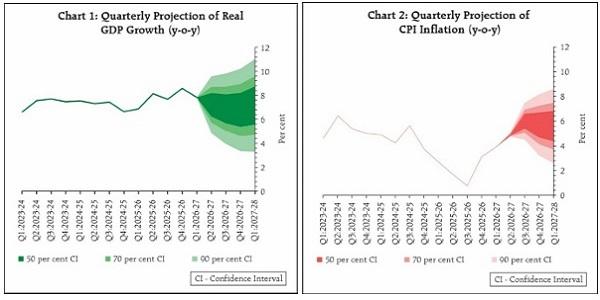
The RBI had held the repo rate at 5.25% in April, June and August 2026, after cutting by a total of 125 basis points through 2025. Since then, inflation has picked up. According to the RBI’s October 2026 Monetary Policy Report, headline CPI inflation rose from 3.5% in April to 4.8% in August, led by food and fuel prices, and core inflation also started to rise in August. Higher energy prices after the West Asia conflict are one of the main pressures. At the same time, growth is strong, with GDP up 7.8% in the first quarter of 2026-27. With demand holding up, the RBI had room to put inflation first.
What it means for borrowing costs
Not every company will feel the hike at the same speed. It depends on how the loan is priced.
Loans linked to the repo rate (EBLR) reprice at their next reset date, so these borrowers see the increase first. The RBI’s report notes that private banks lend a large share of their loans at EBLR, which is why earlier rate changes reached their borrowers faster than those of public sector banks. Loans linked to MCLR move more slowly because of longer reset periods. That is a delay, not protection. When the loan resets, the higher rate arrives.
It is also worth noting that costs were already rising before this hike. In the first half of 2026-27, the average lending rate on fresh rupee loans went up by 21 basis points, and the median one-year MCLR rose by the same amount. So the hike adds to an upward trend that had started.
Fixed-rate loans and debentures are not affected until they come up for refinancing, but they will be refinanced at today’s higher rates. Cash credit and overdraft facilities, being mostly floating, will cost more straight away. For companies with long receivable cycles or large inventory, this shows up in margins quickly.
Higher interest lowers the interest coverage ratio. If a loan agreement has a minimum coverage or debt service ratio, the board should check how much room is left, and talk to the lender early if it is tight. Companies planning to issue debentures or commercial paper should also revisit their assumptions on coupon and timing, and record their reasoning in the board minutes.
The rupee and external borrowings
For companies with foreign-currency loans, the exchange rate matters as much as the interest rate. The RBI’s report says the rupee traded between ₹92 and ₹97 to the dollar and fell 1.4% against the dollar in the first half of 2026-27, after a 6.2% fall in the second half of the previous year.
A weaker rupee raises the rupee cost of repaying an external commercial borrowing (ECB), both interest and principal. The RBI’s report shows that around 73% of outstanding ECBs were hedged at the end of August 2026. That leaves roughly a quarter exposed. If your company is in that group, it is worth checking whether the hedge still matches the loan’s size and tenor, especially for loans nearing repayment.
This is also a good time to go through ECB compliance. Confirm that:
- the all-in-cost is within the ceiling under the ECB framework (check the latest RBI directions for the current benchmark and limit);
- periodic reporting through the Authorised Dealer bank is up to date;
- any change in repayment schedule, interest rate or maturity has been handled and reported as required; and
- the funds are still being used only for permitted purposes.
What the board should look at
The board of company should look at the following:
- Borrowing limits.Confirm borrowings stay within the limit approved under Section 180(1)(c) of the Companies Act, 2013, and that new borrowing is authorised as required under Section 179(3).
- Debt profile.A summary of floating versus fixed debt reset dates, maturities and covenant position.
- Foreign exchange exposure.A review of hedge ratios by the audit or risk committee, and whether the hedging policy still fits.
- Management’s estimate of how further rate or currency movements would affect interest cost and profit.
- For listed companies, whether anything that follows, such as a rating action or covenant breach, needs disclosure under Regulation 30 of the SEBI (LODR) Regulations, 2015.
- The discussion recorded in line with the Secretarial Standards.
What comes next?
By calling its stance calibrated tightening, the RBI has signalled that further hikes are possible if inflation stays high. The central bank’s own report lists energy prices, food supply, the exchange rate and global financial conditions as the main uncertainties. So it makes sense to test your plans against rates staying high for longer, rather than treating this as a one-time move.
The hike itself is modest. The real work for companies is knowing how each loan is priced, how much foreign-currency exposure is unhedged, and making sure the board has looked at both and kept a record.
Disclaimer: This article is for general information only and does not constitute professional advice. Readers should refer to the RBI’s official communications and the applicable laws before acting.
References
[1] Reserve Bank of India, Governor’s Statement / MPC press release, 7 October 2026: Press Releases | Official Website of Reserve Bank of India
[2] Reserve Bank of India, Monetary Policy Report, October 2026 (published under Section 45ZM of the RBI Act, 1934): Publications | Official Website of Reserve Bank of India
[3] ANI, “RBI raises repo rate by 25 bps to 5.50% as per market expectations as inflation risks strengthen,” The Tribune, 7 October 2026: https://www.tribuneindia.com/news/bank-rate/rbi-raises-repo-rate-by-25-bps-to-5-50-as-per-market-expectations-as-inflation-risks-strengthen
[4] Kotak Neo, “RBI MPC Meeting Update: Repo Rate Hiked 25 Bps To 5.50%, Stance Turns Tighter,” 7 October 2026: https://www.kotakneo.com/news/trading/rbi-mpc-meeting-live-latest-updates/
[5] Companies Act, 2013; SEBI (Listing Obligations and Disclosure Requirements) Regulations, 2015; Foreign Exchange Management Act, 1999 and RBI directions on external commercial borrowings